An eccentric quasi-musical about the woman who founded the Shaker religion
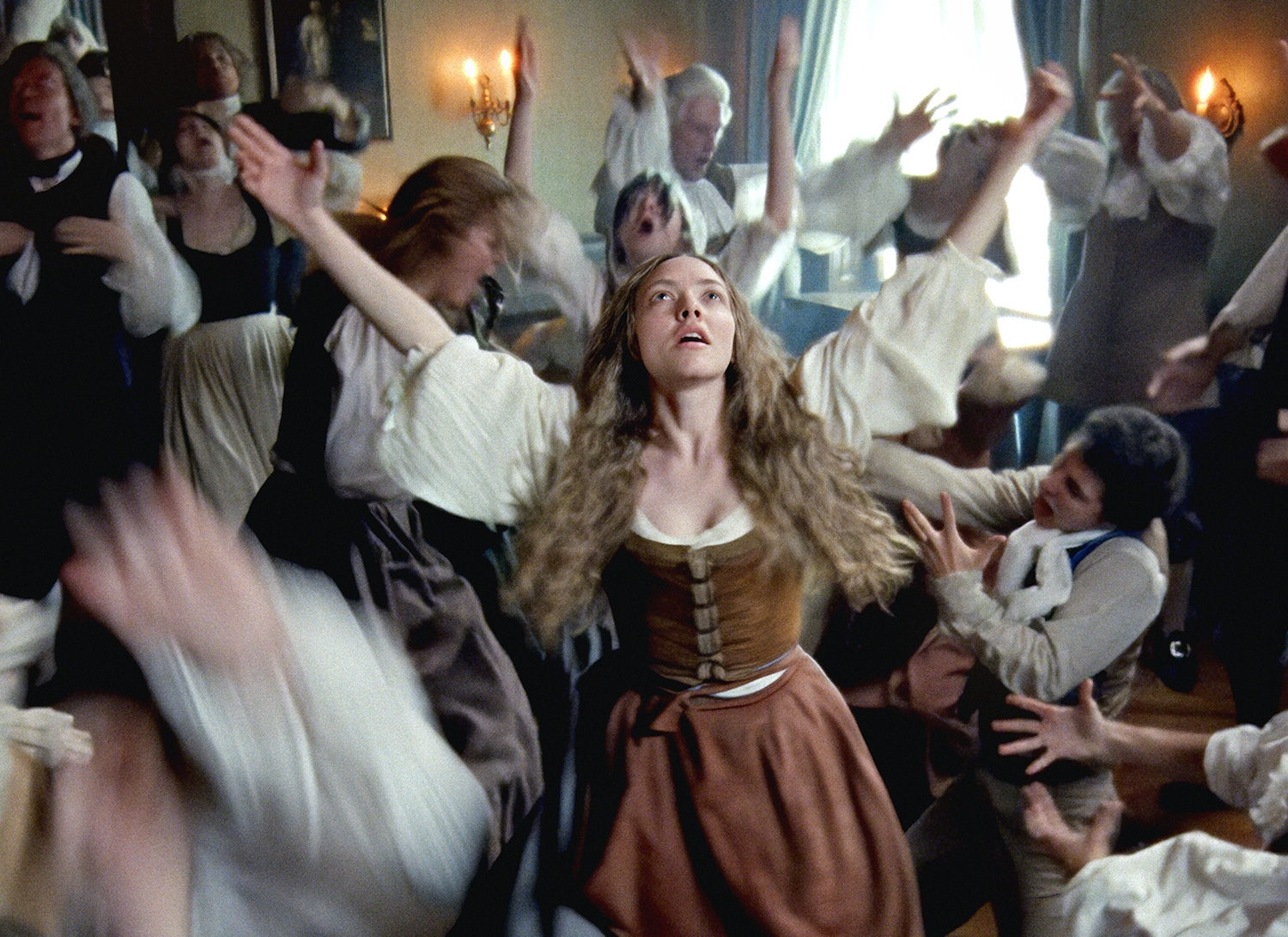
The Testament of Ann Lee
Starring Amanda Seyfried, Thomasin McKenzie & Lewis Pullman
Directed by Mona Fastvold
Rated R
In theaters Dec. 25, 2025
On the spectrum of organized religion, the Shakers have a uniquely odd spot of spirited gonzo weirdness.
Established in England, this offshoot of the Quakers believed sex was sin and that souls could be cleansed through frenzied ecstatic dancing. They also believed that the promise of the “second coming” had been fulfilled in a woman, Ann Lee, proclaimed as the female Christ.
This origin story stars Amanda Seyfried as that woman, who founded the Shakers and brought their beliefs to America in just as the Revolutionary War was getting ramped up. Seyfried (whose wide-ranging previous roles include starring in Mama Mia!, Mean Girls and Les Miserables) certainly gives her all here, pouring herself into the character of Lee, the “woman preacher” whose zealotry launched dozens of Shaker communities with thousands of followers, willing to replace “sinful” sexual desire with communal labor, woodworking craftsmanship and a commitment to non-confrontational pacifism.
Director Mona Fastvold (who co-wrote and produced last year’s The Brutalist) shows us how Lee (played as a child by Millie-Rose Crossley) developed an early distaste for “the depravity of human nature.” Seeing her parents have sex repulses her and sparks a fiery hatred of “fleshly cohabitation.” She grows up with visions of God, heaven, Adam and Eve and the snake in the Garden.
Christopher Abbott plays Ann’s husband, who doesn’t exactly share her views that abstinence through celibacy is the clearest path to eternal salvation. He’s into a bit of kink, he loves bonking, and the four children Ann bears all die as infants. That does it, solidifying her foundation of thought that sex leads to nothing but heartbreak and loss—and possibly damnation.
We see the Shakers twirling and whirling and prancing, jerking and chanting and singing; outsiders see them as crazy, and Ann ends up in prison for leading such disruptive gatherings. But that kind of persecution only steels her resolve. She ventures to the New World with a fervent little group of followers to establish a colony in New York.
Tim Blake Nelson plays an American Protestant minister who converts. Ann’s loyal brother, William (Lewis Pullman) becomes one of her first evangelists, spreading the word about their commune and their commitment. The story is narrated by Mary Partington (Thomasin McKenzie), another follower who accompanies Ann to America.
The movie is a kinda-musical, with many scenes of Shakers breaking into song and dance numbers based on hymns and scriptures. Sometimes it feels like they’re genuinely full of the spirit, but other times it just looks silly or spoofy, like an SNL skit lampooning religious extremity or a crazy intersection of O Brother, Where Are Thou? and Glee.
But the Shakers were dead serious, even moreso as their bizarre behavior (including rumors of spastic dancing naked by firelight) incites violent backlash. Ann is accused of being insane, of practicing witchcraft, and misleading those who follow her “sham” religion. The Shaker colonists are assaulted when an angry mob breaks into one of their services.
It’s no surprise that the movement was relatively short-lived; it’s hard to attract new members, much less grow your flock, when your reputation—as dancing freaks who get beaten bloody and don’t have sex—gets around. Today, there are only two official avowed Shakers in existence, and they live in one of the only remaining Shaker colonies in the world, in Maine.
In the end, the Shakers were a quirky historical footnote, a peculiar thread in the ever-evolving fabric of Christian faith. But The Testament of Ann Lee is a unique cinematic look at how the movement found its footing, and its followers, due to the passion and fiery conviction of a woman who’ll forever be remembered as their “Mother.”
—Neil Pond
 The Media Tourist