Top picks for TV, new books & just-released music& more!
Harry Styles is cop, George Lopez returns & Say Hey, It’s Willie Mays!
Harry Styles and Emma Corman star in a tale of forbidden love.
FRIDAY, Nov. 4 My Policeman Singer-actor Harry Styles stars as a cop who undertakes an emotional journey in this story of forbidden love and changing social norms set in 1950s Britain. With Emma Corrin and David Dawson (Prime Video).
Lopez Vs. Lopez George Lopez returns to TV in this new working-class inter-generational comedy costarring his daughter, Mayan Lopez (NBC).
SATURDAY, Nov. 5 Merry Swissmas Jodi Sweetin (from TV’s Fuller House and its sequel) stars in this romance about romance at an inn in Switzerland, which kicks off the Lifetime’s network of Christmas-themed flicks (8 p.m., Lifetime).
SUNDAY, Nov. 6 Dangerous Liasons New “prelude” to the 18th century literary classic focuses on the origins of the iconic characters, the Marquise de Merteuil (Nicholas Denton) and the Vicomte de Valmont (Alice Englert) meeting as passionate lovers in Paris on the eve of the French Revolution (Starz streaming service).
MONDAY, Nov. 7 One Delicious Christmas Real-life celebrity chef Bobby Flay stars in this streaming holiday movie about a stressed Vermont restaurant and inn owner (Vanessa Marano) preparing for a big Christmas Eve dinner (Discover+).
TUESDAY, Nov. 8 Hey, Willie Mays! Sports doc examines the career and the legacy of the Baseball Hall of Famer, whose achievements on the diamond during the era of Civil Rights helped break through the game’s longstanding color barriers (9 p.m., HBO).
WEDNESDAY, Nov. 9 CMA Awards Country hitmaker Luke Bryan—a two-time CMA Entertainer of the Year—and football superstar Peyton Manning host this 59th annual awarding of the year’s top tunes, performers and collaborations (8 p.m., ABC).
THURSDAY, Nov. 10 The English Emily Blunt stars in this new drama series as an aristocratic British woman on the American frontier, whose life intertwines with a Pawnee ex-U.S. Calvary scout (Chaske Spencer) on a violent landscape built of dreams, destiny and blood (Prime Video).
NOW HEAR THIS
Actor Luke Evans has appeared in a slate of films, including Clash of the Titans, Dracula Unchained, The Hobbit and Beauty and the Beast. But did you know he was a singer? Check out his impressive debut album, A Song for You, with a slate of classics, easy listening tunes and Christmas chestnuts that features a duet with Nicole Kidman, his costar when they costarred in the hit Hulu series Nine Perfect Strangers.
READ ALL ABOUT IT
Attention, Royals fans. Put together a meal fit for a king with Christmas at the Palace (Wheldon Owen), a crown-worthy cookbook for 50 festive recipes, gorgeously posed in charming Christmas settings. Author Carolyn Robb certainly knows her stuff: She spent over a decade in Kensington Palace as a royal chef, where the dining room was peopled by Prince Charles, Princess Diana, Prince William and Prince Harry.
Semi-autobiographical spin on childhood at the dawn of the 1980s has sobering messages about life
Banks Repeta with Anthony Hopkins in ‘Armageddon Time.’
Armageddon Time Starring Anne Hathaway, Anthony Hopkins, Banks Repeta & Jeremy Strong Directed by James Gray Rated R
See it in theaters Nov. 4
From the New Testament of the Bible, the term “Armageddon” entered the wider lexicon to mean an epic battle to end all battles, a final clash between forces of good and evil.
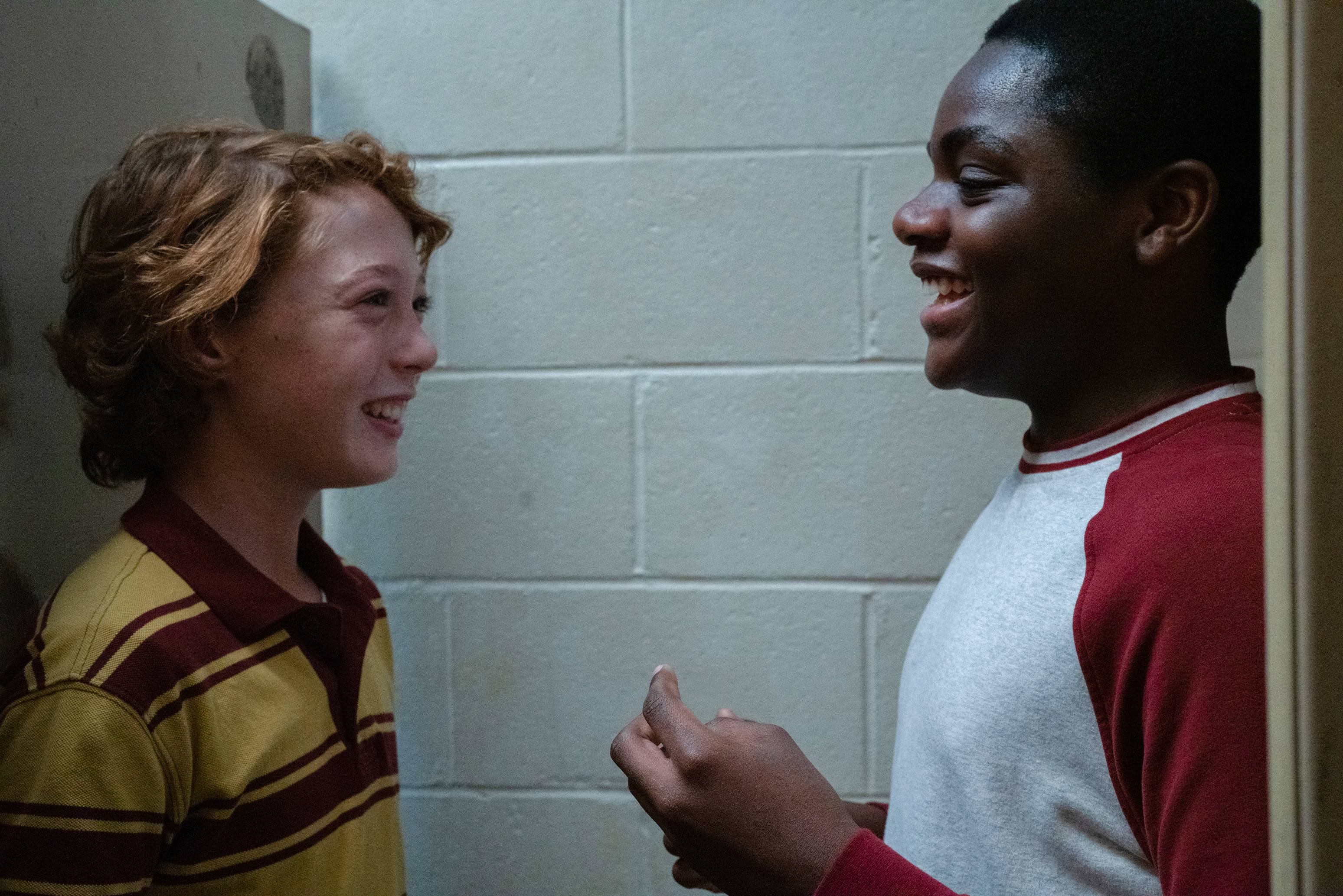
It’s a metaphor for the turmoil of life in James Gray’s largely autobiographical coming-of-age portrait, which centers on an 11-year-old Jewish boy named Paul (Banks Repeta) in the New York City borough of Queens, and the ups and downs of his friendship with a Black classmate (Jaylin Webb) in 1980.
The two lads get in some trouble (toking on a joint in the bathroom) and are separated when Paul’s parents (Jeremy Strong and Anne Hathaway) send him off to a posh private school. But Paul has little interest in becoming someone else’s definition of successful. His kindly grandfather (Anthony Hopkins) encourages his dreams of drawing and becoming a famous artist.
Johnny has dreams, too. He wants to be an astronaut, like his Apollo space heroes. And despite his friendship with Paul, he knows they are from two different worlds, that some dreams will only take you so far, and some flight paths are unchangeable. Like the model rocket Paul launches in the park with his grandfather, life goes where it goes. It goes up, it comes down. It can be beautiful, exciting, thrilling—or it can misfire, or blow up, or crash, becoming a disaster. It’s not equal, it’s certainly not fair, but that’s the way it is.
Armageddon Time is set against the backdrop of Ronald Reagan’s election as U.S. president, and the hawkish prospect he represented for increased militarism in a fight against “communism.” Paul’s mother fears he’ll push America into global conflict, a nuclear Armageddon.
As Paul navigates this brief but formative period, he learns some valuable lessons about racism, antisemitism and how life isn’t always a delicious dinnertime dumpling. His grandfather, a Ukrainian Jew who fled the horrors of ethnic cleansing in Europe, tells him to stand up to bullies, to keep pushing back against evil and darkness, and to be a mensch, a person of integrity and honor.
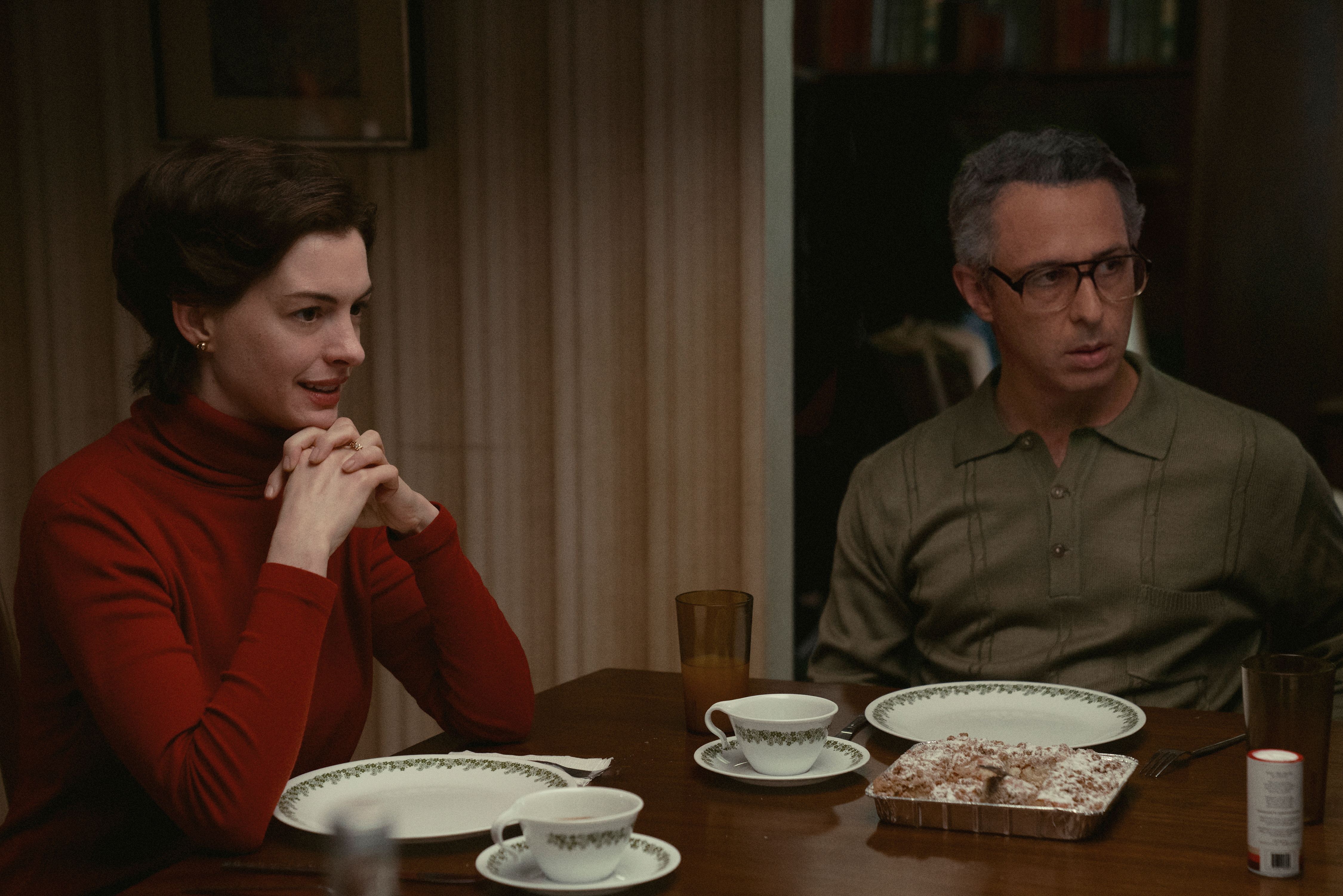
His mother loves him, but thinks he’s “slow,” in need of remedial education. His blue-collar father thrashes him with his belt for misbehaving and worries he’ll never amount to anything. Both parents openly disapprove of his Black friend.
Anne Hathaway and Jeremy Strong play the parents.
Director Gray (whose previous films include the Brad Pitt space saga Ad Astra and the crime thrillers We Own the Night and The Yards) creates an effective, evocative sense of a specific time and place, the rush of childhood, the complicated dynamics of family and a depiction of adolescence on the uncertain threshold of adulthood. He especially draws out memorable performances from his two young central characters, the conduits for his story’s moods of youthful adventure, yearning, frustration and ache. Johnny turns Paul on to the happenin’ hip-hop of Harlem’s Sugar Hill Gang and “Rapper’s Delight.” Paul goes to the movies with his family to watch Goldie Hawn (a Jewish girl) in Private Benjamin. The dawn of the computer age sparks Paul’s imagination, in more ways than one. They make each other laugh, they run through the park, they skip a school field day to hang out and ride the subway.
It reminded me a bit of Licorice Pizza, Paul Thomas Anderson’s gloriously golden retro ode to growing up and the rush of young love in California in the 1970s. But Armageddon Time is a bit darker than that, several shades more sobering, even a dollop depressing in its depiction of the creeping threats to Paul and Johnny’s friendship, in a world tainted by hatred and fear, and the reality that some dreams can never blast off into the bright, blue sky.
And as a nod to what’s coming, for Paul and America, the movie introduces the specter of Donald Trump, in characters representing his father, Fred Trump (John Diehl) and sister, Maryanne (Jessica Chastain).
Armageddon time may, it suggests, be any time. As Paul’s grandfather tells him, never give up, stand tall and keep fighting the “bastards.” There’ll always be bastards, the battle didn’t end in 1980, or after the Holocaust, and it sure doesn’t look like it’s over now.
Millie Bobby Brown reprises her role in new Victorian Era mystery romp
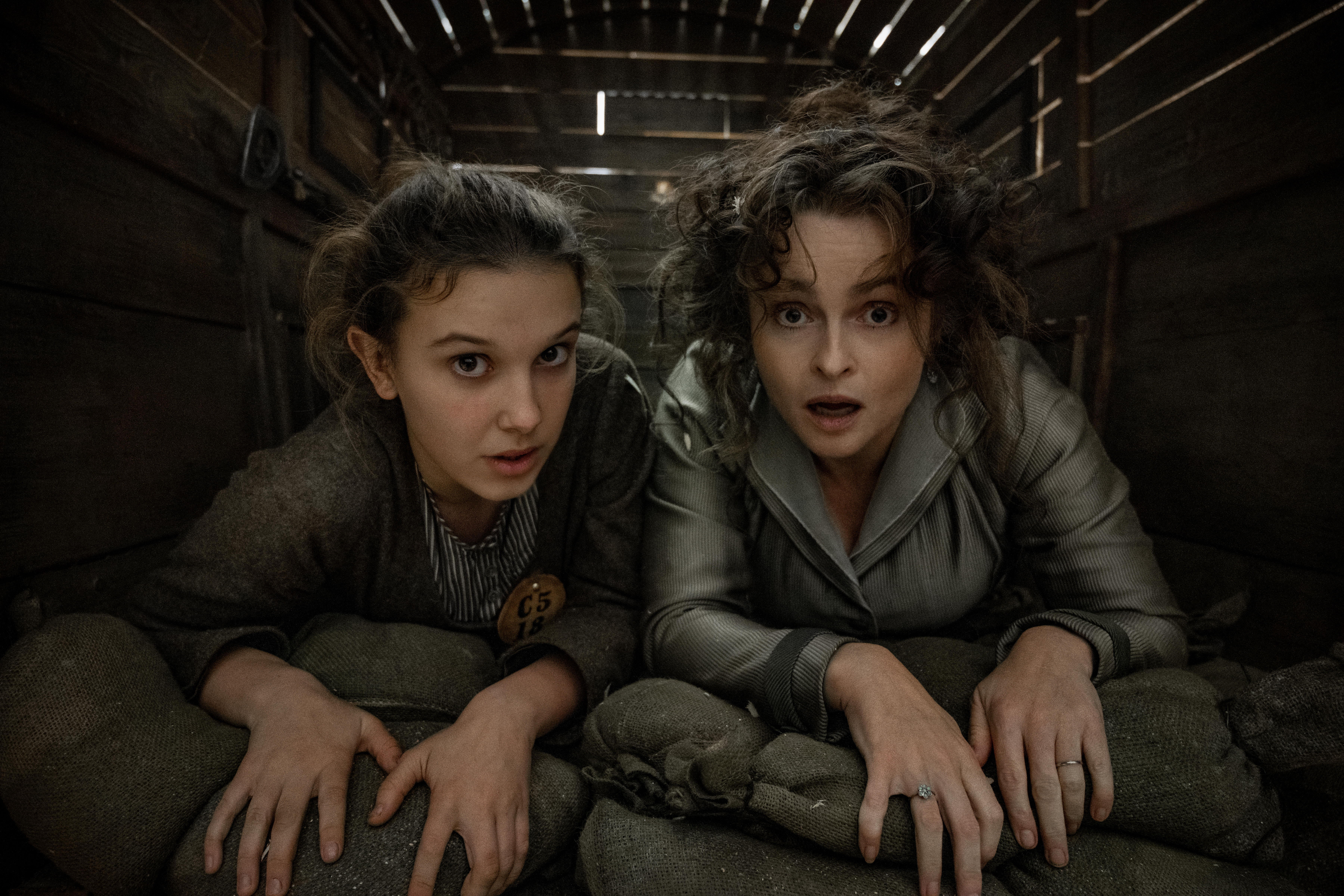
Milly Bobby Brown & Helena Bonham Carter
Enola Holmes 2 Starring Millie Bobby Brown, Henry Cavill, Lewis Partridge & David Thewlis Directed by Harry Bradbeer Rated PG-13
See it: Nov. 4, 2022, only on Netflix
“Some of what follows is true,” reads the placard at the opening of this sassy sequel about Sherlock Holmes’ little sister. “The important parts, anyway.”
The true, important parts are something that took place in England at the close of the 19th century…but more about that later.
Millie Bobby Brown continues to move beyond Stranger Things to reprise her role as the younger sibling of the iconic fictional British sleuth. After the events of the first Enola Holmes flick (2020), the young-adult clue-sniffer has now branched out to open her own detective agency.
But she’s detecting that it’s not easy being a PI when your big brother is the world’s most famous gumshoe. Enola gets her big break, however, when she’s asked to investigate a missing-person case, which turns into a wild, puzzle-solving romp throughout the social strata of 1880s Victorian England.
And it turns Enola into a murder suspect on the lam from the law.
Director Harry Bradbeer also returns behind the camera from the first Enola Holmes, picking things up where they left off. He’s a native Brit himself, with a witty, gritty style that suits this lively, frisky, fem-centric frolic. (He’s also directed episodes of TV’s Fleabag and Killing Eve).
On the surface, the movie is about Enola’s hunt to find out what happened to a young factory worker who has seemingly vanished. But it’s also got some serious stuff on its mind—women’s rights, the unity of sisterhood, really toxic workplaces, progressive politics and setting young Enola up as a proto-feminist firebrand. Gender fluidity even gets a nod.
Bucking the trends of her times, Enola has brains as well as some impressive bust-a-move ju-jitsu…much of which she learned from her mother (Helena Bonham Carter), a scrappy activist-crusader.
Henry Cavill plays Sherlock Holmes.
Henry Cavill (who’s played Superman as well as starring in The Tudors, The Witcher and Midsomer Murders) returns to the role of Sherlock, who ultimately joins Enola as the unraveling thread she’s following leads her into a web of business corruption, conspiracy and even homicide.
There’ve been dozens of actors who’ve played Sherlock, a diverse group of nearly 60 that includes Christopher Lee, Will Ferrell, Michael Caine and Benedict Cumberbatch. Take Robert Downey Jr. out of the running, maybe, and none of them comes close to looking as hunky in a cloak and hat as Cavill. His dapper, brooding, brainiac detective would be the perennial winner of Old London’s Sexiest Bachelor award.
But this movie, after all, is about Enola, and girls will love the way she rocks, rolls, connects the clues and crushes the case about something causing young British women to die. (And that’s the “important” part of the movie, the thing that really matters…even if it’s just an historical footnote.)
And along the way, she crashes a high-falootin’, high-society costume ball, scampers across rooftops, recouples with her crush, the dashing young viscount Tewkesbury (Lewis Partridge), and outwits the conniving London constable (David Thewlis) trying to reign her in. She also runs circles around Scotland Yard’s inspector Lestrade (Adeel Akhtar, also reprising his role), who’s always one hapless step behind Enola and Sherlock.
Run Enola, run!
Lestrade was a recurring character in the Holmes stories of creator Sir Arthur Conan Doyle in the late 1800s. At the end of this spry Sherlock spinoff, you’ll be introduced to yet another character that’s become a nameworthy part of Holmes lore.
As for Enola, her character was created by New Jersey author Nancy Springer, who launched a series of novels about the teenage detective in 2006. Enola may not be as old, figuratively and literally, as her more famous brother, but she has certainly made her mark.
Will we see her again? Likely, and hopefully. The world needs more Enolas, smart young female crusaders everywhere who can also snap open some cans of serious wrong-righting whoop-ass.
All-star cast spins around murder mystery with a message
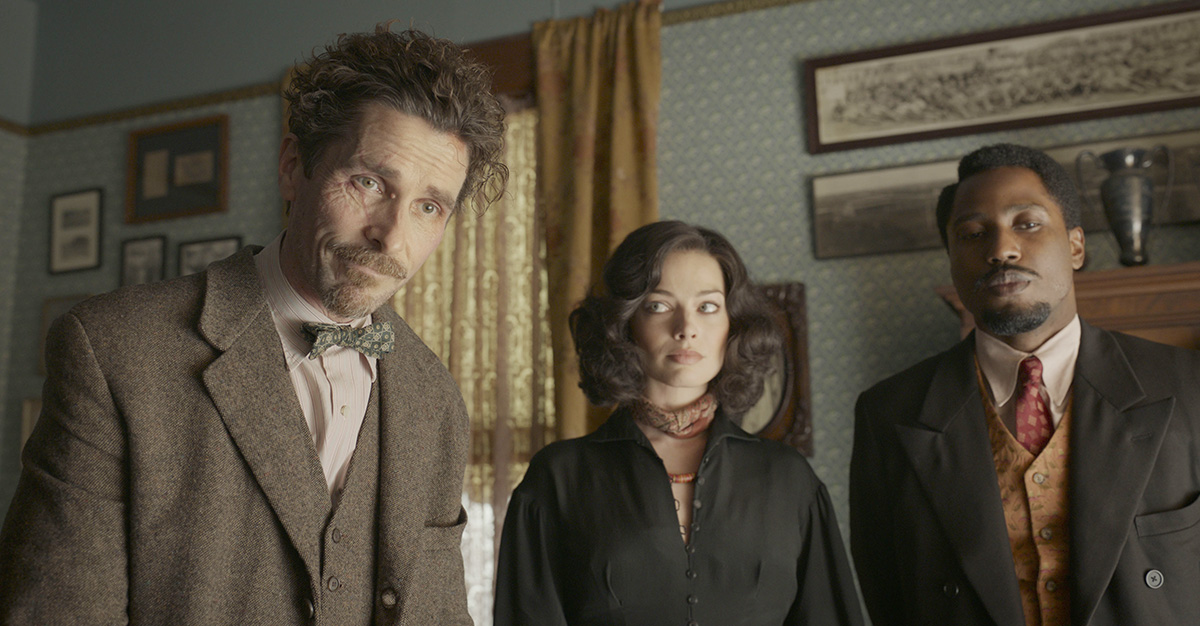
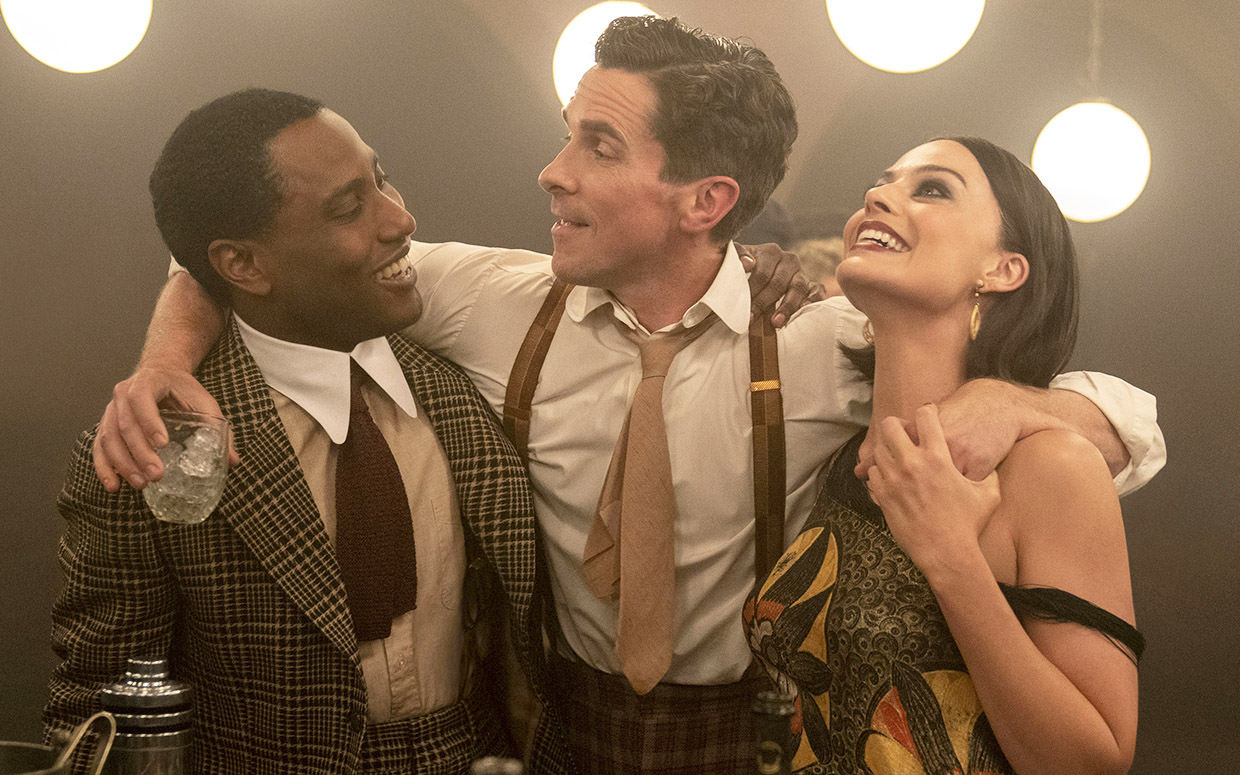
Christian Bale, Margot Robbie & John David Washington anchor the all-star cast of ‘Amsterdam.’
Amsterdam Starring Christian Bale, Margot Robbie & John David Washington Directed by David O. Russell Rated R
In theaters Friday, Oct. 7
A trio of friends from the waning days of World War I forms the hub of this freewheeling screwball yarn of camaraderie, conspiracy, art, beauty and making love, not war.
Director David O. Russell, who also wrote and produced the film, corrals an all-star cast for his quirky caper comedy, which unspools in 1933 as a pair of World War I veterans and a wealthy socialite artist find themselves drawn into a murder mystery, one possibly connected to a deeper, nefarious political plot.
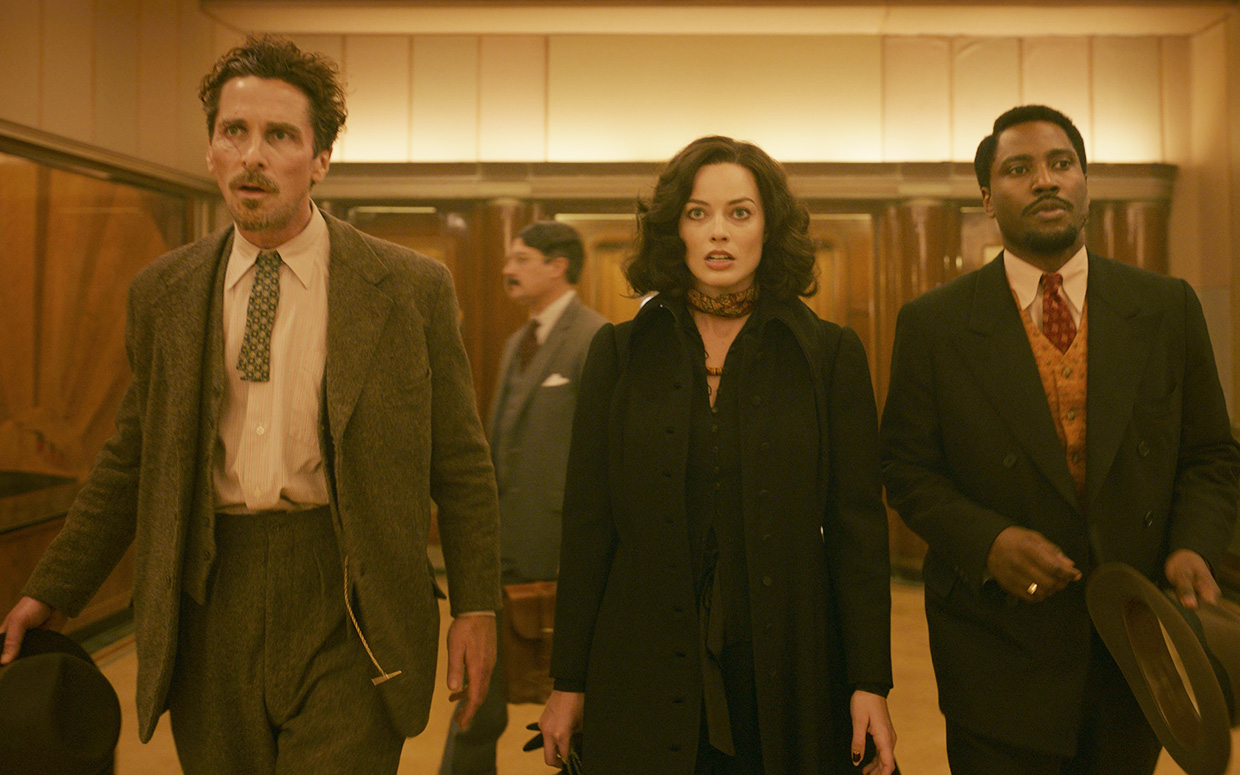
Christian Bale is Burt Berendsen, a physician who served on the battlefields of World War I, now treating the pain and reconstructive needs of other veterans while planning a big WWI reunion of all the servicemen who returned to New York City. Things begin to get messy and mayhem-ic when he and his lawyer pal, Harold Woodsman (John David Washington), are asked to investigate the suspicious death of their highly decorated former commanding officer (Ed Bagley Jr.).
Then they get blamed for the murder—well, actually, for another murder. How can they clear their names?
Soon enough, they are reconnected with Valerie Voze (Margot Robbie), whom they met some 15 years earlier when Burt and Harold were both recovering in a Belgium war hospital where Valerie was working as a Red Cross nurse. The two GIs were awestruck to find out their gorgeous Florence Nightingale had an unusual hobby, using all the bloody shrapnel and bone fragments taken from their battered flesh to make pieces of art, transforming their brokenness into strangely beautiful curios.
Then the three of them ventured together to Amsterdam, on a mission to get Burt a glass eye to replace the one he’d lost in combat. The capital city of the Netherlands was a blissful, dream-like high, a respite of peace after war, one they didn’t want to end.
You probably won’t see another movie this year with so many stars twinkling, twirling, popping and pinging around each other. There’s musical superstar Taylor Swift, as the hyper-paranoid daughter of the deceased officer. Zoe Saldana plays a coroner who opens Burt’s eyes (actually, his eye) to true love. Rami Malek is a suave, wealthy businessman whose huffy-stuffy upper-crust wife (Anya Taylor-Joy) becomes positively mushy at the thought of meeting a famous military hero (Robert De Niro). And hey—there’s Chris Rock, Mike Myers and Michael Shannon!
Rami Malek
With a leading character who has only one real eye and a fake eyeball, we’re reminded that looks—what we see and choose to see—can be deceiving. We’re prompted to look carefully at people and things, to discern who’s who, who’s what and what’s really going on.
Viewers will see, when the film opens and then after it ends, that what’s going on in this lively, light-footed lark is based (somewhat) on something very serious—namely, a dangerous rise of fascism after World War I, which eventually seeded the horrors of Nazi Germany, the Holocaust and another world war. On that level, Amsterdam is a cautionary tale about extremists and anarchists looking to overthrow the government and subvert America’s democratic process—“patriots” who would sabotage the election process to install their own dictator-like leader. You only need one eye to see the contemporary parallels with today’s political turmoil.
Director Russell love star-packing his movies, including American Hustle, Silver Linings Playbook and Joy. This one reunites him with a couple of his favorite actors, Bale (who also appeared in American Hustle and The Fighter) and De Niro (also in Hustle, plus Playbook and Joy). Both screen veterans provide eccentric anchors for the colorful tale as it spins and weaves its rich tapestry of parasitic cuckoo birds, Aryan supremacy, Black history, American fascists, eugenics, high-ranking corruption and fat-cat industrialists, drawing them all into its dark-comedy swirl. It’s Robbie, however, who becomes the story’s heart-and-soul centerpiece, with her character reminding us that we’re all damaged in some way, everyone is hurting inside or out, and kindness, not hate, is the balm for our wounds, our scars and our brokenness.
At one point, she, Burt and Harold perform a French song, a little ditty that a puzzled listener has troubling following. “It’s not supposed to make sense,” Valerie says. “We just made it up.”
This mostly made-up period frolic has a kernel of harsh historical truth at the center of its merrily crowded, retro-rollicking tale of friendship, bonds that last a lifetime and places in the heart—not to mention extinct birds, body parts as reappropriated art, and an ensemble of endearing oddballs. It’s a lot, but it’s also a lot of frisky fun.
Elizabeth Banks & Sigourney Weaver ignite a timely pro-choice tale
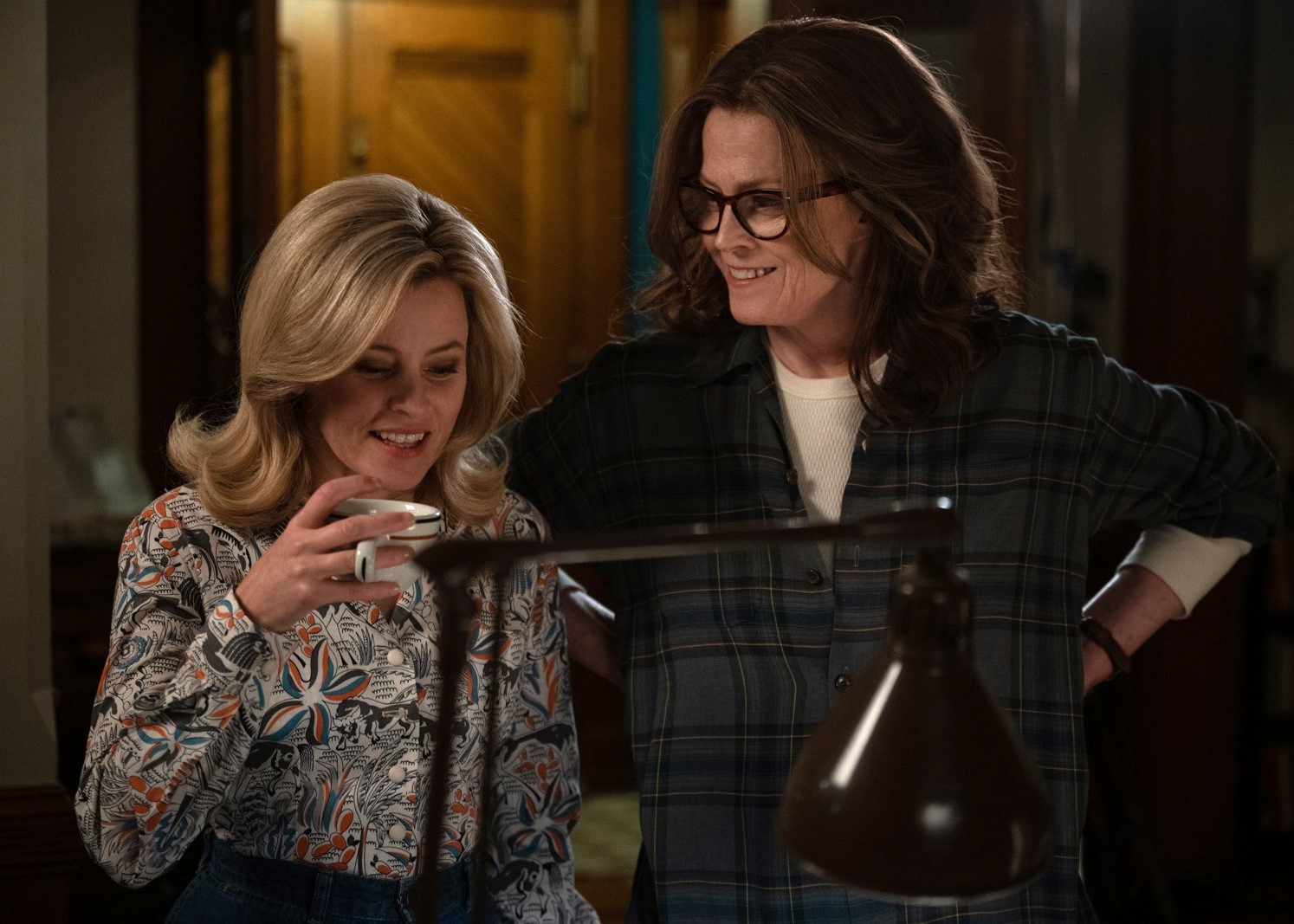
Elizabeth Banks fights for women’s rights in Call Jane.
Call Jane Starring Elizabeth Banks & Sigourney Weaver Directed by Phyllis Nagy Rated R
See it in theaters Oct. 28, 2022
With abortion rights rolled back earlier this year by the U.S. Supreme Court’s reversal of the landmark legislation Roe v. Wade, the timing is perfect for this movie about a group of female activists who made it possible in the 1960s for women to safely terminate their pregnancies during a pre-Roe time when abortion was outlawed as a criminal act.
The film, the directorial debut of Phyllis Nagy (who received an Oscar nomination for her screenplay for the critically praised Carol in 2015), benefits greatly from the presence of two top-tier actors, Elizabeth Banks and Sigourney Weaver. They’re a dynamic duo whose interplay generates the sparks and the sizzle for the depiction of the proto-pro-choice organization known as the Janes, an underground Chicago collective run by women, for women.
Banks, whose impressive resume also includes directing and producing, again shows her versatility and comfort in any kind of genre or format, be it lite and fluffy or heavy and hefty—from the ribald comedy of Movie 43, Wet Hot American Summer and The Happytime Murders to the YA dystopias of The Hunger Games, playing Beach Boy Brian Wilson’s romantic interest in Love & Mercy or slipping into her recurring roles on TV’s Modern Family and Mrs. America. Here she stars as Joy, a suburban homemaker who becomes involved with the Janes after finding out her pregnancy has life-threatening complications. It could literally kill her to deliver another baby.
Costars Elizabeth Banks & Sigourney Weaver
Weaver, known to legions of moviegoers for her roles in the Alien, Avatar and Ghostbusters franchises, plays Virginia, the firebrand figurehead of the collective, who welcomes Joy as a client, then ushers her into deeper involvement with the group. Eventually, Joy is assisting the clinic’s cocky, somewhat creepy “doctor” (Cory Michael Smith, who played the Riddler on the Fox TV series Gotham) in the procedure room. Soon she’s performing the abortions herself.
Women all over Chicago come to know that when they are unable to get what they need anywhere else, they can “call Jane.”
Because abortion can put you in jail, the Janes operate as back-alley subversives, paying local mobsters for a place to work and for protection from police raids. Joy keeps her activities with the Janes a secret from her lawyer husband (Chris Messina), their teenage daughter (Grace Edwards) and her widowed next-door neighbor (Kate Mara). All that time she’s gone from the house? Joy says she’s taking an art class.
But what she’s doing—and hiding—becomes pitch-perfect clear when an undercover cop (John Magaro, from the movies First Cow, The Many Saints of Newark, The Big Short and Not Fade Away, and also in Carol) shows up at her home to ask a few questions.
Wunmi Mosaku might look familiar; the Nigerian actor has been featured in roles on TV’s Lovecraft Country, Loki, Temple and Luther. She plays the Janes’ only member “of color,” who pushes the group toward taking in more women who cannot afford to pay the steep procedure fees—and who often happen to be Black.
And mostly hidden under that nun smock, as Sister Mike, is Aida Turtoro, who played Tony’s sister, Janice, on all seven seasons of The Sopranos.
The movie is a tidy, trim, modest little tale about a very messy, moving-and-shaking time, back in 1968. Streets were roiling with Vietnam war protestors, women’s lib was gaining traction, the Black Panthers were on the move, and a room full of cigarette-smoking doctors could smugly dismiss a pregnant woman by telling her that her unborn baby’s life is more precious than her own, forcing her to find someone else—or some other way—to end her pregnancy. In Call Jane, we meet some of those women and hear about many more: rape victims, pregnant young teens, sexually harassed office workers coerced into sex with their bosses.
Thank goodness we’ve moved on from those dark, repressive days…right?
This cautionary ‘60s snapshot ends on a hopeful woman-power coda, where Virginia, Joy and the other Janes celebrate the 1972 Supreme Court decision that finally made abortion legal. But they note that there is still more work to do, other issues to tackle, other mountains to climb.
And sometimes, as we know, some mountains must be climbed again.
Call Jane is a pointed reminder that, like the old saying goes, women’s work is never done—alas.
Frisky murder-mystery ensemble comedy ‘Amsterdam’ has a serious undertone of truth
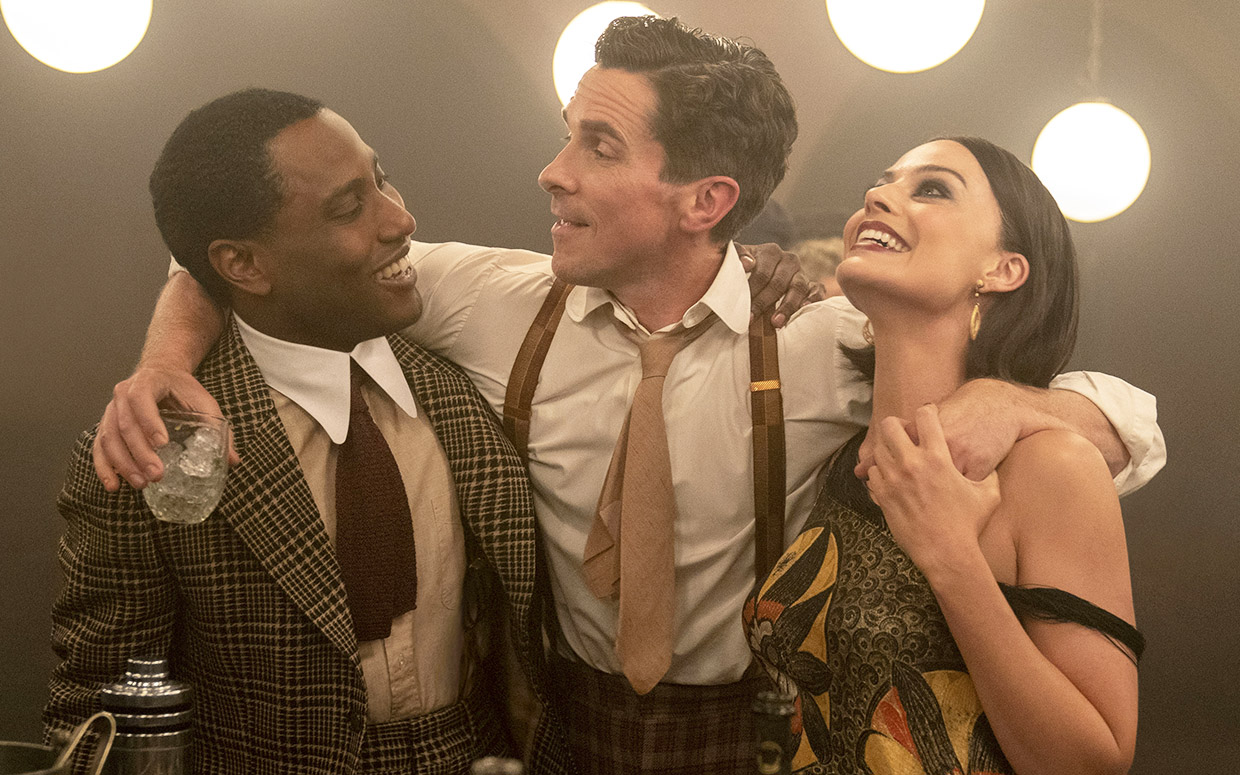
Christian Bale, Margot Robbie and John David Washington star in ‘Amsterdam’
Amsterdam Starring Christian Bale, Margot Robbie & John David Washington Directed by David O. Russell Rated R
In theaters Friday, Oct. 7
A trio of friends from the waning days of World War I forms the hub of this freewheeling screwball yarn of camaraderie, conspiracy, art, beauty and making love, not war.
Director David O. Russell, who also wrote and produced the film, corrals an all-star cast for his quirky caper comedy, which unspools in 1933 as a pair of World War I veterans and a wealthy socialite artist find themselves drawn into a murder mystery, one possibly connected to a deeper, nefarious political plot.
Christian Bale is Burt Berendsen, a physician who served on the battlefields of World War I, now treating the pain and reconstructive needs of other veterans while planning a big WWI reunion of all the servicemen who returned to New York City. Things begin to get messy and mayhem-ic when he and his lawyer pal, Harold Woodsman (John David Washington), are asked to investigate the suspicious death of their highly decorated former commanding officer (Ed Bagley Jr.).
Then they get blamed for the murder—well, actually, for another murder. How can they clear their names?
Soon enough, they are reconnected with Valerie Voze (Margot Robbie), whom they met some 15 years earlier when Burt and Harold were both recovering in a Belgium war hospital where Valerie was working as a Red Cross nurse. The two GIs were awestruck to find out their gorgeous Florence Nightingale had an unusual hobby, using all the bloody shrapnel and bone fragments taken from their battered flesh to make pieces of art, transforming their brokenness into strangely beautiful curios.
Then the three of them ventured together to Amsterdam, on a mission to get Burt a glass eye to replace the one he’d lost in combat. The capital city of the Netherlands was a blissful, dream-like high, a respite of peace after war, one they didn’t want to end.
Rami Malek and Anya Taylor-Joy (with Margot Robbie) are part of the all-star cast.
You probably won’t see another movie this year with so many stars twinkling, twirling, popping and pinging around each other. There’s musical superstar Taylor Swift, as the hyper-paranoid daughter of the deceased officer. Zoe Saldana plays a coroner who opens Burt’s eyes (actually, his eye) to true love. Rami Malek is a suave, wealthy businessman whose huffy-stuffy upper-crust wife (Anya Taylor-Joy) becomes positively mushy at the thought of meeting a famous military hero (Robert De Niro). And hey—there’s Chris Rock, Mike Myers and Michael Shannon!
With a leading character who has only one real eye and a fake eyeball, we’re reminded that looks—what we see and choose to see—can be deceiving. We’re prompted to look carefully at people and things, to discern who’s who, who’s what and what’s really going on.
Viewers will see, when the film opens and then after it ends, that what’s going on in this lively, light-footed lark is based (somewhat) on something very serious—namely, a dangerous rise of fascism after World War I, which eventually seeded the horrors of Nazi Germany, the Holocaust and another world war. On that level, Amsterdam is a cautionary tale about extremists and anarchists looking to overthrow the government and subvert America’s democratic process—“patriots” who would sabotage the election process to install their own dictator-like leader. You only need one eye to see the contemporary parallels with today’s political turmoil.
Director Russell loves star-packing his movies, including American Hustle, Silver Linings Playbook and Joy. This one reunites him with a couple of his favorite actors, Bale (who also appeared in American Hustle and The Fighter) and De Niro (also in Hustle, plus Playbook and Joy). Both screen veterans provide eccentric anchors for the colorful tale as it spins and weaves its rich tapestry of parasitic cuckoo birds, Aryan supremacy, Black history, American fascists, eugenics, high-ranking corruption and fat-cat industrialists, drawing them all into its dark-comedy swirl. It’s Robbie, however, who becomes the story’s heart-and-soul centerpiece, with her character reminding us that we’re all damaged in some way, everyone is hurting inside or out, and kindness, not hate, is the balm for our wounds, our scars and our brokenness.
At one point, she, Burt and Harold perform a French song, a little ditty that a puzzled listener has troubling following. “It’s not supposed to make sense,” Valerie says. “We just made it up.”
This mostly made-up period frolic has a kernel of harsh historical truth at the center of its merrily crowded, retro-rollicking tale of friendship, bonds that last a lifetime and places in the heart—not to mention extinct birds, body parts as reappropriated art, and an ensemble of endearing oddballs. It’s a lot, but it’s also a lot of frisky fun.
Zac Effron brings pop-a-top cheer to Vietnam troops
The Greatest Beer Run Ever Starring Zac Efron Directed by Peter Farrelly Rated R
In select theaters and on Apple TV+ on Sept. 30
There’ve been a lot of movies about the war in Vietnam, and some of them have rightfully become classics: Apocalypse Now, Full Metal Jacket, Born on the Fourth of July, Casualties of War, The Deer Hunter, Platoon. They all plumbed the intense human drama, the moral and ethical complications and the horrific realities of a prolonged conflict that cost nearly 60,000 American lives, plus with more than 3 million civilians and soldiers in North and South Vietnam.
There’s that league of masterpieces, then there’s The Greatest Beer Run ever. In beer terms, this movie’s a bit frothy and lite.
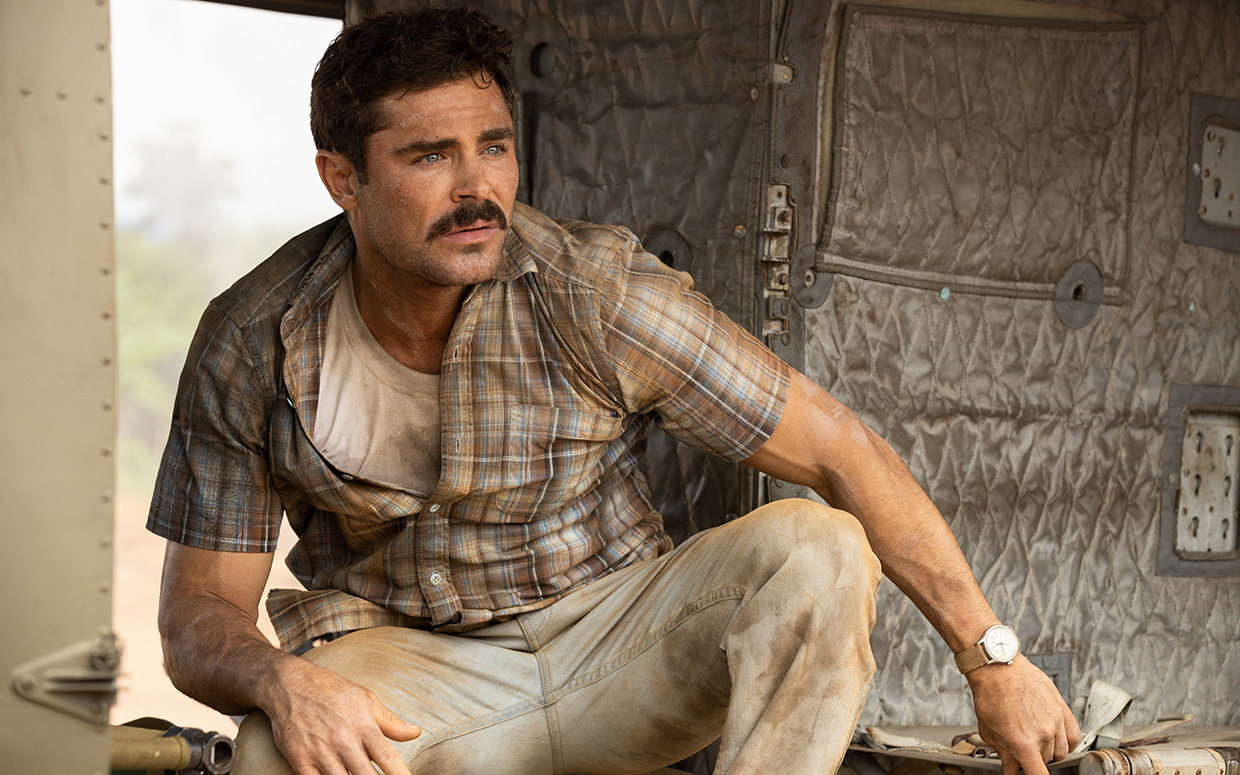
Zac Efron stars as “Chickie” Donohoe, a hawkish, mouthy New Yorker who decides to deliver some back-home barroom cheer to the neighborhood lads serving and fighting in Southeast Asia. He says he’s going there to hand-deliver them cans of Pabst Blue Ribbon from the local pub.
It’s 1967, and Chickie is a staunch supporter of the U.S. involvement in the war; he thinks protesters are “Commie bastards” and scumbags, undermining the heroic efforts of G.I.s to spread the American way. He thinks TV shouldn’t report “bad news,” only the great things our guys are doing. He’s a good-time-Charlle boozehound who freeloads off his parents, doesn’t follow through on anything and has made it so far on his cocky charms.
Even though his friends and his family tell him his idea is foolish, stupid, colossally dangerous and likely impossible, Chickie sees his beer run as his way of supporting the troops. “Everyone’s doin’ something,” he muses. “I’m doin’ nothing.”
So off he goes, with a bag full of brewskies.
Director and writer Peter Farrelly is best known for the raunchy comedies he made with his filmmaking brother, Bobby, including Dumb and Dumber, Shallow Hal, There’s Something About Mary, The Heartbreak Kid and a 2012 contemporary twist on The Three Stooges. He branched out in 2018 into more “serious” fare with The Green Book, which brought him a trio of Oscars.
Like Green Book, which was based on a true story—a Black classical pianist and his streetwise Italian driver find common ground on a trip across the Deep South in the early 1960s—Beer Run is also based on real retro events as detailed by the real-life Chickie in a 2020 book.
Zac Effron stars as Chickie Donoho in this sudsy saga based on a true story.
Efron, the former High School Musical Disney star, went on to big-screen roles in The Greatest Showman, the movie remakes of TV’s Baywatch, Steven King’s Firestarter and the musical Hairspray, and he played notorious serial killer Ted Bundy in Netflix’s Extremely Wicked, Shockingly Evil and Vile. He gives Chickie a kind a contagious, dunderheaded likeability; some of that might be mojo of the moustache he appears to have borrowed from Tom Selleck or Burt Reynolds.
It’s a somewhat whimsical, fanciful tale, about a young, preppy-looking American guy who hops off a U.S. Merchant Marine freighter into the hot zone with a sack of suds. And Farrelly leans on his light-touch comedy chops for running gags, bro banter, punchlines and scenes that point out the tall-tale absurdity of it all. But the movie’s tone is all over the place; the comedy often clashes with the raw, visceral realities of war, and the watered-down production values feel like hammy Hollywood hokum. There’s little “movie magic” to plunge viewers in the mud, blood and teeming turmoil of a country ripped apart by war.
But there’s plenty of magic in that duffel that Chickie dutifully totes around everywhere he goes. At one point, a soldier asks him how many beers are in there. “A bunch,” he replies. Indeed—it seems to be a bottomless pit of boozy sorcery, an endless well of pop-top refreshment. Chickie hands out Pabsts all over Vietnam, on the streets, in barracks, on the battlefield, even tossing them from a helicopter. It’s like Felix the Cat’s Bag of Tricks, a cartoonish stunt. Maybe Jesus had a Chickie bag full of loaves and fishes at the Sermon on the Mount.
The movie brings up issues of relevance, then and now—about lying government officials, the role and responsibilities of the media, a nation divided and Vietnam’s caustic toll. Chickie’s eyes are gradually opened to what’s really going on, watching in shock as a prisoner of war is tossed from a military chopper, or seeing first-hand the dirty work keeping the war machine humming. He comes to realize that, hey, maybe sending American troops to get involved in a civil conflict halfway across the globe, under the ruse of “fighting Communism,” isn’t such a swell idea. His bag of beer doesn’t change anything in Vietnam, or about Vietnam. It does, however, wash away Chickie’s delusions.
Russell Crowe plays a war photographer.
A chorus of cardboard-thin supporting characters pops in and out; this is Chickie’s movie, based on Chickie’s book, based on something Chickie did 50-some years ago, and everyone else is just along to shore up his chummy chronicle. Some two decades removed from the Roman-arena battlefield of Gladiator, Russell Crowe plays a gruff, weary war photographer. His size is, ahem, formidable, but his duties are small, just like the iconic Bill Murray’s portrayal of the flag-waving WWII-veteran bartender back at Chickie’s favorite Manhattan watering hole.
Don’t look for The Greatest Beer Run Ever to get any champagne toasts at next year’s Oscars. It’s a tidy little diversion, an over-simplified story about a shallow fellow who finally follows through on something and learns something else—something many Americans already knew—in the process. It didn’t end the war, but Chickie’s beer run changed his way of thinking.
It’s no Apocalypse Now or Full Metal Jacket, but it has just enough uplifting Green Book DNA to make this sudsy, somewhat superficial tale go down easy, like a foxhole quaff from one of the lukewarm ales rattling around in Chickie’s duffel bag.
Mia Goth stars in director Ti West’s stylish slasher-flick prequel
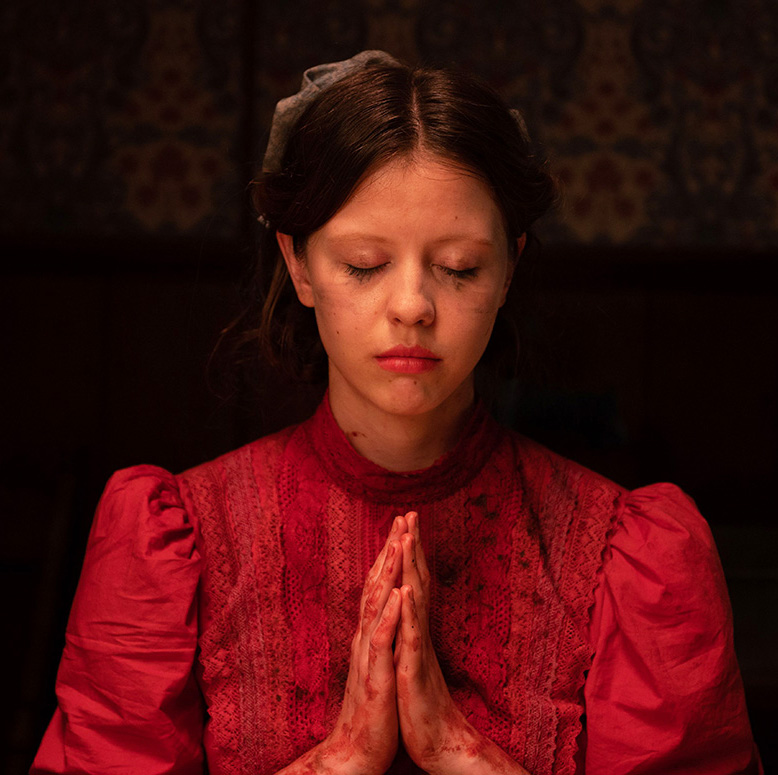
Mia Goth is Pearl, a homicidal maniac in the making.
Pearl Starring Mia Goth, David Corenswet & Tandi Wright Directed by Ti West Rated R
In theaters Friday, Sept. 16
Wondering how an innocent farmer’s daughter becomes a raging homicidal maniac? Well, then, Pearl’s your girl.
Director Ti West’s carnage-packed, candy-colored creepshow is a prequel to X, his horror hit from earlier this year, which featured the character in an advanced age in the late 1970s, lusting for her youth and lost sexuality while preying on an amateur film crew secretly making a dirty movie out behind her barn. Former model-turned-actress Mia Goth played double roles in X, and she now returns as the younger Pearl.
For anyone who saw X (and that’s probably not a lot of you), Pearl fills in the early years and reveals the twisted roots of the young woman who’ll eventually become lethally handy with an axe and a pitchfork. (And a pet alligator.) If you didn’t see X, well, just sit back and watch the lurid nightmare unfold.
Set in 1918, it’s a slasher-flick homage to lavish, big-screen Technicolor spectacles of yesteryear, with overt winks to The Wizard of Oz, rah-rah musicals, war movies and classic Hitchcock. There’s even a nod to the modern world, as characters mask up a la COVID to prevent the spread of the Spanish flu, fearful of bringing the invisible invader into their homes.
Pearl is a war bride whose husband is away fighting “over there,” while she stays at home with her unyielding, German-immigrant mother (Tandi Wright) and invalid, wheelchair-bound father (Matthew Sunderland). Something’s not quite right with Pearl, and she knows it. “I’m worried there may be something really wrong with me,” she tells her sunny sister-in-law, Misty (Emma Jenkins-Purro). “I’m not a good person.”
A cooked pig crawling with maggots becomes a metaphor for the rot that eventually eats away the “good,” and the normal, inside of Pearl.
So, what turns her into a psycho? Maybe it’s being cooped up and confined, like the cow and the goat in their pens, inside a quarantined house with an overbearing mother and an unresponsive father. Maybe it’s because she feels no one ever hears her prayers, and the religious zealotry she’s been force-fed tastes bitter and empty. Maybe it’s her conflicted, confused feelings of sexual repression, and her marriage to a husband she knows she may never see again. Perhaps it’s her boiling-over frustration at being stuck in the middle of an American nowhere (actually, the movie was filmed in New Zealand), with dashed hopes of ever getting out and experiencing the bigger world, in Hollywood or perhaps even Paris.
And then there’s the obsessive tug of Pearl’s dreams, her fantasy of becoming a “follies” girl like the ones in the newsreels she sees at the local picture show. At an audition for a touring dancing troupe, she steps onstage, onto the “X” that’s been taped on the floor to show her where to stand—a mark that sets her identity, secures her place in the world, and seals her destiny of destruction. (It also shows that the anxieties—and crushed hopes—of contestants on contemporary TV talent completions, like The X Factor, America’s Got Talent or American Idol, certainly aren’t anything new. But will any of those wannabe’s become psychos? Guess we’ll have to wait and see.)
A bohemian movie projectionist takes Pearl for a ride.
David Corenswet plays the dashing movie-theater projectionist who flatters Pearl, telling her she can be anything she wants to be, go anywhere she wants to go. He also introduces her to his bed, and to pornography, stirring the tangled, matted mess of psychological, pathological madness in her head. (And suggesting that overheated fantasies of being up on the silver screen or the stage, becoming famous, can really mess up impressionable young minds.) When Pearl stops her bicycle to dry-hump a straw man in a cornfield, it’s a crazily carnal twist on Dorothy’s meeting with the scarecrow en route to Oz. Only there’s no Yellow Brick Road on Pearl’s highway to hell.
Goth is a British actress who had a notable supporting role in Emma (2020)—and got her movie start in the notorious two-part Nymphomaniac (2013), an erotic opus about promiscuous sexuality. In a bravura, gutsy performance, she pulls off the trick of making us feel both sympathy and revulsion for Pearl, whose severe emotional damage creates monstrously scary impulses. Is she crazy? Oh, yeah. Is she unhinged enough to lash out at anyone, or anything, that gets in the way of her dreams? For sure. Even farm animals—and prenatal alligators—aren’t safe.
Pearl shows her ailing father her swamp pet…at dangerously close range.
Yes, it’s violent. It’s bloody. It’s meant to be disturbing. But this super-stylized shocker has a wild, freakishly compelling story—about how mental illness and instability can turn almost anyone into a monster, in 1918 or today. And it’s all packaged with a stylish cinematic flourish and flair, and a splatter-y caution that echoes ancient folktales, about children longing to “leave the farm” for the big city.
“Seems there’s something missing in me that the rest of the world has,” Pearl says at one point. “All I really wanted is to be loved.”
Something may be missing for Pearl, but Goth has certainly found it, in a horror franchise that now plans its third chapter, MaXXXine, about her character from X as the sole survivor of Pearl’s rampage in that film. (Stay through the credits to see the teaser.)
Sam Rockwell & Saorise Ronan play mismatched cops in a multi-level murder mystery
Sam Rockwell and Saoirse Ronan star in ‘See How They Run.’
See How They Run Starring Sam Rockwell, Saoirse Ronan & Adrien Brody Directed by Tom George PG-13
In theaters Friday, Sept. 16
Who’s up for a whodunnit?
A lot of people, apparently, given the wide popularity of TV police procedurals, hit shows like Only Murders in the Building, movies (Knives Out, Murder on the Orient Express and Death on the Nile) and the evergreen murder-mystery conundrums of author Agatha Christie.
In this cleverly comedic clue caper set in the early 1950s, a London theatrical production—of a real Agatha Christie murder mystery—goes off the rails when an actual murder (Eeeeek!) occurs backstage. Soon, a jaded Scotland Yard police inspector (Sam Rockwell) and an overzealous young constable trainee (Saoirse Ronan) arrive on the scene to investigate.
And then, as they say, the plot thickens, into a zesty swirl of possible suspects, likely motives and dizzying distractions, as the two coppers dig into the dish-y high-drama dilemma. “Don’t jump to conclusions,” Rockwell’s experienced sleuth cautions his greenhorn partner, who’s eager to peg almost everything as a case-closing revelation—and nearly everyone as a culprit.
British director Tom George, who honed his craft with short films and BBC comedy, makes his solid feature film debut with the support of a fine ensemble cast and an affection for the gloriously retro grit and glitz of London’s yesteryear theatrical world. He also shows a witty grasp of turning the time-honored traditions of murder mysteries inside out, then back onto themselves, into something fresh and lively and frequently surprising.
Ruth WIlson, Reece Shearsmith, Harris Dickinson, Sian Clifford, Pearl Chanda, Jacob Fortune Lloyd, David Oyelowo and Ania Marson—there’s no shortage of suspects!
Rockwell, a versatile American actor with more than 110 movie and TV roles, adds a new character to his eclectic resume, which includes playing a stir-crazy astronaut (Moon), a superstar choreographer (Fosse/Verdon), President George W. Bush (Vice), a Nazi officer (JoJo Rabbit) and a groovy summertime guru (The Way Way Back). Here, he humanizes his role as the wry Scotland Yard veteran—limping along with a battlefield injury from World War II—with a rumpled, crumpled veneer of world-weary experience anchored to sobering physical and psychological wounds.
Ronan probably won’t net another Oscar nomination, to go along with her previous four, for Atonement, Brooklyn, Lady Bird and Little Women. But she serves up a quaint, likeable, restrained turn that recalls her quirky work with director Wes Anderson in The Grand Budapest Hotel and The French Dispatch. Like Rockwell, she subtly adds dimensionality to a role that could have been significantly thinner and more comedically drawn; Stocker, a war widow whose star-struck obsession with show biz is often good for a pun, is also an avatar of 1950s proto-feminism, a working-class mom determined to do her job and advance in it.
Adrien Brody (who won an Oscar for The Pianist and appeared alongside Ronan in The French Dispatch) plays an American director in London to change whatever he must to refashion the West End stage sensation as a Hollywood movie hit—much to the chagrin of the outraged screenwriter (David Oyelowo), who’d rather adhere to traditional theatrical elements. There’s the film-to-be’s producer (Reece Shearsmith), sneaking around to hide his affair with his assistant (Pippa Bennett-Warner) from his wife (Sian Clifford, who played Claire on the TV series Fleabag).
Why was the theater manager (Ruth Wilson) so anxious to sell the movie rights to the play? What makes the star of the show (Harris Dickinson) and his actress spouse (Shirley Henderson) so smug? And what’s up with the usher (Charlie Cooper)? Does it have something to do with the sandbag counterweight that bonked him on his head?
The movie revels in classic murder-mystery conventions, giving them a deliciously self-aware twist. And it’s all a charming cinematic toast to the works of Agatha Christie, whose stories and novels have been turned into nearly 40 films and numerous plays—including six staged in London during the 1950s. One of them was, in fact, The Mousetrap, which is the very play at the center of See How They Run.
On the stakeout.
Many of the character’s names are wink-wink references to other murder mysteries and actors. Director Alfred Hitchcock gets a shout-out, and so does ‘50s superstar Grace Kelly, who starred in four of Hitchcock’s films (including Rear Window, North by Northwest and Dial M for Murder) before she became Princess of Monaco. Rockwell’s Inspector Stoppard echoes the name of lauded playwright and screenwriter Tom Stoppard, whose many works included a play about—much like See How They Run—a stage production rocked by a real murder. The inspector’s protégé, Constable Stocker, shares her name with the fictional detective Lise Stocker, who appeared in the French TV series Killer by the Lake. The play’s lead actor, “Dickie” Attenborough (playing a detective investigating the crime) might just be intended as a younger version—or a reminder—of the late, great British actor and director Sir Richard Attenborough, whose long career was capped off by his recurring role as John Hammond in the Jurassic Park franchise. The producer, John Wolff, is based on a real-life Oscar-winning Hollywood filmmaker of that same name, who brought several major projects (including The African Queen and Oliver!) to the screen.
Split-screen moments convey the idea that there’s more than one way to see things—quite apt for unraveling a murder mystery, where suspects and clues can be everywhere, anything might be significant, and no detail can be overlooked. A couple of scenes make use of mirrors, “looking glasses” that reflect reversed versions of the same image. At one point, the detective actor goes “Method” and incorporates a physical characteristic of the “real” detective, Inspector Stoppard; Stoppard later mimics—mirrors—the role of the stage actor. This inventive British potboiler, a mirror of classic murder mysteries, playfully blurs the lines between art and artifice, then sends them straight into a merry-mayhem loop-de-loop.
And in the final act of this film about a play being made into a movie, Agatha Christie herself (Shirley Henderson) makes a significant appearance—and the grand dame becomes part of her own drama.
“It’s a whodunnit,” Brody’s director says early on. “You’ve seen one, you’ve seen ‘em all.” Ah, not quite—and don’t be so quick to pre-judge the clue-sniffing charms of this meta ode to murder mysteries, the stage and the screen, which shows there’s still plenty of movie mileage in smoking guns, tainted tea, cocktails, mismatched cops and guys in felt fedoras.
In other words, as Inspector Stoppard advises, don’t jump to conclusions.
Disney’s ‘Pinocchio’ dusts off the age-old tale of the puppet who wants to be real
Tom Hanks plays Geppetto in ‘Pinocchio’
Pinocchio Starring Tom Hanks, Luke Evans and the voices of Joseph Gordon-Levitt & Benjamin Evan Ainsworth Directed by Robert Zemeckis Rated PG Streaming Sept. 8 on Disney+
A classic fairy tale comes to magical life once again in this tall tale of a wooden puppet who longs to become a real boy.
Pinocchio, the little Italian marionette, has been around for quite a while—almost 250 years, in fact. His roots are in a novel published in the late 1880s by Tuscan author Carlo Gilodi, and his story “came alive” for American audiences with the beloved 1940 animated Disney film that’s still considered an unqualified House of Mouse-terpiece and a high-water mark for golden-age, hand-illustrated cinematic storytelling.
Following the vintage blueprint of the 1940 version, the new Disney version makes a few notable tweaks; some new things are added, some old things axed for this eye-catching combo platter of live performance and state-of-the-art computer animation. Pinocchio purists may flinch, but hey, the 1883 novel ends with a real downer—the little puppet is hanged and executed. So just keep that in mind; even Disney-fied, this is an existential “hero’s journey” cloaked in danger and a descent into darkness. Ol’ Walt felt the original Italian folktale was too harsh and off-putting, especially for his sunshine factory, so he scrubbed it up considerably in 1940.
Cynthia Erivo is the Blue Fairy.
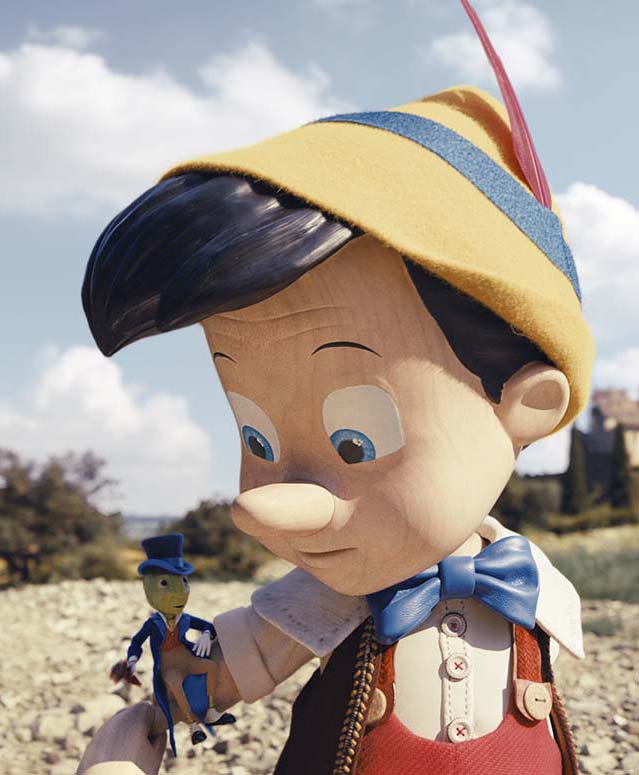
This new-nocchio features the venerable Tom Hanks as Geppetto, the aging woodcarver and clockmaker who fashions a “boy” puppet to fill the void of what is presumed to be the death of his young real-life son. After wishing upon a star—that his creation of pine could somehow come to life—his cottage is visited by the ethereal Blue Fairy (Cynthia Erivo), who grants the wish. Pinocchio (voiced by British newcomer Benjamin Evan Ainsworth) becomes sentient and animated, able to move without strings, but naïve to the ways of the world, its temptations and its treachery. So, Jiminy Cricket (voiced by Joseph-Gordon Levitt), a dapper little insect onlooker, is appointed the role of Pinocchio’s conscious, an important barometer to help him steer right instead of wrong.
The Blue Fairy tells Pinocchio that if he wants to be truly real, he must show himself to be “brave, truthful and unselfish.” And, as almost everyone knows, if he ever tells a lie, his nose will know—and grow and grow and grow.
Which, as it turns out, comes in handy.
And so begins Pinocchio’s wild adventures—kidnapped by a pair of street scallywags, a sly fox misleadingly named “Honest John” (voiced by Keegan-Michael Key) and his scraggly alley-cat cohort; sold as a novelty into puppet slavery to the greedy, bloated showman Stromboli (Italian actor Giuseppe Batson); escaping, only to find himself on Pleasure Island, where its cornucopia-carnival of anything-goes “pleasures” turn out to be only temporary.
And then Pinocchio ends up in the belly a fearsome sea creature known, appropriately enough, as Monstro.
How and this all wraps won’t be any surprise to anyone familiar with the tale, but one of Disney’s new tweaks is the ending—perhaps not as satisfying as a lot of people would wish, and that’s all I’ll divulge about that. But the story’s overtones about honesty, heroism and the importance of good behavior are very much intact. And kids: Stay in school!
Pinocchio and Jiminy Cricket
And this being Disney, in the modern enlightened age of flagrant self-promotion, you’ll even get a wink-wink, yuk-yuk reference to actor Chris Pine (who’s starred in five Disney movie projects, including Into the Woods and A Wrinkle in Time), and a cuckoo display of characters from other classic Disney films, from Snow White to Roger Rabbit and Toy Story.
Erivo, the Oscar-nominated British actress who’s played slave activist Harriet Tubman and musical legend Aretha Franklin, shines (literally) in her one scene as the Blue Fairy, a beacon of light belting out the memorable tune from Disney’s 1960 version that became a an Oscar winner—“When You Wish Upon a Star.” Another familiar song from the classic animated version is “High-Diddle-Dee-Dee (An Actor’s Life for Me),” and Pinocchio sings “I’ve Got No Strings” while he’s prancing on stage with a squad of can-can marionettes. But Jiminy Cricket is robbed of his signature song, “Give a Little Whistle,” which is a bit of a bummer.
Luke Evans—most recently starring in Hulu’s Nine Perfect Strangers—has an enhanced, singing/dancing role as the coachman, who drives kids to their fates on Pleasure Island, and Lorraine Bracco is the voice of Sofia, a helpful seagull.
Director Robert Zemeckis knows movie magic—he took us Back to the Future in two movie sequels, marooned Tom Hanks in Cast Away and gave the world Forrest Gump. His stylish new spin on Pinocchio is a dazzling display of filmmaking, a seamless integration of hyper-realistic FX and human actors. Appropriate, I’d say, for a story about a wooden boy who longs to become real.
An artful new spin on an old, old tale, it likely won’t become a new-age Disney classic—not so long as the 1940 original is around, anyway. But this solidly fanciful fable vibrantly, creatively dusts off the years from pop culture’s most famous puppet.
















 The Media Tourist