Author Archives: Neil Pond

The Bat & The Cat

Robert Pattinson Takes Wing in Epic New Batman Flick

The Batman
Starring Robert Pattinson, Zoë Kravitz, Paul Dano & Jeffrey Wright
Directed by Matt Reeves
PG-13
In theaters March 4, 2022

He’s in his 80s, but man, he’s still got it.

Batman has been around since 1939, a year after Superman made his own comic-book debut. As one of the “oldest” superheroes, he’s been continually reborn through many pop-cultural incarnations over the decades, with high-profile depictions by such stars as George Clooney, Val Kilmer, Michael Keaton, Ben Affleck and Christian Bale.

And let’s not forget Adam West, who camped it up in the 1960s TV series, which gave a lighter, brighter touch to the Dark Knight.

Now Robert Pattison puts on the iconic masked hood for this much denser, darker, much more dramatic dive into the formative days of the caped crime fighter, the alter ego of young billionaire recluse Bruce Wayne.

In The Batman, when a sadistic criminal known as the Riddler (Paul Dano) creates a reign of terror in Gotham City, Batman works to decipher the cryptic clues and puzzles left—personalized for him—at the crime scenes. The trail leads him into a deep den of corruption as he discovers the Riddler’s gruesome quest is intended to reveal a nest of dark secrets about Gotham City itself, making Bruce Wayne confront his own troubled, traumatic past as the scion of one of Gotham’s most renowned families.

The story and characters in the movie exist “outside” other Batman films. It takes place in its own world, during a week-long period beginning on a Halloween night on an unspecified contemporary timeline—sometime after Batman has already become a known entity, a mysterious secret-weapon of crime busting, but in the early days of Gotham City’s criminal elements congealing into a cast of infamous super-villains.

Here he’s a hulking clue digger dressed in intimidating, bat-like body armor—a get-up that some Gotham residents find ridiculous, especially when they call him a “freak.” It’s a bit of a throwback, in that sense, to Batman’s earliest appearance, in the line of Detective Comics that later shortened its name to simply its initials, D.C.

Dano’s murderously unhinged Riddler is the chief focus here, but there’s also a slimeball mobster, Oswald Cobblepot, known as the Penguin (Colin Ferrell, unrecognizable underneath layers of prosthetics). And could that snickering madman in a jail cell turn out to be…the Joker? (Stay tuned: Ferrell will continue his Penguin role in a spinoff series, planned next year for HBO Max.)

And the nascent Catwoman (Zoë Kravitz) is a master thief who has her own reasons for slinking around at night. She reluctantly becomes an ally with Batman when they find themselves on common criminal ground.

Andy Serkis is Alfred, Bruce Wayne’s loyal Butler, and Jeffrey Wright reprises his role as Jim Gordon, Batman’s inside guy and advocate in the Gotham police department. John Turturro adds to his long list of supporting roles with a juicy part as a crime boss with ties to Wayne’s late father.  

John Turturro

Director Matt Reeves—whose previous films include two Planet of the Apes, a pair of Cloverfield horror flicks and the young-vampire drama Let Me In—certainly knows his stuff, masterfully creating a riveting, character-driven tale that sheds new light into some of Batman’s darkest corners. It’s punctuated with explosive action; the walloping fight scenes are combustive ballets of brutal hand-to-hand combat, often accented with flashes of gunfire. A nighttime high-speed car-chase scene, on a rain-soaked freeway, is a revved-up knockout.

And this take on the Dark Knight is, indeed, dark. The movie takes place mostly at night and in the shadows, with a subtext of inner turmoil and horrific, Saw-like malevolence. Much of the time, rain is pouring. The potent, super-charged atmosphere of darkness, dread and doom—and the film’s murky plunge into Bruce Wayne’s psyche—feels like modernist, Baroque Bat-noir.

The plot centers on “Renewal,” a plan for the restoration of Gotham City. The movie is both a renewal and a restoration itself, a bracing new super-serious spin on a character who has become a staple—and sometimes a punchline—in popular culture across nearly every kind of media. And it’s not by accident that the film opens to an operatic performance of Schubert’s “Ava Maria,” a tune that also recurs throughout the film. The lyrics of the beloved classic aria are a prayer, in Latin, asking for deliverance for sinners in “the hour of our death.” The soaring, heavenly sound, overlaid on the movie’s hell-on-Earth storyline about the pursuit of wrong-righting change in a city facing an apocalypse of crime, sets the tone for The Batman—a mighty, moody, majestic exploration of the coexistence of evil and good in the world, and the thin, porous membrane of a line that often separates them.

On a level of sheer enjoyment, Bat-fans will enjoy the depictions of Batman’s “bat cave” lab and lair, a prototype of the jet-powered Batmobile, gizmos like contact-lens cameras and a Bat-suit that lets Batman literally soar, well, like a bat.

Pattison’s Bruce Way is tortured (and scarred) by his past.

Pattinson, first known for his earlier role in the Twilight franchise, has worked steadily in the past decade in mostly indie films (The Lighthouse, Good Time, Maps of the Stars), showing the quiet brooding intensity he can bring to an array of diverse characters. The Batman gives him powerful new movie wings as a hyper-focused, obsessively driven avenging angel on a mission to bring down the hammer of justice on everyone from sociopathic career criminals to dirty cops; he’s not afraid to break a few bones, but he’s staunchly against killing, and against guns.

“Who are you?” asks a ghoulish-looking member of a group of thugs, when Batman interrupts their assault of a hapless subway passenger. “I’m vengeance,” Pattinson hisses, before zapping him senseless with a jolt of electricity. A starring role in the sci-fi mind-bender Tenet notwithstanding, this epic (nearly three-hour) new chapter in the evolution of the superhero is a new milestone for Pattinson. It ranks among the best of all Batman movies, and truly marks his entry into the big-ticket, movie mainstream.
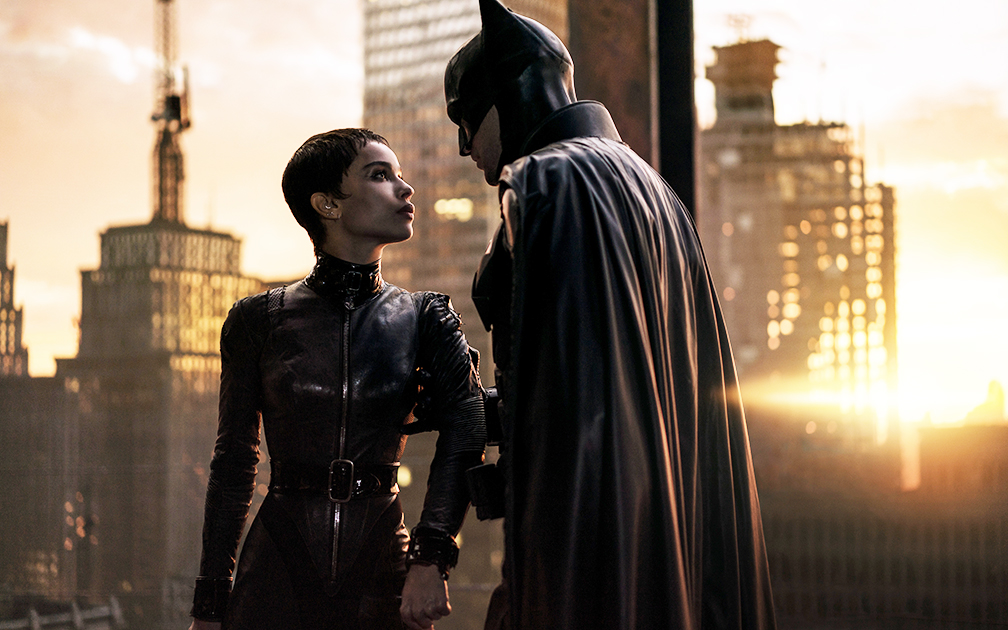
And one of the film’s true surprises is the powerful backstory of Selena Kyle, who becomes Catwoman. Kravitz first got attention in the Divergent movie series before progressing into roles in HBO’s Little Big Lies and Hulu’s High Fidelity, among dozens of other parts. (She even voiced Catwoman in the computer-animated Lego Batman Movie.) Here she’s much more than a side character; she’s an integral part of the story, and the movie even hints at a deeper connection between Catwoman and Batman, especially in a rooftop, sunset scene when she longs to find out what, and who, is underneath the hooded black mask.

She asks him if he’s hiding something, like horrible scars.  

The Batman has scars, all right—and so does she—from the emotional and psychological wounds that have left marks on their worldviews, and their souls. Turns out nearly everyone has scars, even the villains they pursue.

As Batman and Catwoman find their destinies entwined as their paths converge on their scars, and the movie finds its heart, its emotional center, and its own soul.

“The Bat and the Cat,” she tells him. “It’s got a nice ring.”

Indeed, it does. For longtime fans of the franchise, this is the Bat-movie you’ve been waiting for, a stimulating smash of crowd-pleasing blockbuster to begin the new year.

Yes, the Bat and the Cat—for cinema fans of the Caped Crusader, that’s where it’s at.
Run Through The Jungle

Sandra Bullock and Channing Tatum find their rom-com mojo in this fun, feisty romp

The Lost City
Starring Sandra Bullock and Channing Tatum
Directed by Aaron & Adam Nee
PG-13
In theaters March 25, 2022

A languishing romance novelist and her hunky male model find themselves in a real-life rumble in the jungle in this breezy, big-budget rom-com with a pair of Hollywood’s most likeable stars.

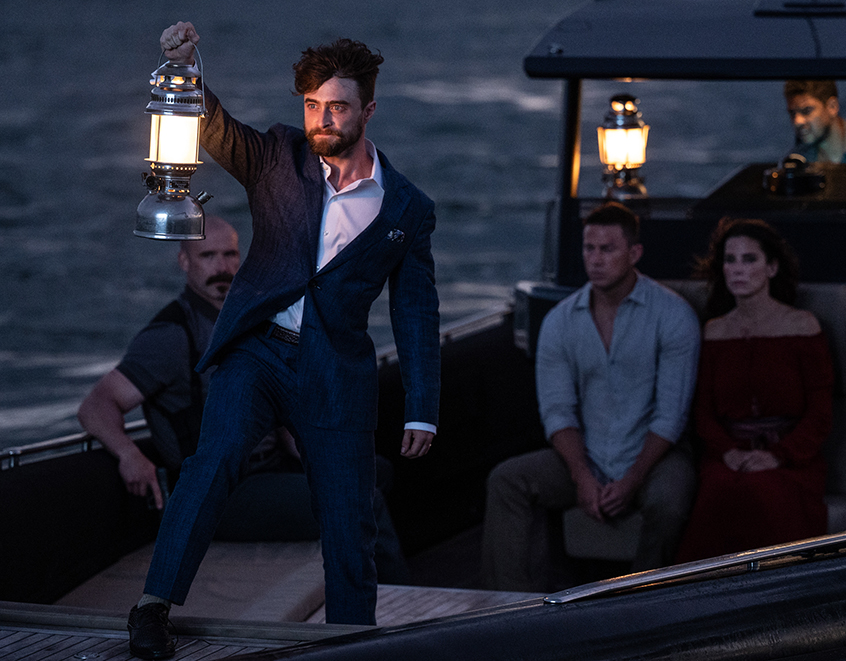
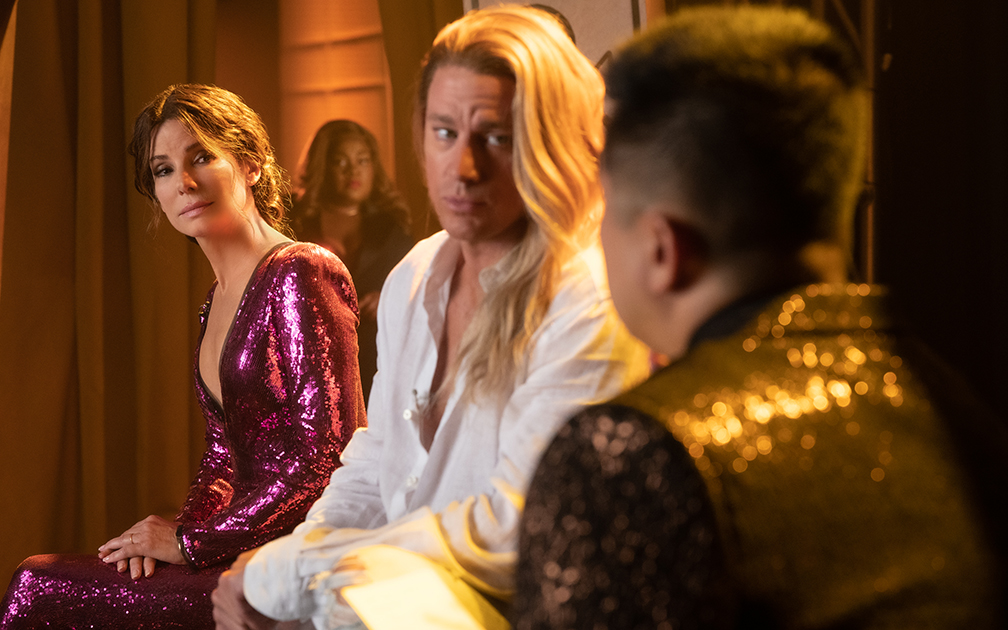
Sandra Bullock—once crowned by the media as “America’s Sweetheart”—plays Loretta Sage, the author of a string of frothy imaginative adventures set in steamy, dreamy exotic locales. At the onset of a book tour to promote what she intends to be the final installment of her Lost City franchise, she’s kidnapped by an obscenely rich superfan (Daniel Radcliffe) who thinks Loretta’s literary world-building has roots in a real place, and a real treasure.

He whisks Loretta off on his private jet and demands that she lead him to the legendary Lost City of D.

Daniel Radcliff plays an archeology-obsessed villain

But, thanks to the pings from Loretta’s Apple watch, help is on the way. Alan Caprison (Channing Tatum), who poses as the himbo cover character for Loretta’s top-selling books, heads off to rescue her, alongside a former Navy SEAL (Brad Pitt) now in the extraction business.

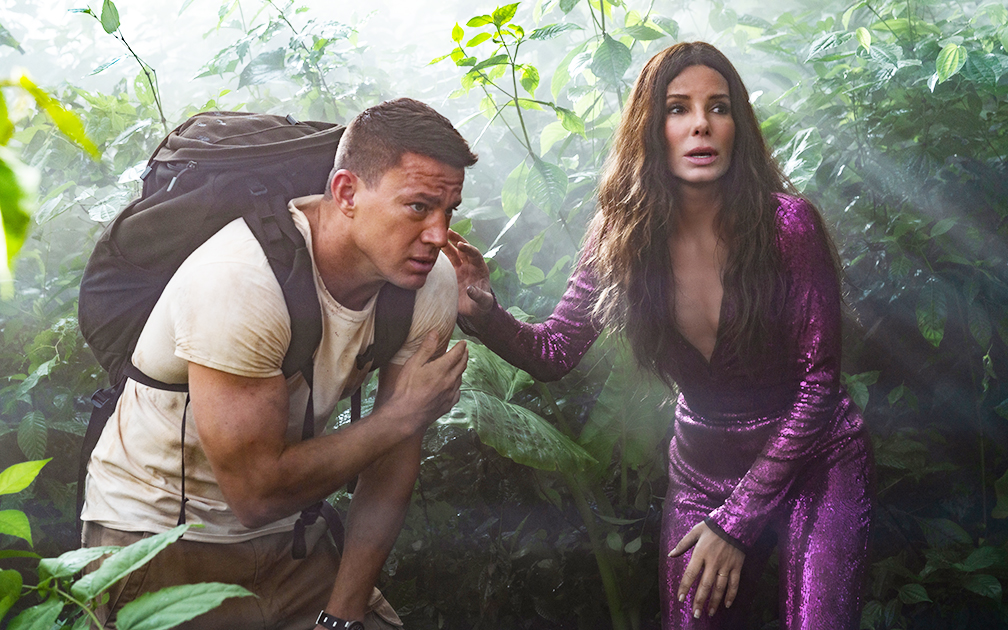
The setup puts Loretta and Alan together on a volcanic tropical island—and into an over-the-top, thrill-filled romp that feels like one of Loretta’s rollicking romances springing to life.

Directors Aaron and Adam Nee—brothers whose previous collaborations were smaller, more modest films, including Band of Robbers and The Last Romantic—up their game considerably here. The Lost City has all the hallmarks of a star-studded, blowout, blockbuster-style caper with chases, explosions, escapes, scuffles and merry, B-movie self-awareness. Its movie DNA is girded with sturdy strands of Romancing the Stone, Raiders of the Lost Ark and even a bit of Bond, especially in the hyper-inflated villainy of Radcliffe’s character and his obsession with something so delectably beyond the reach of his riches.

But the movie belongs to its two lead stars as it crackles throughout on their crisp chemistry. Bullock leans into her natural prowess for action-comedy combo platters that she previously displayed in The Heat, The Proposal, Miss Congeniality and Oceans 8. Channing plays off his sculpted, eye-candy physicality—as demonstrated in Logan Lucky, Magic Mike, 12 Jump Street and Hail, Caesar!—to find the soft soulfulness of his character as genuine romantic sparks begin to fly between Loretta and Alan.

Many times, the movie is laugh-out-loud funny, thanks to a jauntily clever script by Seth Gordon, who certainly knows how to cut to the funny bone; he directed Horrible Bosses and Identity Thief and episodes of TV’s Modern Family, Parks and Recreation and The Office. Packed with wily running gags and brisk-quippery one-liners that sometimes feel spontaneous and ad-libbed, it’s a fun-filled frolic with a hilariously saucy, playfully risqué spin—like when Loretta has a sudden, unexpectedly close encounter with Alan’s nether regions, characters riff on what the “D” in the Lost City might really stand for, or an island legend is given a carnal cap-off.

Brad Pitt to the rescue!

The supporting cast also gets space to show their stuff. Pitt, especially, is a total scene-stealer, channeling the cool, confident alpha-male badassery he displayed in Once Upon a Time in Hollywood. “How are you so handsome?” Loretta asks him, smitten by his bravado and dashing good looks. “My father was a weatherman,” he replies. The Office star Oscar Nuñez, who appeared alongside Bullock in The Proposal, makes the most of his moments as a helpful, island-loving air-cargo pilot. Da’Vine Joy, who held her own alongside comedy super-titan Eddie Murphy in Dolemite is My Name, brings sass and style to the role of Loretta’s hard-working assistant, Beth.

Stay until the credits are completely over to see a coda that offers Pitt a surprise reappearance.

And speaking of reappearances, will this zesty zip of ripping rom-commery have a sequel? We can only hope for an encore, especially since Bullock recently announced she’s ready to take a break from the movies. Maybe Loretta is thinking of retiring her franchise and her characters, but it sure feels like there’s certainly enough gas in the Lost City tank for a crowd-pleasing followup.

“Let’s see what’s on the other side of that door,” Alan’s Fabio-like cover character, Dash McMahon, says in an opening fantasy sequence. Here’s hoping it opens to something that reunites these two immensely likeable lovebirds.

Witchy Woman

Unsettling tale of Old World witchery is sympathetic fable of assimilation

Noomi Rapace stars as in ‘You Won’t Be Alone.’

You Won’t Be Alone
Starring Noomi Rapice, Alice Englert and Sara Klimoska
Directed by Goran Stolevski
Rated R
How to Watch: In theaters April 1, 2022

Since prehistory, witches have been regarded, rebuffed and reviled as fearsomely mysterious, magical women whose powers made them a real threat to the order of the world.

And long before they were turned into Halloween costumes, sitcoms and cartoons,

witches and witchcraft were staples of lore and legend dating back into the B.C. era, even appearing in the Old Testament of the Bible. A trio of witches in Shakespeare’s MacBeth, written in the 1600s, famously warned that “something wicked that way comes.” In The Wizard of Oz, Dorothy encounters two wicked witches and one fairy-like “good” one. Cher, Michelle Pfeiffer and Susan Sarandon were The Witches of Eastwick; Better Midler, Sarah Jessica Parker and Kathy Najimy stirred up laughs in Hocus Pocus. Elizabeth Montgomery turned wizardry into twinkly weekly primetime pixie dust in TV’s Bewitched, and Melissa Joan Hart was Sabrina, the Teenage Witch.

The deep-rooted “sisterhood” of sorcery is at the tortured heart of this wild, devilishly mesmerizing tale of witchcraft set in the Balkans some five centuries ago. It follows one witch “spirit” as she passes through several human (and non-human) bodies.

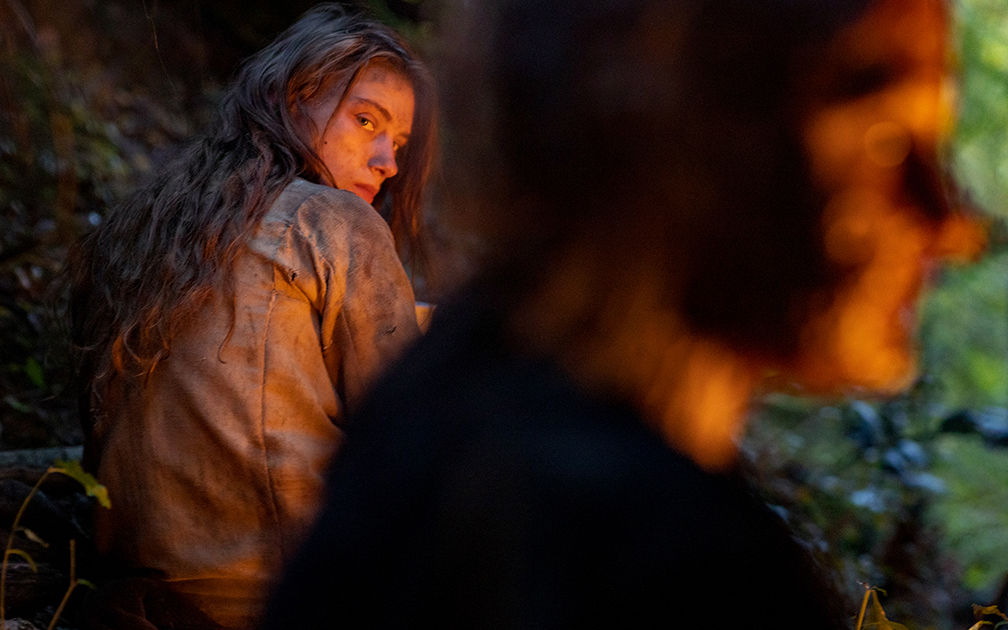
And it for sure isn’t a sitcom. The story begins when a baby named Nivena is whisked away by her freaked-out mother to live out an extremely sheltered childhood: She’s imprisoned in a deep, dark rock abyss to hide her from Old Maria, the terrifying necromancer of local legend who visited the newborn soon after birth and chewed off the baby’s tongue for some black-magic mojo. Mom is obsessed about keeping her little girl secluded from the evil always lurking somewhere out there.

Sara Klimoska as Nevena and Anamaria Marinca as Old Maria

And it works for a while—until, 16 years later, Old Maria returns to claim Nivena, now grown into a young woman, and usher her into full-blown witch-hood.

You think you know a lot about witches? How they ride on brooms, keep black cats for companions and cackle as they stir boiling cauldrons? Well, not in this movie, where witches—all victims of some ancient, passed-on curse—must kill and drink blood to survive, a dietary requirement that doesn’t make them necessarily welcome, at least for long, around other people. They regenerate by taking the bodily forms of their victims, and a special two-step process (a searing rip into the chest by the black talons of a witch’s hand, followed by witch’s spit) mean you’re officially into the club. To hasten the transition from one body into a new victim’s body, witches remove their own innards, like unpacking an old suitcase once you’ve arrived at your destination. Being a witch involves a good bit of blood and guts, gristle and self-inflicted de-boweling.

You probably never imagined Sabrina, Samantha on Bewitched or Harry Potter’s Hermione Granger doing anything like that.  

Almost feral after spending her childhood in a hole, and not being able to talk, Nivena (Sara Klimoska, a young Macedonian actress) doesn’t realize, especially at first, that she’s a witch. She has no understanding of the rough life she’ll face on a hard road she didn’t choose; forever a social outcast and outsider, feared, persecuted and often burned alive unless she conceals her identity. But she’ll learn.

“Just you wait,” her witch-mother, Old Maria (British actress Anamaria Marinca), tells her. “Just you wait.”

One of the things she’ll learn is how she’s been bestowed with a cursed immortality; death may be perhaps unpleasant, but it’s not much of a deterrent. Incinerated in the flames of a pyre as a young woman, Old Maria became the stuff of hysteria and cautionary folktales—the child-plucking Wolf-Eatress—who continues to roam the Balkan countryside in her carcass of charred, scarred, ooey-gooey flesh. 

First-time feature writer/director Goran Stolevski was born in the Balkans himself (before relocating to Australia), and the film is steeped in the folktales, and the scenery, of the region during a rather dark and dismal time. It depicts a pastoral place that was especially rough for women, who mostly lived to serve their husbands, in every way—that is, if they weren’t getting raped, beaten or otherwise reminded of their lowly station in the social order. Maybe that’s why witches were such agitators: They were women with shadowy, secretive connections to the natural and supernatural world, and powerful enough to turn the tables and bring down almost anyone, even the strongest of men.

The dialogue is spoken entirely in the authentic “old” Macedonian language of its setting (subtitled into English for American audiences). We hear the inner thoughts of Nivena—who is unable to speak—as stream-of-consciousness bits of inner monologues, which are sometimes quite profound. As she explores everything around her, it’s all new—grass, trees, fields, sunlight, streams of water, tears and laughter. She marvels at every moment of discovery, struggling to figure out what’s what. “Are sparrows snakes? Women wasps? Kisses chains?” she wonders. “Me, devils?”

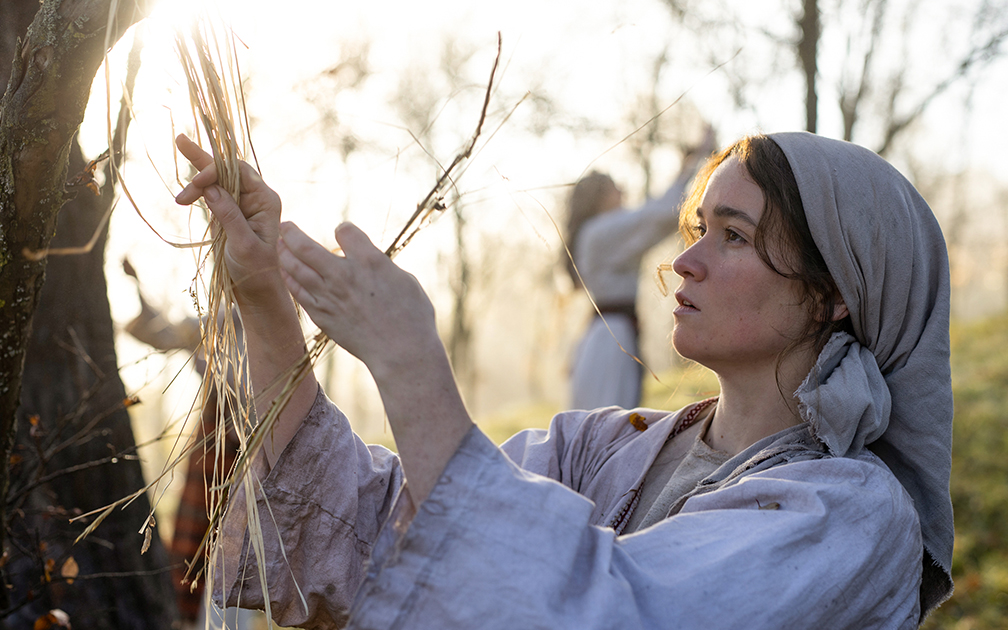
A lot of viewers will find all of it too challenging, too gory, too dreary, too artsy. Unsettling without being particularly scary, it’s not a spookfest meant to shock, but more an exploration, an existential expedition into what witch like might have been like. As the witch progresses through various incarnations, Nivena takes the form of a woman who’s just given birth (Noomi Rapace, the Swedish actress who starred in the original Girl with the Dragon Tattoo), a handsome farm boy, a cat, a dog, a donkey and finally a little girl, who grows up to become a young peasant woman (British actress Alice Englert), marrying and bringing her story full circle. Her witch mother, Maria, keeps popping in, mainly to tell her what a bad job she’s doing. Sometimes you wonder which witch is which.

Alice Englert as Biliana

And you gradually come to realize that You Won’t Be Alone isn’t just about witches. It’s a somewhat sympathetic tale of curiosity, enlightenment and exploration, a gritty parable about a woman who wants to be something else, something more, while being burdened less; a woman who became who (and what) she is because of something beyond her control, who wants most of all to be accepted. In an odd way, it’s about life and living and what it means to be fully alive, and the arc of reinvention. It’s a tale of assimilation and integration built around a most unlikely subject, but one with which many people can relate—certainly women everywhere, who’ve been treated as outliers throughout much of history.  

It’s a fright-fest fable with a uniquely feminist streak of scariness, an international cast, and a good bit of witchy weirdness. The world can be a harsh and unforgiving place, especially when you’re always outside looking in—or when your destiny takes a dark, unholy detour.

For anyone who’s grown up looking to witches for silly chills…well, just you wait: This hypnotic, horrific dive into the Old World disturbia is the stuff of nightmares. And if you it leaves you unsettled and a bit adrift in the terrors of something beyond the veil of modern comprehension, well, like the title says, you won’t be alone.

Far Out!

Michelle Yeoh skips across the ominverse in gonzo sci-fi action comedy

Everything Everywhere All at Once
Starring Michelle Yeoh, Ke Huy Quan, James Hong and Jamie Lee Curtis
Directed by Dan Kwan & Daniel Scheinert
Rated R

In theaters Friday, April 8, 2022

“Will it go round in circles?” asked singer Billy Preston in his hit song from the 1970s. Well, it will, indeed, and it does—in this gob-smacking gauntlet of action-packed, gonzo sci-fi fantasy about the loopy connectedness of all things.

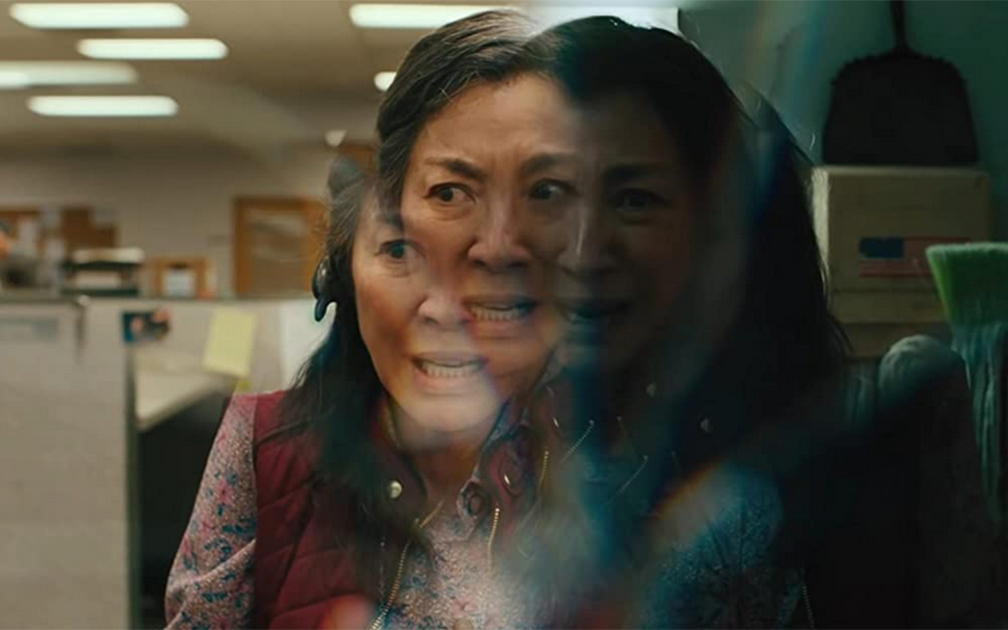
The circle of Everything Everywhere All the Time surrounds Evelyn Wang (Michelle Yeoh), a Chinese immigrant in Southern California who’s become the exhausted, micro-managing proprietress of a laundromat business she inherited from her father (James Hong). Awash in business problems, she meets with a cantankerous IRS agent (Jamie Lee Curtis), who gives Evelyn a hard time…and a hard deadline for getting her affairs in order.

But an audit isn’t Evelyn’s biggest problem, by far, as she’s thrown into a sprawling, mind-blowing comedically cosmic adventure that plugs her into all the other parallel lives she’s ever lived, across the universe—and in other universes, too. And she learns she’s been chosen to lead the resistance against an omnipresent dark force threatening to destroy the entire omniverse, which links everything, everywhere, all the time.

You’ve probably seen Yeoh, who parlayed her success as a Hong Kong action star to noteworthy supporting roles in the Hollywood mainstream, in movies including Last Christmas and Crazy Rich Asians, and in TV’s Star Trek: Discovery franchise. But this marks her first leading role in an American film, and she totally rocks it, grounding the serio-comic shenanigans in a character who creates the zippy, zappy center of every scene. Evelyn is woman who’s told she’s been a failure, at least on the surface, at most everything she’s ever attempted or tried to do. Now she has an opportunity for success in a most spectacular fashion.

Staphanie Hsu

Stephanie Hsu, who played Mai on The Marvelous Ms. Maisel, is Evelyn’s daughter, Joy, whose sunny name belies an inner misery and some serious multi-dimensional clouds. You might recognize Ke Huy Quan, who does a bravura job as Waymand, Evelyn’s husband. (As a child actor, Quan played Short Round in Indiana Jones and the Temple of Doom, and Data in Goonies.) He may seem like a milquetoast, happy-go-lucky husband, but wait until you see Waymand’s parallel selves—as a multiverse warrior and strategist, or a debonair, handsome hunk—and how he can turn even an innocuous fanny pack into a fierce fighting tool.

Scream queen Jamie Lee Curtis—the veteran star of the original Halloween, plus more than 80 other movie and TV projects—camps it up as a frumpy government employee in one universe while pursuing a much more sinister agenda in another.

Jamie Lee Curtis

Worlds collide in a wild, frenetic, crossover mishmash as Evelyn finds herself morphing in and out of multiple versions of herself—as a chef, a prison con, a movie star and a singer, a kung-fu expert, a dominatrix and even a pinata and a sentient rock. The filmmaking team of directors Kwan and Scheinert, who collaborate as The Daniels, create a breathless explosion of riotous metaphysical mayhem as she zips and zaps her way across dozens of other parallel “existences” to fulfill her destiny.

The theme isn’t exactly a new one; other films have aggressively tweaked our perceptions of reality, like The Matrix, Inception, The Adventures of Buckaroo Bonzai and Time Bandits. But none of those films has as much unhinged, unruly playfulness as this one, with a racoon food maestro, a weaponized lap dog (within a frisky cameo by comedian Jenny Slate), people with hot dogs for fingers and a couple of outrageously salacious gags involving sex toys. Nor have other movies ever noted the multidimensional benefits of paper cuts, eating lip balm, sitting on the crack between couch cushions and reusing chewing gum.

This far-out film has all that, and much more.

All the chaos revolves around a soft, sentimental center grounded in marriage, mothers and daughters, kindness and the power of love, and pushing aggressively against the cultural bias of favoring boys over girls, men over women. (In a flashback scene to Eveyln’s birth in China, a nurse announces her arrival, knowing how deeply disappointed her father will be that his new child isn’t a male. “I’m so sorry,” he’s told.) But Evelyn busts that bias, smashes it to smithereens and drags it all over the omniverse, doing something that no one else—including men—could do, and doing it on a celestial scale.

And she learns that that every decision we make, anything we do or don’t do, creates new destiny pathways branching off from one life course and forging another. “Every rejection, every disappointment,” Evelyn is told, “has led you here.” Where you’ve been, in other words, determines where you are, repeatedly and symmetrically, like expanding rings of ripples in the expansive waters of an endless sea. Look closely and you’ll spot all the circles and round forms conspicuously sprinkled throughout the movie—mirrors, pots and pan lids, cookies, Chinese lanterns, stick-on goo-goo eyes, washing-machine windows, something on a piece of paper boldly, emphatically circled with dark ink.

And at the center of it all: a monstrously big bagel.

And like a bagel, yes, this gloriously bonkers blitzkrieg goes round and round, with a hole in the middle—a hole that Evelyn’s destined to fill. At the journey’s end, there she is, where she was at the beginning; she’s ’verse-hopped all around the cosmos, but her path brought her back around to her laundromat and left her with this blissful, all-encompassing thought.

“There is always something to love,” she says. “Even in a universe where we have hot dogs for fingers.”

Ice, Ice Baby

Savage, cold-hearted Viking epic packs a bloody punch

The Northman
Starring Alexander Skarsgård, Nicole Kidman, Anya Taylor-Joy, Ethan Hawke, Claes Bang and Willem Dafoe
Directed by Robert Eggers
Rated R

How to Watch: In theaters Friday, April 22, 2022

The Vikings are coming! The Vikings are coming!

That phrase doesn’t mean much today, except perhaps for Minnesota NFL fans getting revved up for away games.

But some 1,200 years ago, these fearsome Scandinavian seafarers ruled the North Atlantic, raiding, pirating and plundering their way across Europe and beyond. Now they’re laying siege to multiplexes in this galloping, grotesquely immersive epic about one Viking’s merciless, bloodthirsty quest for retribution and revenge.

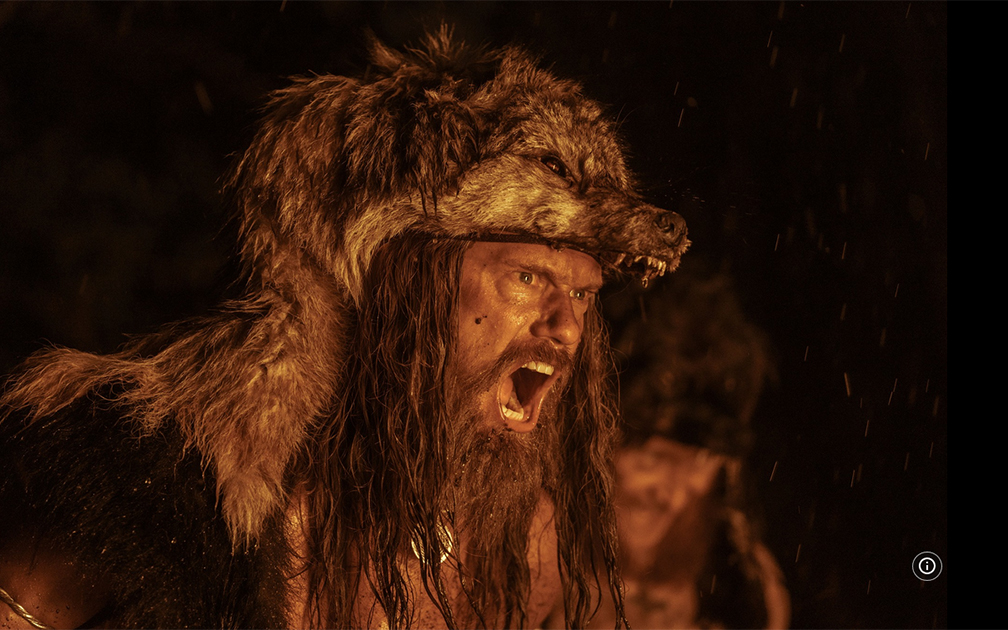
Swedish-born Alexander Skarsgård stars as Amleth, who sets out as a boy on his brutal life’s journey after witnessing the murder of his father, the warrior King Aurvandil (Ethan Hawke), by the king’s bastard brother, Fjölnir (Claes Bang). Narrowly escaping with his own head still attached, the little prince watches, terrified, as Fjölnir carts off his mother, queen Gudrún (Nicole Kidman), hefting her over his shoulder like a sack of stolen booty.  

Ethan Hawke

“I will avenge you, Father,” young Amleth repeatedly vows, desperately rowing away in the icy waters from his pillaged coastal kingdom. “I will save you, Mother. I will kill you, Fjölnir.”

Several years later, Amleth is all grown up, a hulking Viking warrior seething with remorseless hunger for retribution—and an appetite for wanton destruction. Woe to anyone who gets in his way or even crosses his path, like the villagers he and his fellow “berserkers” attack in the intensely brutal first act of the film, slashing and bashing their way through the mud and the blood, rounding up the hardiest and healthiest to be sold into slavery and corralling everyone else—including old women and children—into a thatch hut that’s then set fire.

All in a day’s work for a Viking plunderer.

But as much as he feeds off the raw, surging testosterone of remorseless, alpha-male brutality, Amleth doesn’t forget that he’s a man on a singular mission. Given renewed resolve by an encounter with a blind seeress (the Icelandic singer Björk), he disguises himself as a slave and goes “undercover”—aided by a fellow slave, a sexy sorceress Olga (Anya-Taylor Joy)—to find his traitorous uncle.

Anya-Taylor Joy (right) plays the sorceress Ogla, who helps Amleth (Alexander Skarsgård).

If those themes—family honor and dishonor, revenge and a young heir seeking to restore a fallen hierarchical house—sound familiar, they should. Shakespeare based his own Hamlet on the Scandinavian legend of Amleth, which itself closely follows the “hero’s journey” arc, the template of many of the world’s greatest myths, folktales and religions.

The bones of this tale may be ancient and primal, but director Robert Eggers creates a whole new world for this majestically bonkers, blood-smeared battering ram of Old World barbarism. Super-saturated with authenticity and historical nitty-gritty, The Northman is a visceral, elemental experience that makes you feel the cold, the muck and the mire, taste the brine of the salty sea—and shiver at the sights you see, watching agog as Amleth’s boundless, boiling rage plays out and spills over, like fox-head soup from a simmering caldron.

An indie auteur who certainly knows how to worm under your skin, Eggers also made the deeply unsettling The Witch (2015), which plumbed the psychological horrors of Puritanical hysteria, and The Lighthouse (2019), about two men going mad and flirting with depravity on a remote, storm-swept island. (Is that a mermaid vagina, or are you just happy to see me?) The Northman, Egger’s biggest-budget movie by far, is less complex and not near as subtle, staying more on the surface of its tempestuous tale and boldly assaulting viewers straight-on with its unflinching depictions of unbridled savagery by a man determined to follow his thread of fate and “die by the blade.” And while it’s not necessarily a pretty film, there is certainly a monumental beauty in its bold, relentless intensity, its rampaging, golly-whopping excess, and its spectacularly staged scenes.

When two semi-naked characters, both who’ve vowed to kill the other, fight and grapple amid the glowing lava of a spewing volcano, it’s a dance of death in what looks like the red-hot bowels of hell itself. You don’t see that in just any movie.  

There’s skull-cracking, disemboweling, blood-drinking and beheadings (of men and as well as horses), farting and belching, howling and yelping, and even menstrual flow has its moment. At one point, slaves are forced play a last-man-standing game with a ball and bats, like Harry Potter’s Quidditch—with a much higher fatality rate. The movie packs a lot into its runtime.  

And like Eggers’ other films, it’s suffused with some outright weirdness—hallucinogenic initiation ceremonies in which boy “pups” become “wolf” men; recurring visions of a dream-like “Tree of Kings” that depicts past, present and future royalty hanging like fruits from dark, twisted branches; Viking warriors finding their inner beast in a frenzied pre-raid battle ritual.

Nicole Kidman

It’s a man’s world, for sure. But the movie’s female supporting characters—notably Kidman’s queen and Anya-Taylor Joy’s sorceress—point toward a rich subtext about the power of women in that world, one in which young Amleth’s father, the king, cautions him to “seek not the ways of women.” It’s a dismissal, yes, but also an acknowledgement, recognizing that females rule a realm that even the mightiest warrior, and even kings, respect as sacred, hallowed ground. “Your strength breaks men’s bones,” Olga tells him. “But I have the cunning to break their minds.” Valkryies, fierce female spirits, ferry fallen warriors into their afterlives in the halls of Vahalla. And when one female character tells another, “Your sword is long” after getting an eyeful of his impressive, rune-inscribed mystical blade—is that just Viking small talk, or an assertive, slyly suggestive stab of sexual, even Oedipal arousal?

Skarsgård, who first showed off his impressively sculpted physique in The Legend of Tarzan (2016), is even more pumped-up here, a hulking mass of muscle with shoulders so large they look like they were repurposed from the bulwark of a Viking longboat. Kidman’s role is juicier than you first expect, as a character who becomes much more than a damsel in distress. And the young British actress Anya-Taylor Joy—basking in the glow of success after her award-winning role in the Netflix series The Queen’s Gambit and in critically hailed movies including Emma and the psych-horror-thriller One Night in Solo—worked with Eggers previously in The Witch, which made her a breakout star when she was only 18. Here, she deflates the classic stereotype of witches as withered old hags, especially when Olga slips out of her smock for a hot-springs rub-a-dub.  

And any movie in which Willem Dafoe plays a shamanistic court jester with a waggish tongue that keeps getting him into deep trouble, well, that’s just icing on the Viking cake.

Yes, the Vikings are coming. And in this wild and wooly epic in which mythology and reality comingle, collide and create more than two hours of bloody, brazen big-screen craziness and combustion, I doubt there’s a pro footballer—or even a whole team—anywhere who’d stand much of a chance in a square-off with Amleth.  

Murder, She Wrote

Kenneth Branagh returns to the canon of Agatha Christie for another twisty murder mystery

Kenneth Branagh directs and stars in ‘Death on the Nile,’ his second film based on a classic Agatha Christie novel.

Death on the Nile
Starring Gal Godot, Annette Bening, Tom Bateman, Russell Brand, Letitia Wright, Armie Hammer & Emma McKay
Directed by Kenneth Branagh
Rated PG-13

In theaters Feb. 11, 2022

What do you do when there’s a crime, and everyone’s a suspect?

You get the world’s greatest detective, of course!

As Agatha Christie fans know, that would be Belgian crime-cracker Hercule Poirot, one of the late author’s most beloved, most famous and long-running characters of crime fiction. He has appeared in more than 30 novels, 50 short stories, numerous stage productions and more than a dozen films.

Poirot has been portrayed by a cavalcade of actors over the decades, including Orson Wells, Peter Ustinov, Tony Randall, Alfred Molina and John Malkovich. Britain’s acclaimed Kenneth Branagh first took on the role in 2017, in Murders on the Orient Express, which he also directed. He now returns to it, again as both actor and director, in this lavish new screen adaptation of Christie’s fan-favorite novel, first published in 1937.  

In Death on the Nile, Poirot must untangle a web of lies, deceit, greed and grievances swirling around a gorgeous young London heiress, Linnet Doyle (Wonder Woman’s Gal Godot), on her honeymoon cruise. When Linnet is discovered dead in her room, shot cleanly in her temple with a small-caliber weapon as she sleeps, the plot really begins to thicken

Armie Hammer & Gal Godot are at the center of wave of crime aboard a riveboat.

Soon she’s not the only death in Death on the Nile, as the paddlewheel steamer Karnak makes its way through the land of the pharaohs—and everyone comes under suspicion.

Good thing Hercule Poirot also happens to be on the boat!

As his investigation unfolds, Poirot finds no shortage of possible perpetrators, plausible motives—and murder weapons. Clues begin to add up as bodies begin to pile up: a dead woman caught in the boat’s paddlewheel; a pistol wrapped in a blood-stained scarf, dredged from the bottom of the river; a tense, jealous love triangle between Linnet, her new husband (Armie Hammer) and his former fiancé (Emma Mackay, the British Margot Robbie lookalike who stars in the Netflix series Sex Education).

The riverboat wedding party also includes Linnet’s lawyer and cousin (Ali Fazal), with a sheath of documents he seems anxious for her to sign; a renowned painter (Annette Bening) and her son, Bouc (Tom Bateman), Poirot’s confidante; a physician (Russell Brand) who was once engaged to Linnet; a maid (Rose Leslie, from Downton Abbey and Game of Thrones); and a brassy blues nightclub singer (Sophie Okonedo) and her niece/manager (Black Panther’s Letitia Wright), one of Linnet’s former classmates. The British comedy team of Jennifer Saunders and Dawn French play Linette’s socialite godmother and her companion/nurse.

As a director, Branagh (currently a top Oscar contender for his semi-autobiographical drama Belfast) takes a few creative liberties with Christie’s story, and fans of the English author will enjoy seeing the creative spins he puts on her classic puzzle—a few character tweaks here, a minor plot point there. He also crafts a compelling backstory for Poirot, with an opening scene that puts us alongside him, as a young soldier, in the muddy trenches of World War I—and provides the genesis of his florid, double-decker trademark moustache.

Gal Gadot: The ‘Wonder Woman’ star plays a London heiress

Gorgeous to look at, Branagh’s film—shot on a massive London soundstage, complete with a gargantuan water tank—is filled with sights and splash and splendor, from the pyramids and tombs and antiquities of ancient Egypt to the funky, dirty-dancing delights of a hoppin’ London speakeasy. Omens on the screen portend something bad is surely going to happen down the river as a crocodile lunges from the murky waters to snatch a squawking egret; a hissing snake strikes out, unexpectedly, toward the viewers; a massive piece of tumbling stonemasonry barely misses Linette and her husband.

And despite its title, and its centerpiece crime, Branagh has another theme on his mind. “It’s love,” as Linnet notes at one point. “It’s not a game played fair. There are no rules.” Romantic ties—and societal rule-breaking—run throughout the entire story, and cross-connect almost every character, in some way or another. Even Poirot himself, as the film’s beginning and ending suggest, is not immune to being gob-smacked by love’s primal power.

This new Death on the Nile—which has previously been the subject of two theatrical films, a TV movie, a Broadway play and a BBC radio serial—is a twisty, turn-y tale of love and lovers, murder and mystery, and passions that can sometimes turn poisonous. It may take place some eight decade ago, but its themes are timeless.

And not all the movie drama, as it turns out, appears onscreen. Like several other films, Death on the Nile faced a struggle to even be released—its opening was delayed six times due to the COVID pandemic. Meanwhile, the movie’s leading man, Armie Hammer, became an untouchable persona non grata in Hollywood after charges levied against him for sexual misconduct and rape, and his bizarre sexting comments about cannibalism. Disney reportedly considered—but ultimately abandoned—options that included reshooting the entire film, or digitally removing his character and replacing it with another actor.

But here we finally are, and fans of whodunnit riddles—from Agatha Christie to Knives Out and even the classic board game of Clue—will greatly enjoy trying to piece together the evidence to unravel this period-piece knot alongside Christie’s favorite sleuth.

There may have been some 46 other movies—and more than 50 TV and radio versions—based on the works of Christie, who died in 1976, many of them featuring Poirot or Christie’s other famous mystery solver, Miss Marple. But Branagh’s lively, exotic, star-spangled take on Death on the Nile proves there’s plenty of life left in finely crafted stories of love, murder and the messy matters of the human heart.

All aboard!

Tagged , , ,

California Dreamin’

Newcomer stars give breakthrough performances in Paul Thomas Anderson’s graceful, charming ode to growing up in the 1970s

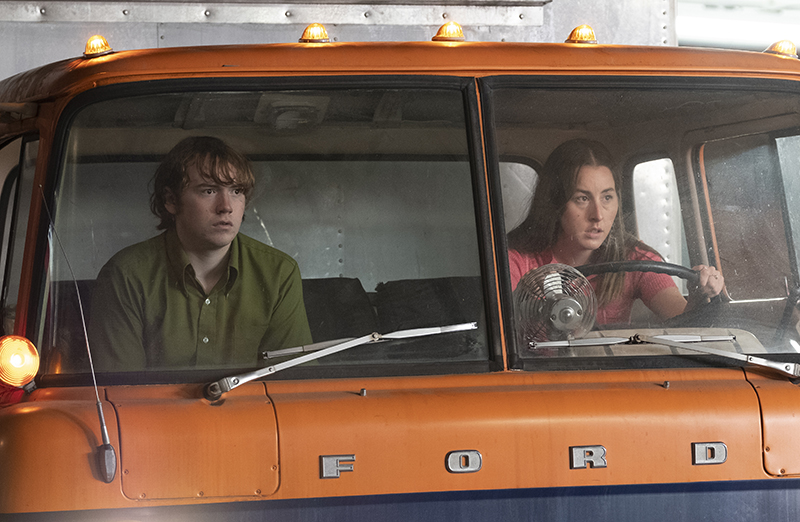
Alana Haim & Cooper Hoffman star in ‘Licorice Pizza’

Licorice Pizza
Starring Cooper Hoffman and Alana Haim
Directed by Paul Thomas Anderson
Rated R
In theaters now

A charming Southern California coming-of-age tale set in the mid-1970s, Licorice Pizza takes a sweet, nostalgic look at an era when waterbeds were the new rage, Eastern food was exotic cuisine, pinball was a prohibited vice, the war in Vietnam was dragging on, and an oil embargo and gasoline crisis created endless lines of vehicles in the streets.  

Director Paul Thomas Anderson weaves all that, and more, into this affectionate, sprawling saga of a high school teen and his first-love crush on an “older” young woman.

Licorice Pizza is several things. It’s a love story, for sure. It’s an expertly rendered snapshot of a very specific time, teeming with detail, and a very specific place—L.A.’s San Fernando Valley, within tantalizing earshot of Hollywood’s glittery star-making machinery. And it’s the latest movie from one of the industry’s most acclaimed directors, who’s been nominated eight times for an Oscar.

It’s sprinkled with stardust and familiar faces, but it totally belongs to its two young leads. Cooper Hoffman plays Gary, a 15-year-old who becomes smitten on school-picture day by one of the photographer’s assistants, Alana. She’s played by Alana Haim, who in real life is part of the rock trio Haim, along with her two sisters, Este and Danielle (who appear in the movie as Alana’s movie siblings.) The Haims’ real-life parents also play Alana’s mom and dad.

The movie marks the acting debuts of both Hoffman and Haim, and they are nothing short of remarkable. Haim has already received several nominations, including nods from the Critics’ Choice Awards and the Golden Globes. And in Hoffman, you can plainly see the DNA of his father, the late Oscar winner Philip Seymour Hoffman, a go-to for director Anderson in several of his films, including Punch Drunk Love, Magnolia and Boogie Nights. In December, the younger Hoffman was recognized, along with Haim, for their breakthrough performances by the National Board of Review, which also cited Licorice Pizza as the year’s best film, and Anderson as the best director.

Anderson’s Magnolia had Tom Cruise; two of his other films, There Will Be Blood and Phantom Thread, were both galvanized with immersive performances by Daniel Day-Lewis; Boogie Nights resurrected the career of Burt Reynolds. But neither Cooper nor Haim are glamour-puss, “known” actors, which gives Licorice Pizza its loose, shaggy, authentic, unpredictable feel. The arc of their characters’ relationship isn’t a conventional one, but their charisma and their commitment sell it, with all its quirks, and you believe it.  

Gary is a go-getter, an aspiring young actor, and he’s like a lovestruck puppy; Alana, a decade older, is cool, detached and listless, unsure of what to do with her life, or who do it with. Hoffman and Hiam center the film on their characters and the experiences that bond them—Gary coaching Alana for a meeting with a casting agent, the two becoming business partners in a waterbed store, a surprise encounter with the cops, Alana’s bravura navigation of a delivery truck in reverse, down a winding Hollywood hill. And through it all, there’s the awkwardness of a relationship shaking out its messy, uncertain wrinkles before it can unfold into romance.

In several scenes, the movie shows Gary and Alana running—joyous jaunts with each other, breathless sprints when one of them is in need, and, ultimately, toward each other.

The movie is loosely based on the experiences of an actual child actor and entrepreneur, Gary Goetzman, who as an adult became friends with director Anderson and regaled him with stories of his exploits, several of which occur in the film—with the business ventures of “movie Gary” and his hustle to get his acting career off the ground. (Goetzman went on to co-found Tom Hanks’ Playtone movie-production company.)

Although it’s never explained, the title comes from the name of a well-known (now gone) record-store chain throughout Southern California, back in the day.

There are other real-life connections in the film, too. Bradley Cooper has a most memorable turn as Hollywood celebrity hairdresser Jon Peters, who was famously linked in the 1970s to superstar singer-turned-actress Barbra Streisand. He’s flat-out hilarious as a hot-headed horndog who orders one of Gary’s waterbeds, telling Gary that “I love tail too much. You know how much tail I get? All of it,” and schooling him of the pronunciation of his current conquest: “It’s Streisand…Streis-hand.”

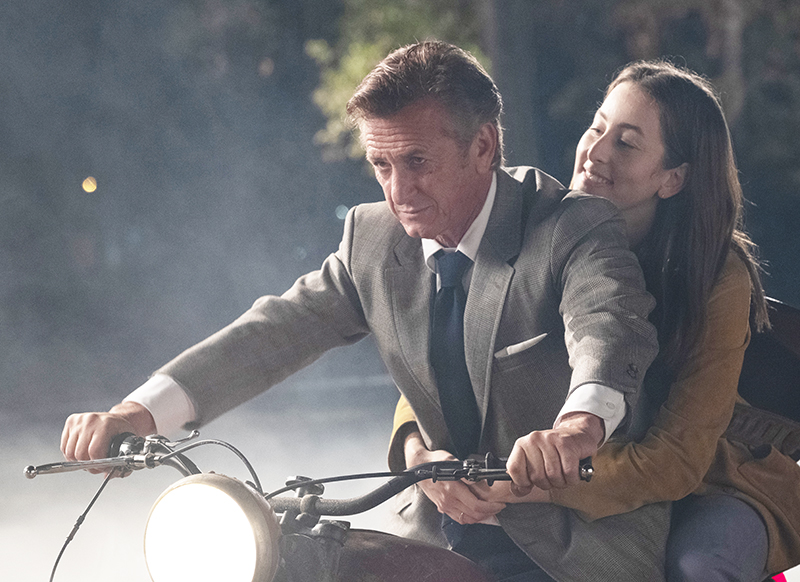
Sean Penn plays a movie icon based on William Holden

Sean Penn has a couple of scenes as Jack Holden, a macho, alcoholic actor modeled on real-life actor William Holden. Jack is still basking in the glow of his biggest movie, which bears a strong resemblance to William Holden’s 1954 World War II drama The Bridges of Toko-Ri. Looking to cast his next film, he has a brief flirtation with Alana, flattering her when he compares her to princess-actress Grace Kelly (the real Holden’s costar in that film). Tom Waits, the musician-turned-actor, has a juicy turn as Holden’s hard-drinking director, with a boozy swagger that recalls the iconic, globetrotting John Huston, the Ernest Hemingway of Hollywood filmmakers for several decades.

There’s SNL alum Christine Ebersol as Lucille Doolittle, a TV and movie icon clearly modeled on Lucille Ball. Watch for a familiar actor in a brief, uncredited appearance as Herman Munster, from TV’s The Munsters. John Michael Higgins, who hosts the syndicated TV gameshow America Says, plays the buoyant, Japanese-mangling owner of Gary’s favorite Japanese restaurant. Alana does volunteer work for a local rising politician with a secret, Joel Wachs (Benny Safdie), based on an actual trailblazing member, with that name, of the L.A. City Council.

Steven Spielberg’s two daughters, Leo Di Caprio’s dad, Tim Conway’s adult son and director Anderson’s longtime romantic partner (Mia Rudolph), plus and their four children, also appear.

The rocking soundtrack—with carefully curated hits and deep cuts from Todd Rundgren, Sonny & Cher, David Bowie, Clarence Carter and Blood, Sweat & Tears—help define the time and accentuate the plot.

It’s all a delightful, delicious swirl of ingredients—like a licorice pizza—for a feel-good story that will charm its way into your heart, a heady, intoxicating rush of romance and nostalgia to remind us of the tricky, unsure navigation often required in growing up, finding a true soulmate and falling in love.

Lost in Memories

Olivia Colman dazzles in director Maggie Gyleenhaal’s superb directorial debut

The Lost Daughter
Starring Olivia Colman, Ed Harris, Dakota Johnson & Jesse Buckley
Directed by Maggie Gyllenhaal
Rated R

In theaters Dec. 17, 2021, and available Dec. 31 on Netflix

In his 1903 poem The Mask, the famed Irish poet William Butler Yeats wrote about a woman who has something to hide. He implores her to take off her “mask” and reveal herself.

“I would find what’s there to find,” goes the poem and the poet. “Love or deceit.”

There’s love, and deceit, and even a reference or two to Yeats, in Maggie Gyllenhaal’s supremely impressive directorial debut, in a which a summer getaway to a Greek seaside resort triggers troubling motherhood memories for a middle-aged woman. 

Olivia Coleman stars in this slow-burn psychological drama, a tale of a woman wearing a “mask” of her own. She’s Leda, a Cambridge college professor who arrives at the resort on the island of Spetses anticipating a relaxing, low-key vacation. But Leda’s interactions there on the beach with an attractive young wife and mother, Nina (Dakota Johnson), and her daughter set a fateful chain of events into motion, one that stirs up painful flashbacks for Leda about raising her own two daughters.

Dakota Johnson

We learn about Leda gradually. She’s reserved and refined, outwardly a model of decency and decorum. She can be pleasant and charming. But she can also be stubborn, snappy, curt and even cold. Something’s going on with Leda, but what is it? And which Leda is the real Leda? Which one is wearing the mask?

It’s not an easy question to answer, as the plot weaves through incidents and events that include a missing little girl, her lost dolly, and Leda’s flirtations with both the college-student cabana boy (Paul Mescale) and the resort’s leathery American expat caretaker (Ed Harris).

In throwbacks to Leda’s past (where she’s superbly played by Jesse Buckley), we watch her struggling to balance her budding scholastic career—working from home translating comparative literature—with being a wife and a mom. Sex with her amorous husband (Jack Farthing) isn’t very fulfilling for her, and though she obviously loves her two little ones, she clearly prefers the academic world more than domestic life. Tenderness with her daughters at one moment can become a brittle battle of wills, a knotted tangle of frayed nerves. At a workshop event in London, she has a fling with a professor (Stellan Sarsgaard) and then comes home with a shocking announcement.

Peter Sarsgaard and Jessie Buckley

Present-day Leda and Nina strike up a tentative friendship, but it’s fraught with tensions. The sea itself, where the resort’s guests congregate every day, can be both idyllic and vaguely menacing. Nina’s thug-like in-laws create an atmosphere of dread and possibly danger, and Leda harbors a secret—and a certain stolen object—that threatens to bring everything crashing down around her.

Gyllenhaal has acted in nearly 50 films and TV shows including HBO’s The Deuce, the 2008 Batman blockbuster The Dark Knight, and Crazy Heart, for which she was nominated for an Oscar. She doesn’t make an appearance here, but her experience and confidence are evident behind the camera as she spins the story (based on the novel of the same name) with intimacy, intensity and a sense of tightly wound nuance, and lets her outstanding cast burrow into its characters.

The actor-turned-director gives us hints of the unpleasantries we’ll eventually discover when Leda settles into her room at the resort, inspecting the bowl of fresh-looking fruit that’s been set out for her and seeing that it’s rotten underneath. Leda is awakened one night by the buzzing of a big cicada, which has flown into her open window and landed on her pillow. Repulsed, she tosses out the bug and burrows deeper into her blankets.

There’s something unsettling on the underside of The Lost Daughter, and something is certainly bugging Leda.

The movie belongs to Colman, who’s already become an Oscar front-runner for her master-class performance here as a woman, and a mother, whose conflicts run deep; she might easily add another trophy to her Emmy (for The Crown) and her Academy Award (Best Actress for The Favourite). And Buckley—who starred in the most recent season of TV’s Fargo, in the miniseries Chernobyl, and in the mind-bending movie I’m Thinking of Ending Things—provides emotional heft to the aching backstory.

The Lost Daughter is challenging, as it brings up some uncomfortable truths not typically addressed by mainstream Hollywood. “I’m an unnatural mother,” Leda says at one point, capping the movie’s prickly stance that not all women embrace motherhood equally—and there’s more than one way a daughter, or anyone else, can become “lost.”

As any mom knows, parenting can be hard, trying work. Raising kids isn’t always a picnic, and it’s not a job everyone is prepared to do, wants or chooses. And almost anyone can have storms raging underneath a seemingly calm surface—like the sea to which Leda is inexplicably, repeatedly drawn—that they keep hidden, masked and unknowable to the world.

Colman’s riveting performance in The Lost Daughter is a powerful, tour-de-force potrayal of the conflicts of parenting—and what happens when the mask finally falls away, revealing what’s there to find.

Bring on the Music

Andrew Garfield soars in director Lin-Manuel Miranda’s paean to musical theater dreams

Tick…Tick…BOOM!
Starring Andrew Garfield
Directed by Lin-Manuel Miranda
Rated PG-13

In select theaters now, available on Netflix Nov. 19

Musical-theater geeks will flip over this immersive paean to one of Broadway’s fallen heroes.

Jonathan Larson, who composed the groundbreaking rock musical Rent—which ran on Broadway for 12 years—died suddenly, of a heart malady, on the very night of his production’s premiere performance in 1996. Only 35 at the time of this cosmic irony, he was awarded three posthumous Tonys and a Pulitzer Prize for Drama for his La Bohemè-ish tale of impoverished young artists struggling, under the grim specter of the epidemic of AIDS, to live, love and lean on each other in the Big Apple.

But this isn’t that story. Rather, it’s the story of Larson and his pre-Rent challenges in completing, and staging, a futuristic 1990 oddity called Superbia, loosely inspired by George Orwell’s dystopian classic 1984

Andrew Garfield plays Larson, and the film marks the directorial debut of Lin-Manuel Miranda, who certainly knows a thing about Broadway, Tonys, Grammys and other trophies as the writer (and star) of his own Broadway sensation, Hamilton. Earlier this year, another of Miranda’ works, In the Heights, got the Hollywood treatment.

Garfield may be best known to the general moviegoing public for his two movie turns as The Amazing Spider-Man, but he’s turned in several impressive other “grown-up” performances—in Martin Scorsese’s Silence, in The Social Network, as conscientious-objector WWII hero Desmond Doss in Hacksaw Ridge, and just recently, as disgraced telemarking evangelist Jim Bakker in The Eyes of Tammy Faye.

And he soars to new heights of his own here, for a tricky role that required him to expand his skillset to learn to sing and play the piano. He portrays Larson as a zealous, youthful idealist, anxious to establish a toehold on Broadway, to create a buzz that will be his big break. The tick-ticking he hears in his head is the sound of his rapidly vanishing 20s, and his approaching self-imposed deadline: his upcoming 30th birthday.

Andrew Garfield with Robin De Jesus

Larson is a bit self-obsessed and totally driven, as he nourishes his dreams while slinging sandwiches in a busy diner. But he has a big heart for his fellow “bohemian” friends, especially his childhood pal, Michael (a terrific Robin de Jesús), who gave up his own theatrical dreams for the steady income of a Madison Avenue job. And he also loves his girlfriend, Susan (Alexandra Ruth Shipp, who starred in the title role in the 2014 Lifetime movie Aaliyah: The Princess of R&B), an interpretive dancer whose thoughts for a more practical future might pose a bit of a problem for their relationship.

High School Musical star Vanessa Hudgens (who also starred on Broadway in Gigi and had roles in the TV musical presentations of Grease: Live and Rent: Live) and Joshua Henry—who played Aaron Burr in Hamilton—provide impressive, real-chops backupas singing characters in Larson’s show.

As he struggles with a massive, monstrous case of writer’s block, trying to find the right song to cap his musical as the days trickle down to its public-workshop debut, Larson watches his friends succumb to HIV and AIDs, putting some heavy perspective on his own deadlines and goals.  

Vanessa Hudgens

Director Manuel can certainly identify with a young composer striving to become established, because he used to be one. He knows all about the world of Jonathan Larson, because it was once his world, too. And he certainly knows how to make a musical, deftly, innovatively unfolding Larson’s story—and his existential predicament—in a mixed format of musical performances, flashy movie-musical set pieces, straightforward dramatic scenes and “fantasy” sequences that blur the lines. When Larson goes to clear his head with a swim, he marvels as markers on the bottom seem to turn into musical staffs and notes; in the rousing number “No More,” Larson and Michael contrast the young ad executive’s gleaming new valet-tended apartment high-rise with the cramped, squalid, six-floor walkup where the two friends used to be roommates—and were Larson still lives.  

Fans of musicals will delight in Easter-egg cameos from a slate of stage-heeled celebs—a flock of cameo casting that was helped, no doubt, by Miranda’s superstar cachet in the theatrical community. Bradley Whitford is spot-on as theater icon Stephen Sondheim, who gives Larson some valuable advice, and Judith Light (who made her debut on Broadway before landing a starring role in 1977 on TV’s One Life to Live) plays Larson’s agent, Rosa, who tells him that the musical he should be working on is always “the next one.”

The next one, for Larson, was his autobiographical one-man-show, Tick…Tick…Boom!, which was ultimately staged posthumously as a multi-part rock musical. And then came Rent, the production that would have brought him the success, and the achievement, he so ardently sought as a younger man on the dreaded cusp of closing out his third decade.

But this impassioned, enthusiastically eclectic portrait reminds us of the boundless dream of a gifted creator taken too soon, and takes viewers into a teeming, bustling, hustling substrata world of musical theater that’s not quite Broadway…not just yet—as it suggest to all of us, whatever we do, that “the next one” could be, and might just be, the big one.

Tall in the Saddle

Benedict Cumberbatch plays a cruel cowboy in ‘The Power of the Dog’

Benedict Cumberbatch & Jesse Plemons ride out in ‘The Power of the Dog’

The Power of the Dog
Starring Benedict Cumberbatch, Jesse Plemons, Kirsten Dunst and Kodi Smit-McPhee
Directed by Jane Campion
In theaters Friday, Nov. 19; on Netflix Wednesday, Dec. 1

The West isn’t all that wild in this taut, terrifically tense tale set in Montana in 1925; there’s electricity and automobiles. But it’s a wild ride alongside Benedict Cumberbatch—who’s played a spectrum of characters, across a wide swath of genres, from sci-fi to period dramas—as he saddles up to play a cowboy.

But not just any cowboy—he’s one particularly tough, unlikable hombre.

Cumberbatch stars as Phil Burbank, a cattle rancher who lives on the sprawling property he and his brother, George (Jesse Plemons), took over from their parents. The two siblings couldn’t be more different. George is a soft-spoken gentleman who dresses in dandy suits; Phil, who refuses to even bathe indoors, is as rough and rugged as a pair of old rawhide chaps. He castrates cattle barehanded with two brisk whisks of his knife, struts and stomps in his boots and spurs, and revels in the musk and mire of clearly being the ranch’s alpha male.

“I stink, and I like it,” he snarls, and we know it in more ways than one.

Kirsten Dunst

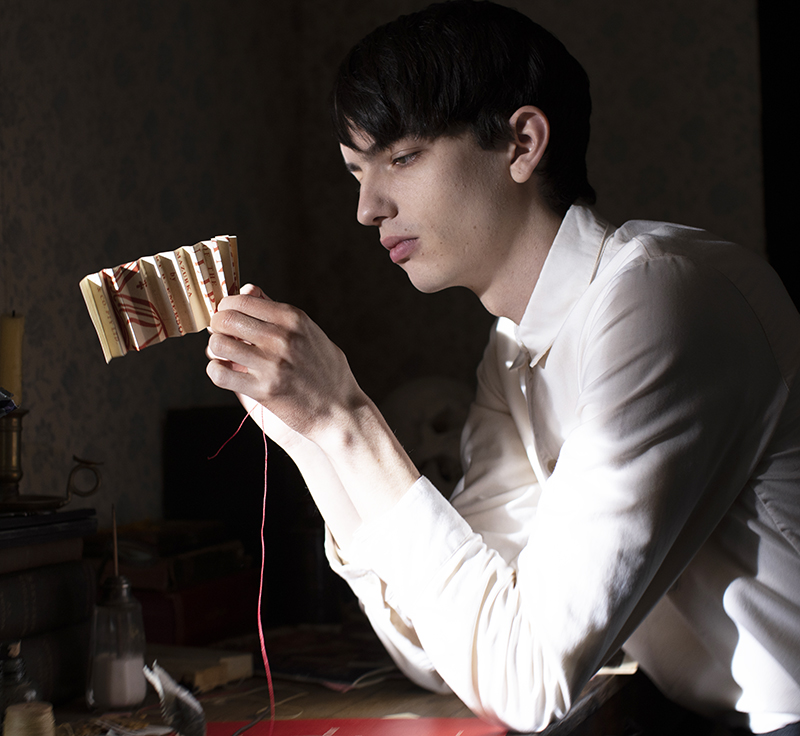
When George marries Rose (Kirsten Dunst, Plemons’ real-lifewife), a widow who operates a nearly boarding house, and moves her into the mansion-like ranch manor, it triggers something in Phil—a toxic seethe of jealousy, resentment and suppressed anger. Phil cruelly taunts Rose and her sensitive son, Peter (Kodi Smit-McPhee), a lanky pup of a lad who makes paper flowers, plays with a hula hoop and wears white canvas shoes instead of boots. Phil thinks Pete is a sissy, an effeminate “half-cooked” nancy, almost subhuman. And he torments the emotionally fragile Rose—and stokes her growing sense of dislocation, menace and unease—by whistling a tune that he knows she can no longer remember how to play on the piano.

Phil knows how to inflict hurt, knows how to wound. His poisonous personality burns like the bright ends of his hand-rolled cigarettes when he puffs, falling onto his shirt like combustion from a fire from deep within him. His mockery of Pete gets supportive guffaws from his ranch hands, he takes out his rage on his horse, and he drives Rose to drink and Pete to tears.

Kodi Smit-McPhee

Filming in her native New Zealand, director Jane Campion, who won a pair of Oscars for writing and directing her 1993 romantic drama The Piano, creates a masterful atmosphere of creeping dread for where this is all headed. She captures the rich details of life on the ranch—and a crucial subtext of the bonding between these cowboys, whose work with other men isolates them from much of the rest of the world—against spectacular vistas of picture-postcard perfection, with massive mountains, oceans of grass, and a herd of hundreds of cattle, flowing across the dusty plain like a bovine river.

High up on a mountainside, Phil sees something, when the sun is at a certain angle, casting shadows on the terrain, making a specific outline, a design in the interplay of light and dark. But he’s also looking up there and into his past, and the genesis of his idolization and fetishization of a long-gone horseman, Bronco Henry, who taught him how to work cattle.

Cumberbatch, who was Oscar-nominated for his starring role in The Imitation Game (2014), shows all the signs of another nomination here, creating a character that practically sears the screen with his vicious unkindness—and a complexity that hints at fragility, a degree of refinement, intelligence, and some other things…despite his grimy fingernails, coarse personality and stiff backbone. With a towering performance that recalls the intensity of Daniel-Day Lewis in There Will Be Blood and Phantom Thread, Cumberbatch’s Phil is a portrait of bullying, hyper-masculine toxicity that makes a target of anything, and anyone, that he perceives to be weak.

After Pete makes a discovery that sheds new light on Phil, it begins to reshape their relationship—but it will it lead to something better, or something even more malevolent?

The movie (and the 1967 novel on which it’s based) takes its title from a Bible verse in the book of Psalms, a bitter poem attributed David, the young shepherd who slew the giant Goliath and later became King of Israel. It’s reference to deliverance from his foes and “the power of the dog,” an animal seen in ancient times as a lowly, undomesticated pack scavenger that attacked the vulnerable.

Phil has both the bark and the bite. He’s top dog among his group of ranch-hand cowboys in this twisty, tough-as-nails frontier tale, in which the age-old battle between good and evil plays out on an intense psychological tableau, one straddling the border between clean, convenient modernity and the rugged, raw, ragged past.

And when it bares its teeth and clamps down, hard, and likely not how you’d expect, this Dog takes you by surprise, and it really leaves a mark.