Category Archives: Movie Reviews

Movie Review: “Marty Supreme”

Timothée Chalamet gets his game on as a 1950s ping-pong whiz with a dream and a scheme (or two)

Marty Supreme
Starring Timothée Chalamet, Gwyneth Paltrow, Kevin O’Leary & Odessa A’zion
Directed by Josh Sadfie
Rated R

In theaters Thursday, Dec. 25

He’s played Willy Wonka, Bob Dylan, a cannibal boyfriend and King Henry. Now Timothée Chalamet is playing ping-pong, starring in this feisty drama loosely based on the flamboyant real-life table-tennis hustler Marty Reisman, who rose to fame wowing audiences in the 1950s.

Chalamet’s character—with the slightly tweaked name of Marty Mouser—is a wisecracking, motor-mouthed wheeler-dealer, a table-tennis prodigy who fervently wants to become a world champion, the supreme player of the sport, more than anything else. But to get there, he first must run a gauntlet of mishaps, misunderstandings and mayhem—and somehow score enough cash to fund his travel to international tournaments in London, Japan and the Middle East.

Director Josh Sadfie (whose other flicks include the fabulously frantic Uncut Gems and Good Time) keeps the snappy breathless pace zipping and zinging, flying almost as fast—and as unpredictable—as the ping-pong balls Marty slams, smacks and smashes with his paddle. Sadie makes table tennis so exciting, this movie might just spark a new craze.

It takes us along for the wild, gritty ride and the breathless whir of all the schemes and hustles as Marty engages with a wide range of colorful characters. There’s his pregnant longtime friend (Odessa A’zion). Marty has a steamy tryst or two with a glamorous actress (Gwyneth Paltrow), who’s married to an ink-pen magnate (Shark Tank’s Kevin O’Leary) who may be the ticket to Marty’s hopes for table-tennis supremacy. Fran Drescher plays his mom, Sandra Bernhard is a neighbor, Isaac Mizrahi has a couple of scenes as an over-enthusiastic publicist.

Real-life moviemaker and award-winning playwright David Mamet pops in as the director of an off-Broadway play, and Marty gives some handy advice to its actor (Frederick Hechinger, who played a weaselly Roman emperor in Gladiator II). A shady character portrayed by filmmaker Abel Ferrara sets off a chain reaction that weaves throughout the film when a flophouse bathtub falls on him. The rapper Tyler the Creator gets screen time as Marty’s friend Wally, a taxi driver who steers him through one particularly crazy night.

But the revved-up engine that drives everything is clearly Chalamet, demonstrating yet again what crackling, confident versatility he can summon onscreen. It’s no surprise his character is in every scene. The camera clearly loves him (and females will swoon during a scene when he, ahem, drops trou.)

Throughout the movie, Marty ponders his next move. Should he risk his life trying to recover a kidnapped dog to get what he thinks will be a sizeable reward? Should he take a gig playing exhibition pong, hamming it up for pay like the Harlem Globetrotters, playing with pots and pans instead of paddles, across from a trained seal as an opponent? Why is he running from the cops, or driving through a cornfield? And what’s World War II and a bunch of cheering GIs got to do with it all?

Will Marty realize his dream, finally, when he faces off with his international nemesis, the Japanese champ (real-life ping-pong master Koto Kawaguchi)? Or will he find another dream to make him happy and fulfilled? (Cue Tears for Fears’ “Everybody Wants to Rule the World.”)

It’s all fast, fun and friskily a-swirl with surprises. Like a game of pong, you never know just how, or where, the balls are going to bounce. At one point, a whole bushel basket of them spills out a window, bouncing all over the sidewalk. Marty’s adventure bounces him all over the place too, but Chalamet is always in control with charm, charisma and ping-pongy pizzazz. “It’s only a matter of time before I’m staring at you from the cover of a Wheaties box,” Marty boasts at one point.

It’s a late runner entering the field, but Marty Supreme is already being lauded as one of the best movies of the year. And best of all, you don’t have to wait for a Wheaties box to see Timothée Chalamet in an impressive, balls-n-all display of what he can do up on the big screen.

—Neil Pond

Tagged , , ,

Movie Review: “The Testament of Ann Lee”

An eccentric quasi-musical about the woman who founded the Shaker religion

The Testament of Ann Lee
Starring Amanda Seyfried, Thomasin McKenzie & Lewis Pullman
Directed by Mona Fastvold
Rated R

In theaters Dec. 25, 2025

On the spectrum of organized religion, the Shakers have a uniquely odd spot of spirited gonzo weirdness.

Established in England, this offshoot of the Quakers believed sex was sin and that souls could be cleansed through frenzied ecstatic dancing. They also believed that the promise of the “second coming” had been fulfilled in a woman, Ann Lee, proclaimed as the female Christ.

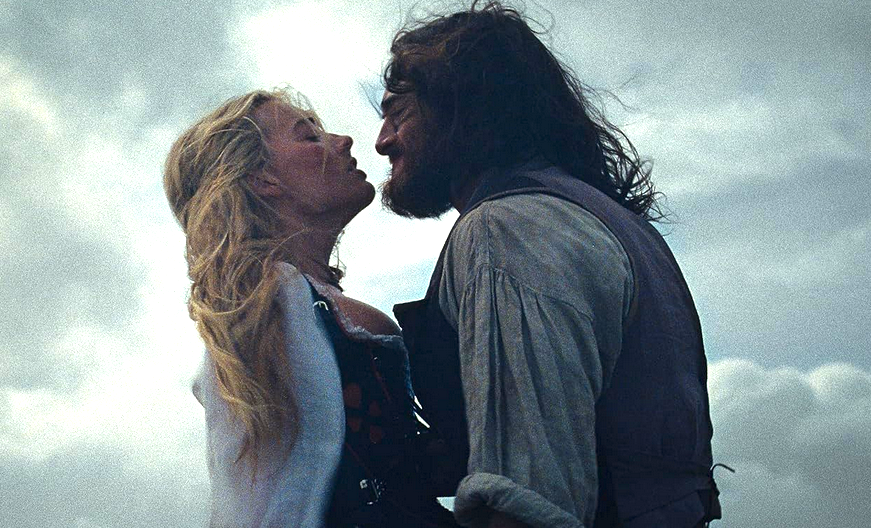
This origin story stars Amanda Seyfried as that woman, who founded the Shakers and brought their beliefs to America in just as the Revolutionary War was getting ramped up. Seyfried (whose wide-ranging previous roles include starring in Mama Mia!, Mean Girls and Les Miserables) certainly gives her all here, pouring herself into the character of Lee, the “woman preacher” whose zealotry launched dozens of Shaker communities with thousands of followers, willing to replace “sinful” sexual desire with communal labor, woodworking craftsmanship and a commitment to non-confrontational pacifism.

Director Mona Fastvold (who co-wrote and produced last year’s The Brutalist) shows us how Lee (played as a child by Millie-Rose Crossley) developed an early distaste for “the depravity of human nature.” Seeing her parents have sex repulses her and sparks a fiery hatred of “fleshly cohabitation.” She grows up with visions of God, heaven, Adam and Eve and the snake in the Garden.

Christopher Abbott plays Ann’s husband, who doesn’t exactly share her views that abstinence through celibacy is the clearest path to eternal salvation. He’s into a bit of kink, he loves bonking, and the four children Ann bears all die as infants. That does it, solidifying her foundation of thought that sex leads to nothing but heartbreak and loss—and possibly damnation.

We see the Shakers twirling and whirling and prancing, jerking and chanting and singing; outsiders see them as crazy, and Ann ends up in prison for leading such disruptive gatherings. But that kind of persecution only steels her resolve. She ventures to the New World with a fervent little group of followers to establish a colony in New York.

Tim Blake Nelson plays an American Protestant minister who converts. Ann’s loyal brother, William (Lewis Pullman) becomes one of her first evangelists, spreading the word about their commune and their commitment. The story is narrated by Mary Partington (Thomasin McKenzie), another follower who accompanies Ann to America.

The movie is a kinda-musical, with many scenes of Shakers breaking into song and dance numbers based on hymns and scriptures. Sometimes it feels like they’re genuinely full of the spirit, but other times it just looks silly or spoofy, like an SNL skit lampooning religious extremity or a crazy intersection of O Brother, Where Are Thou? and Glee.

But the Shakers were dead serious, even moreso as their bizarre behavior (including rumors of spastic dancing naked by firelight) incites violent backlash. Ann is accused of being insane, of practicing witchcraft, and misleading those who follow her “sham” religion. The Shaker colonists are assaulted when an angry mob breaks into one of their services.

It’s no surprise that the movement was relatively short-lived; it’s hard to attract new members, much less grow your flock, when your reputation—as dancing freaks who get beaten bloody and don’t have sex—gets around. Today, there are only two official avowed Shakers in existence, and they live in one of the only remaining Shaker colonies in the world, in Maine.

In the end, the Shakers were a quirky historical footnote, a peculiar thread in the ever-evolving fabric of Christian faith. But The Testament of Ann Lee is a unique cinematic look at how the movement found its footing, and its followers, due to the passion and fiery conviction of a woman who’ll forever be remembered as their “Mother.”

Neil Pond

Tagged , ,

Movie Review: “Song Sung Blue”

Hugh Jackman and Kate Hudson shine in this true love story built on a foundation of Neil Diamond hits

Song Sung Blue
Starring Hugh Jackman and Kate Hudson
Directed by Craig Brewer
Rated PG-13

In theaters Thursday, Dec. 25

What, exactly, is a song sung blue? In Neil Diamond’s No. 1 hit single from 1972, it’s a singalong about shared sadness and turning something melancholy into a thing that makes you happy—even if you’re singing it “with a tear in your voice.”

This flick is based on the true story of a husband and wife who performed together as a tribute act, Lightning and Thunder, in the ‘80s and ‘90s. Hugh Jackman and Kate Hudson star as Mike and Claire Sardina, whose story was previously made into a 2008 documentary film with the same title.

The Sardinas were struggling singers—and divorcees with kids—before meeting each other, falling in love, joining forces and becoming a local sensation in Milwaukee, Wisc., harmonizing on Neil Diamond songs at state fairs and other events.

Diamond himself doesn’t appear anywhere, but the movie is built on his musical legacy and best-known hits, anchored by a love story about a couple who cared for each other, loved making music together and became regionally famous doing it. Jackman gets to flex the singing chops he displayed in The Greatest Showman and Les Misérables. Last year, Hudson released her own album, Glorious. Both are pitch perfect in roles that require them to sing, and sing a lot.

“You’re not a Neil Diamond impersonator,” Claire tells Mike, calming his initial intimidation about stepping into the shoes of the hitmaker who wrote The Monkees’ “I’m a Believer.”  “You’re a Neil Diamond interpreter.”

Music lovers will certainly love watching Jackman and Hudson interpret “Sweet Caroline,” “Cherry, Cherry,” “Play Me,” “Holly, Holy,” “Brother Love’s Traveling Salvation Show” and “Soolaimon,” a frequently mispronounced favorite of Diamond’s that he often used to open his shows. There are deeper cuts too, like “Crunchy Granola Suite.” And, of course, “Song Sung Blue.”

The movie does a great job of showing a stratum of the music biz that’s, well, a few layers below Taylor Swift…or Neil Diamond. Song Sung Blue effectively depicts the couple’s journey from casinos and barrooms to concert halls (opening for Pearl Jam!). It’s not always smooth ‘n’ easy; Mike works as a backyard mechanic to make ends meet.

And just when the showbiz future starts looking bright, wham—the real world comes crashing in.  

Michael Imperioli, Jim Belushi and Fisher Stevens all have supporting roles as Mike’s pals. And as impressive as Jackman and Hudson sound singing, she also does a great job of mastering a Midwestern accent. You’d never guess she grew up in L.A., not on the shoreline of Lake Michigan.

“I’m not a songwriter, I’m not a sex symbol,” Mike tells Claire early in the movie, as their relationship is just beginning to blossom. “I just want to entertain people.”

And Jackson and Grant certainly do that. Song Sung Blue is a Christmastime gem of a musical biopic to lift your holiday spirits, get your toes tapping, and make you smile through the melancholy…even if you don’t know your Neil Diamond from your Neil Sedaka.  

—Neil Pond

Tagged , , , , , , ,

Movie Review: “Avatar: Fire & Ash:

Third installment of the blockbuster sci-fi franchise is big and blue and in a zone all its own

Avatar: Fire & Ash
Starring Sam Worthington, Sigourney Weaver, Stephen Lang, Zoe Saldaña & Oona Chaplin
Directed by James Cameron
Rated PG-13

In theaters Friday, Dec. 19

Welcome back to the distant moon of Pandora, some 26 trillion miles from Earth—but as close as your local movie screen!

In this third installment of director James Cameron’s Avatar adventure epic, the peaceful Na’vi tribe is stirred to action by a much more aggressive clan aligned with militaristic human invaders plotting to take over Pandora and line their pockets exploiting it.

If you’re an avid Avatar-iac, a diehard fan of the billion-dollar blockbuster franchise, you’ll feel right at home. If you’re new to the wonders of Pandora, well, hold onto your pointy ears, your tail and your dreadlocked hair. You’re in for one far-out ride, one that lasts nearly three and a half hours.

Using his pioneering motion-capture technology to put digital “makeup” onto real actors, Cameron has crafted another spectacular, not-of-this-earth saga. Your eyes know what they’re seeing isn’t 100 percent “real,” but it’s not quite fake, either. It’s a whole ‘nother sprawling universe, existing in a new realm of artificially heightened movie reality with a pantheon of exotic creatures and 10-foot tall Pandorans sweeping and swooping around the sky riding dragon-like lizard birds, swimming in the sea alongside massive leviathan predators, and running like goosed gazelles through the dense jungle.

You’ll see some familiar digitized faces (some more than others) in characters carrying over from the two previous Avatars, in 2009 and 2022, including  Sam Worthington, Sigourney Weaver, Zoe Saldaña, Kate Winslet and Stephen Lang, while Giovanni Ribisi and Edie Falco also reprise their real-people roles as humans, no digitization required. Jack Champion, playing “Spider,” the adopted human boy raised by the Na’vi, has a critical role in the story and a much bigger part than in previous films.

But the movie’s real splash is made by Oona Chaplin as Varang, the shamanic leader of the warring Ash People, so known because they live in a volcano and can control fire. If the last name rings a bell, it’s because Chaplin is the granddaughter of silent-film pioneer Charlie Chaplin, who died, alas, more than half a century before seeing what his li’l lumpkin spawn would look like all grown up and digitally enhanced as an impossibly lanky blue humanoid wearing war paint, a flaming red headdress and a skimpy, strapless two-piece Pandora-kini. If Bob Mackie designed costumes for Cher for a ’70s TV show somewhere in a faraway galaxy, she might look something like Varang—who I kept wishing would break into a Pandoran cover of “Gypsies, Tramps and Thieves.” She’s one bewitchingly sexy, seriously terrifying villain, especially when she hisses and sneers.

It’s a mega-load of deep-dish sci-fi on steroids, but it also has some resonant real-world themes about spirituality, the evils of colonization, the importance of family, reverence for the mysteries of nature and creatures great and small, and the great connectedness of our world, no matter which planet—or moon—we call home. The Ash People are regarded as “savages” and “hostiles,” in much the same way indigenous Americans were considered by more “civilized” Euro-centric immigrants. It’s no wonder they shoot flaming arrows and make chilling war-whoops.

In addition to the “cowboys ‘n’ Indians” thread running throughout, there are hints of other pop-cultural touchstones, including some vine-swinging a la Tarzan, a fateful sea-battle moment that reminded me of captain Ahab and Moby Dick, and even a deadly serious climatic cliffhanger that made me think—bizarrely, I know—of the ‘80s sitcom My Two Dads. When you watch it, you’ll know what I mean. Pandora may be far, far, far away, and its air may be toxic for humans to breathe, but nothing exists in a vacuum.

It’s a golly-whopper of a thrill ride, a gob-smacking display of filmmaking tech, unbridled imagination and meticulously crafted world-building. To say “You’ve never seen anything like it” isn’t quite right, but mostly is. Cameron’s Avatar realm truly does exist in a world of its own, one that feels both futuristic and prehistoric, one he created—and one that gazillions of fans eagerly flock to visit.

And they’ll be flocking well into the future. The director has announced that the fourth and fifth Avatars are already on the launchpad. So, keep that dragon-bird saddle and stirrup handy.

Neil Pond

Movie Review: “The Housemaid”

Who’s the crazy one in this steamy, twisty-turny potboiler? Hint: It may not be who you think.

The Housemaid
Starring Sydney Sweeney, Amanda Seyfried & Brandon Sklenar
Directed by Paul Feig
Rated R

In theaters Friday, Dec. 19

When a young woman with a checkered past takes a job as a live-in maid, it pries opens a Pandora’s box of secrets in this steamy little potboiler.

Sydney Sweeney stars as Millie, who’s clearly down on her luck—living in her car, bathing in washrooms—when she she’s hired by Nina (Amanda Seyfried) to clean, cook and look after her pouty young daughter (Indiana Elle). And there’s Nina’s hunky, buff husband, Andrew (Brandon Sklenar), and a mysterious, broody groundskeeper (Michelle Morrone).

Veteran actress Elizabeth Perkins has a supporting role as Andrew’s icy, high-society mom, giving off some strong Cruella de Ville vibes.

Millie thinks she’s hit the jackpot, a job working for a perfect couple. But perfection, she learns, can be an illusion.

That everything heats up to a combustive breaking point won’t surprise anyone. But how it gets there, well, I won’t spoil it—except to say that nothing is quite as it appears to be, and first impressions can be misleading. A lot of the movie’s fine-tuned tension comes from director Paul Feig, whose resume is loaded with successful TV (Mad Men, The Office, 30 Rock) and films (Bridesmaids, The Heat, Spy). He knows how to unspool an engaging story—and spike it with stabs and jabs of humor, even when they draw blood.  

And he’s working with a super-juicy, torrid tale. The film’s based on Freida McFadden’s 2022 runaway bestselling novel, which lays down the movie’s guessing-game groundwork and sets up its tangled romantic triangle built on lies, schemes, sex, misdirection and manipulation.

There are signs everywhere that trouble is brewing, revelations that add new wrinkles to the plot.  Someone’s served time in prison, and you’ll find out why someone else is feigning infertility. Who’s been in and out of the psych ward? The caddish Andrew, who loves to flirt, tells Millie that his smile is a “sword.” Does he mean sword, like a weapon? When he plunks down on the sofa with her to watch a rerun of Family Feud, you know this “family” is soon going to be feuding for real.

Seyfried, soon to be seen as the founder of the Shakers in The Testament of Ann Lee, turns up the heat here in a bold performance that peels away the layers of a character who’s more complex—and more sympathetic—than she comes off. Skelener, who’ll be recognizable to Yellowstone fans as Spencer Dutton in the show’s 1923 spinoff, oozes seductive charm spiked with menace. And Sweeney, whose Hollywood star has been rising since her TV roles in The White Lotus and Euphoria, anchors it all as the domestic who finds herself with a bit more to do than dusting countertops or scrubbing toilets.

The soundtrack includes tunes from Lana Del Rey, Kelly Clarkson and Sabrina Carpenter. The opening line of Linda Ronstadt’s cover of The Rolling Stone’s “Tumbling Dice” offers a hint early about how the movie’s going to go, as she snarls about people who “always think I’m crazy…”

You too will be thinking about who’s crazy in this deliciously twisty psycho thriller that lights the fuse on a pulsating powder keg of deep, dark secrets as it barrels toward its cathartic closing explosion.

—Neil Pond

Tagged , ,

Movie Review: “Hamnet”

Jessie Buckley and Paul Mescal spin a tragic tale behind Shakespeare’s greatest play

Hamnet
Starring Jessie Buckley and Paul Mescal
Directed by Chloé Zhao
Rated PG-13

In select theaters Friday, Nov. 26 / Opening wide Friday, Dec. 5

This meticulously melancholic movie drama probes the origins of William Shakespeare’s Hamlet, widely regarded as one of the greatest plays of all time. It dramatically—and inventively—fills in gaps from the scant historical record about the life of the so-called Bard of Avon, his work, his wife Agnes and their three children, including a son who died when he was only 11.

The son’s name was Hamnet.

Based on a bestselling and award-winning 2020 novel of historical fiction by Maggie O’Farrell, it’s a story of love, anguish, grief and guilt, all ultimately channeled—plausibly—into a towering work of art, a tragedy that becomes a triumph.

Jessie Buckley has more than 40 acting credits, including acclaimed roles in movies including I’m Thinking of Ending Things, Men, Women Talking and Wild Rose, and TV’s Fargo and Chernobyl. But playing Agnes/Anne Shakespeare in Hamnet may very well bring her an Oscar. Agnes is a child of nature, a healer and a mystic (local townsfolk claim she’s “the child of a forest witch”) who tames wild birds, grows flowers, makes potions and poultices, and wails like a banshee during childbirth—or cradling her son as he breathes his last.

She also charms—or perhaps bewitches—the young “pasty faced scholar” of her village who’ll become her husband, and England’s most famous poet and playwright. William (an excellent Paul Mescal, from Gladiator II, All of Us Strangers and Aftersun) charms Agnes as well, captivating her with the Greek myth of the doomed lovers Orpheus and Eurydice.

Director Chloé Zhao, who already has a pair of Oscars (for 2020’s Nomadland) might want to be making a spot on her mantle for a third. She confidently steers Hamnet through an emotional, intensely intimate journey of highs and lows, and a time when life was hard, dirt and grime and disease were everywhere, and nature rich with signs and portents. Up there, in the sky—that’s not just a bird on the wing, it’s a spirit, a soul, a memory borne aloft.

And that clump of buzzing bees on a tree limb, well, they spell trouble, something bad, perhaps a plague or a pestilence. To quote one of Shakespeare’s other works, “Something wicked this way comes.” Indeed, it does. And it hits hard.

Appropriately enough, the movie begins with a shot of the massive roots of a tree. Listen and watch, and you’ll catch glimpses of the roots of Shakespeare’s success, laboring by candlelight over what will become Romeo and Juliet or laughing with Agnes as their children playfully recreate a scene with three witches from Macbeth.

The scene when little Hamnet dies, crosses to the other side, is devastating. But it’s virtuoso filmmaking as we watch him entering the afterlife, then disappearing into a stage setting—the very stage setting from which we’ll eventually see him “re-emerge.” The movie’s real emotional wallop—and its ultimately uplift—comes at the end, when Agnes attends a cathartic performance of her husband’s play about a son, a ghost and death.

This isn’t a story you’ll read in a history book, at least not quite. But it’s one rooted in real people, a real place and time, and a real tragedy—and the play that’s speculated to be rooted in it all. “Get thee to a nunnery,” we hear as actors rehearse for Hamlet. Forget the nunnery. Get thee to a theater to see Hamnet and find out what the Oscar buzz is all about.

—Neil Pond

Tagged , , , , ,

Movie Review: “Eternity”

Perky romcom asks how do you want to spend your (after)life, and with whom?

Eternity
Starring Elizabeth Olsen, Miles Teller & Callum Turner
Directed by David Freyne
Rated PG-13

In theaters Wednesday, Nov. 26

Where do we go when we die? That question has fueled speculation since the beginning of time, and now we know: We take a train to an afterlife hub, a midpoint waystation where we then choose where we want to spend the rest of our forever.

That’s likely a bit different from what you might have learned in church, but in this clever new comedy, you just go with it.

Things generally run smoothly in Eternity’s afterlife. Until, that is, the recently deceased Joan (Elizabeth Olson, known as Wanda Maximoff in the Marvel movie universe) arrives, just on the heels of her late husband, Larry (Miles Teller, from Whiplash). And guess who else is there, working as the hub’s bartender? It’s Luke (Callum Turner), the Korean War vet to whom Joan was married decades before Larry.

The hereafter romantic triangle plays out against a backdrop of afterlife rules and regulations. For instance, once you choose an afterlife, that’s it, the door closes. If you decide your afterlife destination isn’t really for you, well, too bad. We learn that you arrive in the afterlife at whatever “age” you were the happiest, regardless of how old you were when you expired. And it’s for everyone; there’s no heaven or hell, as such. “Everybody gets an eternity,” says Anna, Larry’s saucy A.C., or Afterlife Coordinator (Da’Vine Joy Randolph, who almost steals the show.) “The good, the bad and the ugly.”

The afterlife in Eternity is a bustling place. It has entertainment by celebrity impersonators, upscale hotel rooms, and halls of memories where you can revisit everything that happened in your life. Exhibits and hawkers promote different forever destinations, like an endless travel convention. Almost anywhere you want to go, whatever your interest, you can spend eternity doing it in various recreated realms, or “worlds,” including ones that cater to whatever religious beliefs you hold dear. There are brochures and TV spots to help you choose between the nearly limitless options, like Smoking World (“Because cancer can’t kill you twice”) or 1930s Germany World (“Now with 100% less Nazis”).

Eternity is a mix of zippy metaphysical satire and humor that’s a bit less sublime (like the joshes about Larry’s renewed manhood, or another character’s experiments in bisexuality). It even gets a chuckle from a quick bit about a 9-year-old boy killed in a hit-and-run. You almost expect Ted Danson to stroll in from The Good Place. But it’s rooted in a predicament of the heart, one quite common in the realm of the living: Choosing a mate, a lover, the person you want to share your life…or your eternity. Love can be complicated, with the laws of attraction matted and messy and confusing. Can you love more than one person, for different reasons, at the same time? Will Joan choose to rekindle the youthful passions cut short by the premature death of Luke, almost 70 years ago, or continue in the afterlife with Larry, the grandfather their grandkids?

It’s no surprise the closing credits scroll to Dean Martin crooning “Everybody Loves Somebody Sometime.”

It won’t win any Oscars, but it could be a sweet little side dish to your Thanksgiving. If you’ve been yearning for a zesty afterlife romcom that makes you laugh, makes you think, tugs at your heartstrings and sends you home with a satisfied smile, well, here’s an answer to your prayers.

—Neil Pond   

Tagged , ,

Movie Review: “Wicked: For Good”

The big-screen adaptation of the Broadway hit soars to an emotional conclusion

Wicked: For Good
Starring Ariana Grande, Cynthia Erivo, Jeff Goldblum and Michelle Yeoh
Directed by Jon M. Chu
Rated PG

In theaters Friday, Nov. 21

Perhaps you’ve heard there’s another Wicked movie coming out. But you likely know that already, if you haven’t been living under a pile of yellow bricks.

The latest offshoot of one of pop culture’s most enduring tales, this one follows the hit 2024 movie, which quickly became the highest-grossing flick ever based on a Broadway show. You probably also know how Wicked, the stage musical, was based on a 1995 book, which in turn was based on the iconic movie from 1939, director Victor Fleming’s The Wizard of Oz, which adapted L. Frank Baum’s book, The Wonderful Wizard of Oz, from 1900.

Wicked: For Good is another explosion of expensive-looking color and visual wowza, filled with songs and powerhouse performances sure to become new faves for faithful fans. The story continues to swirl around the complicated relationship of Elphaba (Cynthia Erivo), the green-skinned enchantress unjustly shunned and feared as the “Wicked Witch,” and her former schoolmate Glinda (Ariana Grande), who’s now even more popular as Elphaba’s “good” counterpart.

Most of the cast of Wicked returns. Jeff Goldblum is back as Oz’s titular wizard, now admitting he’s more manipulator than magician. Michelle Yeoh again plays the dastardly Madame Morrible. There’s the dashing Fiyero (Jonathan Bailey), who’s been promoted to captain of the Wizard’s Guard. And SNL’s Bowen Yang as Glinda’s doting assistant, and Marissa Bode as Elphaba’s wheelchair-bound sister, now the governor of Munchkinland.

There’s a lot going on as Morrible and the Wizard plot to ensnare Elphaba, Glinda prepares for her wedding (and ponders trademarking the word “good”), and Oz’s talking animals flee the kingdom to avoid enslavement. And those flying monkeys, yep, they’re still darkening the sky.

Wicked: For Good often presents a “darker” shade on the golden shine of the Yellow Brick Road, particularly in the origins of the Tin Man, the Cowardly Lion (voiced by Colman Domingo) and the Scarecrow. You’ll see how the crash-landing of Dorothy Gale’s farmhouse creates a fateful chain of events. And there’s a nod to very consequential bucket of water.

But although it dances around the well-known plotlines from the 1939 movie, it also colors outside those lines in a couple of significant ways—and if you’ve seen the stage production of Wicked, you know what I’m talking about. But no spoilers here.

And, oh yes, there’s plenty of music. Goldblum gets a feisty showstopper, “Wonderful,” joined by Grande and Erivo, who also intertwine their impressive voices for the soaring closer, “For Good.” Elphaba and Fiyero heat up a steamy number, “As Long as You’re Mine,” during a passionate encounter. There are two new songs, which weren’t in the Broadway production: Glinda’s “The Girl in the Bubble” and Elphaba’s “No Place Like Home.”

The dynamic between Glinda and Elphaba is the crux of it all. They’re old friends who found themselves in wildly divergent circumstances, on opposite sides of Oz’s political machinery and its plans—not to mention the chasm created by their perceived differences. Can they ever mend the fences that now separate them? What does fate have in store for them both?

At the screening I attended, there were laughs, tears and applause. Wicked fans will be over-the-rainbow enchanted and delighted by it all, and how it wraps things up. I can’t imagine any will leave disappointed—except for knowing that there likely won’t be any more Wicked movies after this one.

—Neil Pond

Tagged , , , ,

Movie Review: “Rental Family”

Brendan Frasier is pitch perfect as an actor pretending to be real in this warmhearted drama about finding out who you are.

Rental Family
Starring Brendan Frasier, Takehiro Hira, Mari Yamamoto & Akira Emoto
Rated PG-13
Directed by Hikari

In theaters Friday, Nov. 21

Brendan Frasier stars as Phillip, an actor in a slump now living in Japan who takes a gig with a “Rental Family” service to “act” as characters in other people’s lives. “We help clients connect to what’s missing,” says the owner (Takehiro Hira) of the service. “We sell emotion.”

So, Phillip—whose most recent gigs include playing a tree and a tube of toothpaste—embarks on a new phase of his career, one which has him role-playing the groom at a wedding, a mourner at a funeral, and a daddy to little girl (Shannon Gorman, in a most impressive debut) who’s missing a father figure. The clients of the service all need or want something, or someone, they don’t have, and Phillip is there to fill in the gaps in their lives.

And Phillip, who’s been longing for more “roles with real meaning,” certainly finds it.

Frasier—who brought home an Oscar two years ago for his intensely moving starring role in The Whale—is pitch-perfect here as a “big American” outsider in a place with its own customs, heritage, spirituality and heightened sense of propriety. Scenes where he ducks down to pass through a door without bonking his head, or hunker over in a chair that’s too small, reinforce the movie’s idea that he’s a visitor, an interloper, someone who just doesn’t quite fit in—at least not at first.

But he comes to connect with the strangers with whom he’s been hired to interact, learning about them and caring about their lives. It starts to bug Phillip that he’s living a series of lies, pretending to be someone he isn’t. (Even as he tells Mia, the little girl, that “Sometimes its okay to pretend.”)

It all plays out with some twists and turns and surprises, especially when Mia’s mother (Shino Shinozaki), who’s hired Phillip, becomes jealous of her daughter’s fondness for him. Or the feisty senior citizen (esteemed Japanese actor Akira Emoto) with dementia who wants to take Phillip on a tender road trip down memory lane…before he forgets what it is that he wants to remember.  

In the very capable hands of director Hikari (real name Mitsuyo Miyazaki), who also directed several episodes of the hit Netflix series Beef, it’s a warm, sweet mix of whimsy and heart. It hits home with its themes of loneliness and emotional need, wherever home might happen to be, and whether we need a bit of drama to spice up our lives, or just “someone to look us in the eye and show us we exist.”

It’s about fathers and sons and daughters, and the broader meaning of family, with a few existential lessons about life itself. It’s no coincidence that, at one point, a conversation is sparked by a 1963 jazz album by Charles Mingus (titled “Myself When I’m Real,” how fitting!) and an observation that jazz is all about “improvisation, chord changes and flow,” making the music mesh with the musicians making it. “Jazz is about adapting, says Kikuo, the older man who thinks Phillip is a writer doing a story on him. Hmmm, adapting…kinda like life.

You’ll watch Phillip learn to improvise, to change, to go with the flow and adapt, to mesh and help make the music of life all the sweeter for everyone his life touches. So that, in the end, he can he look himself in the eye—and see that his “lies” have led him to the truth.

Neil Pond

Tagged ,

Movie Review: “Jay Kelly”

George Clooney and Adam Sandler shine in this warm hug of a movie about friends, family, work, choices, consequences…and regrets

Jay Kelly
Starring George Clooney & Adam Sandler
Directed by Noah Baumbach
Rated R

In theaters Nov. 21, on Netflix Nov. 5

So, who’s Jay Kelly? He’s a very successful actor, not near as young as he used to be, and this funny, touching and moving movie takes us on an engaging, emotional journey with him as he re-evaluates his life. And it’s a big booster shot of authenticity that he’s played by George Clooney, himself a very successful (Oscar-winning) actor, not near as young has he used to be when he made his debut back in the early ‘80s.

Jay Kelly is a wonderfully woven story about life’s wide-ranging journey, told through an inside-Hollywood prism as we meet the people in Jay’s past and present: his manager (Adam Sandler), publicist (Laura Dern), director-mentor (Jim Broadbent), old acting-school chum (Billy Crudup), father (Stacy Keach) and daughters (Riley Kelough and Grace Edwards). The populous cast also includes Patrick Wilson, Isla Fischer, Emily Mortimer, Greta Gerwig and Eve Hewson.  

The movie’s many characters have all played—and are playing—parts in shaping Jay’s life, and we watch him as he revisits old memories. Regrets? As the song goes, he’s had a few. But we see how he, and his life in movies, have touched countless lives, made so many people smile, across the decades. Jay Kelly is a showbiz microcosm for us all, reminding us how we’re irrevocably shaped by where we’ve been and what we’ve done, and the choices we’ve made. As Jay regards his own life, and his choices, he wonders if he’s been the father he should have been, the husband he might have been, or the friend he could have been.

Clooney is charming and spot-on-perfect, but Sandler is a revelation. Hundreds of movie miles away from the on-screen immature goofballs that have been his primary stock in trade, here he’s a big part of the film’s heart and soul as his character is wrenched between his loyalty to his client and his own family priorities.

Director/writer Noah Baumbach, a lauded Hollywood presence himself, expertly juggles all the actors and the movie’s many moving parts as the story moves across time—and across Europe, where Jay goes to attempt to catch up with his youngest daughter and pick up an honorary award. On a bustling train ride from France to Italy, he enviously watches “ordinary” people enjoying their lives—and becomes a real-life “hero” by nabbing a purse-snatcher. Throughout, the characters’ conversations and dialogue, and their behaviors, ring true.

But life, and fame, can be complicated, and sometimes nothing—and no one—is quite what appearances suggest, especially when it’s a superstar actor playing roles, always pretending to be someone else.

The movie begins—and ends—with Jay asking for another “take,” another shot at re-doing his part, his scene. “Can I go again?” he asks. Haven’t we all wanted a re-do, a chance to do something over, and do it better?

Jay Kelly is a wistful, wonderfully warm hug of a movie about friends, family, choices, sacrifices and consequences, a rumination with a smile wrapped in the life of an unreal actor who seems every bit as real as the real actor playing him.

—Neil Pond