Category Archives: Movie Reviews

Wishful Thinking

Disney’s latest misses the mark for good ol’ House of Mouse magic

Wish
With voices by Ariana DeBose, Chris Pine and Alan Tudyk
Directed by Chris Buck & Fawn Veerashuthorn
Rated PG-13

In theaters Wednesday, Nov. 22

In this fairytale fable timed to Disney’s 100th anniversary celebration, a plucky teenager wishes upon a star and starts a revolution in a magical kingdom ruled by a duplicitous sorcerer. Disney has turned wishing on stars into a corporate mantra; the company’s theme song—from 1931’s Pinocchio—is, as you know, “When You Wish Upon a Star.” Wish is cute and sometimes even clever, but it feels more like a feature-length piece of Disney marketing than a standalone new cinematic chapter, with plentiful wink-wink callbacks to House of Mouse classics (Cinderella, Sleeping Beauty, Snow White and the Seven Dwarfs) and greatest-hit ingredients copped from the tried-and-true Disney-flick playbook.

Ariana DeBose does a capable job as the voice of Asha, a 17-year-old girl whose brownish Mediterranean skin and cornrowed hair signal Disney’s continuing movie march toward more inclusiveness in its anything-but-white female “princess” characters. She belts out several showtunes with the same gusto she brought to Hamilton on Broadway and 2010’s West Side Story (which won her a Supporting Actress Oscar). But none of the mostly meh musical numbers in Wish seem destined for Disney greatness, much less Academy Awards (like Frozen’s “Let It Go,” The Little Mermaid’s “Under the Sea” or Aladdin’s “Whole New World”).

Chris Pine, best known for his roles as Capt. Kirk in the rebooted Star Trek movie franchise and Gal Godot’s cohort in a pair of Wonder Woman movies, appears to relish his chance to be a preening bad guy as Magnifico (below), who hoards the heartfelt “wishes” of his people in his castle like a collection of blue bubbles, effectively robbing the citizenry of their hopes and dreams.

There’s a talking goat (Alan Tudyk) and a voiceless little fallen star that looks like a cross between a Pokemon and the Pillsbury doughboy. They may become plush toys in Disney’s ever-growing arsenal of movie merchandise, but they don’t make near enough impression to become part of the sidekick hall of fame alongside Flounder, Olaf, Jiminy Cricket and Tinker Bell.  

The animation combines an old-school technique (watercolors, especially in backgrounds) with modern computer wizardry, but the result sometimes looks curiously odd and out of place, neither here nor there—and comes across more as cost-cutting than innovation. It’s a peculiar choice for a company that became known as a pioneer of cartoon animation.

The movie’s message also gets lost in the muddle of a plot that mostly tells us, instead of showing us, how important wishes really are. In one of the songs, a woodland creature notes that we’re all “shareholders” in the stars, interconnected parts of—and partners in—an ongoing cosmic mystery. For a century now, Disney has made its multi-generational audience feel like partners in the mysteries of movie magic. I just wish Wish had a bit more of it.

Neil Pond

Viva La France

Joaquin Phoenix steps into history as France’s most famous despot

Napoleon
Starring Joaquin Phoenix & Vanessa Kirby
Directed by Ridley Scott
Rated R

In theaters Wednesday, Nov. 22

One of history’s most famous love stories was written in blood. In this expansively, elaborately expensive epic historical biopic, Joaquin Phoenix stars as the French emperor whose military conquests were a brutal backdrop for the domestic battles he waged with his wife, Josephine (Vanessa Kirby).

Director Ridley Scott creates a sumptuous, spectacular saga about Napoleon Bonaparte, the Corsican soldier in the French army who rose quickly within its ranks in the late 1700s to become one of the most wide-ranging military commanders in all of Europe. History remains somewhat divided on Napoleon, with assessments falling along a spectrum of opinion ranging from despotic megalomaniacal dwarf to brilliant military strategist. But this movie mostly splits the difference in favor of a sprawling period-piece portrait of a complicated, obsessive leader and his muddy, bloody times.

The movie establishes its battleground bona fides in the opening 15 minutes, during the close of the tumultuous French Revolution. Marie Antoinette meets her end at the guillotine, a horse gets its head blown off by a cannonball, and Bonaparte reaches into the hole to pull out the steed’s heart—as a souvenir for his mother. War is hell, and Napoleon, his face spattered with fresh blood, develops an early taste for it.

The battle scenes are dynamic, visceral, impressively boom-boomy and gruesomely gorgeous; in one, Napoleon’s army corners retreating Russians on a frozen lake, then fires cannonballs into the ice from a wooded hillside. Bloodied bodies flail helplessly as they sink slowly into the freezing, deathly depths in a winter ballet of red-smeared carnage.

But for Napoleon, all’s fair in love and war. When he isn’t opening his bag of tactical dirty tricks to fight the Austrians, the Russians or the British, he comes home to spar with Josephine. He throws food at her at the dinner table, bonks her in the bedroom like a rabid bunny, scolds her for her infidelity while he’s away doing war stuff (conquering Egypt), and ultimately leaves her for another woman when she’s unable to bear him an heir. But she, somehow, loves him after all that, remaining a central part of the story, an essential part of his story. And he remains obsessed with her. Napoleon is crushed to find out that all the gushy letters he’s been dutifully writing to Josephine have been stolen and sold. And this was centuries before Ebay!

Vanessa Kirby stars as Empress Josephine.

Phoenix, who also appeared in director Scott’s Gladiator, is center stage here as one of history’s most consequential and controversial characters, bratty, petulant, temperamental and dictatorial, maybe even batshit crazy; he’s The Joker in a pointy, bicorne hat. “You think you’re so great because you have boats!” he fumes at a British ambassador about England’s naval superiority. Kirby, a distinguished British actress, is elegantly stoic as Josephine, who sticks by her man even when his outbursts reduce her to tears.  

The movie notes that Napoleon staged some 60 battles, only losing seven of them—one of which was at Waterloo, a defeat so infamously disastrous it became shorthand for almost any decisive, game-over setback. The historical Napoleon himself became a sort of pop-cultural, comical shorthand—an avatar for domineering behavior, overcompensation for a less-than-imposing stature. (Even though we don’t know how tall Napoleon actually was in real life, the movie suggests he could use a few inches, notably when he requires a boost to peer into an Egyptian sarcophagus and view a mummy’s ancient face.) He’s been the subject of countless movies, including one as early as 1913, and widely parodied, in Bugs Bunny cartoons and Bill and Ted’s Excellent Adventure, Minions and Night at the Museum.

But this Napoleon is no cartoon, no joke and certainly no dry, dull history lesson. It brings to the big screen a bold new take on the enduring tale one of history’s most endlessly fascinating figures, the forever controversial Frenchman who dominated so much of the known world—and the woman who conquered his heart back home.

—Neil Pond

Take a Bow

Bradley Cooper channels superstar conductor Leonard Bernstein in splendid new biopic

Maestro
Starring Bradley Cooper and Carey Mulligan
Directed by Bradley Cooper
Rated R

In limited theatrical release Wednesday, Nov. 22; on Netflix Dec.

You don’t have to know much, or anything really, about Leonard Bernstein (who died in 1990) to fall under the spell of Maestro, the majestic musical biopic about the superstar composer and conductor who won seven Emmys, two Tonys and 16 Grammys, wrote the Broadway musical West Side Story, composed symphonies, operas, chamber music and choral masses, and became the first American conductor to lead a major orchestra. He was also the first conductor to take classical music to the general public via television, and he led, at one time or another, almost all the world’s most prestigious symphony orchestras.

He was the famous “face” of classical music for decades.

The film shows Bernstein’s vibrant, exuberant life through the complicated, clouded prism of his relationship with his wife, Felicia Montealegre (a splendid Carey Mulligan).

Bradley Cooper, who both directs and stars, is nothing short of amazing, morphing (with the help of a prosthetic nose) into the demanding role as the charming, chain-smoking Bernstein, a live-wire, wild-haired musical genius with a voracious, nearly insatiable appetite for life and love. “I want a lot of things,” he says; he wants to write, to conduct, play piano and make a musical bridge for his creativity to become manna for the masses.

He also wants to love both men and women. Which is ok, to some extent, with his wife…until it isn’t. Mulligan gives a searing, carefully nuanced performance as the Chilean-born TV and Broadway actress who sacrificed much of her own career to support her husband’s rising star and become his muse, rearing their family while dealing with his ongoing attraction to other men.

Cooper was previously lauded for his directorial debut, A Star is Born, which received multiple Oscar noms and a pair of Grammys. But Maestro is his magnum opus, a superbly crafted demonstration of his full confidence on both sides of the camera as it sprawls across the decades, from the black and white New York City of the ‘40s through the colorfully swingin’ ’60s, into the go-go haze of the ‘70s and the cocaine-fueled ‘80s. There’s already Oscar buzz for both Bradley and Mulligan (who was herself also previously Oscar nominated, for the stinging #metoo slap of Promising Young Woman.)

You know it’s the holidays when Snoopy placidly floats by a window in the Macy’s Thanksgiving Day parade—just after Lenny and Felicia’s scathing domestic disagreement in the family’s Park Avenue penthouse apartment. I loved the scene where an elderly Bernstein grooves in a nightclub, drunk or coked up or maybe just high on life, to Tears for Fears’ “Shout.” To cop a line from that song, Cooper “let it all out” to become Bernstein so completely and convincingly, I did a double take when images of the “real” Bernstein came onscreen during the credits.

The clothing, the hairdos, the rapid-fire, rat-a-tat-tat dialogue, the changing look of the changing times—all spot-on. And the orchestral concert-hall performances, with Cooper approaching something that looks like ecstasy as he “feels” the notes and slices through the air with his baton, the sound coursing through him—well, it will course through you as well, sweeping you up and away in the grandiose, transcendent power of music. Bravo!, maestro!

—Neil Pond

Tagged , ,

Reality Bites

Two Oscar-winning actresses do a delicate dance around a dicey subject built on tabloid fodder

May December
Starring Natalie Portman & Julianne Moore
Directed by Todd Haynes
Rated R

In limited release Friday, Nov. 17; on Netflix Dec. 1

A Hollywood actress preps for a provocative, ripped-from-the-headlines role in this deliciously dark exploration of sexual manipulation, forbidden love, deep-dish obsession and the porous boundary between entertainment and reality. Taking its title from the shorthand phrase for a relationship with a wide age gap between partners, May December pairs two formidable Oscar-winning actresses in a delicate dance around a dicey subject: a scandalous liaison and the sexual exploitation of a child.

Natalie Portman stars as Elizabeth, a well-known TV actress who comes to the small Southern town of Savannah, Ga., to spend some time with the real woman she’ll be playing for “reel” in a movie about a decades-old chapter from her disreputable past. Julianne Moore is Gracie, a character closely based on Mary Kay Letourneau, the infamous schoolteacher who was sentenced to seven years in prison in the ‘90s for inappropriate sexual relations with one of her students, a 12-year-old boy that she pleaded guilty to raping when he was a sixth grader.

Like Letourneau, Gracie and her student/lover later married and started having children. He’s 36 years old now as we meet him as the movie opens, a dad with twins about to graduate from high school and another—born while Gracie was in the hoosekow—enrolled in college. Clearly Joe (in a solid, heart-wrenching performance by Charles Melton) is carrying the emotional baggage of a lost youth, an emotionally stunted man-child thrust into adulthood too soon. And unlike the Monarch butterflies he raises as a hobby, Joe can’t emerge from his confining, life-defining cocoon of fate with Gracie. There’s no way he can leave his past behind, spread his wings and just fly away from it all.

As Elizabeth researches her role, she tries to get inside Gracie’s head, to understand what makes her tick. Gracie, herself lost in her own cocooned concocted fantasy of a wholly consensual, misunderstood relationship, resents the intrusion of show biz, shining the glare of its spotlight into her life. And Joe is caught in the middle, where eventually a line is crossed and Elizabeth discovers that she and Gracie may not be that different, after all.

Director Haynes, a lauded filmmaker whose previous work includes Carol, Mildred Pearce, Dark Water and biopics on Bob Dylan and Cher, walks this precariously tense familial tightrope (there’s even a bar band doing a ragged rendition of Leon Russell’s song 1972 hit “Tight Rope”) with dollops of subversive humor, analogies for predators and prey, and scathing swipes at America’s apparently insatiable appetite for true-crime programming, boldly biting the Netflix hand that feeds his project. A scene in a dress shop, in which fitting-room mirrors resemble the myriad reflections in a carnival funhouse, suggests that fabrication and real experience have become nearly indistinguishable from each other, conveniently merged for our carnivorous consumerism, our entertainment and amusement.

Even though Moore tends to chew the scenery here and there, taking her performance over the top into meaty melodrama and campy cheese, she does convey the skewed reality of a woman who did the crime and did the time, but now spends her days refusing to confront any of it or the damage it caused. Portman is the audience’s surrogate, looking into a situation and trying to understand it, then being pulled deep into it.

Together, they pull you into this tawdry tale based on taboo fodder, elevating it in the process to something much more profound, and more unflinchingly honest.

—Neil Pond

Love Me Tender

‘Priscilla’ tells a melancholy tale of the little girl who married a king

Priscilla
Starring Cailee Spaeny & Jacob Elordi
Directed by Sofia Coppola
PG-13

In wide theatrical release Friday, Nov. 3

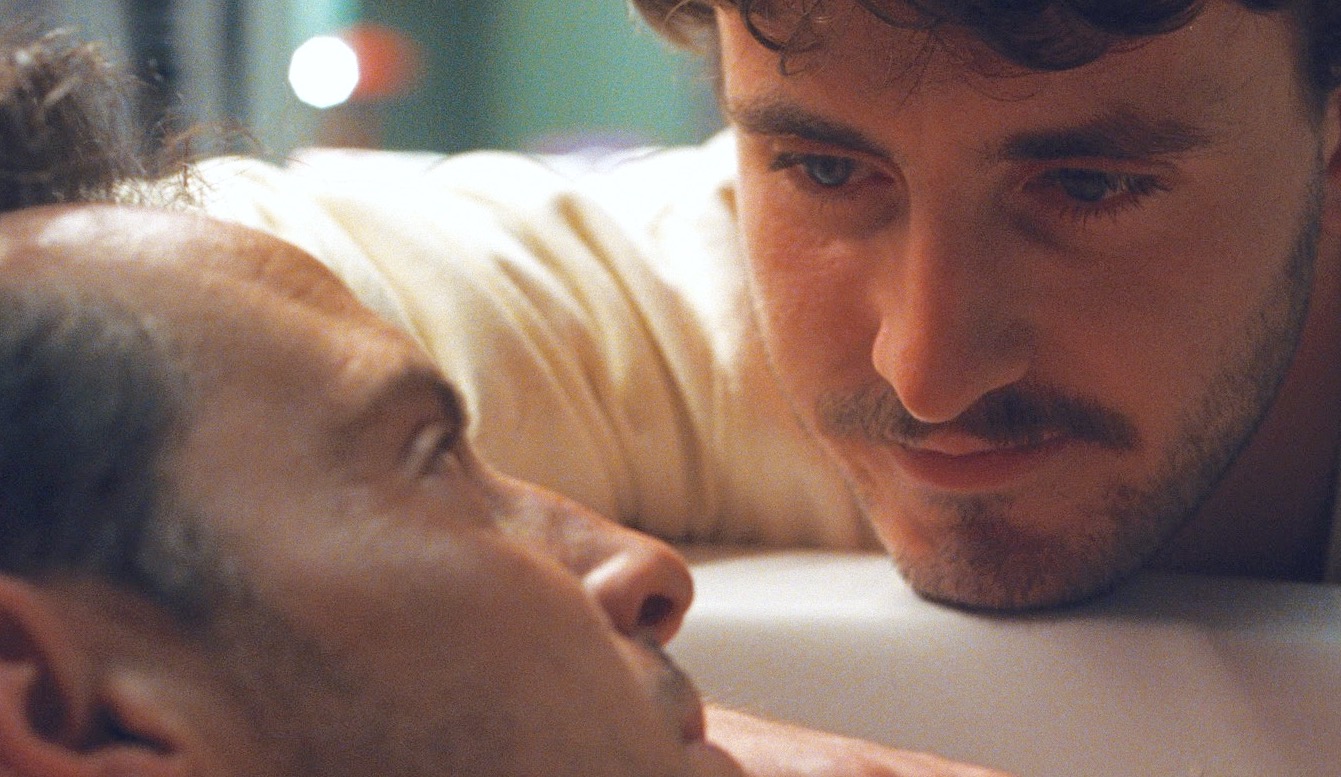
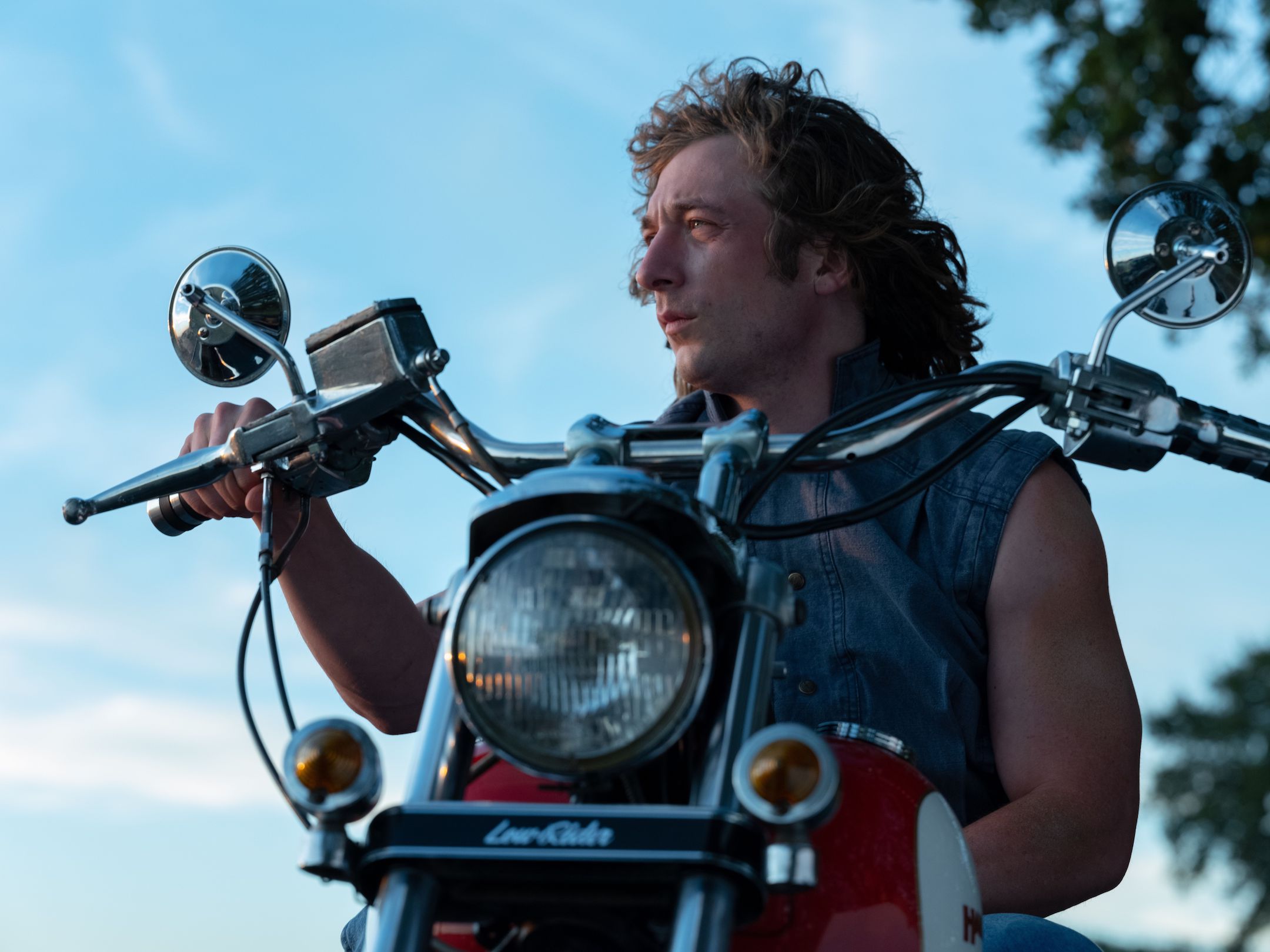
Like the B-side to a smash hit record, Priscilla flips the familiar Elvis Presley story to put the focus on someone other than Elvis. Cailee Spaneny (most recently seen in HBO’s murder mystery Mare of Easttown) is a revelation as the young Army brat who meets Presley when she’s only 14. (“Just a baby,” he tells her, almost admiringly, when she reveals to him her age.) Euphoria hunk Jacob Elordi plays Elvis, early in his ascent to the top of the world as he begins to woo the wide-eyed 9th grader while still a G.I. stationed overseas in Germany, then finishing his military service and skirting her away to Graceland, his Memphis mansion.

As she’s done in other films (like Marie Antionette, Lost in Translation and The Beguiled), director Sofia Coppola explores the experience of another young woman in an off-balance power dynamic. It’s a curious (and yes, admittedly creepy) relationship as Priscilla is swept away by the singing superstar, 24 at the time, only to become increasingly dissatisfied as a virtual captive in his castle. At six-foot-five, Elordi is considerably taller than Presley was, and his Elvis literally towers over the diminutive Spaeny, more than a foot shorter; their scenes together make a striking visual metaphor for the disparity of a grown, worldly adult man with an adolescent plucked from the nest of home, family and familiarity.

Priscilla is an arty, elegant film, a moody, often melancholy exploration of the girl who left her initially skeptical parents and eventually became Presley’s wife in 1967, when she was 22. (It’s based on Priscilla’s own 1985 memoir, Elvis & Me.) We’re transfixed as young Priscilla settles into her new habitat, a garishly ornate, male-dominated kingdom of sycophantic hangers-on, frenzied fans and a pill-popping husband who introduces her to drugs and tries to groom her into his expectations. Elvis is a control freak who chooses her clothes, dictates her makeup and hair style, and forbids her to accompany him on tour or movie sets. “Keep the home fires burning,” he tells her, while Priscilla comes to suspect he’s carrying on affairs with his Hollywood costars—like Swedish bombshell Ann-Margaret and Nancy Sinatra, Frank’s daughter—and possibly other women as well.

Elvis also has a mean, petulant, unpredictable streak; “I’ve got my mother’s temper,” he tells her after impulsively hurling a chair her way, missing her head by inches. And he has, um, intimacy issues in the bedroom.

As Pricilla’s rock and roll fantasy unravels (leading to their divorce in 1973), we come to see that Elvis and ‘Cilla have something in common; they’re both prisoners. He’s shackled to his fame, while she’s his bird kept in a gilded cage, a little girl lost in a dream, staring wistfully out Graceland’s windows to see what’s on the other side. Priscilla is her story, certainly, but it also surely chips away at the fabled mythology of the complicated superstar with whom she spent more than a decade of her young life.

—Neil Pond

Tagged , , , ,

Civil Righter

Bringing an anti-discrimination fighter on the sideline of history into the spotlight

Rustin
Starring Colman Domingo
Directed by George C. Wolfe
PG-13

In theaters Nov. 3, available on Netflix Nov. 17

Half a century before he was awarded the Presidential Medal of Freedom by President Barack Obama in 2013, Bayard Rustin made his mark as a ferociously dedicated anti-discrimination crusader. Though he’s been marginalized by history and somewhat shuffled into the sidelines of the bigger Civil Rights story, Rustin organized one of the largest peaceful protests ever, which in 1963 drew a crowd of some 250,000 to a massive demonstration on the National Mall in Washington, D.C., and provided the stage for Dr. Martin Luther King’s monumental “I have a dream…” speech. And it led, nine months later, to the passing of the landmark legislation of the Civil Rights Act, officially prohibiting discrimination based on sex, race, color or national origin.

Rustin’s planning for that historic day in D.C. is the framework of this stirring biopic (produced by Barack and Michelle Obama) starring Colman Domingo. The versatile Tony-winning stage actor—who’s also appeared on TV’s Fear the Walking Dead and Euphoria—gives a dynamic, Oscar-baiting star turn as the pacifist leader whose behind-the-scenes activism was often hampered by his open homosexuality, his former ties to the Communist Party and his non-mainstream (Quaker) religious background. As if being Black in America in that tumultuous era wasn’t perilous enough by itself, Rustin was sometimes slurred as a “pervert and a traitor.”

A large ensemble cast rounds out the story as various politicians, union heads and Black movers and shakers swirl—often contentiously—around Rustin. There’s Jeffery Wright as combative Harlem Congressman Adam Clayton Powell; lauded stage and screen star Audra McDonald is NAACP leader Josephine Baker; British thespian Amil Ameen plays MLK, the young firebrand Baptist preacher who became a Civil Rights icon. But Chris Rock seems a bit misplaced; the well-known comedian never really feels comfortable (or believable) in the stern and serious groove as Black activist Roy Wilkins.

The movie itself is mostly standard fare as biopics go; it’s a bit wordy, dialogue-heavy and stagey, like a play that decided to become a movie instead. But it gives plenty of room for Domingo—in real life an openly gay actor—to shine as the Black idealist on the margins of the Civil Rights movement, who believed in freedom for all through Gandhi-esque nonviolence even in the face of violence. Rustin, who’s conspicuously missing a molar from a beating by a cop, later tells someone else to hit him on the other side of his mouth, for “symmetry.”

Rustin hails this little-known racism fighter who worked from the sidelines to harness the power of peace to make walls fall, move mountains and work toward a world-changing “symmetry” of equality for everyone.  

—Neil Pond   

A Robo-Slasher Freak Show

Hit videogame franchise makes for disappointing horror flick

Five Nights at Freddy’s
Starring Josh Hutcherson, Piper Rubio and Elizbeth Lali
Directed by Emma Tammi
PG-13

In theaters and streaming on Peacock Oct. 27

Based on a hugely popular videogame franchise, this misguided monster mash is a muddled fright-night mess about buried trauma, lost childhood, disappearing kids, ghosts, and a group of animatronic animals going rogue at an abandoned pizzeria. Think Chuck E. Cheese as a crazy creepshow.

Hunger Games actor Josh Hutcherson stars as Mike, a down-on-his luck security guard at a long-abandoned pizza parlor, Freddy Fazbear’s, where night work has an unusually high turnover rate. Elizabeth Lail (from TV’s Once Upon a Time) plays a helpful cop with a deep secret, and young newcomer Piper Rubio is Mike’s little sister, Abby, at the center of everything with a copious amount of crayon artwork “from beyond.” Matthew Lilard, a solid character actor in dozens of TV shows and movies for more than two decades, chews the scenery in his small but pivotal part.

Mike wrestles with nightmares about something that happened long ago…maybe it’s got something to do with the haunted pizzeria and its fatal fun-zone arcade? Do ya think?

How does one movie tie all that together? Well, in the case of this off-kilter robo-slasher backed by horror producer Jason Blum, not very well. It seems aimed at young teens and diehard gamers, with a handful of jump-scare jolts and only a tepid degree of real terror; the dialogue is often stiff and (unintentionally) laughable, the actors seem to forget they’re in a horror movie, and this wannabe fright flick fumbles and stumbles sustaining tension or dread in its cavernous “spook house” setting—like a particularly odd scene in which little Abby makes a play fort for a sleepover with the overstuffed Frankenbots.

Hey, there’s Mary Stuart Masterson, all grown up from the ‘80s and early ‘90s and her starring roles in Fried Green Tomatoes and Some Kind of Wonderful. And is the animatronic band really jiving to Lou Reed, and Johnny O’Keefe’s 1950s rockabilly hit “Wild One”? And singing The Romantics? Yep, and I gotta give the movie some props for making “Talking in Your Sleep,” the group’s biggest hit, sound even more ominous than it did back in 1983.  

The creatures—a motley, distressed-looking ensemble that resembles shipwreck survivors washed ashore from the island of misfit toys, or mangy mascots for teams playing in a Twilight Zone league—will be familiar to fans of the videogames. But everyone else will likely feel like they’re being introduced to murderous, mangy, misunderstood Muppets. Maybe that’s because they’re full-size creations designed by the late Muppet-master Jim Henson’s iconic puppetry company.  But I don’t remember Kermit the Frog ever opening his mechanized maw and chewing up someone’s face, Saw-style.

Five Nights at Freddy’s adds up to two hours of a clunky, junky pizzeria freak show, with an odd mix of toppings, extra carnage and served super cheesy.

Neil Pond

Tagged , , ,

Dirty Work

Michael Fassbender stars in this cold stare into the void of a hired assassin

The Killer
Starring Michael Fassbender
Directed by David Fincher
Rated R

In limited theatrical release Oct. 27, on Netflix Nov. 10

He travels the world, loves British rock band The Smiths, meticulously tracks his heart rate and limbers up every day with yoga. And he makes his living killing people—with rifles, pistols, nail guns, bombs, poison or whatever other means necessary. Michael Fassbender plays the unnamed professional assassin-for-hire in this stylishly chilling neo-noir drama from director David Fincher, who has plumbed the dark, cold depths of bleak nihilism before in movies like Seven, Zodiac, Fight Club, The Girl with the Dragon Tattoo and Gone Girl. It’s another stone-cold stare into the void as we watch “the killer” go about his work with icy, expressionless, amoral precision, purging himself of empathy and laser-focused on his job—until an assignment in Paris hits a snag, his bullet misses its target, and the hunter suddenly becomes the hunted. It’s a gripping riff on a fatalistic job and a guy who does it, with an aloof “procedural” tone that takes an abrupt shift into revenge-survival mode as Fassbender’s character tries to find out—and rub out—the parties assigned to clean up the loose ends of his botched hit. The grim goings-on are deadly serious, but there are a few glimpses of dark humor as the killer uses aliases (we never know his real name) from classic TV shows, employs a cheese grater in a brutally bruising fight scene, and has a fateful encounter with a rival (Tilda Swinton) who tells a fearlessly funny existential joke about a bear in the woods. We never get to know much about the killer, and that’s the way he wants it, going about his work in the shadows, an anonymous figure leaving a path of destruction on a career track where people want other people dead. A finely tooled exercise in dirty work, this is a lean, mean descent into a deadly “professional” underworld with dozens of ways to die—especially if you cross paths with The Killer.

—Neil Pond

Scorsese’s Wild West

The acclaimed director tackles a dark chapter of American history, and makes another movie masterpiece

Killers of the Flower Moon
Starring Leonardo DiCaprio, Robert De Niro & Lily Gladstone
Directed by Martin Scorsese
Rated R

In theaters Friday, Oct. 20

“If you’re gonna make trouble, make it big.”

That’s what big-deal bigshot William Hale (Robert De Niro) tells his neophyte nephew (Leonardo DiCaprio) early in director Martin Scorsese’s sprawling, slow-burn neo-Western epic about a grim and horrific chapter of American history in the expanding frontier of the 1920s.

And indeed, there’s some very big trouble in this very big big-message movie, which clocks in at nearly three and a half hours.

DiCaprio’s character, Ernest Burkhart, is a young WWI veteran who returns from the battlefield to stake out a new life “out West” on the Great Plains of Oklahoma, where oil has been discovered on land settled and owned by the Native Americans of the Osage Nation. Ernest freely admits—a couple of times—that he “loves money,” and there’s certainly plenty of it here, bubbling and spewing in geysers from the ground…and making the Osage some of the most fabulously wealthy people on the planet.

And it’s also made a boomtown for carpetbaggers, non-indigenous “white” opportunists like Ernest’s uncle, thirsty for some of that black gold—or all of it. So, what will money-loving Ernest do to get filthy rich, far beyond what he can rake in playing poker or even pulling highway-robbery holdups?

Scorsese is probably best known for his crime sagas—Goodfellas, Casino, Gangs of New York, The Irishman, The Departed. This isn’t a “gangster” movie, as such, but it certainly has the feel of the director’s familiar wheelhouse, with a core group (yes, a gang) of bad men doing bad things. In the Osage Nation, they’re robbing the natives of their wealth by almost every means possible, including murder.

Ernest falls in love and marries an Osage woman, Molly (Lily Gladstone), and then, one by one, all Molly’s sisters and other family members start dying. Who’ll be next? Maybe even Molly? Who blew up that house? Or left that dead body out in the woods? And what’s Ernest got to do with it? As the death toll rises into double digits, J. Edgar Hoover sends a federal agent (Jesse Plemons) from the Bureau of Investigation—which would later become the FBI—to nose around.

Based on the bestselling 2017 novel by David Grann, it’s a complex, complicated tale of systemic racism, white nationalism, greedy imperialism, income disparity, ethnic genocide and a conspiracy of silence and coverup, all folded into a love story that takes a wrenching wrong turn. DiCaprio has rarely been better, playing a scowling, morally compromised yahoo in an oversized Stetson, and Gladstone (who grew up in the Blackfeet Nation) has an almost Mona Lisa-like serenity, anchoring the story with a radiance and grace that will doubtlessly be recognized by the Oscars and other year-end awards. Their chemistry is lusty and palpable.

It’s all massive, majestically moving and monumental, but also intimate, richly detailed and finely tooled, full of authentic “period” touches—and enough violence, including an ad hoc autopsy with a handsaw, to meet minimum requirements for a Martin Scorsese movie.

DeNiro—who, like DiCaprio, is one of Scorsese’s favorite go-to actors—is great, as usual, craftily playing “King” Bill Hale, a dapper Osage benefactor and community builder whose smile masks a much more sinister side. There are dozens of other characters too, many played by authentically indigenous Osage actors, and small-part cameos by musicians Jack White, Sturgill Simpson, Pete Yorn and Jason Isbell, plus Brendon Frasier and John Lithgow.

But appropriately enough, it’s Scorsese, the virtuoso filmmaker who’s crafted yet another cinematic masterpiece of movie storytelling, who gets the last word, quite literally, in a final wrap-up epilogue that show how true crime became entertainment for the masses—like this all-star opus about “big trouble” that the modern-day Osage still refer to as their nation’s Reign of Terror.

Neil Pond

Tagged , , , ,

The Devil Made Me Do It

New ‘Exorcist’ is a schlocky retread of shocks we’ve seen before, with diminishing returns of disturbia

The Exorcist: Believer
Starring Leslie Odom Jr., Jennifer Nettles & Ann Dowd
Directed by David Gordon Green
Rated R

In theaters Friday, Oct. 6

Fifty years ago, people all over the place were freaking out about director William Friedkin’s The Exorcist. I saw it in a downtown Nashville theater with one of my high school friends and her mom, who was progressive enough to take a couple of 16-year-old kids to a movie swirling with buzz about how deeply disturbing it was, and that anyone who saw it might be opening themselves up to dark, satanic forces.

Well, my friend, her mom and I and survived it, just fine. And The Exorcist went on to claim a rightful place as a horror classic, the gold standard of movies about the ancient belief in demonic possession. It became a brand name, a franchise of five films spread over as many decades.

Now there’s a sixth, and even though it’s an Exorcist movie, it’s no Exorcist. The new fright flick is a schlocky, hyperventilating return to the basics of the first movie, transplanting the original setting of D.C.’s leafy Georgetown neighborhood to the modern-day South (everything, it seems, is filmed in Georgia these days) with all-new characters joined by a couple of old ones, including Ellen Burstyn reprising her role from 1973. There’s someone else, too, but I won’t spoil it.

As Charlie Daniels once sang, the Devil went down to Georgia, and here he does, indeed. Hey, that must mean all the demonic scourge has been purged from Washington, right?

When a couple of young school chums (Lidya Jewett and Olivia Marcum) go missing for several days in their tight-knit, church-going community, their parents (Leslie Odom Jr., Jennifer Nettles) are understandably distraught, then overjoyed when the two little girls are found, disoriented and a bit worse for wear after their three-day trek in the woods. After a battery of medical procedures and psychological testing, their moms and dads—and a devout next-door-neighbor (Ann Dowd)—realize what the audience already knows: Some kind of demon has hitched a ride home inside the two little sweetums.

Norbert Leo Butz and Jennifer Nettles play parents of a real problem child (Olivia O’Neill)

Both girls get progressively weirder in this devilish two-fer before going head-spinning, feral-batshit crazy. The Exorcist: Believer retreads most of the shock-value stuff of the original film—writhing young bodies, blood-stained nightgowns, spooky levitation, a vicious act with a crucifix and droning incantations of religious mumbo jumbo. One of the girls has slash marks on her back spelling out a message that viewers of the 1973 movie will certainly recognize. “The body and the blood!” screams the other, stomping down the aisle of a church service in a ranting reference to the Christian ritual of communion. A character compares what the girls have been through with the sacred mythos of Christ descending into hell for three days between his crucifixion and resurrection.

Eventually, a Catholic priest is called in, but this exorcism becomes a grassroots all-in affair, with two little girls strapped into chairs, hissing and writing and spewing black bile as parents, friends and neighbors intone Bible verses and splash on “holy” water.

Only here, 50 years later, it’s not very frightening, and it’s certainly not terribly shocking anymore. This retread into familiar territory doesn’t do much of anything new, especially when it comes to deeply disturbing viewers, and it crowns it all with a tidy little bow of suggestion that the powers of demons and darkness can only be countered by being a “believer.”

Director David Gordon Green also steered three Halloween sequels, and he collaborated with Danny McBride on the gonzo pothead movie comedy Pineapple Express and TV’s East Bound and Down, Vice Principals and The Righteous Gemstones. McBride is also one of this film’s cowriters and producers, and this project was hatched during breaks in production of Gemstones, the profanely hilarious HBO comedy series in which he plays a comedically corrupt televangelist.

McBride doesn’t appear in this Exorcist, though, and that’s too bad. Having Jesse Gemstone do battle with a double-dipping demon—now that, I believe, would make for one fine holy hell of a movie.  

Tagged , , , , ,