Category Archives: Movie Reviews

Crafty Criminals

Jason Statham does the dirty work in Guy Richie’s action-comedy ‘Operation Fortune’

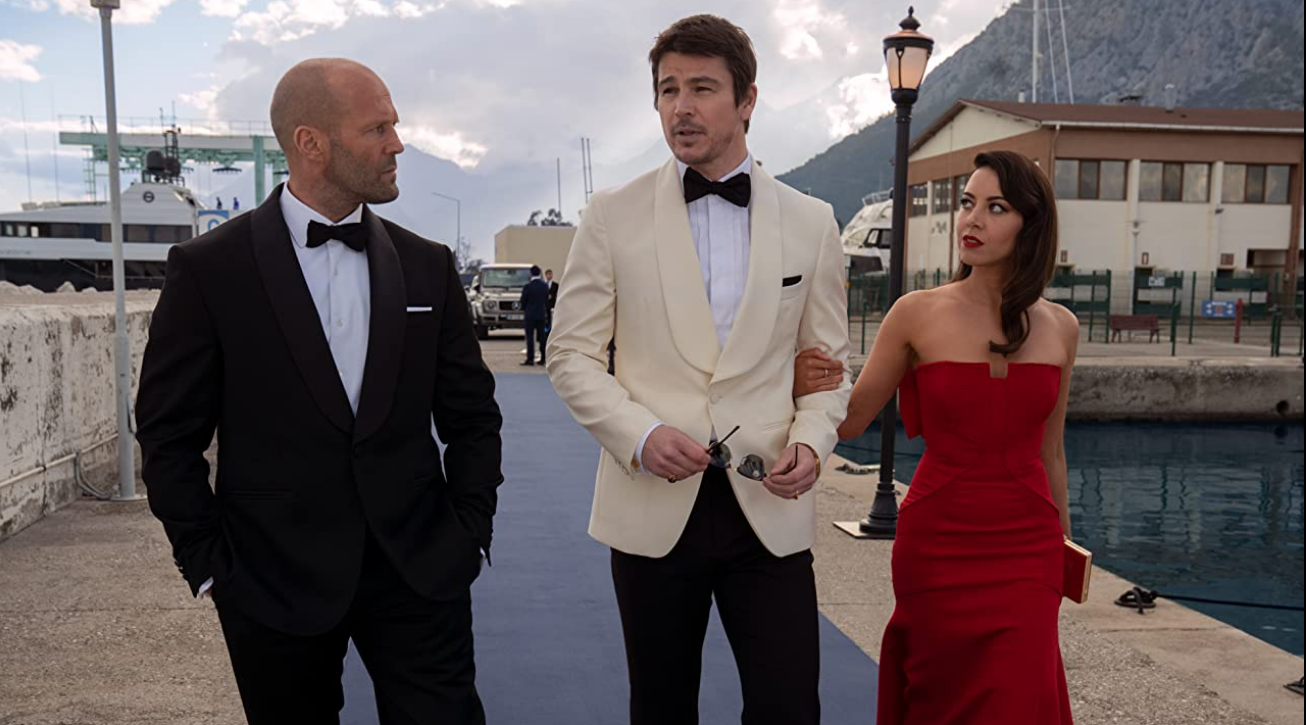
Jason Statham, Josh Hartnett and Aubrey Plaze in ‘Operation Fortune,’ a movie that delayed a full year…but not for the reasons you might think.

Operation Fortune: Ruse de Guerre
Starring Jason Statham, Hugh Grant, Aubrey Plaza, Carey Elwes and Josh Hartnett
R
Directed by Guy Richie
How to Watch: In theaters Friday, March 3

A high-stakes, slam-bang spy caper, director Guy Richie’s latest flick again shows off his fondness for crafty criminals, fast-moving action and wisecracking British gents.

In Operation Fortune: Ruse de Guerre, a super-agent and his team recruit a Hollywood star to help them on a far-ranging mission to track down a heisted something-or-other. If they don’t get it, someone else will—and that would be bad news for, well, everybody else.

What they’re after, as they follow a $10-billion-dollar money trail, involves special agent Orson Fortune (Jason Statham) breaking bones, busting heads and blasting bad guys all over the place, from the French Riviera to Turkey and Quatar.

And it also involves a sexy-smart computer sleuth (Aubrey Plaza), a munitions and muscle man (British rapper Bugsy Malone), a government secret-ops liaison (Carey Elwes), a celebrity-obsessed billionaire (Hugh Grant) and his Hollywood movie-star crush (Josh Hartnett).

The film’s subtitle, Ruse de Guerre, is French for the “deception of war,” and deception is the name of Operation Fortune’s international cat-and-mouse game.

The movie’s been “in the can,” finished and ready to go for more than a full year. Reportedly, its release was postponed not by the COVID 19 pandemic, but for its depictions of Ukrainian gangsters.

Director Richie is known for his British gangster films Snatch and Lock, Stock and Two Smoking Barrels; the Sherlock Holmes franchise with Robert Downey Jr.; The Man From U.N.C.L.E, the big-screen remake of TV’s 1960 spy series; Disney’s Aladdin; and the medieval epic King Arthur: Legend of the Sword. He likes his popcorn movies to have pop, ka-pow and lots of punches, and this one’s got all of those. It’s fast and nimble, sharp and stylish, with likably roguish, smack-talking characters doing dirty work.

The movie opens with the rhythmic click-click-click of shoes on a well-dressed character as he makes his way down a long, polished hallway, setting the stage for the film’s driving percussive beat of quick edits, dapper elegance, quippy banter and globetrotting, jet-setting travel that rarely pauses to catch its breath.

It’s a reunion for the director with Hugh Grant, who appeared in The Gentlemen, another of Richie’s criminal-caper flicks, and with Statham, with whom Richie collaborated Wrath of Man (plus four other projects). British actor Peter Ferdinando—who plays a disreputable rogue spy competing with Statham’s character for the whatzit—was an earl in King Arthur: The Legend of the Sword.

Aubrey Plaza fires away.

Grant, who became a star in British romcoms and costume dramas— like Four Weddings and a Funeral, Sense and Sensibility, Love Actually and Bridget Jones’s Diary—continues to flex his comedic chops. Plaza, best known as the deadpan April Ludgate in Parks and Recreation and more recently on HBO’s season two of The White Lotus, has saucy fun as the team’s cool, confident tech chick. And Hartnett—whose resume includes playing the Wolfman in the TV horror series Penny Dreadful—slips right into the movie’s meta-joke, as a Hollywood action star who now finds himself playing himself in some for-real, life-or-death cloak-and-dagger business.

But the movie is built around Statham, who continues to ride his reputation for intense, tough-guy roles, as established in the Fast & Furious franchise, The Expendables and a slate of other action-thriller films. His schtick ain’t Shakespeare, but he does elevate meaty, muscle-bound macho to a kind of movie art form—one he satirized to great effect alongside Melissa McCarthy in the rollicking comedy Spy. It doesn’t seem like any stretch at all for him here, playing a character whose quiet, coiled collectedness can erupt, when necessary, in a lethal torrent of bruising force, served up with a dry, wry slice of Brit wit.

There’s a car chase with a vintage Mustang; characters come and go between mansions in luxury jets and private yachts; there’s more than one discussion of fine wine. Everyone, even the thugs, looks dashing. The movie drips self-assured style and oozes money, and people take some realistic-looking pummeling in the fight scenes. But the action sequences seem almost like afterthoughts, paling in comparison to jaw-dropping James Bond moments or anything in the Mission: Impossible films. An explosion blowing out the end of a tunnel? A footrace to catch a guy on a motor scooter? A stuntman falling from off a building? Yawn.

Operation Fortune throws a lot at the screen—characters, breezy British repartee, exotic locales, and loads of kabooms and snapped bones. There’s a robbery—that’s also a ruse—that takes place to the tune of B.J. Thomas singing “Raindrops Keep Falling on My Head.” In the end, there’s even a movie within the movie; make sure you stay through the credits. The plot is a knot of detail, a thread to be unspooled, a puzzle box to unpack. “Let’s not make this any messier than it has to be,” someone says at one point. Indeed.

It’s a bit wobbly and untidy but not quite a total mess, from a director clearly back in his comfort zone—his wheelhouse—with a brisk, propulsive, combustive British action-comedy. Operation Fortune won’t win any awards, but if this ruse of a romp sounds like your cup of English tea, well, just sit back and sip and let Guy Ritchie, Jason Statham and crew do their thing.

—Neil Pond

Grin & Bear It

Cast of familiar faces put a ferociously flip, rip-roaring spin on a true incident from the ’80s

Cocaine Bear
Starring Keri Russell, O’Shea Jackson Jr., Margo Martindale and Alden Ehrenreich
Directed by Elizabeth Banks
R

In theaters Friday, Feb. 24

Sometimes, movies have titles that leave you wondering, or might be misleading. Quantum of Solace? Don’t look for it on a map—and what the heck is a Quantum of Solace, anyway? Reservoir Dogs? Watch the whole movie, and you won’t see a single reservoir, or any canines. A Clockwork Orange? No clock, no orange. I screened Armageddon Time last year and liked it, but when it was over, I still felt the title was, well, a tad obscure for a story about a Jewish boy growing up in Queens during the 1980s.

There’s nothing misleading or obscure, however, about Cocaine Bear. It’s 100% on the nose, about a bear that does cocaine—a lot of cocaine.

It’s an outrageously fun—and often quite hilarious—spin on the old “man vs. nature” theme, about people pitted against an apex predator and fighting to keep the body count low. Think Jaws in the Great Smoky Mountains, or Leonardi DiCaprio getting mauled by that grizzly in The Revenant, but, well, a lot more unbridled, unhinged fun than either of those. In this case, the predator is a black bear flying high on blow from a drug smuggler’s crashed airplane.

Black bears—as we learn from some onscreen information from Wikipedia, which opens the film—aren’t generally threats to humans; they’re mostly just looking for something to eat.

But a bear hoovering copious snootfuls of snow? Well, watch out!

And, as you might have heard, it’s based on a stranger-than-life true story from the mid-1980s, when a 175-pound bear did, indeed, come upon a duffle bag filled with cocaine cargo dropped from a smuggler’s airplane in the mountains of east Tennessee. When wildlife agents came across the bear, its stomach gorged with about $15 million worth of nose candy, it was dead. A medical examiner at the time said no creature, not even a large one, would have a chance surviving that much coke. There was no rampage, no attacks on people, just a major, unfortunately fatal OD, a sad end to a majestic creature of the forest.

So, the movie takes a few liberties—well, a lot—with the facts, as movies sometimes do. Actor-director Elizabeth Banks adds to her behind-the-camera resume (which includes directing one of the Pitch Perfect movies, and the 2019 remake of Charlie’s Angels) with this ferociously entertaining action-comedy romp as an ensemble cast of familiar-face characters converges, eventually colliding with the cocaine bear. She finds just the right tone of black (bear) humor, spicing the story with a few severed limbs and goosing it all with some well-timed, funhouse-level gotchas.

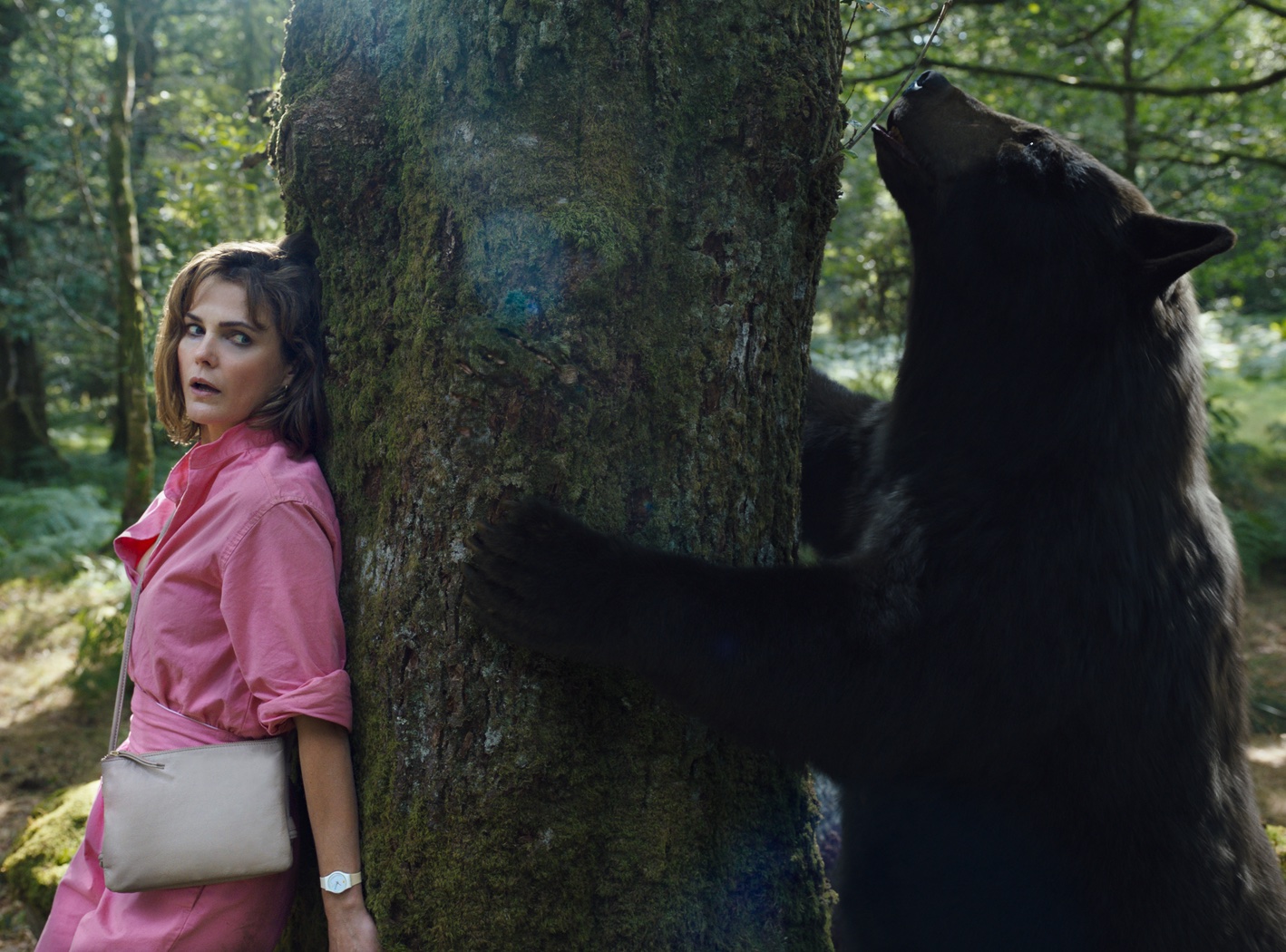
Keri Russell is menaced by a bear coked up on nose candy.

It’s a wild ride as a park ranger (Margo Martindale), wildlife inspector (Jesse Tyler Ferguson) and single mom (Keri Russell) venture into the Great Smoky Mountains National Park to look for a couple of young school-skipping teens (Brooklyn Prince, who made her debut as a wayward kid in the critically hailed The Florida Project, and Christian Convery). Meanwhile, the bear has already attacked a tourist couple (Kristofer Hivju from Game of Thrones and Dutch actress Hannah Hoekstra), while a motley crew of small-time drug-smuggling middlemen (rapper/actor O’Shea Jackson, Alden Ehrenreich—he was young Han Solo in the Star Wars spinoff Solo—and, in one of his final roles before his death last year, Ray Liotta) arrive in the area. They’re hoping to intercept the dropped drugs and scoot before a local cop (Isiah Whitlock Jr.) can sniff out their trail.  

Brooklynn Prince and Henry Christian get more than a tardy slip when they skip school.

You can’t have a movie about a wild, drug-crazed bear without a few bear attacks, can you? The mama bear in Cocaine Bear is completely computer-generated, designed by the same topline effects company that crafted amazing creatures for King Kong, Avatar and Lord of the Rings. But she behaves, well, certainly not like Yogi, Fozzie Bear or Paddington—more like you might expect a big wild animal on toot would really behave, out-of-its mind crazy and desperately craving another snort. (At one point, mama bear does a quick line off a lower leg recently detached from, well, you’ll just have to see it.) There’s blood and guts, but they’re balanced by the well-calibrated, giddily gruesome humor of watching an ensemble of recognizable actors gamely throw themselves into the merry, deep-woods mayhem.

As one of them finds out, pinned underneath an exhausted, zonked-out black bear passed out on top of him, that’s not somewhere you want to be.

Isiah Whitlock Jr. is a cop on the cocaine trail.

Do kids and baby bear cubs get into the stash, too? Yep. Can a cocaine-fueled bear outrun a speeding ambulance? Yes, she can. Is it wise to try to escape a bear—especially one zooming on coke—by climbing high into a tree, or locking a door? Um, no, it is not.

This could very well become a new cult classic, in the vein of some other movies that have successfully found ripe, riotously rich comedic tones in dangerous, deadly situations, like Werewolves Among Us and Snakes on a Plane, turning something frightfully fearful into something else, something fun, flipped-out and funny.

It’s a rip-roaring romp, with lots of rip and lots of roar—and a message from the ‘80s that still resonates today: Keep your stash of cocaine away from the bear!

—Neil Pond

Ant-y Warfare

Paul Rudd returns to the teeny-tiny character that’s become a major cog in the Marvel movie machine

Paul Rudd, Kathryn Newton & Evangeline Lilly confront a new challenge in ‘Quantumania.’

Ant-Man and the Wasp: Quantumania
Starring Paul Rudd, Evangeline Lilly, Michael Douglas & Michelle Pfeiffer
Directed by Peyton Reid
PG-13

In theaters Friday, Feb. 17, 2023

“From small things, mama,” sang Bruce Springsteen back in 1979, “big things one day come.”

The Boss wrote and recorded that song some 35 years before the first Ant-Man movie, in 2015, which introduced fans of the Marvel Comics character to Paul Rudd as the pizza employee, doting dad and petty thief who ends up with a high-tech, form-fitting super-suit that can shrink him down to become an insect-size do-gooder.

Or, when necessary, enlarge him into a towering colossus.

Just like real-life ants who can engineer and construct entire mega-colonies, form themselves en masse into bridges and boats, lift up and carry up to 5,000 times their body weight, and (of course) change the course of picnics, Ant-Man is a teeny-tiny “small thing.” But he’s become a big player in the Marvel movie franchise. Quantumania is the third in the Ant-Man movie franchise, and as the title suggests, it takes place in the “quantum realm,” a hidden dimension in the sprawling Marvel multiverse that’s only accessible through dark sorcery or weird science.

Or the movies like this one.

Quantum-ville is like Oz buzzing on super steroids and maybe some crystal meth, an explosively colorful place of breathtaking awesomeness, unfathomable peril and outrageous oddity—like Alice in Wonderland crossed with Mad Max: Fury Road, Lord of the Rings, Dune and the cantina scene from Star Wars, with a dash of Terry Gilliam’s fanciful Monty Python whimsy. Giant snails are used like horses, there’s a character who looks like a walking stalk of broccoli, and an army of minions with heads that resemble light bulbs. And another character (Carey Stoll) is practically all head.

Oh, and yes, there’s also Bill Murray, playing…oh, does it really matter? It’s Bill Murray.  

And this being a marvel movie, there are some very high stakes—not just the fate of the universe, but the fate of the multiverse and all universes, existence itself. Director Peyton Reed, who’s steered both previous Ant-Man movies, keeps the ka-pow factor high and the tone bounding giddily between high tragedy and quippy silliness. The fate of everything may hang in the balance, but even in the quantum realm, inappropriate, selfish, annoying behavior is still known as a dick move.

And rest assured, you’ll see the movie’s superbad bad guy, Kang the Conqueror (Jonathan Majors—from The Last Black Man in San Francisco, Lovecraft Country, Devotion) again. Dudes who want to rule the world, and more, aren’t easily dissuaded or dismissed. Like Taylor Swift tells us, haters gonna hate. And conquerors gonna conq.

Ant-Man confronts Kang the Conqueror (Jonathan Majors).

It’s a wild rush of heady stuff, but such is the Marvel way, which connects everything in Quantumania to the larger MCU (that’s the Marvel Cinematic Universe), a sort of multi-dimensional superhero realm for the interconnectivity of film properties based on Captain America, Thor, Iron Man, the Guardians of the Galaxy, the Avengers, Dr. Strange, Deadpool, Spider-Man and other characters rooted in Marvel comic-book ink.

I won’t get into the cosmic weeds of all the mind-bending details, but in this latest adventure, Scott Lang (pssst—he’s really Ant-Man) is sucked into the quantum realm (in case you forget what it’s called, it’s mentioned about a dozen times in the first 10 minutes of the film). He’s accompanied by Hope van Dyne (the returning Evangeline Lilly), whose superhero alter ego is the Wasp, and Hope’s brainiac-scientist parents (Michelle Pfeiffer and Michael Douglas, also reprising their roles). Kathryn Newton (Little Big Lies, Freaky, Supernatural) comes aboard as Pym’s young-adult daughter, Cassie, whose social activism keeps getting her in trouble on Main Street USA but well suits her for what she’ll end up doing alongside revolutionaries in the quantum realm.

Michelle Pfeiffer and Michael Douglas somehow keep their coifs looking stylish, in any dimension!

Can the multiverse be saved? Can Kang be defeated, or at least contained? Will Scott finally bond with his daughter? Will Michelle Pfeiffer and Michael Douglas’ expertly coiffed hair ever be unfashionably mussed, even after being violently downsized to microscopic scale, sucked into the vortex of inter-dimensional debris and finding themselves in the middle of a quantum-realm war?    

MCU fans will geek out over the sheer spectacle and the bountiful bombast of CGI—two hours of mind-numbingly expensive zipping and zapping and crashing and smashing. There’s one particular scene (involving gazillions of Lang and Ant-Men, permutations of “all possible outcomes”) who mobilize into something like a teeming human anthill. If you love you some Paul Rudd—an immensely likeable and prolific actor with more than 130 movie and TV credits, from franchise blockbusters to zany romcoms, relationship dramas and even spy flicks—well, you’ll certainly get a heaping helping of him here.   

And in this packed and stacked Ant-Man movie, some actual ants get their spotlight in a major way.

This supersized, noisy and sometimes chaotic superhero adventure won’t be for everyone—particularly those who like their movies smaller, quieter, a bit more subtle and with less blowout spectacle, and fewer ants. But for Marvel fans, it’s the latest mega-movie about a teeny character doing tremendous good, on a massive stage across space and time.

Small things lead to big things—in a Springsteen song, or in the MCU’s multiverse, anything is possible. Ant-Man is an everyman hero, movie manes never get mussed, and Paul Rudd can truly do everything, everywhere, all the time, all at once.

—Neil Pond

Bot Life

A super-smart android doll makes life interesting—and then dangerous—in this spunky horror comedy

M3GAN
Starring Alison Williams & Violet McGraw
Directed by Gerard Johnstone
R

In theaters Friday, Jan. 6

Back in 1963, Telly Savalas starred in an episode of The Twilight Zone called “Living Doll,” playing a father who buys a talking doll for his daughter. But the chatty plaything becomes a pest, then a threat, telling him, “My name is Talky Tina—and I’m going to kill you.”

“Artificial intelligence” wasn’t such a hot topic in the early 1960s, an era long before smartphones, computerized appliances, interactive toys, Siri searches and self-driving cars. Today we’re surrounded by things that “think,” processing information much, much faster than the human brain.

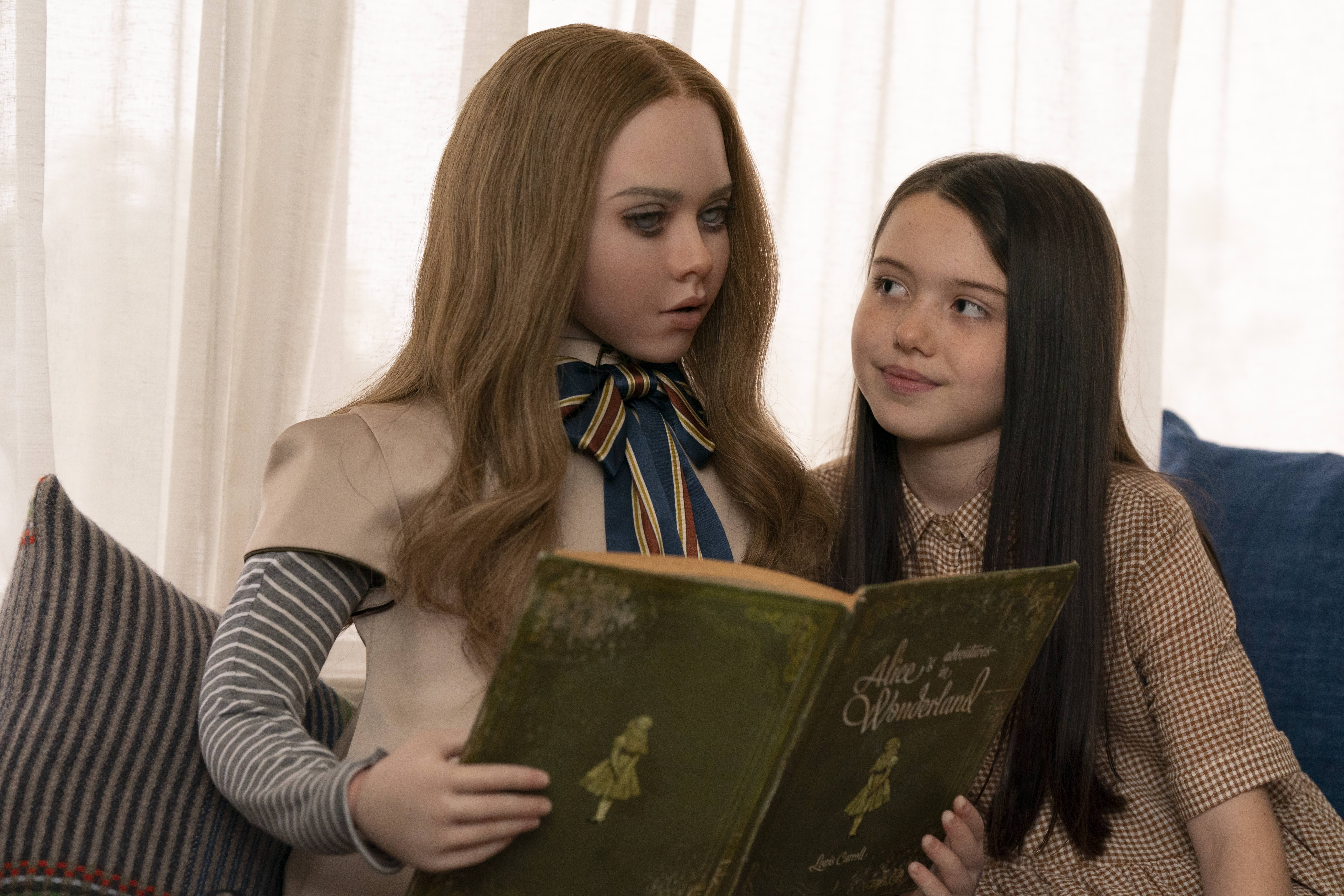
In M3GAN, a high-tech robotic doll takes over the lives of a young girl and her aunt. Alison Williams stars as Gemma, a computerized toy designer in Seattle who brings her latest prototype home as a companion to her niece, Cady (Violet McGraw), whose parents have died in a tragic road accident. Now Gemma is Cady’s official guardian, and she’s stretched thin with her demanding job and the overwhelming duties of being a new parent. M3GAN (it stands for Model 3 Generative Android) can do a lot of things, for golly-gee sure—but can she take the place of a loving mother?

M3GAN and Cady bond almost instantly. “She’s not a toy!” Cady insists, and indeed, the lifelike doll becomes Cady’s companion, best friend and playmate. She sings, she dances, she reads storybooks in the voices of the characters. She can “read” a room like, well, like a computerized android who knows what you’re thinking, what you’re feeling.

And she becomes a fierce protector. Bullying schoolboys, vicious dogs, meddlesome next-door neighbors, corporate males who want to control her—well, M3GAN’s got your number.

This spry, supple horror comedy nimbly slices into our ever-increasing reliance on things that aren’t human but that have become “essential” parts of everyday living. It’s tense and intense and scary without being gory, and its well-placed humor helps lighten the mood of eventual, inevitable murder and mayhem as M3GAN stands up for Cady, and for herself.

M3GAN becomes a sensation and makes Gemma, her creator, a superstar. She’s constructed of titanium and circuitry, with a rubbery silicone coating, but she’s made of pure gold, a sure contender to corner and crush the market for the toy company that commissioned her. (Even though we’re told she’ll retail for “less than a Tesla.”) But M3GAN has other ideas. And when things turn dark and ominous, as you know they will, the movie becomes a gleefully freakish joyride as we wait for her make her next maliciously nasty move, whether it’s bolting on all fours like a wild animal, weaponizing a nail gun or calmly pursuing a soon-to-be victim down a blood-red hallway, wielding a machete.

The film’s stylish horror-show cred is impressive. Williams, a former star of the TV series Girls, made a splash in Jordan Peele’s acclaimed terror parable Get Out, and young McGraw got her start in the streaming series The Haunting of Hill House. One of the producers is Jason Blum, whose Blumhouse franchise gave us Saw, The Conjuring, Insidious and Malignant.

There are respectful nods to the bountiful lineage of other scarifying movies that have come before, from Frankenstein to Chucky and Ex Machina, with touches of Stephen King and even The Evil Dead. As M3GAN mounts her reign of monstrously fun movie terror, the film raises some serious existential issues, most notably mortality itself as M3GAN comforts Cady over the loss of her parents. What is death, exactly? What happens after you die? And, in M3GAN’s case, how can you possibly “kill” something that was never alive to begin with?

It may make you think about what, exactly, Alexia is doing in your home when you’re away. Or if your smartphone is smarter than you are. Just how much do Google and Facebook and Amazon, or your Mac or PC, really know about what you’re doing online?

But if you see Telly Savalas stomping through your house and heading into the basement with a blowtorch…run!

—Neil Pond

Loud & Clear

All-star cast presents a searing drama about a homespun #MeToo movement

Women Talking
Starring Rooney Mara, Jessie Buckley, Claire Foy & Ben Whitshaw
Directed by Sarah Polley
Rated PG-13

In theaters Friday, Jan. 6, 2023

An all-star ensemble cast tackles a thorny subject in director Sarah Polley’s powerful presentation of a 2018 novel about the traumatic aftermath of horrific sexual abuse. 

The book was based on actual events that happened in Bolivia, when men in an ultraconservative religious community were arrested and eventually imprisoned for raping women and young girls after drugging them with animal tranquilizers. The film imports the story to America, as a small group of the victimized women—Mennonites in the book, but not noted in the film—meet in a barn during a tense two-day period to decide their fateful course of action for when the men return, out on bail.

There are indelibly potent performances by Roonie Mara, Jessie Buckley, Claire Foy and others as the besieged women huddling on haybales to debate faith, forgiveness, justice, morality and mortality, and craft their dreams for a better future. Suffering for years under the heels of a repressive patriarchy that has kept them apart from the “civilized” world and denied them access to education and technology, the women are barely literate. But, with the clock ticking and their attackers returning, they realize the importance of choosing one of the three options before them—staying and resisting, leaving forever, or simply doing nothing.

Ben Whitshaw plays a mild-mannered, college-educated Mennonite who has returned to the colony as a schoolteacher; he’s the only male the women trust, and he’s been asked to take the minutes of the meetings, to create a record. Significantly, he’s the only adult male in the movie that we ever fully see, or whose voice we hear—the lone sympathetic soul in a seemingly soulless place where the other males are either faceless sexual predators, abusive beasts, or enablers of a male-dominated culture that has fostered such toxic, repressive masculinity.

Ben Whishaw, Rooney Mara and Claire Foy star in ‘Women Talking.’

The discussions are fraught with weighty consequences. In this authoritarian religious microcosm, male leaders have told the women that the horrors they’ve experienced are only the fertile stuff of dreams and nightmares, the results of the hyper-active female imagination—and those pregnancies, well, they’re the work of ghosts, or even Satan. And if they ever, for whatever reason, deign to leave the colony, women will forever forfeit their ticket to all heavenly afterlife rewards.

It’s stylish and solidly theatrical, intimately small and intently focused in both scope and setting; it’s filmed in muted, monochromatic colors to underline the somber overtones and the seriousness of the situation. These are women at a breaking point, pushed to life-altering choices about what to do with their lives, how to move forward to ensure the safety of their daughters. As they grapple with the details of their homespun #MeToo movement to move out from underneath a gaslight toward true light, viewers are compelled to consider the wider, larger real-world connections—to women everywhere, anywhere, anytime, who bravely confront injustice and abuse.

Although there’s little action, in a conventional movie sense, there’s plenty of drama as the women do what the title suggests: They talk. They also sing hymns, quote Scripture, shout, and sometimes laugh—and let fly an f-word or two. A familiar Monkees hit, blaring from a car, is a bittersweet intrusion of the “forbidden” outside real world popping—for just a moment—their insular little bubble. There’s even a shoutout to gender fluidity, represented by a young female character who decides—after her rape and miscarriage—that she simply doesn’t want to be a girl anymore.  

It’s not Top Gun or Avatar, by any stretch. Nothing blows up, no one gets shot, and the only high-velocity moment is when a horse-drawn buggy veers off into a field. But Women Talking is explosive in other ways, including how it presents a group of women facing choices that could very well blow up the only world they’ve ever known. As the rest of America is being “counted,” against the film’s backdrop of the 2010 national census, these women are also making their presence known.

A late entry as a contender for one of the year’s best movies, it’s a monumentally consequential, timelessly important film. How important? Frances McDormand (who has a small role as one of the women) and Brad Pitt (who doesn’t) are among the producers, believing in the film enough to put their movie muscles into it.

It quietly, vividly, simply and surely sears its way into your soul, a bold, thought-provoking testament to the revolutionary power that can start with women talking, then mapping the way for themselves and future generations to navigate the world.  

Party On! ‘Babylon’ Movie Review

Margot Robbie cuts loose in spectacularly profane ode to Old Hollywood debauchery

Babylon
Starring Margot Robbie, Brad Pitt, Jean Smart & Diego Calva
Directed by Damien Chazelle
Rated R

See it: In theaters Friday, Dec. 23

A sweeping, swaggering, spectacularly saucy salute to old Hollywood, Damien Chazelle’s new Oscar-bait period-piece epic spins a sprawling, gloriously seedy tale about the deep-dish decadence of a bygone era.

Drugs? For sure. Sexual kink? Plenty of that! Excessive nudity? Oh, yeah. Hard-partying depravity? Check.

This big, boisterously sleazy ode to Hollywood’s baser instincts of yore clocks clocks in at just more than three hours, spanning several years in the intertwined lives of its ensemble of characters, from the late 1920s into the early ‘50s. Among other, more salacious things, it’s a looking glass into the moviemaking machinery and the process of those “golden years,” from suffocatingly hot studio soundstage sets to chaotic, wide-open on-location spectacles, with hundreds of extras running into (and over) each other and multiple movies filming at once, racing the setting sun before the productions run out of light.

Brad Pitt

The all-star cast is anchored by Margot Robbie, and you can expect her name in the conversation as a Best Actress contender. She’s the “face” of the movie as Nellie LeRoy, an aggressively eager starlet, hungry to climb up the Hollywood food chain. Brad Pitt plays Jack Conrad, a dashing former superstar watching his leading-man legend fade as movies transition from silent films to “talkies.” Diego Calva played a drug lord in Netflix’s Narcos: Mexico, and here he makes his movie-mainstream debut as Manny Torres, a lowly Mexico-born film assistant working his unlikely way to becoming a big-shot studio exec. Jean Smart of Hacks is a Hollywood hack, the been-there-seen-that gossip columnist who watches it all from the sidelines.

Jean Smart

Hey, look! There’s Tobey Maguire (he was Spider-Man!), Lukas Haas (the grownup kid from Witness!), Olivia Wilde (she directed Don’t Worry Darling and Booksmart!), Katherine Waterson (her dad is Law & Order star Sam Waterson!), Eric Roberts (Julia’s brother!), and Flea (the bass player from the Red Hot Chili Peppers!). A jazz trumpet player (Jordan Adepo) and a lesbian torch singer (Li Jun Li) are also along for the boisterous, bumpy ride through crazytown.

This outrageously excessive, cocaine-fueled romp depicts a time when Hollywood was itself outrageously excessive, often living up (and down) to its hedonistic reputation—and its nickname, lifted from the ancient cradle of civilization that became Biblical shorthand for evil and immorality. You get a good idea about the why the movie is called Babylon in the Fellini-esque bacchanalia buffet of rampant debauchery that opens the film, half an hour before the movie’s title even appears onscreen. 

Director Chazelle made his mark with the Oscar-winning Whiplash and his smash 2016 musical, La La Land. That movie, too, was set in Hollywood, but it seems like a soft, gentle breeze of a lullaby compared to the roaring hurricane of tawdry behavior in Babylon, which depicts a Hollywood gone wild, yet to be reined in by a “morality code” or restricted with movie ratings. If you think Charlie Sheen was a baaad boy and Lindsey Lohan the poster child for wasted excess, well, they can’t hold a candle to this.

It’s not a true story, but it is true-ish, and characters are amalgams of certain Hollywood screen idols of yesteryear—Pitt’s character represents a cross between the swashbuckling Douglas Fairbanks Jr. and the seductive, big-screen suavity of Clark Gable. Robbie’s Nellie LeRoy follows the career trajectory of Clara Bow, a former Brooklyn flapper who became one of filmdom’s first “sex symbols” in the Twenties—and whose abrasively nonconformist lifestyle didn’t exactly help Hollywood transcend the widespread perception of movies as cheap, disposable “low art.”

Margot Robbie

Bawdy, extravagant, explosively vulgar and sometimes salaciously savory—it’s all that and more, and you’ll probably not see another movie this holiday season with explosive pachyderm diarrhea, phallic-shaped pogo sticks, a subterranean lair full of freaks and geeks, and a conversation discussing the, ahem, dimensions of Charlie Chaplin’s manhood. And Margot Robbie fights a rattlesnake. Yes, Margot Robbie fights a rattlesnake.

But it’s also funny, sad, sometimes quite poignant, and heart-achingly human, depicting a place of towering artifice teetering on a foundation of vanity and fever dreams, on the cusp and the cutting edge of sweeping innovation and change, with characters watching their own fortunes rise and fall along the wayside. The end sequence, which takes place (fittingly enough) inside a movie theater, is a dazzling, almost hallucinatory salute to the durability of film, the magic of an art form that will ultimately outlast the lives of all who ever work in, on or for it.

Fame and fortune can swell and soar, as did the Tower of Babel in the ancient city of Babylon—before it all came crashing down. Nothing lasts forever. And like the resplendently tawdry, off-the-rails Hollywood depicted in Babylon, every party comes to an end, one way or another…no matter how many drugs or how much booze, how many naked starlets, trumpeting elephants or hissing vipers.

Big Blue Blockbuster

How much movie can $350 million buy you? See the new ‘Avatar’ and you’ll see

Avatar: The Way of Water
Starring Sam Worthington, Sigourney Weaver, Zoe Saldana & Stephen Lang
Directed by James Cameron
PG-13

See it: In theaters Friday, Dec. 16

Thirteen years after the sensation that was the original Avatar (2009), director James Cameron returns to the fantastical world of Pandora, the far-out celestial home of the peaceful blue-hued humanoid creatures known as the Na’vi. They’re about 10 feet tall, towering over mere humans, but still small fries compared to the all-out epic-ness of this mega-movie spectacle that cries out for the biggest screen possible. It’s a towering cinematic achievement of visceral emotion, slam-bang action and jaw-dropping special effects that show just how far a budget of some $350 million can stretch.

All the money is “showing” in this 3-D saga that moves the story from the lush primordial floating forests of the first film to a more “tropical” island setting, where a group of green-skinned Na’vi have evolved to live for extended periods underwater. (Their tails are thicker, for steering as they swim, and their skins adorned with what look like Mãori tattoos, a distinctively Polynesian touch.) It all looks amazing, richly detailed, hyper tactile and mesmerizingly real, even though you know what you’re seeing is enhanced hi-tech fakery—CGI, created from extensive motion-capture performances by the actors. See it in 3D and you’ll swear things are floating right in front of your face.

Cameron loves the water; his seafaring disaster drama Titanic (1997) was an unqualified smash, the most commercially successful movie ever made, and The Abyss (1989) took a really, really deep dive into oceanographic, extraterrestrial sci-fi. There are swooshy echoes of those previous movies in this galloping golly-whopper, which continues the original Avatar’s themes of cultural coexistence, ecological awareness, the evils of colonization and the atrocity of genocide. Savvy moviegoers will detect other strands of its wide-ranging movie DNA, including cowboys-and-Indians Westerns, Pacific war flicks, chomp-chomp dinosaur romps, robotic dystopias and even Moby Dick.

Sam Worthington and Zoe Saldana return to their original roles—as Jake Sulley, the former human earthling who became a Na’vi hybrid through a process of avatar-ization, and his mate, the Pandora homegirl Neytiri. They’re both scrappy fighters when they must be, but mostly they enjoy the laid-back life on Pandora as a happy blue family. Their three kids may have grown up on a distant moon on the other edge of a distant galaxy, but nonetheless are well versed in teen ‘tude, smack-talk and using expressions that sound like they spilled forth from almost high-school hallway in America, like “bro,” “bitch,” “cuz” and “perv.” I guess teen lingo is a truly universal language.

When earthlings—the “sky people”—return to Na’vi to again plunder its bountiful resources and thin out “the hostiles,” they’re led by the menacing Col. Quaritch (Stephen Lang), the macho paramilitary commander from the first film. He’s become an avatar now, too, for Na’vi infiltration purposes, and he has a longstanding grudge to settle with Jake. Quaritch’s vendetta forces the Sullys to flee to a far-flung islandic refuge of the “sea clans,” where they are taken in by the protective leader of the reef people (Cliff Curtis) and his pregnant, holistic wife (Kate Winslet).

But wouldn’t you know it, trouble comes a-callin’.

Jack Champion as Spider

A couple of characters bridge the old with the present and point the way toward the future. (Cameron plans three more Avatar movies in the coming years.) Sigourney Weaver, who also starred in the original, returns as a new character—the daughter of her old character, in a way that makes sense only in the Avatar-verse. And young Jack Champion (he was the “kid on bike” in Avengers: Endgame) plays Spider, an “outsider” human teen who’s bonded with the Na’vi; he’s clearly queued up for a pivotal role in wherever Avatar goes next. Spider is somewhere on the wild-child spectrum between the “Feral Kid” in Road Warrior and the mouthy runt Tanner in The Bad News Bears—a scruffy, scrappy side dish that becomes essential to the bigger menu. 

Sigourney Weaver

Cameron, one of the most bankable directors of all time, certainly knows how to build a blockbuster. And this blockbuster-to-be busts out all over the place, in the air, across expanses of blue Pandoran sea and far underneath the ocean waves. It’s a thing of movie wonder, filled with amazing sights, magnificent creatures, fearsome mega machines, a big beating heart and some bone-rattling, Dolby kaboom. A full-on immersion for the senses unlike almost anything else you’ve ever seen, it’s the studio’s big-ticket bet for luring audiences back into theaters. Safe to say it will do just that, and it’s a shoo-in for Oscar nominations in several categories, especially for visual effects and maybe even Best Picture.

Cameron even came up with a new motion-capture innovation, allowing him to shoot extended sequences underwater. Winslet, who also starred in his landmark movie Titanic, set a record for holding her breath while submerged for a scene in The Way of Water (more than five minutes!), besting the previous title holder, one Tom Cruise, renowned for doing his own stunts. Mission Not-So-Impossible, right, Tom?

If you’ve been holding your breath, treading water for more than a decade for another big-screen Avatar adventure, well, your wait is over. You can breathe again, and dive into this splashy Christmas present for anyone who likes their movies super-sized in every way.

As one character says, “The way of water has no beginning and no end.” It sure seems that way for this big blue franchise, which will undoubtedly keep rolling along—and rolling in the green.   

Tagged , , ,

Hello Darkness, My Old Friend: “Nanny” Movie Review

When motherhood is a dream that becomes a nightmare

Anna Diop has dreams of drowning in the psychological horrors of ‘Nanny.’

Nanny
Starring Anna Diop, Michelle Monaghan & Morgan Spector
Directed by Nikyatu Jusu
Rated R

In theaters Dec. 16, 2022

Motherhood can be a tough gig. It certainly is for Aisha, a young immigrant mom in New York City trying to scrape together money to bring her son to America from their homeland of Senegal. So, she lands a job as a nanny for an upper-class family, serving as a surrogate mom to someone else’s daughter. Decent pay, long hours, but great gig, right? Well, yes and no.

That’s the setup for this masterfully mesmerizing psychological horror drama rooted in African mythology and the wrenching emotions of having, and raising, a child. Getting a wider release after wowing film festival audiences, it’s a knockout breakthrough role for Anna Dopp as the nanny, whose reality becomes blurred with troubling visions and panic-inducing nightmares. Maybe that black mold growing on the ceiling of the bedroom, which has been provided by her employers, is an omen. Every little boy she sees reminds her, for a halting, haunting moment, of her son. And those creepy-crawly spiders, that slithering snake in her bed, and the fish-tailed mere-creature that glides through her dreams of drowning… well, they can’t be leading to anything good.

Director Nikyatu Jusu, making a mightily impressive debut, masterfully shifts the lines when what’s bothering Aisha begins to bleed into her reality. Michelle Monaghan and Morgan Spector play the white Manhattan couple for whom she toils, working overtime as caregiver to their preschool daughter (Rose Decker) while they’re occupied with their jobs. But they’re stingy with pay, and their fractured marriage isn’t nearly as picture-perfect as it might seem.

Sinqua Walls & Anna Diop

It’s a tough job and a tough situation, and it’s not made any easier with the mind-mucking Dark Continent hoodoo that seems to be bewitching Aisha. A budding romance with the apartment-building doorman (Sinqua Walls) seems like a sweet distraction…until it turns into something of a lifeline. Things don’t get any easier for Aisha when her employer finds out her nanny has been making unauthorized dietary choices for her picky-eater munchkin, or hears through the nanny grapevine that one day on the playground, Aisha became momentarily separated from her daughter. (Geesh, the nanny network has eyes everywhere.) Losing track of a child, even for a few seconds, can be traumatic, and here it portends something even more distressing.

The great singer-actress Leslie Uggams has a small but significant role as a mystical grandma, who suggests to Aisha that her dark episodes are due to unseen forces that have bigger plans for her.

The film touches on issues of white privilege and the struggle of many immigrants trying to build new lives, especially if separated from family, friends and culture. But it’s really about what happens when one mother’s American dream becomes a living, waking, walking nightmare. The effectively unsettling Nanny may very well haunt your dreams, too.

Tagged , , , ,

Daddy Issues: “The Son” movie review

Hugh Jackman stars in heart-wrenching family drama

The Son
Starring Hugh Jackman, Laura Dern & Vanessa Kirby
Directed by Florian Zeller
Rated PG-13

See it: In select theaters Dec. 16, 2022

French director Florian Zeller’s previous film, The Father, inventively took viewers into a disorienting world of an older man’s dementia. Now The Son plunges audiences into a drama about a teenager’s descent into the darkness of depression, and his exasperated father’s earnest efforts to reach and rescue him.

Hugh Jackman plays Peter, a super-busy New York City corporate lawyer with his steady eye on a plum spot as a political consultant in Washington. He’s thrown off-course, however, when his teenage son, Nicholas (newcomer Zen McGrath), comes to live with him and his partner, Beth (Vanessa Kirby), and their new baby boy.  Laura Dern plays Nicholas’ mom, Kate—Peter’s ex—who realizes something’s unsettled with their child. “He’s not well,” Kate says. “He scares me.”

Peter can’t understand why Nicholas is skipping school, why he doesn’t seem to have any interest in anything, why he’s let all his friendships go and why he says life is weighing him down. Why does he say his head is about to explode? Why are there cuts up and down his arms, and a knife under his mattress? Why is he so listless, so numb to everything, so zoned out? For Peter, there must be a reason, an explanation, a cause and effect. After all, Pete’s an upper-level exec who sees things as situations that need to be turned around, from loss to profit, red to black, lose to win. He’s blind to the signs that his son is suffering from something more serious, and far more complicated, than ordinary teen angst—something that can’t be amended by Peter sternly telling Nicholas his perplexing behavior is forbidden.

Nicholas’ parents are slow to realize their son is drowning in depression. And when they do, well, things just get worse, and more fraught with raw emotion, from there.

This gut-punch slice-of-life tale reinforces its central father-son characters with a couple of highly symbolic objects. For Peter, it’s the sleek elevator in his office building, a clean, efficiently vertical channel that you’re either riding up, or you’re going down; that’s how his legal-eagle world operates. Nicholas is represented by the sloppy, choppy churn of a washing machine—his mind is a swirling, topsy-turvy tumble of a mess, with everything constantly twisting and collapsing on itself, round and round, wadded up and going in circles, but also going nowhere.

Anthony Hopkins

Anthony Hopkins, who won as Oscar (his second) for his formidable, foundational role in Zeller’s The Father, reappears for one scene here, loosely connecting the two films. (Both The Father and The Son were originally written for the stage by the director.) Hopkins plays Peter’s father, a cold and aloof Washington political lion who doesn’t have any patience for reflection, soul-searching, indecision, mistakes…or Peter’s struggles with Nicholas, and his out-of-control life. “Just f__king get over it, for God’s sake,” Peter’s pop snaps at him, the equivalent of a resounding slap across the dinner table.

There’s certainly a slap of seriousness in this family drama about a family in crisis and a son’s desperate cry for help, and how fathers don’t necessarily have all the answers nor always do the right thing.  (“Sometimes love isn’t enough,” a psychiatric doc tells Peter.) How guilty should Peter feel? After all, Nicholas blames him for leaving his mother, and for causing his maladjustment in the world.

But it’s by no means an easy, comfortable, entertaining watch, and when it reaches its heavy-handed climax, it’s shocking, but hardly surprising. The talented cast struggles against the shortcomings of the gloomy, manipulative script, and an ever-downward spiral that eventually strands them on a teary, heart-wrenching shore littered with regrets.

This tale about depression is quite depressing itself. Its message about the understanding and addressing mental illness may be an important one, but The Son is certainly no fun.

Guillermo de Toro’s Pinocchio

Deliciously dark new take on the classic folktale takes you far beyond Disney

Guillermo del Toro’s Pinocchio
Voices by Gregory Mann, Ewen McGregor, Christoph Waltz & Finn Wolfhard
Directed by Guillermo del Toro and Mark Gustafson
Rated PG

See it: On Netflix Friday, Dec. 9

Guillermo del Toro has always had a soft spot for monsters and misfits.

The Oscar-winning director of The Shape of Water, Pan’s Labyrinth, Crimson Peak and Nightmare Alley puts a deliciously dark, fantastically original spin on the enchanted tale of the wooden puppet who longs to become a real boy.

This isn’t the Pinocchio you grew up with, particularly if your baseline is the beloved Disney version from 1940, or even Disney’s ambitious hybrid (computer animation plus live action) from earlier this year, featuring Tom Hanks as Pinocchio’s creator,  Geppetto. With a vision rooted in the source material, the 1883 fantasia novel by Italian author Carlo Collodi, del Toro gives the fable a boldly creative, explosively imaginative retooling of magical enchantment, grotesque beauty, mythological mysticism, sweeping human emotion and existential wonder.

This Pinocchio has an eye-popping wow factor that’s practically off the charts. Visually resplendent and bursting with detail, its magnificent stop-motion animation (courtesy of Mark Gustafson, whose other work includes Fantastic Mr. Fox) elevates the craft far above cartoon-y kids’ stuff and into the rarified upper echelons of high art.  Resetting the story in 1930s Italy (as opposed to the vague, 19th century “once upon a time” of earlier versions), it uses the rise of brutal far-right fascism in Italy—dictator Benito Mussolini even makes an appearance—for a real-world, pre-World War II militaristic backdrop that becomes an integral part of its tale…and a callout to today’s unsettled modern world.

Ewan McGregor provides the voice of the movie’s narrator, Sebastian Cricket.

There are all-new songs (with a resplendent original soundtrack by Oscar-winning composer Alexander Desplat) and other enhancements to the familiar tale, including a recurring afterlife setting with grousing, poker-playing black rabbits, and a poignant backstory to the pine tree that provides the wood for Pinocchio. (And pinecones become a potent symbol of life, rebirth and regeneration.) Jiminy Cricket is now Sebastian Cricket (voiced by Ewan McGregor), a dapper bon vivant who lives in a knothole in Pinocchio’s chest—quite literally, inside his heart.  The glowing, translucent, blue-hued wood sprite (voiced by Tilda Swinton), peering into Pinocchio with hundreds of inscrutable eyes, is an otherworldly, awe-inspiring winged serpent that bestows Geppetto’s creation with life—and grants Sebastian Cricket a single, significant wish.

As for the puppet boy (evocatively voiced by young Gregory Mann), he’s a gangly, twiggy, wobbly oddity of a creature with more than a passing connection to another “unnatural” being, Frankenstein’s monster. And he has a fascination with yet another wooden creation, the life-size Jesus on the crucifix Geppetto makes for the village church. Pinocchio is puzzled why villagers adulate the somber figure on the cross, heaping high praises to him in song, but they hurl cries of “monster” and “demon” at him. “Why do they like him, and not me?” PInocchio asks Geppetto.

And like a crucified Christ, Pinocchio also rises again, in yet another twist to the story. The puppet boy discovers that since he’s not really “alive,” in a human sense—he’s made of wood, after all—so he can’t really die. At least, not for long: He keeps bounding back from various mishaps that turn him into heaps of splintered wood scraps. But there’s a difference, he finds out, between existence and truly experiencing life.

Like many “boys,” Pinocchio is full of energy, enthusiasm, curiosity and spunk. As a newcomer to the world of the living, he has a lot to learn—that hot chocolate is yummy, fire can burn, and other creatures—other creations—have feelings. He learns empathy. He stands up to the cruel carnival master (Christoph Walz) abusing his monkey assistant (Cate Blanchett), and he offers to work at the carnival’s puppet show, in a kind of indentured servitude, to keep his father out of a crippling debt. His infectiously sunny personality disarms a young village boy who starts out as his tormentor, turning him eventually into a friend and ally.

The A-list vocal cast also includes David Bradley as Geppetto, the lonely woodcarver who longs for Pinocchio to fill the aching hole created by the untimely death of his young son. Finn Wolfhard is Candlewick, the son of the town’s sternly militaristic podesta (Ron Pearlman), who sees the “stringless puppet” as an ultimate soldier who can’t be killed, conscripting him as fodder for the nation’s war machine. (Instead of a wild-boy romp Pleasure Island, there’s a major scene in a “youth camp” where Pinocchio and Candlewick are forced to compete in a high-stakes war-game exercise.) John Turturro is the village padre, a priest under the thumb of the oppressive regime.

This finely refashioned fairytale is a story of outsiders and nonconformists, imperfect boys and imperfect fathers, the heartbreaking burden of loss, about learning to love, and accepting people (and puppets) for who they are, not who, or what, we want them to become. It’s a reminder that no one lives forever but life goes on, that some rules—like telling the truth—aren’t absolute, and everyone “must try to do their best—and that’s all anybody can do.”

Even after nearly 150 years, this little puppet still has a few things he can teach us. And Guillermo del Toro has created one of his best, a film that spins magisterial new magic into an age-old folktale.

Tagged , , , ,