Category Archives: Movie Reviews

Ice, Ice Baby

Savage, cold-hearted Viking epic packs a bloody punch

The Northman
Starring Alexander Skarsgård, Nicole Kidman, Anya Taylor-Joy, Ethan Hawke, Claes Bang and Willem Dafoe
Directed by Robert Eggers
Rated R

How to Watch: In theaters Friday, April 22, 2022

The Vikings are coming! The Vikings are coming!

That phrase doesn’t mean much today, except perhaps for Minnesota NFL fans getting revved up for away games.

But some 1,200 years ago, these fearsome Scandinavian seafarers ruled the North Atlantic, raiding, pirating and plundering their way across Europe and beyond. Now they’re laying siege to multiplexes in this galloping, grotesquely immersive epic about one Viking’s merciless, bloodthirsty quest for retribution and revenge.

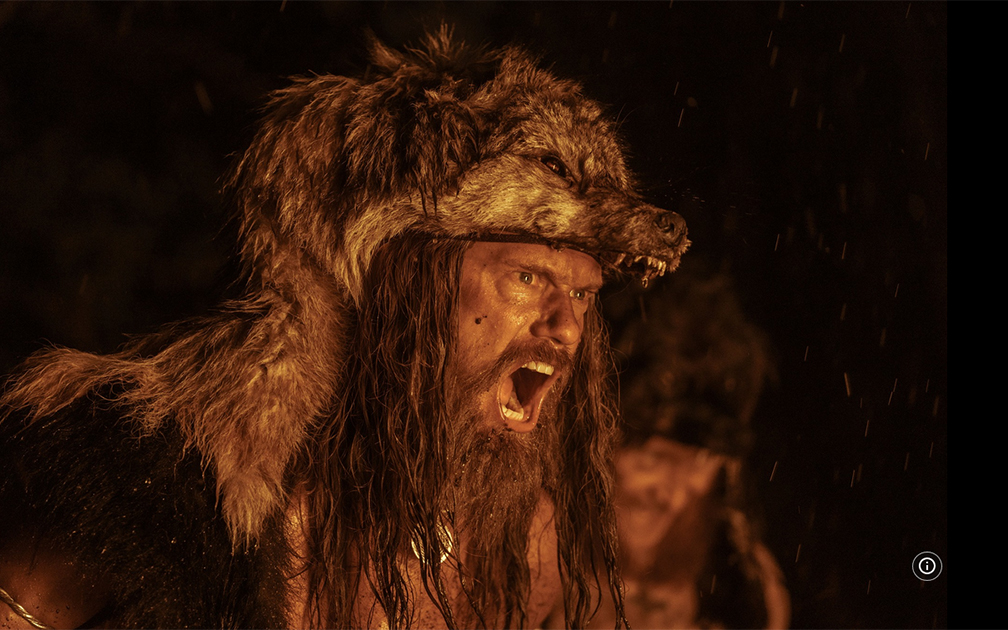
Swedish-born Alexander Skarsgård stars as Amleth, who sets out as a boy on his brutal life’s journey after witnessing the murder of his father, the warrior King Aurvandil (Ethan Hawke), by the king’s bastard brother, Fjölnir (Claes Bang). Narrowly escaping with his own head still attached, the little prince watches, terrified, as Fjölnir carts off his mother, queen Gudrún (Nicole Kidman), hefting her over his shoulder like a sack of stolen booty.  

Ethan Hawke

“I will avenge you, Father,” young Amleth repeatedly vows, desperately rowing away in the icy waters from his pillaged coastal kingdom. “I will save you, Mother. I will kill you, Fjölnir.”

Several years later, Amleth is all grown up, a hulking Viking warrior seething with remorseless hunger for retribution—and an appetite for wanton destruction. Woe to anyone who gets in his way or even crosses his path, like the villagers he and his fellow “berserkers” attack in the intensely brutal first act of the film, slashing and bashing their way through the mud and the blood, rounding up the hardiest and healthiest to be sold into slavery and corralling everyone else—including old women and children—into a thatch hut that’s then set fire.

All in a day’s work for a Viking plunderer.

But as much as he feeds off the raw, surging testosterone of remorseless, alpha-male brutality, Amleth doesn’t forget that he’s a man on a singular mission. Given renewed resolve by an encounter with a blind seeress (the Icelandic singer Björk), he disguises himself as a slave and goes “undercover”—aided by a fellow slave, a sexy sorceress Olga (Anya-Taylor Joy)—to find his traitorous uncle.

Anya-Taylor Joy (right) plays the sorceress Ogla, who helps Amleth (Alexander Skarsgård).

If those themes—family honor and dishonor, revenge and a young heir seeking to restore a fallen hierarchical house—sound familiar, they should. Shakespeare based his own Hamlet on the Scandinavian legend of Amleth, which itself closely follows the “hero’s journey” arc, the template of many of the world’s greatest myths, folktales and religions.

The bones of this tale may be ancient and primal, but director Robert Eggers creates a whole new world for this majestically bonkers, blood-smeared battering ram of Old World barbarism. Super-saturated with authenticity and historical nitty-gritty, The Northman is a visceral, elemental experience that makes you feel the cold, the muck and the mire, taste the brine of the salty sea—and shiver at the sights you see, watching agog as Amleth’s boundless, boiling rage plays out and spills over, like fox-head soup from a simmering caldron.

An indie auteur who certainly knows how to worm under your skin, Eggers also made the deeply unsettling The Witch (2015), which plumbed the psychological horrors of Puritanical hysteria, and The Lighthouse (2019), about two men going mad and flirting with depravity on a remote, storm-swept island. (Is that a mermaid vagina, or are you just happy to see me?) The Northman, Egger’s biggest-budget movie by far, is less complex and not near as subtle, staying more on the surface of its tempestuous tale and boldly assaulting viewers straight-on with its unflinching depictions of unbridled savagery by a man determined to follow his thread of fate and “die by the blade.” And while it’s not necessarily a pretty film, there is certainly a monumental beauty in its bold, relentless intensity, its rampaging, golly-whopping excess, and its spectacularly staged scenes.

When two semi-naked characters, both who’ve vowed to kill the other, fight and grapple amid the glowing lava of a spewing volcano, it’s a dance of death in what looks like the red-hot bowels of hell itself. You don’t see that in just any movie.  

There’s skull-cracking, disemboweling, blood-drinking and beheadings (of men and as well as horses), farting and belching, howling and yelping, and even menstrual flow has its moment. At one point, slaves are forced play a last-man-standing game with a ball and bats, like Harry Potter’s Quidditch—with a much higher fatality rate. The movie packs a lot into its runtime.  

And like Eggers’ other films, it’s suffused with some outright weirdness—hallucinogenic initiation ceremonies in which boy “pups” become “wolf” men; recurring visions of a dream-like “Tree of Kings” that depicts past, present and future royalty hanging like fruits from dark, twisted branches; Viking warriors finding their inner beast in a frenzied pre-raid battle ritual.

Nicole Kidman

It’s a man’s world, for sure. But the movie’s female supporting characters—notably Kidman’s queen and Anya-Taylor Joy’s sorceress—point toward a rich subtext about the power of women in that world, one in which young Amleth’s father, the king, cautions him to “seek not the ways of women.” It’s a dismissal, yes, but also an acknowledgement, recognizing that females rule a realm that even the mightiest warrior, and even kings, respect as sacred, hallowed ground. “Your strength breaks men’s bones,” Olga tells him. “But I have the cunning to break their minds.” Valkryies, fierce female spirits, ferry fallen warriors into their afterlives in the halls of Vahalla. And when one female character tells another, “Your sword is long” after getting an eyeful of his impressive, rune-inscribed mystical blade—is that just Viking small talk, or an assertive, slyly suggestive stab of sexual, even Oedipal arousal?

Skarsgård, who first showed off his impressively sculpted physique in The Legend of Tarzan (2016), is even more pumped-up here, a hulking mass of muscle with shoulders so large they look like they were repurposed from the bulwark of a Viking longboat. Kidman’s role is juicier than you first expect, as a character who becomes much more than a damsel in distress. And the young British actress Anya-Taylor Joy—basking in the glow of success after her award-winning role in the Netflix series The Queen’s Gambit and in critically hailed movies including Emma and the psych-horror-thriller One Night in Solo—worked with Eggers previously in The Witch, which made her a breakout star when she was only 18. Here, she deflates the classic stereotype of witches as withered old hags, especially when Olga slips out of her smock for a hot-springs rub-a-dub.  

And any movie in which Willem Dafoe plays a shamanistic court jester with a waggish tongue that keeps getting him into deep trouble, well, that’s just icing on the Viking cake.

Yes, the Vikings are coming. And in this wild and wooly epic in which mythology and reality comingle, collide and create more than two hours of bloody, brazen big-screen craziness and combustion, I doubt there’s a pro footballer—or even a whole team—anywhere who’d stand much of a chance in a square-off with Amleth.  

Murder, She Wrote

Kenneth Branagh returns to the canon of Agatha Christie for another twisty murder mystery

Kenneth Branagh directs and stars in ‘Death on the Nile,’ his second film based on a classic Agatha Christie novel.

Death on the Nile
Starring Gal Godot, Annette Bening, Tom Bateman, Russell Brand, Letitia Wright, Armie Hammer & Emma McKay
Directed by Kenneth Branagh
Rated PG-13

In theaters Feb. 11, 2022

What do you do when there’s a crime, and everyone’s a suspect?

You get the world’s greatest detective, of course!

As Agatha Christie fans know, that would be Belgian crime-cracker Hercule Poirot, one of the late author’s most beloved, most famous and long-running characters of crime fiction. He has appeared in more than 30 novels, 50 short stories, numerous stage productions and more than a dozen films.

Poirot has been portrayed by a cavalcade of actors over the decades, including Orson Wells, Peter Ustinov, Tony Randall, Alfred Molina and John Malkovich. Britain’s acclaimed Kenneth Branagh first took on the role in 2017, in Murders on the Orient Express, which he also directed. He now returns to it, again as both actor and director, in this lavish new screen adaptation of Christie’s fan-favorite novel, first published in 1937.  

In Death on the Nile, Poirot must untangle a web of lies, deceit, greed and grievances swirling around a gorgeous young London heiress, Linnet Doyle (Wonder Woman’s Gal Godot), on her honeymoon cruise. When Linnet is discovered dead in her room, shot cleanly in her temple with a small-caliber weapon as she sleeps, the plot really begins to thicken

Armie Hammer & Gal Godot are at the center of wave of crime aboard a riveboat.

Soon she’s not the only death in Death on the Nile, as the paddlewheel steamer Karnak makes its way through the land of the pharaohs—and everyone comes under suspicion.

Good thing Hercule Poirot also happens to be on the boat!

As his investigation unfolds, Poirot finds no shortage of possible perpetrators, plausible motives—and murder weapons. Clues begin to add up as bodies begin to pile up: a dead woman caught in the boat’s paddlewheel; a pistol wrapped in a blood-stained scarf, dredged from the bottom of the river; a tense, jealous love triangle between Linnet, her new husband (Armie Hammer) and his former fiancé (Emma Mackay, the British Margot Robbie lookalike who stars in the Netflix series Sex Education).

The riverboat wedding party also includes Linnet’s lawyer and cousin (Ali Fazal), with a sheath of documents he seems anxious for her to sign; a renowned painter (Annette Bening) and her son, Bouc (Tom Bateman), Poirot’s confidante; a physician (Russell Brand) who was once engaged to Linnet; a maid (Rose Leslie, from Downton Abbey and Game of Thrones); and a brassy blues nightclub singer (Sophie Okonedo) and her niece/manager (Black Panther’s Letitia Wright), one of Linnet’s former classmates. The British comedy team of Jennifer Saunders and Dawn French play Linette’s socialite godmother and her companion/nurse.

As a director, Branagh (currently a top Oscar contender for his semi-autobiographical drama Belfast) takes a few creative liberties with Christie’s story, and fans of the English author will enjoy seeing the creative spins he puts on her classic puzzle—a few character tweaks here, a minor plot point there. He also crafts a compelling backstory for Poirot, with an opening scene that puts us alongside him, as a young soldier, in the muddy trenches of World War I—and provides the genesis of his florid, double-decker trademark moustache.

Gal Gadot: The ‘Wonder Woman’ star plays a London heiress

Gorgeous to look at, Branagh’s film—shot on a massive London soundstage, complete with a gargantuan water tank—is filled with sights and splash and splendor, from the pyramids and tombs and antiquities of ancient Egypt to the funky, dirty-dancing delights of a hoppin’ London speakeasy. Omens on the screen portend something bad is surely going to happen down the river as a crocodile lunges from the murky waters to snatch a squawking egret; a hissing snake strikes out, unexpectedly, toward the viewers; a massive piece of tumbling stonemasonry barely misses Linette and her husband.

And despite its title, and its centerpiece crime, Branagh has another theme on his mind. “It’s love,” as Linnet notes at one point. “It’s not a game played fair. There are no rules.” Romantic ties—and societal rule-breaking—run throughout the entire story, and cross-connect almost every character, in some way or another. Even Poirot himself, as the film’s beginning and ending suggest, is not immune to being gob-smacked by love’s primal power.

This new Death on the Nile—which has previously been the subject of two theatrical films, a TV movie, a Broadway play and a BBC radio serial—is a twisty, turn-y tale of love and lovers, murder and mystery, and passions that can sometimes turn poisonous. It may take place some eight decade ago, but its themes are timeless.

And not all the movie drama, as it turns out, appears onscreen. Like several other films, Death on the Nile faced a struggle to even be released—its opening was delayed six times due to the COVID pandemic. Meanwhile, the movie’s leading man, Armie Hammer, became an untouchable persona non grata in Hollywood after charges levied against him for sexual misconduct and rape, and his bizarre sexting comments about cannibalism. Disney reportedly considered—but ultimately abandoned—options that included reshooting the entire film, or digitally removing his character and replacing it with another actor.

But here we finally are, and fans of whodunnit riddles—from Agatha Christie to Knives Out and even the classic board game of Clue—will greatly enjoy trying to piece together the evidence to unravel this period-piece knot alongside Christie’s favorite sleuth.

There may have been some 46 other movies—and more than 50 TV and radio versions—based on the works of Christie, who died in 1976, many of them featuring Poirot or Christie’s other famous mystery solver, Miss Marple. But Branagh’s lively, exotic, star-spangled take on Death on the Nile proves there’s plenty of life left in finely crafted stories of love, murder and the messy matters of the human heart.

All aboard!

Tagged , , ,

Bring on the Music

Andrew Garfield soars in director Lin-Manuel Miranda’s paean to musical theater dreams

Tick…Tick…BOOM!
Starring Andrew Garfield
Directed by Lin-Manuel Miranda
Rated PG-13

In select theaters now, available on Netflix Nov. 19

Musical-theater geeks will flip over this immersive paean to one of Broadway’s fallen heroes.

Jonathan Larson, who composed the groundbreaking rock musical Rent—which ran on Broadway for 12 years—died suddenly, of a heart malady, on the very night of his production’s premiere performance in 1996. Only 35 at the time of this cosmic irony, he was awarded three posthumous Tonys and a Pulitzer Prize for Drama for his La Bohemè-ish tale of impoverished young artists struggling, under the grim specter of the epidemic of AIDS, to live, love and lean on each other in the Big Apple.

But this isn’t that story. Rather, it’s the story of Larson and his pre-Rent challenges in completing, and staging, a futuristic 1990 oddity called Superbia, loosely inspired by George Orwell’s dystopian classic 1984

Andrew Garfield plays Larson, and the film marks the directorial debut of Lin-Manuel Miranda, who certainly knows a thing about Broadway, Tonys, Grammys and other trophies as the writer (and star) of his own Broadway sensation, Hamilton. Earlier this year, another of Miranda’ works, In the Heights, got the Hollywood treatment.

Garfield may be best known to the general moviegoing public for his two movie turns as The Amazing Spider-Man, but he’s turned in several impressive other “grown-up” performances—in Martin Scorsese’s Silence, in The Social Network, as conscientious-objector WWII hero Desmond Doss in Hacksaw Ridge, and just recently, as disgraced telemarking evangelist Jim Bakker in The Eyes of Tammy Faye.

And he soars to new heights of his own here, for a tricky role that required him to expand his skillset to learn to sing and play the piano. He portrays Larson as a zealous, youthful idealist, anxious to establish a toehold on Broadway, to create a buzz that will be his big break. The tick-ticking he hears in his head is the sound of his rapidly vanishing 20s, and his approaching self-imposed deadline: his upcoming 30th birthday.

Andrew Garfield with Robin De Jesus

Larson is a bit self-obsessed and totally driven, as he nourishes his dreams while slinging sandwiches in a busy diner. But he has a big heart for his fellow “bohemian” friends, especially his childhood pal, Michael (a terrific Robin de Jesús), who gave up his own theatrical dreams for the steady income of a Madison Avenue job. And he also loves his girlfriend, Susan (Alexandra Ruth Shipp, who starred in the title role in the 2014 Lifetime movie Aaliyah: The Princess of R&B), an interpretive dancer whose thoughts for a more practical future might pose a bit of a problem for their relationship.

High School Musical star Vanessa Hudgens (who also starred on Broadway in Gigi and had roles in the TV musical presentations of Grease: Live and Rent: Live) and Joshua Henry—who played Aaron Burr in Hamilton—provide impressive, real-chops backupas singing characters in Larson’s show.

As he struggles with a massive, monstrous case of writer’s block, trying to find the right song to cap his musical as the days trickle down to its public-workshop debut, Larson watches his friends succumb to HIV and AIDs, putting some heavy perspective on his own deadlines and goals.  

Vanessa Hudgens

Director Manuel can certainly identify with a young composer striving to become established, because he used to be one. He knows all about the world of Jonathan Larson, because it was once his world, too. And he certainly knows how to make a musical, deftly, innovatively unfolding Larson’s story—and his existential predicament—in a mixed format of musical performances, flashy movie-musical set pieces, straightforward dramatic scenes and “fantasy” sequences that blur the lines. When Larson goes to clear his head with a swim, he marvels as markers on the bottom seem to turn into musical staffs and notes; in the rousing number “No More,” Larson and Michael contrast the young ad executive’s gleaming new valet-tended apartment high-rise with the cramped, squalid, six-floor walkup where the two friends used to be roommates—and were Larson still lives.  

Fans of musicals will delight in Easter-egg cameos from a slate of stage-heeled celebs—a flock of cameo casting that was helped, no doubt, by Miranda’s superstar cachet in the theatrical community. Bradley Whitford is spot-on as theater icon Stephen Sondheim, who gives Larson some valuable advice, and Judith Light (who made her debut on Broadway before landing a starring role in 1977 on TV’s One Life to Live) plays Larson’s agent, Rosa, who tells him that the musical he should be working on is always “the next one.”

The next one, for Larson, was his autobiographical one-man-show, Tick…Tick…Boom!, which was ultimately staged posthumously as a multi-part rock musical. And then came Rent, the production that would have brought him the success, and the achievement, he so ardently sought as a younger man on the dreaded cusp of closing out his third decade.

But this impassioned, enthusiastically eclectic portrait reminds us of the boundless dream of a gifted creator taken too soon, and takes viewers into a teeming, bustling, hustling substrata world of musical theater that’s not quite Broadway…not just yet—as it suggest to all of us, whatever we do, that “the next one” could be, and might just be, the big one.

Tall in the Saddle

Benedict Cumberbatch plays a cruel cowboy in ‘The Power of the Dog’

Benedict Cumberbatch & Jesse Plemons ride out in ‘The Power of the Dog’

The Power of the Dog
Starring Benedict Cumberbatch, Jesse Plemons, Kirsten Dunst and Kodi Smit-McPhee
Directed by Jane Campion
In theaters Friday, Nov. 19; on Netflix Wednesday, Dec. 1

The West isn’t all that wild in this taut, terrifically tense tale set in Montana in 1925; there’s electricity and automobiles. But it’s a wild ride alongside Benedict Cumberbatch—who’s played a spectrum of characters, across a wide swath of genres, from sci-fi to period dramas—as he saddles up to play a cowboy.

But not just any cowboy—he’s one particularly tough, unlikable hombre.

Cumberbatch stars as Phil Burbank, a cattle rancher who lives on the sprawling property he and his brother, George (Jesse Plemons), took over from their parents. The two siblings couldn’t be more different. George is a soft-spoken gentleman who dresses in dandy suits; Phil, who refuses to even bathe indoors, is as rough and rugged as a pair of old rawhide chaps. He castrates cattle barehanded with two brisk whisks of his knife, struts and stomps in his boots and spurs, and revels in the musk and mire of clearly being the ranch’s alpha male.

“I stink, and I like it,” he snarls, and we know it in more ways than one.

Kirsten Dunst

When George marries Rose (Kirsten Dunst, Plemons’ real-lifewife), a widow who operates a nearly boarding house, and moves her into the mansion-like ranch manor, it triggers something in Phil—a toxic seethe of jealousy, resentment and suppressed anger. Phil cruelly taunts Rose and her sensitive son, Peter (Kodi Smit-McPhee), a lanky pup of a lad who makes paper flowers, plays with a hula hoop and wears white canvas shoes instead of boots. Phil thinks Pete is a sissy, an effeminate “half-cooked” nancy, almost subhuman. And he torments the emotionally fragile Rose—and stokes her growing sense of dislocation, menace and unease—by whistling a tune that he knows she can no longer remember how to play on the piano.

Phil knows how to inflict hurt, knows how to wound. His poisonous personality burns like the bright ends of his hand-rolled cigarettes when he puffs, falling onto his shirt like combustion from a fire from deep within him. His mockery of Pete gets supportive guffaws from his ranch hands, he takes out his rage on his horse, and he drives Rose to drink and Pete to tears.

Kodi Smit-McPhee

Filming in her native New Zealand, director Jane Campion, who won a pair of Oscars for writing and directing her 1993 romantic drama The Piano, creates a masterful atmosphere of creeping dread for where this is all headed. She captures the rich details of life on the ranch—and a crucial subtext of the bonding between these cowboys, whose work with other men isolates them from much of the rest of the world—against spectacular vistas of picture-postcard perfection, with massive mountains, oceans of grass, and a herd of hundreds of cattle, flowing across the dusty plain like a bovine river.

High up on a mountainside, Phil sees something, when the sun is at a certain angle, casting shadows on the terrain, making a specific outline, a design in the interplay of light and dark. But he’s also looking up there and into his past, and the genesis of his idolization and fetishization of a long-gone horseman, Bronco Henry, who taught him how to work cattle.

Cumberbatch, who was Oscar-nominated for his starring role in The Imitation Game (2014), shows all the signs of another nomination here, creating a character that practically sears the screen with his vicious unkindness—and a complexity that hints at fragility, a degree of refinement, intelligence, and some other things…despite his grimy fingernails, coarse personality and stiff backbone. With a towering performance that recalls the intensity of Daniel-Day Lewis in There Will Be Blood and Phantom Thread, Cumberbatch’s Phil is a portrait of bullying, hyper-masculine toxicity that makes a target of anything, and anyone, that he perceives to be weak.

After Pete makes a discovery that sheds new light on Phil, it begins to reshape their relationship—but it will it lead to something better, or something even more malevolent?

The movie (and the 1967 novel on which it’s based) takes its title from a Bible verse in the book of Psalms, a bitter poem attributed David, the young shepherd who slew the giant Goliath and later became King of Israel. It’s reference to deliverance from his foes and “the power of the dog,” an animal seen in ancient times as a lowly, undomesticated pack scavenger that attacked the vulnerable.

Phil has both the bark and the bite. He’s top dog among his group of ranch-hand cowboys in this twisty, tough-as-nails frontier tale, in which the age-old battle between good and evil plays out on an intense psychological tableau, one straddling the border between clean, convenient modernity and the rugged, raw, ragged past.

And when it bares its teeth and clamps down, hard, and likely not how you’d expect, this Dog takes you by surprise, and it really leaves a mark.

Far From Disneyworld

Creepy Icelandic tale cautions about crossing the line with Mother Nature

Lamb
Starring Noomi Rapace and Hilmir Snær Gudnason
Directed by Valdimar Johannsson
Rated R
How to Watch: In theaters Oct. 8, 2021

A childless couple get a Christmas miracle in this grim fairy tale, but it doesn’t exactly turn out to be the gift they’d hoped it would be.

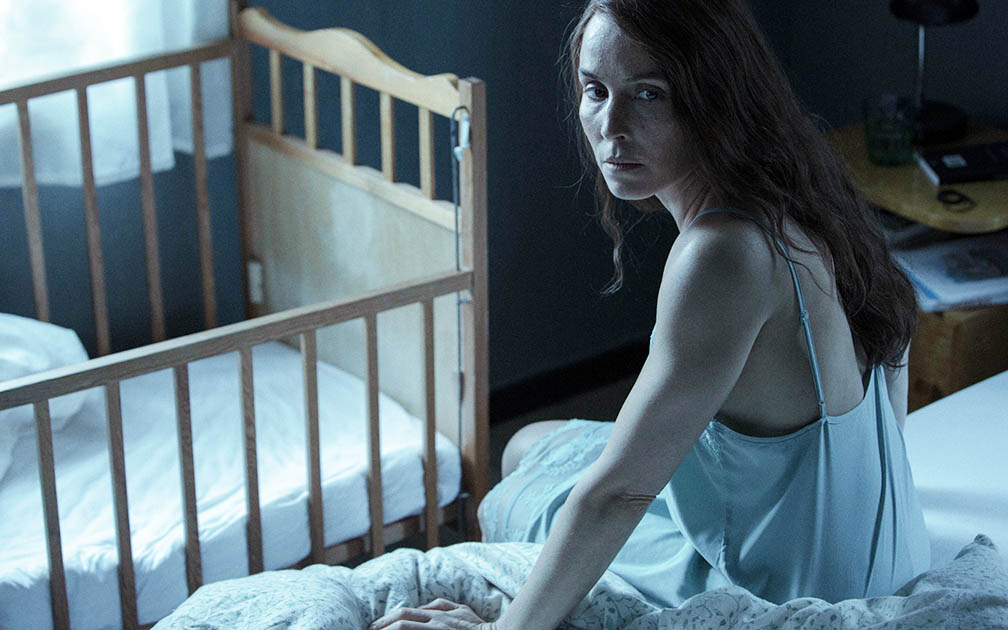
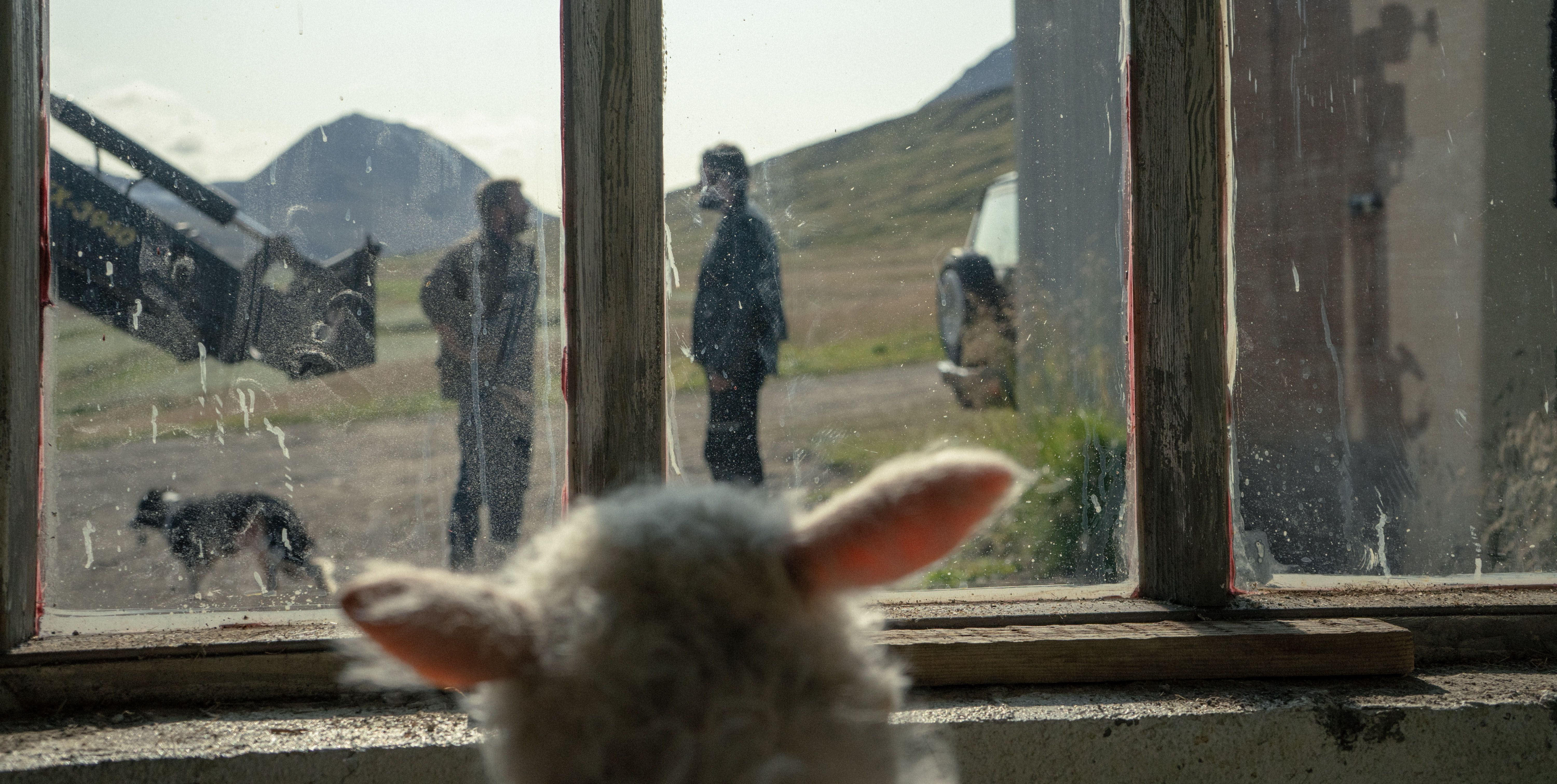
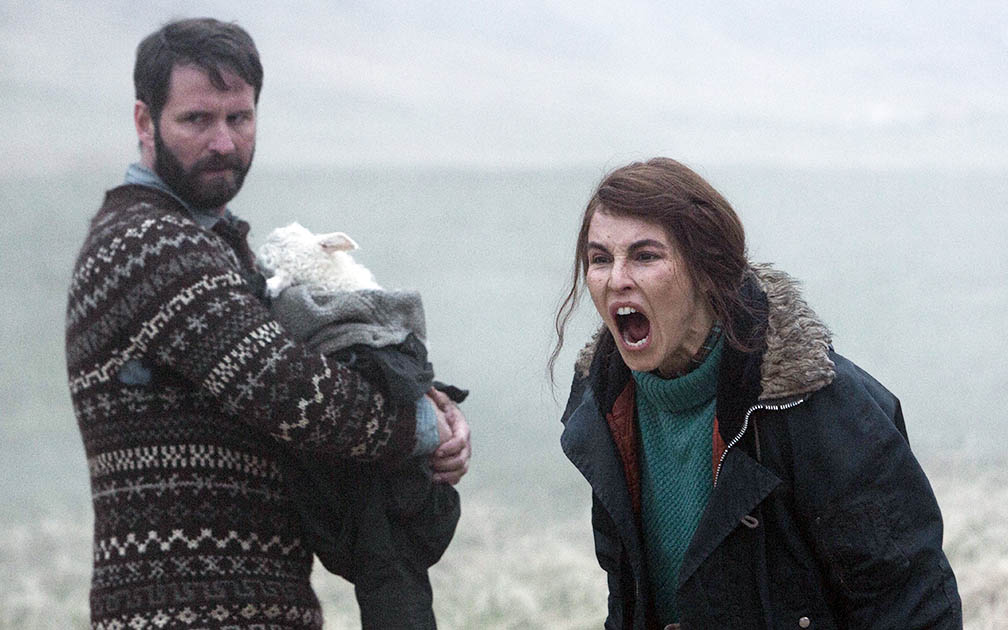
An atmospheric arthouse marital drama drenched in suspense and brooding with an elemental sense of timeless, deep-rooted horror, Lamb is a doozy-woozy of a wild yarn about what happens when the couple—who operate a sheep farm in a remote valley in Iceland—helps one of their ewes deliver an, ahem, unique baby in their barn.

The newborn a part-lamb, part-human lamb-child.

Maria (Noomi Rapace) and Ingvar (Hilmir Snær Gudnason) take in the hybrid infant—who has a sheep’s head, but a human body—to raise as their own child. They name her Ada.

Maria and Ingvar didn’t see—in the movie’s nightmarish opening scene—whatever it was that entered the barnyard a couple of months ago, on Christmas Eve, spooking the animals and making “Ada’s” mother collapse in a heap outside her stall. But the farm’s wary sheepdog knows something isn’t right, and so does the Sphinx-like housecat, a mute, inscrutable observer of all.

Making a supremely confident directorial debut, Valdimar Johannsson creates—and maintains—an atmosphere of tension and dread, suffused with awe and even elements of humor. Filming on location in Iceland, he turns the rugged majesty of the terrain and the landscape into a palatable presence—deep valleys, endless, boggy meadows and mist-shrouded mountains hiding ancient mysteries, legends and folktales. It looks like the kind of place where, from the beginning of time, gods, monsters and men might have walked the same earth.

And maybe they still do…

The Swedish actress Rapace, best known for starring in the Swedish versions of the Girl with the Dragon Tattoo films, and for her role in the sci-fi space adventure Prometheus, gives a knockout performance. She makes us feel Maria’s strong, fiercely resolved sense of maternal attachment to her new foundling, especially after we understand the roots of a profound, unspoken sadness that has settled into her marriage.

Ada, Maria says, is a gift that has finally brought joy and a sense of purpose to her life. Ada gives her and Ingvar something to live for, beyond planting potatoes, driving their ancient tractor, and trudging through the fog and the bog doing other endless farm chores.  

When Ada’s sheep mother keeps bleating, day and night, outside their bedroom window, Maria decisively, swiftly puts an end to it.

Ingvar’s slacker brother, Pétur (Björn Hlynr Haraldsson), a former pop star, shows up, and becomes the audience’s surrogate. Like us, he can’t believe what he sees: a half-animal creature dressed as a child, toddling around the house, sitting at the dinner table, watching television.  

“What the f— is this?” he asks incredulously.

“Happiness,” says Ingvar.

This animal-husbandry creature feature might not be for everyone. The dialogue is, yes, Icelandic, with English subtitles, and it’s a slow burn, ratcheting up the pressure and the unease bit by bit, until the shocking final scene—when you’ll find out the flip side to this fable about what can happen when humans try to “humanize” and anthropomorphize the natural world for their own enjoyment, entertainment and, yes, happiness.

Hilmir Snær Gudnason & Noomi Rapace

Maria and Ingvar’s isolated farm is, shall we say, thousands of miles away from the joyous singing and dancing mice, ducks and piggies of Disneyland, in every way.

For centuries, lambs have been potently symbolic, representative of innocence, purity, sacrifice, vulnerability and naivety. Of course, the lamb is a central symbol of Christianity. But Lamb doesn’t make any overt connections to faith or religion; if anything, it suggests something demonic and unholy afoot and astir. Think Rosemary’s Baby crossed with the Puritanical madness—and the creepy goat, Black Philip—of The Witch. It brings up some issues about parenting, child custody and nature vs. nurture, in its twistedly unhinged way. It suggests that there’s a bond, an agreement, between nature and humans, and we may not fully understand it, but breaking it—violating it—can unleash some terrible payback mojo.

As we used to be reminded by an old TV commercial for Chiffon margarine—a product that claimed to taste so much like real butter that even Mother Nature would be confused—it’s not nice to fool Mother Nature.  

Indeed: Cross-wiring the natural order of things sets off one bloody, ungodly Icelandic paternity spat in Lamb. It invokes the wrath of something ancient, unholy and unfathomably terrifying from somewhere in the mountains, fjords, glaciers and pitch-black soil of Europe’s least-populated country. And it might just make you a wee bit nervous the next time you’re at the petting zoo. 

Sock It To Me

Jennifer Hudson Gives the Queen of Soul a Righteously Royal Salute

Respect
Starring Jennifer Hudson, Forrest Whitaker, Mark Maron & Marlon Wayans
Directed by Liesl Tommy
PG-13
In theaters Aug. 13, 2021

If anyone deserves respect, it’s the Queen of Soul, a singing superstar who earned 18 Grammys, had 20 No. R&B singles, sold 75 million records and became the first female ever inducted into the Rock and Roll Hall of Fame.

Aretha Franklin gets the appropriate royal treatment in this rousingly righteous biopic starring another singing superstar, Jennifer Hudson, as the prodigiously gifted Detroit preacher’s daughter who became a global musical sensation in the 1960s and ‘70s. We see how the talent of young Aretha (portrayed impressively as a child by young Skye Dakota Turner, who also played the pint-size version of another iconic crooner, Tina Turner, on Broadway) was nurtured by her divorced parents, her music-loving father (Forrest Whitaker) as well as her songbird mother (Broadway’s award-winning Audra McDonald).

We see that she grew up in an upper-middle-class world swirling with music and celebrities. Dinah Washington (Mary J. Blige), one of the most popular and successful Black entertainers of the 1950s, was a close family friend. Black gospel pioneer James Cleveland (Tituss Burgess) gives Aretha music lessons. Motown crooner Smokey Robinson (Lodric Collins) drops by her dad’s backyard cookouts.

We also see the heartbreak, loss and trauma that scarred little Aretha, creating lingering “demons” that resurfaced into her adulthood. Franklin’s life was complex, complicated and messy, and Respect doesn’t shy away from the mess.

First-time feature-film director Liesl Tommy—whose previous work has been in TV and stage—deftly handles episodes of sexual, emotional and physical abuse, and addresses the rifts and ruffles in families, friendships and business caused by jealousy, possessiveness, suspicion, alcohol and infidelity.

Respect pours plenty of biographical and chronological detail onto the screen and weaves them into its story, using songs as signposts and superimposing years and placenames, like “Detroit,” “Paris,” “New York City” and “Muscle Shoals, Alabama,” to keep us oriented as we march through more than three decades of Aretha’s event-filled life.

We watch her singing as a teenager at rallies for Dr. Martin Luther King Jr. (Gilbert Glenn Brown), where her early activism was stoked into a fiery lifelong passion. We watch her floundering fledgling efforts at recording, where her first, jazzy albums were flops—until she switches labels and begins working with upstart R&B producer Jerry Wexler (Mark Maron), who helps her find her soulful mojo with hits like “Think,” “Chain of Fool,” “Do Right Woman, Do Right Man,” “(You Make Me Feel Like) A Natural Woman,” “I Say a Little Prayer” and “Respect.”

We watch her troubled relationship with her first husband/manager, Ted White (a terrific Marlon Wayans), whose mercurial temper gives her painful musical inspiration, but ultimately dooms their marriage.

And importantly, the movie also takes us to church, emphasizing how much gospel music formed the foundation of Franklin’s musical DNA. As she grows from a little girl into a woman, she never forgets something her mother tells her: that her voice belongs to God.

We see and hear many of Aretha’s greatest, mightiest milestone hits, and some of her lesser ones, and learn how they came to be. We watch her singing in her home, in nightclubs, in the studio, in concert halls, where adoring fans throw roses at her feet…and in church. There are bits of a lot of songs, pieces of many others, and full-on performances of at least a couple, including an electrifying closing with “Amazing Grace” that will make you a hands-in-the-air believer—at least a believer in the profound gifts of Jennifer Hudson, the former American Idol finalist and Grammy winner who was hand-picked by Franklin, who died in 2018, for the role.

Hudson, who won an Oscar for her supporting role in Dreamgirls, reaches new heights—and emotional depths—as Franklin, singing “live” for all the filmed performances (no lip-synching) and conveying the often-tortuous terrain Franklin walked for most of her life, from dealing with her domineering father to her abusive, gaslighting husband, and navigating a career as a Black female in a music career controlled by white men, even ones that meant well.

At a performance of Respect, Aretha throws shade at her no-good lout of a man in the wings, then gives a nod of solidarity to her backup singers, including her two younger sisters (Hailey Kilgore and Saycon Sengbloh), when she gets to the song’s refrain of “Freedom!” We know that she knows how loaded that word is, that it’s more than just a word. It’s a rallying cry, an R&B power punch of female empowerment and emancipation, in a song that would become a civil rights anthem and her own enduring musical signature.

The fashions—which span the ‘50s to the late ‘70s—are fab. The music is majestic, with much attention to detail; recording sessions where we observe the almost organic process by which crack studio musicians create a song tapestry, on the spot, for instance, or as we eavesdrop while Franklin, noodling at 3 a.m. on her piano with her sisters, comes up with the vocal hooks and stacked harmonies for Respect: “Re, re, re, re…” “Just a little bit…” “Find out what it means to me…”

“Do your thing,” one of her sisters encourages her earlier, during a time when Franklin is doubting her musical direction, unsure of what kind of music she should make or the type of songs she should sing. “And do it as big and as loud as long as you can.”

Franklin is gone, but her music lives on, and this tuneful tribute is a ringing, right-on reminder of her legacy that stokes the flame for a new age, lifting her story loud and long and strong. And Hudson’s moving, monumental performance channels the power, the spunk and the very spitfire spirt of Aretha herself.

R-E-S-P-E-C-T, indeed. And more than just a little bit. A lot.

This Precious Life

Hauntingly beautiful pre-life proposal might make you look at things differently

Nine Days
Starring Winston Duke, Zazie Beetz, Benedict Wong & Tony Hale
Directed by Edison Oda
Rated R
How to Watch: In theaters Aug. 6, 2021

A lot of people wonder what happens after we die. But do you think much about what happens before we’re born?

That’s the premise of this fantastical fable, an existential gem of a film in which a reclusive metaphysical middle manager interviews a group of new souls for a shot at the big show: real life.

The souls (including Tony Hale, Bill Skarsgård, Arianna Ortiz and Zazie Beetz) all look like fully formed adults, but they’re only a few days—or minutes, or hours—old. That’s how it is, here in the pre-life world.  

As the interviewer, Will (Winston Duke), puts them through a gauntlet of tests, trials and open-ended moral-ethical questions, he’s looking to fill a recently vacated slot in the real world—a young female violinist who died in an unfortunate accident. The candidates have nine days to prove themselves worthy of the position. Only one will be chosen, and that’s Will’s job.   

“You are being considered for the amazing opportunity of life,” he tells them. “If after this process, you are selected, you will have the chance to be born in a fruitful environment where you can grow, develop and accomplish.”

“Are you the boss?” Hale’s character asks him.

“I would say a cog in the wheel,” says Will.

We never learn much—anything, really—about that wheel, the bigger scheme of things outside the little isolated “house” where Will operates. It’s in the middle of a vast desert (the movie was filmed in Utah), and inside is a wall of old-school televisions and monitors. That’s where Will and his assistant, Kyo (Benedict Wong), who drops by every day, watch the real-world lives unfolding of all the previous candidates Will has successfully “placed.” He takes copious notes about what happens to them, good or bad, and he dresses up for their weddings, recitals and other life-event celebrations—as if he’s attending, too. Sometimes Kyo brings flowers.

Will records and catalogues everything on VHS tapes, stores all his notes in a room packed with metal file cabinets, and photographs candidates with a Polaroid camera. Will’s pre-life world appears, for some reason, to be stuck in the low-tech early 1980s.

The candidate souls all buckle down for their nine-day assignments. Hale (from TV’s Veep and Arrested Development) plays Alexander, who always finds something funny in everything. Beetz, from TV’s Atlanta and a supporting standout in Joker, is Emma, whose fascination with Will unsettles him, forcing him to confront his own troubled past—a past in which a recitation of Walt Whitman’s epic poem, “Song of Myself,” was pivotal. And it’s interesting to see Skarsgård, best known as the evil clown Pennywise in the terrifying It movies, in a much less threatening role. 

Zazie Beetz

Brazilian-American writer-director Edison Oda, whose background is mostly in advertising and short films, makes a smashingly impressive feature debut, filling it with lovely cinematic touches and coaxing graceful, sometimes powerful performances from his cast. Duke, a physically impressive actor who played a fierce warrior in Black Panther and the bumbling dad in Us, grounds the movie in Will’s melancholy mysteries; he becomes an imposing metaphor for the many unknowable things about life itself.

“Maybe there’s another parallel dimension,” Kyo says to Will. Perhaps the two of them are being “watched by someone else, who’s being watched by someone else, who’s being watched by someone else. It’s deep, isn’t it?”

It is, indeed. The movie isn’t interested in making any big statements about spirituality or religion; it’s broader and more mystical and—yes—deeper than that, with more questions than answers. It wants to make you think, to ponder, to wonder. The number nine, of course, is packed with symbolism: cats with nine lives, human pregnancies that last nine months, the numeral nine and its mathematical “magic.” In a Tarot deck, the ninth card is the Hermit—like Will, living alone in the desert.

The movie, which sometimes seems like a stage play given feature-film treatment, probably won’t be for everyone. The drama is slow-moving and somewhat static; nothing moves fast, no one gets into a brawl and there’s no blood, explosions, fights, shocks or scares. By most mainstream movie standards, some viewers might chalk it up as a bit of a snooze.

But this desert drama has a haunting, unique beauty, a strange but alluring spin on what might be just beyond—or come before—the veil of our human existence; it feels like a bracing shot of Twilight Zone in a retro martini glass, with a chaser of Disney-Pixar’s Soul, only with considerably more bite and grown-up grit, and a lot less whimsy. This beguiling peek into a strange corner of another “world” invites you to look at life, and reality itself, through a prism of alternative out-there possibilities.

As the candidates go through their testing, they learn about life, and living, from watching people on Will’s TVs. They learn about—and long to experience—little “real world” things, like bicycle rides, the feeling of being on a beach, eating a peach, relishing a beer or sharing a laugh over jokes with friends around a dinner table. They learn that life is made up of those little things, those moments that become lifetimes of memories.

“What is it like, to be alive?” Beetz’s candidate asks Will.

“Maybe you’ll find out,” he answers her. Maybe we all will, if we haven’t already.

You may not think much about where you came from, how you got here or what might have gone on before you popped out, into the world. But maybe someone like Will was watching you all along, and maybe he picked some soul—like Zazie Beetz or Tony Hale or Bill Skarsgård—who worked hard for days, expressly for the opportunity to be “you.”

Crazy? Well, maybe. Or maybe not.

No matter what you believe, Nine Days makes you think that getting here, being alive and feeling the full spectrum of being human, is no trivial thing. Life is precious; souls long for it, compete for it. So, ponder that—especially the next time you bite into a peach, feel the sand of a beach between your toes, or the wind on your face as you ride a bike, or laugh with your friends.

And say hi to Will, somewhere out there.

This One’s For the Girls

ScarJo’s ‘Black Widow’ Shows Some Real Superheroes

Black Widow
Starring Scarlett Johannson, Florence Pugh, David Harbor & Rachel Weisz
Directed by Cate Shortland
PG-13
In theaters Friday, July 9, and also available on Disney+.

Just call her the spy who came in from the COVID.

Scarlett Johannson’s character of the highly trained former KGB agent Natasha Romanoff has been a fan favorite ever since she was introduced in the Marvel movie universe back in 2010 (with an appearance in Iron Man 2). After numerous supporting roles in other superhero sagas as one of the Avengers, she eventually got the go-ahead for her own movie—which had the misfortune of setting its release just as theaters shut down in the growing wake of a global pandemic.

Delayed, postponed or pushed back three times since May 2020, Black Widow, Romanoff’s much-anticipated origin story, now finally makes its way into theaters, and onto the screen. And it’s a doozy—a ripping, globe-trotting, action-packed spy yarn, a heart-tugging hero’s journey, and a tale of sisterhood with a worldwide twist.

Anyone who follows the MCU—the Marvel Cinematic Universe, the superhero movies based on the characters from Marvel Comics—knows there’s a lot to keep up with, like a jumbo puzzle that just keeps growing. Characters overlap and appear in each other’s films, and timelines get crissy-crossy crazy. But that’s all part of the fun, and diehard fans won’t flinch, for example, to realize that the events of Black Widow take place before everything in Avengers: Endgame (2019), in which Johannson’s character, well, meets her end.

But she’s very much alive and well here, all the way back to her childhood, where we come to understand how she became the Black Widow—or, more accurately, one of the Black Widows. She’s not the only little girl who was trained—and brainwashed—to become a lethal assassin, part of a massive covert Soviet spy network. How did Natasha break free from the dark grip of a hidden headquarters called the Red Room, where young women like her are biologically modified to become remorseless killing machines? What do pigs, pheromones, fireflies, Ohio and Don McLean’s song “American Pie” have to do with it all?

Scarlett Johannson & Florence Pugh

Reuniting with her now-grown little “sister,” Yelena (Florence Pugh), another Black Widow, Natasha vows to return to the nefarious Red Room to put an end to its sinister human production line.

Pugh, who’s already demonstrated her movie chops in Little Women, Midsommer and Lady Macbeth,is super-impressive in her debut in a superhero movie. She’s a fireball of tightly coiled droll wit piloting a helicopter in an avalanche, rocketing through the streets of Budapest—or across its rooftops—evading a killer cyborg, or jabbing her big sis for being a media “celebrity,” featured on TV and magazine covers for her do-gooding with her super-friends, the Avengers.

“You’re a poser,” she says, mimicking Romanoff’s spring-to-action “trademark” pose of dropping to a squat, on one bent knee and another leg extended, then jerking her head to toss her red hair out of her face.

We’ll be seeing more of Pugh in another Marvel project. You can count on it.

David Harbour (from TV’s Stranger Things) gets a juicy role as Alexei Shostakov, whose Russian alter-ego, the super-soldier Red Guardian, is comically obsessed with his red-white-and-blue counterpart, Captain America. Rachel Weisz is a seasoned Black Widow and a lead scientist in the Red Room program—with a deep “family” connection to Alexei, Natasha and Yelena. Veteran British actor Ray Winstone plays Draykoff, the devious head of the Red Room, whose overconfident plan for world dominance smacks of the smarmy DNA of some of James Bond’s most devious villains.

Rachel Weisz

But Black Widow belongs to Johannson, who’s waited for more than a decade to move from the superhero sidelines into her own spotlight. And if you’re looking for Avengers or other Marvel characters here, well, they’re discussed, but not displayed. One character mentions the rift in the superhero franchise, depicted in Captain America: Civil War (2016), as “the Avengers getting divorced.” This is the Black Widow’s story, and no one else’s.

The movie’s theme of Natasha’s search for her family—what it is, and what it can be—gives Black Widow a reflective, sometimes melancholy tone, punctuated with humor, style and swagger, slam-bang action and a dark undercurrent about what bad men do to little girls. In an early scene, director Cate Shotland melds images of terrified youngsters, separated from their families, held in shipping containers, soon to be modified and “groomed” for the Red Room. A cover of Nirvana’s “Smells Like Teen Spirit” (“With the lights out, it’s less dangerous/Here we are now, entertain us”) makes it even creepier. They’ll be molded and remade not for sex, but for killing, but it’s still human trafficking, and it’s meant to make your skin crawl.

Superhero movies, like the comic books on which they’re based, have almost always skewed toward a predominately male audience, with only a handful of notable exceptions. And Black Widow is particularly notable, with a female star, a female co-star, a female director, and a redemptive fem-centric message about women putting their lives on the line for other women, un-doing years of damage and righting terrible wrongs.

And these superheroes weren’t born gods and didn’t get powers after being exposed to radiation or finding some magical objects. They’re just women—who were once little girls, now vowing to change things. Now that’s a real superpower, and that’s a superhero.

Pursued in the movie by an antagonistic U.S. government official (William Hurt) intent on hunting all the Avengers down, Natasha doesn’t have time to deal with his nuisance. She’s got more important things to do.

“I’ve lived a lot of lives before I met you,” she tells him over a radio.

Indeed, she has. The Black Widow has been around in comic books since the mid-1960s, where she was a part of the Avengers, the Defenders, the Champions, S.H.I.E.L.D. and the Thunderbolts. She’s been in seven major movies, before this one. And now she’s got her own movie, and her own story to tell. And this one’s for the girls.

Hopes, Dreams and Music

Lin-Manuel Miranda’s New Movie Musical is a Summertime Burst of Salsa-Flavored Sunshine

Corey Hawkins and Leslie Grace star in ‘In the Heights’

In The Heights
Starring Anthony Ramos, Leslie Grace, Corey Hawkins, Melissa Barrera & Jimmy Smits
Directed by Jon M. Chu
Rated PG-13
How to Watch: In theaters and on HBO Max June 11, 2021

This is the musical that started it all.

Years before Hamilton made Lin-Manuel Miranda the toast of Broadway, he wrote the songs for this quasi-autobiographical paeon to the neighborhood of his New York City childhood. First staged on Broadway in 2008, In the Heights was nominated for 13 Tony Awards and won four, including Best Musical.

Now, after a theatrical-release delay of more than a year due to the COVID-19 pandemic, it finally hits the big screen with an exuberant summer explosion of salsa-flavored sunshine, a technicolor extravaganza of dazzling sights, a spirit-lifting message about home and family and the hopes and dreams of an immigrant community built on a “corner full of foreigners” where the “streets are made of music.”

Set in the largely Dominican neighborhood of Washington Heights, in the uppermost part of Manhattan, the story unfolds over a period of several days during a sweltering summer as Usnavi (Anthony Ramos,who played the dual roles of Philip Hamilton and South Carolina statesman John Laurens in Hamilton), the 30-year-old owner of a small bodega, or grocery store, considers selling his shop and returning to his native island land, from which he emigrated as a child with his late “papa.”

But Usnavi also feels the tug of another island—Manhattan. His store has become an integral part of his small community, and he can’t deny his feelings for Vanessa (Mexican actress Melissa Barrera, who starred in the Starz TV series Vida), his childhood friend, now a beautiful nail technician with aspirations to become a fashion designer. And there’s also Usnavi’s teenage cousin, Sonny (Gregory Diaz IV), his only store employee… and “Abuela” Claudia (Olga Merediz, who also played the role on Broadway), the loving matriarch of the barrio. She raised Usnavi and became a grandmother figure to most all the other children, too.

Anthony Ramos and Melissa Barrera

What will happen to them if Usnavi goes back to the Dominican Republic?

Then there’s Nina Rosario (Leslie Grace, a Dominican/American actress making her movie debut), who’s just returned to the barrio after “getting out” and completing her freshman year at Stanford University in California. The first in her family to attend college, she’s discovered life outside Washington Heights isn’t the wonderland she’d hoped it would be. Her father (veteran TV and film actor Jimmy Smits), the owner of the local taxi company, wants her to buckle down and complete her education—and he’s willing to make some serious sacrifices for it to happen. But Nina seems to have other things on her mind, including personal reasons for getting involved in local the DREAMers immigration-rights movement—and reconnecting with her beau, Benny (Corey Hawkins, who played Eric Carter on TV’s 24), who works as a dispatcher for her father.

And yes, that’s Lin-Manuel Miranda himself (who starred as Usnavi on Broadway), playing a bit part as a street vendor, peddling shaved ice.

Director Jon M. Chu, who also crafted a crowd-pleasing hit with Crazy Rich Asians, takes Miranda’s songs, this sprawl of characters and the theatrical “book” by Quiara Alegría Hudes and corrals everything into a shot-on-location showpiece with several outstanding production numbers.

Even the display wigs in the local beauty shop spring to waggish life in the playful, gossipy “No Me Diga (You Don’t Say).” The pool at Highbridge Park is the setting for a spectacular, exuberant aqua-ballet number for “96,000,” the dollar amount of a winning lottery ticket that gets everyone excited when it sells at Usnavi’s store—but the winner can’t be located. A sweaty, sexy dance-off heats up “The Club,” just before a blackout plunges everything into darkness, and the loss of electricity for air conditioning turns up the heat even higher. The entire neighborhood pulsates with energy and pride in “Carnival del Barrio,” and the movie’s opening theme song is so catchy, even a manhole cover and a garden hose get into the rhythmic act. In “When the Sun Goes Down,” Nina and Benny do a gravity-defying dance off their balcony, thanks to a nifty bit of camera trickery.

Daphne Rubin-Vega, Stephanie Beatriz, Melissa Barrera, Olga Merediz, Gregory Diaz IV, Dascha Polanco and Jiimmy Smits

In the Heights is a musical love story, on more than one level, with an even deeper message about where we come from, the lives we make for ourselves and each other, things we give and give back, and a reminder of the riches to be found in America’s vibrant communities of color, anywhere.

“Let me just listen to my block,” says Nina, pressing her face close to a chain-link fence beside a basketball court.

Listen to Nina’s block and you’ll also hear Lin-Manuel Miranda’s neighborhood in his latest triumph, a joyous story about a group of people, a community, its music and traditions. After more than a year of fighting a crushing pandemic, this rousing, hopeful, break-out celebration of dance, culture, storytelling and song is just the shot of feel-good we need. In the Heights soars with the sweet sound of life.

Devilishly Disney

Emma Stone gets punk-y, spunky and diabolically funky in Cruella

Cruella
Starring Emma Stone, Emma Thompson & Mark Strong
Directed by Craig Gillespie
Rated PG-13
In theaters and on Disney+ March 28, 2021

Disney hikes up its hip factor considerably with this bow-wow-wow backstory to one of its grandest, most grandiose franchise villains.

The House of Mouse, known for fairytale princesses and happily-ever-after endings, gets punk-y and spunky and devilishly funky with Cruella. Playfully dark, popping with brisk, saber-sharp wit and soaring with superfly style, it’s one of the most vivaciously deviant Disney properties to ever come flying out of the movie mousehole.

There’s no Little Mermaid, no Cinderella or no Sleeping Beauty anywhere in sight as a young London street urchin, Estella (Emma Stone), graduates from pickpocketing and petty thievery to seize her moment—and apply her innate design skills—with an opportunity at a posh fashion house. But the head of the fashion empire, the haughty, manipulative Baroness (Emma Thompson), is a battle axe who chops up her competition, steals Estella’s designs and crushes her dreams. The Baroness also harbors a deep secret that triggers Estella’s transformation into her vengeful alter ego, Cruella de Ville.

As the tension heats up between them, a raucous, all-out fashion war erupts, involving a purloined heirloom, an Oceans 11-style heist, doggie poo and a special glittery gala gown that will eventually have all of London a-flutter—and make Cruella the toast of the town.  

Emma Thompson

And those handsome Dalmatian dogs that belong to the Baroness? Well, they become an integral part of the tale, as well.

Director Craig Gillespie (whose other films include Lars and the Real Girl, Fright Night and I, Tonya) fleshes out the character of Estella from the very beginning. In voiceover narration (from a grownup Estella/Cruella), we learn that Estella came into the world making a bold statement—namely, with her shock of hair, jet black on one side and pure white on the other, that made strangers gasp. “From an early age, I saw the world differently,” she says.

When she’s old enough to go to school, other kids bully little Estella (played as a youngster by Tipper Seifert-Cleveland). She fights back, getting into so many scraps and scuffles that the headmaster quickly fills up the white spaces of her behavior record with black inkblots.

That black-and-white, Dalmatian-dot, good-or bad “duality” will come to define Estella-Cruella, in an almost literal sense.  

Stone won an Oscar for La La Land, and she was nominated for her role in The Favourite. But she’s every kind of perfect for her part here, and you can tell how much diabolic fun she’s having digging into the campy, vampy, deep-dish-diva conflicted anti-hero vibes. By the time Estella completes her “arc” and becomes Cruella, we get it; Stone makes us understand all that curdled her character. There’s a series of progressive provocations, bad breaks, bad news, sad news, a major tragedy, and one absolutely golly-whopper shocker of a surprise.

Cruella relishes being an outlier—but she wants to do it her way, with a flourish of rebel style and outrè fashion. She’s Disney’s first true rock-star villainess. “I want to make art,” she says. “And I want to make trouble.”

The rest of the cast is excellent as well, especially the other Emma—the venerable British veteran Emma Thompson is hilariously haughty as the deliciously corrupt Baroness, the movie’s equivalent of an “evil queen.” Paul Walter Hauser and Joel Fry are terrific as Estella/Cruella’s partners in crime, and Mark Strong plays his cards close to his chest as the longtime, loyal valet for the Baroness who has an important childhood connection to Estella, too. British theatrical actor John McCrea is sure to become an audience fave as Artie, the owner of a London boutique who becomes a Cruella ally.

Mark Strong

And doggone it if a little eyepatch-wearing pooch named Winks, another Cruella accomplice, doesn’t come close to stealing the show, along with a bunch of other things.

Set in the swinging mid-1970s, the movie dazzles and zazzles with an explosion of eye-popping fashions—just wait until you get a load of Cruella’s spectacular “garbage-truck gown.” And it has a killer soundtrack, one of the most rockin’ playlists of any Disney flick ever, mining the musical wealth of its mid-’70s setting. How can you not love a film that kicks off with Supertramp’s “Bloody Well Right,” closes with the Rolling Stones’ “Sympathy for the Devil,” and packs in a Beatles cover from Tina Turner, the movie theme from Car Wash, plus hit tunes and deep tracks from Queen, David Bowie, Deep Purple, Joe Tex, Black Sabbath, Argent, Doris Day, the J. Geils Band and Suzie Quatro? In a pivotal “coming out” scene, Cruella herself takes the stage to belt out “I Wanna Be Your Dog,” her cover of the debut 1969 single from the punk-metal band The Stooges.

Little girls may still be swooning to Frozen’s power anthem “Let It Go.” But Cruella brings the big-girl fire, not the ice. This is one totally groovy movie that really rocks. It’s fun and it’s funny, witty and wily, outrageously full of sass and style, and it barrels along with both high-spirited hijinks and heart.  

Now: How to get around the fact that, in the 1961 Disney animated original and two live-action sequels, the character of Cruella made coats from the pelts of Dalmatian puppies? That’s why she’s always been one of Disney’s baddest of bad girls, so hissable there was very little to redeem her. How can anything make us like, or understand, someone like that?

Stone with Paul Walker Hauser (left) and Joel Fry

I won’t spoil how Cruella deals with such an elephant-sized Dalmatian of a character flaw in the room, other to say that it will likely surprise you, how tactfully, creatively and quite satisfyingly the film sidesteps such a sizeable potential landmine—and even pulls off the amazing feat of making us sympathize with Cruella as it leaves the door open for what assuredly feels like a sequel. At the very end you’ll witness something else quite creative, as the movie circles back (and looks ahead, at the same time) to its 1961 predecessor with a snippet of an old familiar song, and a couple of Cruella characters—who happen to have some very familiar names, for anyone familiar with the original film—get some very special deliveries.

After one particularly big night, Cruella pops into Artie’s shop. “Well, you certainly made a splash,” he approvingly coos.

Indeed, she did—and she does, in this splashy, badass, blissfully ballsy spinout from the venerable Disney stables, one that takes a classic 2D cartoon character and brings her roaring to live-action life with gutsy verve, passion and grit.

What will Cruella do next, another character asks her later. “I’ve got a few ideas,” she says with a coy smile. Ooooooh, and we can’t wait to find out what they are.