Category Archives: Movie Reviews

Movie Review: “Wicked: For Good”

The big-screen adaptation of the Broadway hit soars to an emotional conclusion

Wicked: For Good
Starring Ariana Grande, Cynthia Erivo, Jeff Goldblum and Michelle Yeoh
Directed by Jon M. Chu
Rated PG

In theaters Friday, Nov. 21

Perhaps you’ve heard there’s another Wicked movie coming out. But you likely know that already, if you haven’t been living under a pile of yellow bricks.

The latest offshoot of one of pop culture’s most enduring tales, this one follows the hit 2024 movie, which quickly became the highest-grossing flick ever based on a Broadway show. You probably also know how Wicked, the stage musical, was based on a 1995 book, which in turn was based on the iconic movie from 1939, director Victor Fleming’s The Wizard of Oz, which adapted L. Frank Baum’s book, The Wonderful Wizard of Oz, from 1900.

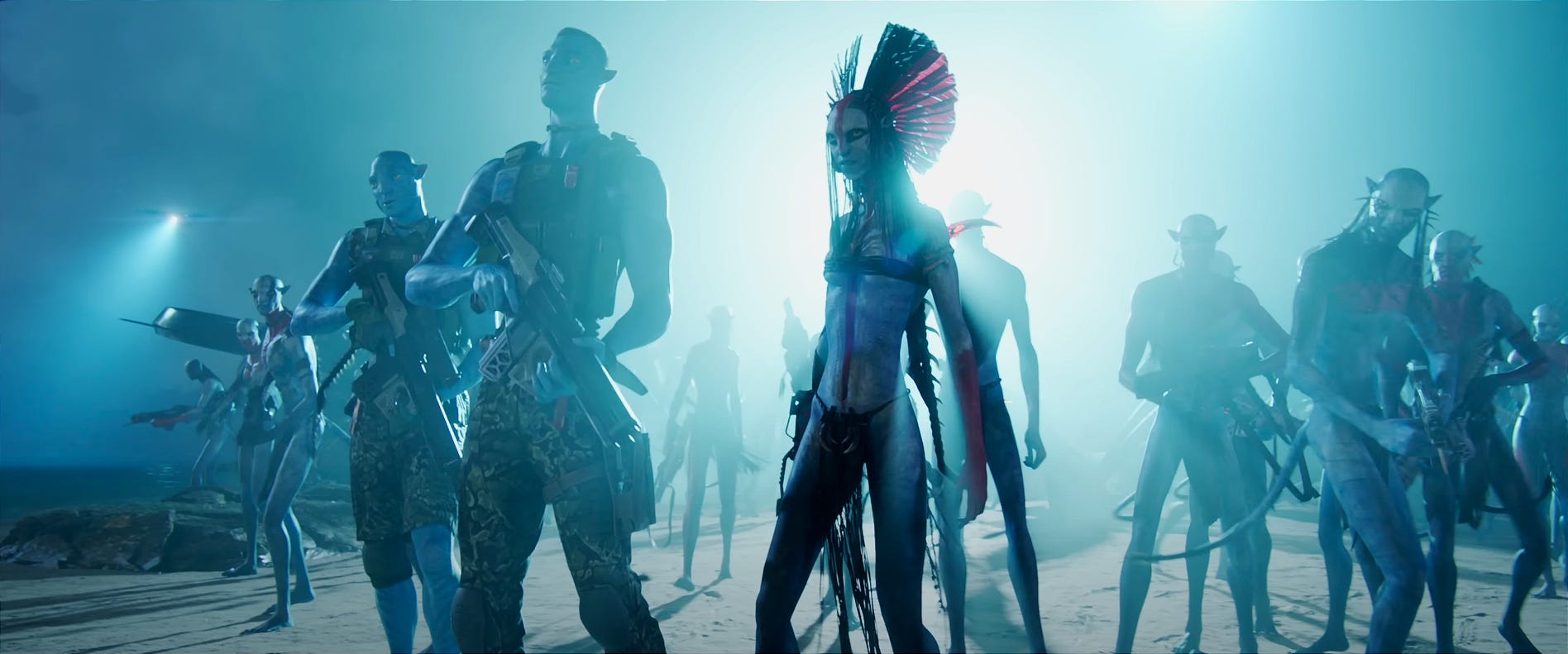
Wicked: For Good is another explosion of expensive-looking color and visual wowza, filled with songs and powerhouse performances sure to become new faves for faithful fans. The story continues to swirl around the complicated relationship of Elphaba (Cynthia Erivo), the green-skinned enchantress unjustly shunned and feared as the “Wicked Witch,” and her former schoolmate Glinda (Ariana Grande), who’s now even more popular as Elphaba’s “good” counterpart.

Most of the cast of Wicked returns. Jeff Goldblum is back as Oz’s titular wizard, now admitting he’s more manipulator than magician. Michelle Yeoh again plays the dastardly Madame Morrible. There’s the dashing Fiyero (Jonathan Bailey), who’s been promoted to captain of the Wizard’s Guard. And SNL’s Bowen Yang as Glinda’s doting assistant, and Marissa Bode as Elphaba’s wheelchair-bound sister, now the governor of Munchkinland.

There’s a lot going on as Morrible and the Wizard plot to ensnare Elphaba, Glinda prepares for her wedding (and ponders trademarking the word “good”), and Oz’s talking animals flee the kingdom to avoid enslavement. And those flying monkeys, yep, they’re still darkening the sky.

Wicked: For Good often presents a “darker” shade on the golden shine of the Yellow Brick Road, particularly in the origins of the Tin Man, the Cowardly Lion (voiced by Colman Domingo) and the Scarecrow. You’ll see how the crash-landing of Dorothy Gale’s farmhouse creates a fateful chain of events. And there’s a nod to very consequential bucket of water.

But although it dances around the well-known plotlines from the 1939 movie, it also colors outside those lines in a couple of significant ways—and if you’ve seen the stage production of Wicked, you know what I’m talking about. But no spoilers here.

And, oh yes, there’s plenty of music. Goldblum gets a feisty showstopper, “Wonderful,” joined by Grande and Erivo, who also intertwine their impressive voices for the soaring closer, “For Good.” Elphaba and Fiyero heat up a steamy number, “As Long as You’re Mine,” during a passionate encounter. There are two new songs, which weren’t in the Broadway production: Glinda’s “The Girl in the Bubble” and Elphaba’s “No Place Like Home.”

The dynamic between Glinda and Elphaba is the crux of it all. They’re old friends who found themselves in wildly divergent circumstances, on opposite sides of Oz’s political machinery and its plans—not to mention the chasm created by their perceived differences. Can they ever mend the fences that now separate them? What does fate have in store for them both?

At the screening I attended, there were laughs, tears and applause. Wicked fans will be over-the-rainbow enchanted and delighted by it all, and how it wraps things up. I can’t imagine any will leave disappointed—except for knowing that there likely won’t be any more Wicked movies after this one.

—Neil Pond

Tagged , , , ,

Movie Review: “Rental Family”

Brendan Frasier is pitch perfect as an actor pretending to be real in this warmhearted drama about finding out who you are.

Rental Family
Starring Brendan Frasier, Takehiro Hira, Mari Yamamoto & Akira Emoto
Rated PG-13
Directed by Hikari

In theaters Friday, Nov. 21

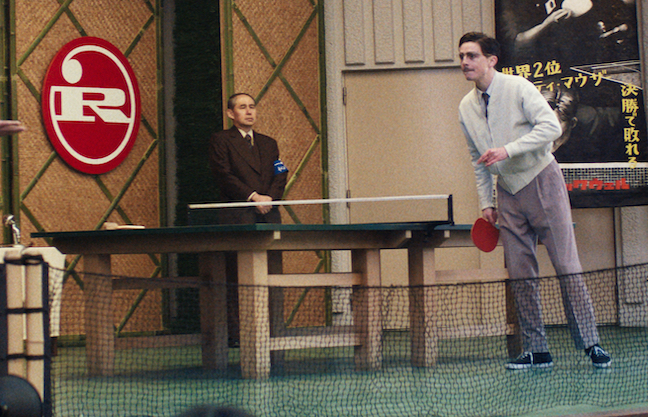
Brendan Frasier stars as Phillip, an actor in a slump now living in Japan who takes a gig with a “Rental Family” service to “act” as characters in other people’s lives. “We help clients connect to what’s missing,” says the owner (Takehiro Hira) of the service. “We sell emotion.”

So, Phillip—whose most recent gigs include playing a tree and a tube of toothpaste—embarks on a new phase of his career, one which has him role-playing the groom at a wedding, a mourner at a funeral, and a daddy to little girl (Shannon Gorman, in a most impressive debut) who’s missing a father figure. The clients of the service all need or want something, or someone, they don’t have, and Phillip is there to fill in the gaps in their lives.

And Phillip, who’s been longing for more “roles with real meaning,” certainly finds it.

Frasier—who brought home an Oscar two years ago for his intensely moving starring role in The Whale—is pitch-perfect here as a “big American” outsider in a place with its own customs, heritage, spirituality and heightened sense of propriety. Scenes where he ducks down to pass through a door without bonking his head, or hunker over in a chair that’s too small, reinforce the movie’s idea that he’s a visitor, an interloper, someone who just doesn’t quite fit in—at least not at first.

But he comes to connect with the strangers with whom he’s been hired to interact, learning about them and caring about their lives. It starts to bug Phillip that he’s living a series of lies, pretending to be someone he isn’t. (Even as he tells Mia, the little girl, that “Sometimes its okay to pretend.”)

It all plays out with some twists and turns and surprises, especially when Mia’s mother (Shino Shinozaki), who’s hired Phillip, becomes jealous of her daughter’s fondness for him. Or the feisty senior citizen (esteemed Japanese actor Akira Emoto) with dementia who wants to take Phillip on a tender road trip down memory lane…before he forgets what it is that he wants to remember.  

In the very capable hands of director Hikari (real name Mitsuyo Miyazaki), who also directed several episodes of the hit Netflix series Beef, it’s a warm, sweet mix of whimsy and heart. It hits home with its themes of loneliness and emotional need, wherever home might happen to be, and whether we need a bit of drama to spice up our lives, or just “someone to look us in the eye and show us we exist.”

It’s about fathers and sons and daughters, and the broader meaning of family, with a few existential lessons about life itself. It’s no coincidence that, at one point, a conversation is sparked by a 1963 jazz album by Charles Mingus (titled “Myself When I’m Real,” how fitting!) and an observation that jazz is all about “improvisation, chord changes and flow,” making the music mesh with the musicians making it. “Jazz is about adapting, says Kikuo, the older man who thinks Phillip is a writer doing a story on him. Hmmm, adapting…kinda like life.

You’ll watch Phillip learn to improvise, to change, to go with the flow and adapt, to mesh and help make the music of life all the sweeter for everyone his life touches. So that, in the end, he can he look himself in the eye—and see that his “lies” have led him to the truth.

Neil Pond

Tagged ,

Movie Review: “Jay Kelly”

George Clooney and Adam Sandler shine in this warm hug of a movie about friends, family, work, choices, consequences…and regrets

Jay Kelly
Starring George Clooney & Adam Sandler
Directed by Noah Baumbach
Rated R

In theaters Nov. 21, on Netflix Nov. 5

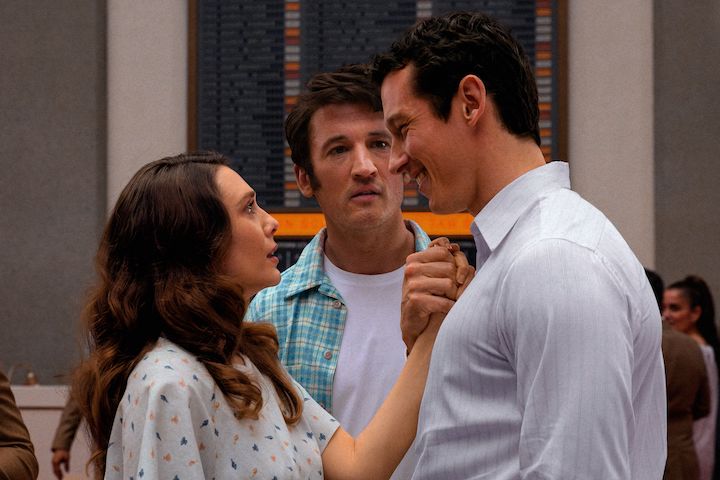
So, who’s Jay Kelly? He’s a very successful actor, not near as young as he used to be, and this funny, touching and moving movie takes us on an engaging, emotional journey with him as he re-evaluates his life. And it’s a big booster shot of authenticity that he’s played by George Clooney, himself a very successful (Oscar-winning) actor, not near as young has he used to be when he made his debut back in the early ‘80s.

Jay Kelly is a wonderfully woven story about life’s wide-ranging journey, told through an inside-Hollywood prism as we meet the people in Jay’s past and present: his manager (Adam Sandler), publicist (Laura Dern), director-mentor (Jim Broadbent), old acting-school chum (Billy Crudup), father (Stacy Keach) and daughters (Riley Kelough and Grace Edwards). The populous cast also includes Patrick Wilson, Isla Fischer, Emily Mortimer, Greta Gerwig and Eve Hewson.  

The movie’s many characters have all played—and are playing—parts in shaping Jay’s life, and we watch him as he revisits old memories. Regrets? As the song goes, he’s had a few. But we see how he, and his life in movies, have touched countless lives, made so many people smile, across the decades. Jay Kelly is a showbiz microcosm for us all, reminding us how we’re irrevocably shaped by where we’ve been and what we’ve done, and the choices we’ve made. As Jay regards his own life, and his choices, he wonders if he’s been the father he should have been, the husband he might have been, or the friend he could have been.

Clooney is charming and spot-on-perfect, but Sandler is a revelation. Hundreds of movie miles away from the on-screen immature goofballs that have been his primary stock in trade, here he’s a big part of the film’s heart and soul as his character is wrenched between his loyalty to his client and his own family priorities.

Director/writer Noah Baumbach, a lauded Hollywood presence himself, expertly juggles all the actors and the movie’s many moving parts as the story moves across time—and across Europe, where Jay goes to attempt to catch up with his youngest daughter and pick up an honorary award. On a bustling train ride from France to Italy, he enviously watches “ordinary” people enjoying their lives—and becomes a real-life “hero” by nabbing a purse-snatcher. Throughout, the characters’ conversations and dialogue, and their behaviors, ring true.

But life, and fame, can be complicated, and sometimes nothing—and no one—is quite what appearances suggest, especially when it’s a superstar actor playing roles, always pretending to be someone else.

The movie begins—and ends—with Jay asking for another “take,” another shot at re-doing his part, his scene. “Can I go again?” he asks. Haven’t we all wanted a re-do, a chance to do something over, and do it better?

Jay Kelly is a wistful, wonderfully warm hug of a movie about friends, family, choices, sacrifices and consequences, a rumination with a smile wrapped in the life of an unreal actor who seems every bit as real as the real actor playing him.

—Neil Pond

Movie Review: “The Running Man”

Glen Powell has a blast running in the long shadow of Arnold Schwarzenegger in this bang-bang, boom-boom remake of the ’80s cult classic

The Running Man
Starring Glen Powell, Josh Brolin & Colman Domingo
Directed by Edgar Wright
Rated R

In theaters Friday, Oct. 14

Glen Powell is running for his life in this slam-bang dystopian drama about a futuristic TV game show in which contestants are hunted down for the thrill of the kill.

If that sounds familiar, it’s probably because it’s a remake of the 1987 movie with Arnold Schwarzenegger in the role, based on a story by Stephen King. (Watch closely for a nod to Ahh-nold in the early minutes of the new film.)

Powell stars as Ben Richards, a distraught dad who auditions for a spot on The Running Man, TV’s hottest property—and its riskiest. Almost no one survives. But if they do, they’ll win a whopping billion dollars. And even if they don’t, they can still make some serious jack just by hanging on for as long as possible (and killing a hunter or two along the way). Richards desperately needs the cash to get his family out of the slums and buy medicine for his ailing daughter.

But he’ll have to dodge a lot of bullets and bombs first. And rappel down the outside of a hotel, outrun a fireball, leap off a bridge and fight for his life inside a high-tech V-plane (with six toilets, we learn). Meanwhile, ordinary citizens—and TV watchers—are encouraged to report him. He dons disguises and takes on fake names. Drones track him. It’s a high-stakes, life-or-death game of hide and seek.

As in the original movie, woven through the gauntlet of boom-boom and bang-bang, there are overtones and undercurrents about our escalating appetite for extreme entertainment, and how media can manipulate and mislead us. It even addresses the growing use of AI, with videos that look real, but aren’t. As Ben becomes a reality-TV superstar, his righteous anger pumps up the show’s ratings. At one point, he fatefully crosses paths with another reality TV show, a spoofy sendup of The Kardashians called The Americanos. The movie suggests that TV can be toxic to our health, in more ways than one.

Josh Brolin (above) plays the smarmy exec behind the show. Dominic Colman hams it up as the host (the role originally played by Richard Dawson). Micheal Cera is a rebel leader who becomes Ben’s ally. William H. Macy is an underground arms dealer. Katy O’Brien plays another contestant.

British director Edgar Wright (whose previous films include Last Night in Soho, Baby Driver and The World’s End) throws a lot into the story, and onto the screen. Some of it sticks, but some of it doesn’t. This is his “biggest” movie, by far, with dozens of characters and wide-ranging sequences shot in Bulgaria and Scotland. But its high-octane mix of satire, drama, cautionary-tale messaging and expensive, explosive action doesn’t always mesh. It sometimes feels like Blade Runner crossed with Mission: Impossible and Survivor, with a razzle-dazzle-y dab of America’s Got Talent.

And Powell, who made females in the audience swoon last year in Twisters, is clearly the star of the show. Come for the action, stay to see him lounging around a hotel room wearing only a towel. He’s a marquee name now, for sure, no matter what he’s wearing. In this movie, that includes a priest’s robe and a nerdy pair of glasses.

“You want a show?” Richards asks his rabid TV audience at one point, in a live video. “I’ll give you a show.” And in this stylish new spin on an ‘80s cult classic, Powell certainly does just that.

—Neil Pond

Tagged , , , ,

Movie Review: “Now You See Me, Now You Don’t

Third installment of hocus-pocus franchise adds new youthful hijinks

Justice Smith, Ariana Greenblatt, Dominic Sessa, Jesse Eisenberg,
Isla Fisher and Dave Franco

Now You See Me: Now You Don’t
Starring Jesse Eisenberg, Woody Harrelson, Dave Franco and Isla Fisher
Directed by Reuben Fleischer
Rated PG-13

In theaters Friday, Nov. 14

Ready for some (more) hocus-pocus-y hijinks?

The gang’s all here in this third installment of the “magical” movie franchise about a group of superstar illusionists known as the Four Horsemen (Jesse Eisenberg, Woody Harrelson, Dave Franco and Isla Fisher), who use their smoooooth sleight-of-hand skills for much more than just pulling rabbits out of hats.

This time they’re again Robin Hoods, now on an international mission to bring down a nefarious diamond heiress (award-winning British actress Rosamond Pike, from Gone Girl and Saltburn) at the head of a global crime syndicate of arms dealers, drug traffickers and warlords. And if you’re a fan of the previous flicks, you’ll be delighted to see Morgan Freeman returning to his role as the Horsemen’s mentor, a grand senior wizard with a few tricks still up his sleeve.

But this movie’s main trick is introducing a new supporting cast of younger tricksters. There’s Dominic Sessa (who made a most impressive debut opposite Paul Giamatti in The Holdovers), Ariana Greenblatt (she played Sasha in 2023’s Barbie) and Justice Smith (from the horror flick I Saw the TV Glow). They’re the new Horsemen, now saddled up to take this franchise even further down the road.  

There are twists and turns, snappy quips, a slick, sneering villainess, and plenty of situations where some stage-magic smarts come in handy—misdirection, card trickery, holograms, disguises, switcheroos, escapes, hypnotism and vanishing. It all feels like James Bond lite, with no substantial danger; you just know the Horsemen will somehow be able to wiggle out of any sticky situation, whether it’s a locked jail cell, a hall of mirrors or an oversized glass box slowly filling with sand…and them locked in it.

The movie also gives a big bow to the art of classic performance magic, with references to great illusionists and their groundbreaking tricks, plus how large-scale subterfuge and deception—inflatable tanks, dummy parachutists, sound effects—were used in World War II to dupe the Germans. It’s a magical history tour.

All the chasing and running and wily outsmarting lead to a big “trick” of a finale and a cameo appearance by yet another star (no spoilers here!) who played an integral part in previous movies.

“Everything that disappears, reappears,” says Eisenberg’s character. True dat: Just like this durable movie property, which reappears yet again to remind us just how much razzmatazz entertainment can be found in a star-packed bag of tricks.  

—Neil Pond

Movie Review: “In Your Dreams”

A fantastical family-friendly flight of fancy into the wild realm of unbridled imagination

In Your Dreams
With voices by Jolie Hoang-Rappaport, Elias Janssen, Craig Robinson, Simu Liu & Cristin Milioti
Directed by Alex Woo
Rated PG

Limited release in theaters Friday, Nov. 7 / On Netflix Friday, Nov. 14

“I have a dream,” said Martin Luther King.

But the late, great civil rights leader wasn’t dreaming about carnivorous hot dogs, deranged muffins, a bed galloping across the sky like a bucking mustang, or a stuffed giraffe farting laser-beam fireworks.

They’re all part of this clever, wildly imaginative animated flight of fantasy about a young teen girl, Stevie (Jolie Hoang-Rappaport), and her kid brother, Elliott (Elias Janssen), who take a deep dive into the realm of dreams hoping to meet the legendary Sandman. They’ve read that his mythical powers can make dreams come true. In Stevie’s case, she dreams about keeping her family together when she finds out her mom (Cristin Milioti, from HBO’s The Penguin) and her dad (Simu Liu, “Rival Ken” in Barbie) might be separating.

Alex Woo, making his directorial debut, clearly knows his stuff when it comes to animated romps; he learned the ropes working on the creative team at Pixar for Finding Dory, WALL-E, Cars 2 and other projects. In Your Dreams is a visually splendid, fabulously engaging “kids adventure” with a surprising amount of heart, as Stevie comes to see her little bro as less bratty slob and more sibling soulmate—and that there’s nothing more important than having a happy family.

It’s also flip, fun and even funky, with needle-drop musical moments from Eurythmics (“Sweet Dreams,” what else?) to Weezer’s cover of Metallica’s “Enter Sandman.” The Sandman himself (Omid Dialili) even gets his own razzmatazz song-and-dance number, down a big sandcastle staircase, belting an updated version of The Chordettes’ classic “Mr. Sandman.”  A pizza-parlor chorus croons a pizza-centric version of Pussycat Dolls’ “Don’t Cha.” And Milioti and Liu even get to duet on a cozy number, “The Holding On and the Letting Go,” which is already getting Oscar buzz for Best Original Song.

And you can’t have dreams without a few nightmares. In this case, it’s the shape-shifting Nightmara (Gia Carides), who’s handy with some words of not-so-scary wisdom.

But the real scene stealer is Craig Robinson (whom you probably came to know from his recurring role on NBC’s The Office) as the voice of Elliott’s well-worn, stuffed-toy lovie. You’ll find out why the scuffed-up giraffe is called Baloney Tony, and you’ll chuckle throughout at his rapid-fire wisecracks—and his “colorful” gaseous discharges.  And Baloney Tony will likely remind you of a favorite stuffed animal, for yourself or your kids, that became an inseparable childhood companion.

Stevie, Elliott and Baloney Tony’s wide-ranging nocturnal wanderings take them to some far-out, fantastical places, like a corrugated-cardboard city, an angry mob of zombie-fied food, a raging sea, a ball-pit river, a malevolent teddy bear and the swirling eye of a maelstrom. But in the end, back in the real world, Stevie comes to realize that there’s no place like home, even when it’s not neat and clean and calm and perfect.

In Your Dreams is a sweet, freshly original, eye-popping tale for the whole family—and especially for your farting giraffe.  

—Neil Pond

Tagged , ,

Movie Review: “Frankenstein”

Guillermo del Toro puts a potent new spin on the iconic tale of the man who made a monster

Frankenstein
Starring Oscar Issac, Jacob Elordi, Mia Goth and Christoph Waltz
Directed by Guillermo del Toro
Rated R

In theaters Oct. 24, on Netflix Nov. 7

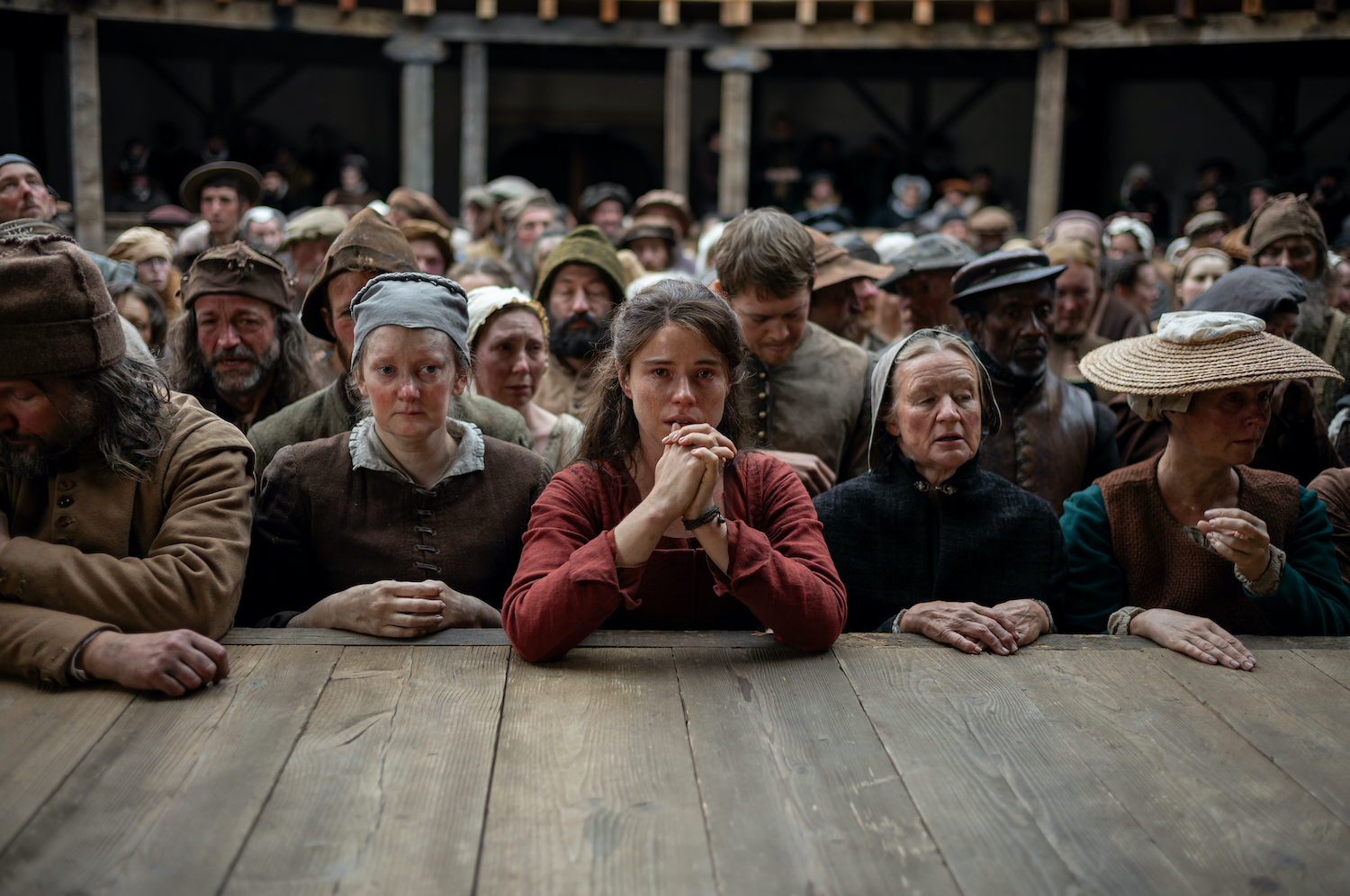
With a walloping flourish of fresh Hollywood talent, some powerful filmmaking mojo and a potent message about life itself, a classic movie monster is spectacularly revived, once again, for the screen.  

You know the age-old story: A mad scientist, Victor Frankenstein, creates a living creature from a dead human body. And things do not go well.

Director Guillermo del Toro’s Frankenstein hinges on the ethical questions at the root of the tale, based on Mary Shelley’s seminal 1818 novel: Is the real monster the creature or the “devil” who created him? And just because you can do something, should you do it? You might recall that Shelley’s story was subtitled The Modern Prometheus, referring to the Greek titan who stole fire from the gods—and suffered the consequences for eternity.

Del Toro also goes back to Shelley’s original narrative for much of his new staging of the tale, deviating somewhat from the seminal 1931 film starring Boris Karloff as the creature. Inventively, he breaks the movie into two parts, telling the story in reverse, first from Victor’s perspective and then from that of the creature.  

Mia Goth as Elizabeth

The cast is top-notch. Oscar Issac (Ex Machina, A Most Violent Year, Inside Llewyn Davis) plays Victor, driven to control the powers of life and death.  Mia Goth (Pearl, X) is Elizabeth, whose shifting affections become a significant plot driver. Christoph Waltz (D’jango Unchained, Inglourious Basterds) plays Victor’s scheming German benefactor, pouring profits from the Crimean War into Baron Frankenstein’s perverse experiments.

But the real star of the show is Jacob Elordi (Nate Jacobs on HBO’s Euphoria, and Elvis in Priscilla) as the unnamed creature, a stitched-together cadaver from the battlefield brought back to life by a jolt of lightning in Victor’s lab. A magnificent, hulking patchwork of scarred flesh and long, matted hair, he’s one hella hunka-hunka sexy uber-beast. You could easily picture him as an ‘80s rock star.

We see not only how Victor and his creature came to be, but also how the creature learns to speak, to feel and to hurt—and know that he will always be loathed, outcast and hunted. He eventually begins to long for companionship (Bride of Frankenstein, there’s your cue!). A side effect of Victor’s experiment gave his “monster” the ability to regenerate, for his body to heal after injuries, and impossible to kill—and therefore unable to find relief from his loneliness and yearning through the release of death.

It’s Elordi’s creature who gives this monster movie its beauty, and its tender, beating, aching heart.

It all fits perfectly into del Toro’s directorial wheelhouse, which has often swirled with hyper-visual elements from fairytales, mysticism and Gothic horror (as in The Shape of Water, Pan’s Labyrinth and a live-action remake of Pinocchio). His Frankenstein is monstrously majestic, with immense sets and grandly detailed, baroque embellishments…and eternal existential questions.

It’s a “monster movie,” of course, but it’s also a cautionary tale, a parable about the responsibilities of bringing a new life into the world, through natural procreation or otherwise—and how Victor Frankenstein was, in effect, father to an unnaturally made, highly unconventional “son” that he came to fear and despise. And we understand what Victor’s brother (Felix Krammerer) means when he tells him, “You’re the real monster.”

Mary Shelley’s “beast” has been one of the most popular and widely known movie monsters ever, appearing in more than 400 films and spinoffs. Appropriately, del Toro’s Frankenstein ends with a quote from the English poet George Gordon Byron: “And the heart will break, but brokenly live on.” With this impressive retooling, the epic, time-honored tale of Mary Shelly—and its messages about men and monsters, and playing God—lives on, in gloriously grand fashion. And it may just break your heart.

—Neil Pond

Tagged , , ,

Movie Review: ‘Black Phone 2’

Scattershot sequel to the 2021 horror hit feels like a movie misfire

Black Phone 2
Starring Ethan Hawke, Mason Thames, Madeline McGraw & Jeremy Davies
Directed by Scott Derrickson
Rated R

In theaters Friday, Oct. 17

Ever since Lazurus, we’ve been fascinated with people who come back from the dead. Ethan Hawke pulls off his own resurrection trick in this gritty sequel to the 2021 horror hit in which his character was killed off in a climactic confrontation by the young teen he’d kidnapped and tormented.

In Black Phone 2, set four years later, Hawke’s creepy “Grabber”—so named because he snatched victims off the street and sweeps them away in his black van—haunts the dreams of the younger sister of the boy who ended his reign of neighborhood terror. Then those dreams become living nightmares.

The gang’s all here from the first film. Mason Thames (from the recent How to Train Your Dragon remake) is Finny, the only known survivor of the Grabber’s basement of horrors. Madeline McGraw (from Disney’s Secrets of Sulphur Springs) returns as his sis, Gwen, now haunted by nighttime visions of the Grabber, his deeds and his victims. Jeremy Davies is back as their father, battling alcoholism and his own traumatic past.

But this time around, it’s all about the ghostly Grabber being set on revenge by sinking his sinister hooks—or his hatchet—into Gwen.

There’s blood and visceral goop and terrible stuff going down, but not a whole lot of bone-chilling scares or shocks. And right off the bat, we know the Grabber is dead, right? The sequel is set in 1978, back when there were still wall-mounted telephones and payphone booths. Gwen’s dreams are shot in a way that looks, appropriately enough, like grainy, 8mm home movies. And a ringing phone likely means someone from the “other side,” or the Grabber himself, wants to talk. There’s a remote Colorado winter youth camp, a blinding snowstorm, and a group of mutilated kids killed by the Grabber, entombed under the ice of a frozen lake, their lost young souls crying out for eternal rest.

And Hawke gets star billing, but he spends almost the entirety of the movie hidden behind the grinning devil mask that became the Grabber’s must-have accoutrement. Oh, the masked Grabber also ice skates, in a finale that suggests ax hockey might be hell’s most popular pastime.

The original Black Phone was a big box-office success. But maybe it was best just to let it rest in peace, rather than bring it back with a story that feels like a strained hodgepodge of horror-show cliches and stereotypes—the snowstorm, zombie-ghost children, a lakeside camp, a young woman accused of being “possessed,” bad dreams that bleed into reality. It’s like The Shining, Friday the 13th, The Walking Dead and Carrie all showed up in A Nightmare on Elm Street and took a Wrong Turn into The Exorcist before heading to an Ice Capades show.

And it also gets sidetracked by what seems to be an unfocused obsession with religion, with lots of scenes showing crosses and Bibles, recited lines of Scripture, and a foul-mouthed spew of venom at overly pious Christians. Most of the story is set in a Christian youth camp. But it never connects faith to the rest of the narrative.

“O death, where is thy sting?” Gwen asks the Grabber at one point, quoting the New Testament’s book of 1 Corinthians.

Fans of the first Black Phone might be asking the same question about this scattershot sequel with little of its predecessor’s sting. Where is the monstrous mojo of a phone call from beyond the grave? As creepshows about phone booths go, this one feels like a misdial.

—Neil Pond

Movie Review: “After the Hunt”

Julia Roberts and Andrew Garfield star in this heady sexual-accusation psychodrama set in the world of academia

After the Hunt
Starring Julia Roberts, Andrew Garfield, Ayo Edebirl, Michael Stuhlbarg & Chloë Sevigny
Directed by Luca Guadagnino
Rated R

In theaters Friday, Oct. 17

When a Yale doctoral student accuses one of her professors of sexual assault, it sets off a chain reaction of consequences in this provocative psychodrama set in the heady world of academia.  

Julia Roberts leads the stacked, all-star cast as Alma Imhoff, an adjunct psychology prof suffering from some internal mystery malady (she heaves over the toilet a lot). Maybe it’s stress related, since she’s certainly anxious about getting tenure—and mired in conflict when one of her students, Maggie (The Bear’s Ayo Edebirl), claims she was raped by one of Alma’s professorial colleagues, Hank (Andrew Garfield).

The situation is further complicated by the fact that Alma really likes both Maggie and Hank. Maggie insists she was raped. Hank proclaims his innocence. Who does Alma believe? Who do you believe?

Another professor (Chloë Sevigny) sniffs about Yale’s “entitled” student body, and how they’re quick to claim victimization of any kind. Michael Stuhlbarg plays Frederick, Alma’s doting psychiatrist husband.

After the Hunt is a-swirl with recriminations, he-said/she-said ambiguity, long-buried secrets, career-altering revelations and smoldering sexual tension. It’s about a “hunt” for truth, and assigning blame. It’s interwoven with talk about white male patriarchy, female solidarity, #MeToo, sexual misconduct, morality, restorative justice and racial inequality. There are conversations dense with banter about Aristotle, Freud, Arendt, Nietzsche and Kierkegaard. Sometimes it feels like a philosophy crash course.

It’s a knotty, complex story, largely told through Alma’s perspective as she reacts to what’s going on all around her—and realizes the need to reconcile her own past with her present. Roberts and the rest of the cast are terrific. The soundtrack (by the three-time Oscar-winning duo of Trent Reznor and Atticus Ross) scores what we’re seeing onscreen with a sometimes-unconventional sonic undercurrent effectively conveying the sense of creeping uncertainty and growing dread. Director Luca Guadagnino continues his interest in exploring the many ways passion, sexuality and amour can be twisted into dysfunction and dysphoria; After the Hunt certainly slices into a thematic vein shared with the Italian director’s previous films Challengers, Queer, Call Me by Your Name, Bones and All and Suspira.

It’s all very handsome, tony, provocative and well-crafted, but it asks a lot from the audience—including, with a running time of over two hours, more than a bit of patience. And it presents some truly thorny ideas and issues without really resolving or wrapping them up in the end—even though a hospital scene in the final stretch offers some insight, if not a tidy little bow. A “five years later” coda adds to the sense that time may not, in fact, heal all wounds. It’s not a feel-good movie, by any means. It challenges you to watch, listen, think and stew along with its characters.

As Alma snaps to Maggie in a heated up-close encounter, “Not everything is supposed to make you feel comfortable.” That obviously includes After the Hunt.

—Neil Pond

Tagged , , , , ,

Movie Review: “A House of Dynamite”

Are you ready for doomsday? Directory Kathryn Bigelow’s latest makes us think about the unthinkable.

Rebecca Ferguson gets a troubling phone call.

A House of Dynamite
Starring Idris Elba, Rebecca Ferguson, Gabriel Basso, Tracy Letts & Greta Lee
Directed by Kathryn Bigelow
Rated PG-13

In theaters Friday, Oct. 10 / On Netflix Friday, Oct. 24

As an intercontinental ballistic missile bears down on the United States, everyone scrambles to find out who fired it and what to do before it reaches its target in about 20 minutes. That’s the ultra-high-stakes situation in A House of Dynamite, which plops a bona fide doomsday scenario into our laps and forces us to think about the unthinkable.

Oscar-winning director Kathryn Bigelow (The Hurt Locker, Zero Dark Thirty) expertly tightens the screws and amps up the tension with every taught, fraught second, inventively overlapping timelines to show us how different politicians, advisors, generals, military personnel and Washington insiders grapple with the toughest decision they’ve ever made, from the U.S. President (Idris Elba) on down the chain of command.

Confusion, dread and disbelief abound. Who launched the missile, headed straight for Chicago? Was it Russia? North Korea? China? Why didn’t America’s intercept-and-destroy defense network work? “That’s what $50 million buys us!??” barks the incredulous Secretary of Defense (Jared Harris). Should the U.S. makes its own retaliatory strike, before it’s too late? What VIPs and essential personnel will be evacuated to safety deep inside a mountain bunker, and who’ll be left behind? Will a governmental communications expert (Rebecca Ferguson) ever see her husband and young son again?

And what about the 10 million citizens expected to die when the missile hits its target?  The horrific specter of all-out nuclear Armageddon looms large, with one bomb likely to start a chain reaction of mutually assured destruction. As one character notes, we’re living in a house full of dynamite.

Bombers scramble to take out a Russian submarine in the Pacific.

The impressive ensemble cast includes Greta Lee, Anthony Ramos, Gabriel Brasso, Jason Clarke, Kaitlyn Dever and Tracy Letts. How does WNBA basketball star Angel Reese fit into things? Or a date with an Appleby’s waitress, elephants in Kenya, Civil War re-enactors or young soldier-sentries standing guard at a remote Alaskan outpost? The movie unnervingly depicts the wide-ranging ripple effect, across a spectrum of geography and life, about to be affected in the worst possible way.

It’s like Stanley Kubrick’s brilliant Dr. Strangelove, but without any of that 1964 film’s scathing satire—this is deadly serious stuff. And it takes on even more gravity with current events being what they are, global politics fraught with growing tensions, and nuclear proliferation a very real thing and a very real threat. How would today’s leaders—generals, cabinet members, and yes, the president—respond if faced with that situation?

And consider this unnerving premise from the film: Despite America’s expansive, high-tech defense systems, such an attack is well within the realm of possibility.

In one early scene, Rebecca Ferguson’s character toys with a tiny plastic dinosaur, handed to her by her son before she left for work that fateful morning. As she wonders if life as she knows it may be ending, that little prehistoric creature comes to represent an even more discomforting mega scenario, one in which all humankind might very well become extinct, extinguished like the dinosaurs. And, in a grim irony, done in by our devices.

A House of Dynamite is a sobering countdown, a colossally jarring wake-up call about the fragility of our very existence…and about a time—and a day, in a span of minutes—that we can only hope never comes.

Neil Pond

Tagged , ,