Category Archives: Movie Reviews

Movie Review: “In Your Dreams”

A fantastical family-friendly flight of fancy into the wild realm of unbridled imagination

In Your Dreams
With voices by Jolie Hoang-Rappaport, Elias Janssen, Craig Robinson, Simu Liu & Cristin Milioti
Directed by Alex Woo
Rated PG

Limited release in theaters Friday, Nov. 7 / On Netflix Friday, Nov. 14

“I have a dream,” said Martin Luther King.

But the late, great civil rights leader wasn’t dreaming about carnivorous hot dogs, deranged muffins, a bed galloping across the sky like a bucking mustang, or a stuffed giraffe farting laser-beam fireworks.

They’re all part of this clever, wildly imaginative animated flight of fantasy about a young teen girl, Stevie (Jolie Hoang-Rappaport), and her kid brother, Elliott (Elias Janssen), who take a deep dive into the realm of dreams hoping to meet the legendary Sandman. They’ve read that his mythical powers can make dreams come true. In Stevie’s case, she dreams about keeping her family together when she finds out her mom (Cristin Milioti, from HBO’s The Penguin) and her dad (Simu Liu, “Rival Ken” in Barbie) might be separating.

Alex Woo, making his directorial debut, clearly knows his stuff when it comes to animated romps; he learned the ropes working on the creative team at Pixar for Finding Dory, WALL-E, Cars 2 and other projects. In Your Dreams is a visually splendid, fabulously engaging “kids adventure” with a surprising amount of heart, as Stevie comes to see her little bro as less bratty slob and more sibling soulmate—and that there’s nothing more important than having a happy family.

It’s also flip, fun and even funky, with needle-drop musical moments from Eurythmics (“Sweet Dreams,” what else?) to Weezer’s cover of Metallica’s “Enter Sandman.” The Sandman himself (Omid Dialili) even gets his own razzmatazz song-and-dance number, down a big sandcastle staircase, belting an updated version of The Chordettes’ classic “Mr. Sandman.”  A pizza-parlor chorus croons a pizza-centric version of Pussycat Dolls’ “Don’t Cha.” And Milioti and Liu even get to duet on a cozy number, “The Holding On and the Letting Go,” which is already getting Oscar buzz for Best Original Song.

And you can’t have dreams without a few nightmares. In this case, it’s the shape-shifting Nightmara (Gia Carides), who’s handy with some words of not-so-scary wisdom.

But the real scene stealer is Craig Robinson (whom you probably came to know from his recurring role on NBC’s The Office) as the voice of Elliott’s well-worn, stuffed-toy lovie. You’ll find out why the scuffed-up giraffe is called Baloney Tony, and you’ll chuckle throughout at his rapid-fire wisecracks—and his “colorful” gaseous discharges.  And Baloney Tony will likely remind you of a favorite stuffed animal, for yourself or your kids, that became an inseparable childhood companion.
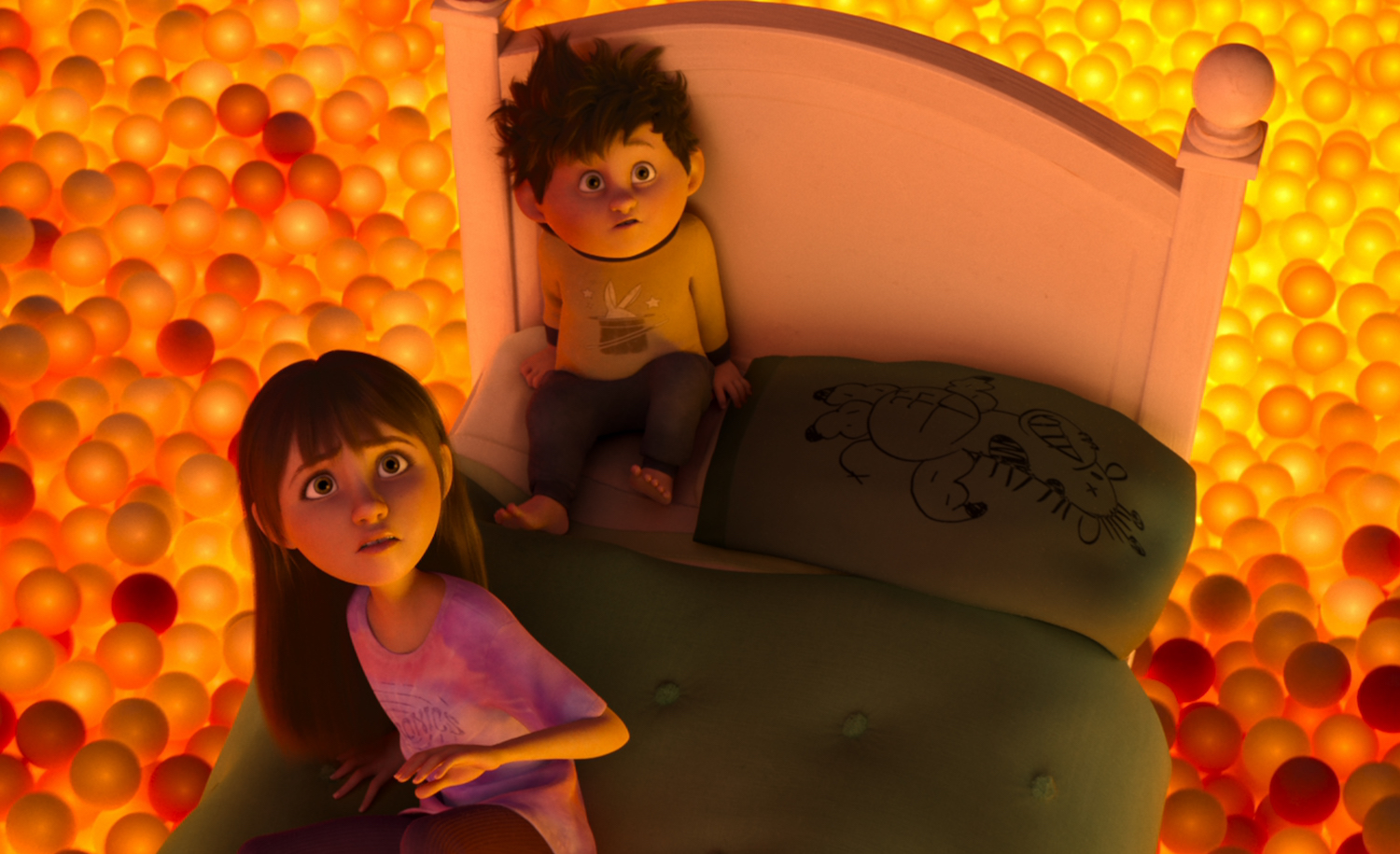
Stevie, Elliott and Baloney Tony’s wide-ranging nocturnal wanderings take them to some far-out, fantastical places, like a corrugated-cardboard city, an angry mob of zombie-fied food, a raging sea, a ball-pit river, a malevolent teddy bear and the swirling eye of a maelstrom. But in the end, back in the real world, Stevie comes to realize that there’s no place like home, even when it’s not neat and clean and calm and perfect.

In Your Dreams is a sweet, freshly original, eye-popping tale for the whole family—and especially for your farting giraffe.  

—Neil Pond

Tagged , ,

Movie Review: “Frankenstein”

Guillermo del Toro puts a potent new spin on the iconic tale of the man who made a monster

Frankenstein
Starring Oscar Issac, Jacob Elordi, Mia Goth and Christoph Waltz
Directed by Guillermo del Toro
Rated R

In theaters Oct. 24, on Netflix Nov. 7

With a walloping flourish of fresh Hollywood talent, some powerful filmmaking mojo and a potent message about life itself, a classic movie monster is spectacularly revived, once again, for the screen.  

You know the age-old story: A mad scientist, Victor Frankenstein, creates a living creature from a dead human body. And things do not go well.

Director Guillermo del Toro’s Frankenstein hinges on the ethical questions at the root of the tale, based on Mary Shelley’s seminal 1818 novel: Is the real monster the creature or the “devil” who created him? And just because you can do something, should you do it? You might recall that Shelley’s story was subtitled The Modern Prometheus, referring to the Greek titan who stole fire from the gods—and suffered the consequences for eternity.

Del Toro also goes back to Shelley’s original narrative for much of his new staging of the tale, deviating somewhat from the seminal 1931 film starring Boris Karloff as the creature. Inventively, he breaks the movie into two parts, telling the story in reverse, first from Victor’s perspective and then from that of the creature.  

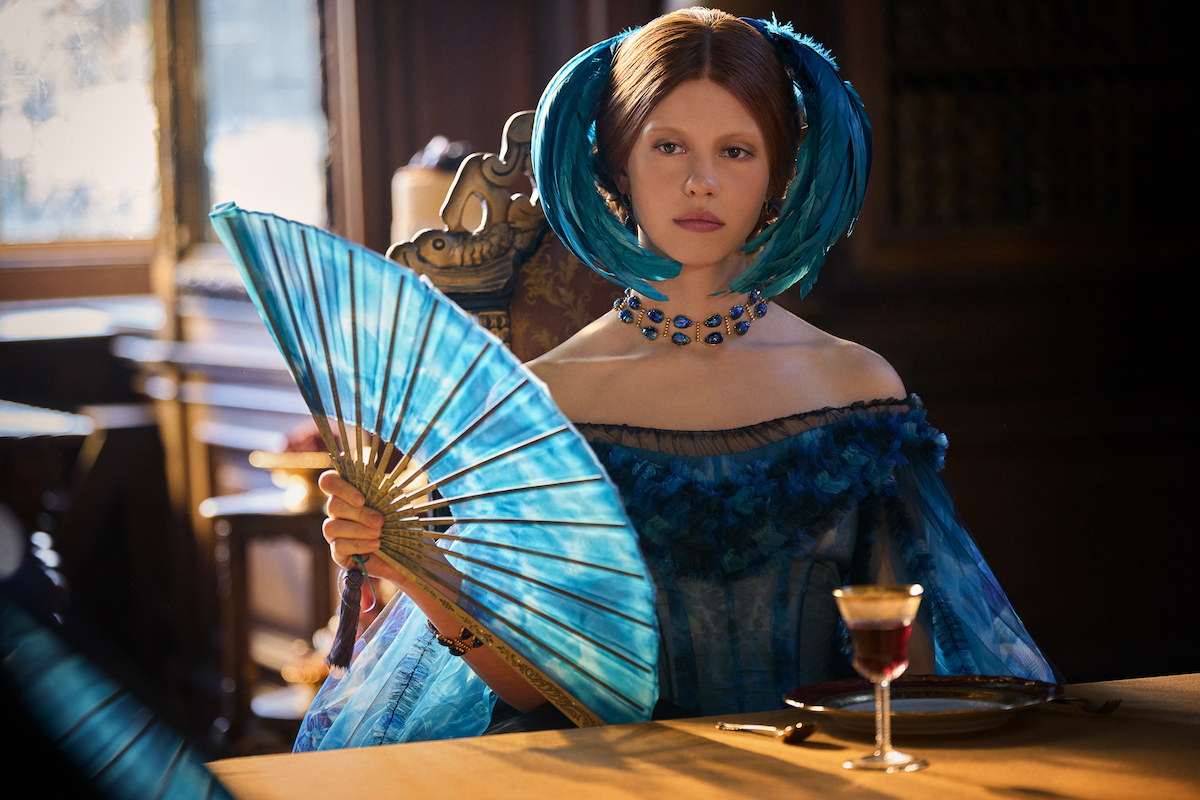
Mia Goth as Elizabeth

The cast is top-notch. Oscar Issac (Ex Machina, A Most Violent Year, Inside Llewyn Davis) plays Victor, driven to control the powers of life and death.  Mia Goth (Pearl, X) is Elizabeth, whose shifting affections become a significant plot driver. Christoph Waltz (D’jango Unchained, Inglourious Basterds) plays Victor’s scheming German benefactor, pouring profits from the Crimean War into Baron Frankenstein’s perverse experiments.

But the real star of the show is Jacob Elordi (Nate Jacobs on HBO’s Euphoria, and Elvis in Priscilla) as the unnamed creature, a stitched-together cadaver from the battlefield brought back to life by a jolt of lightning in Victor’s lab. A magnificent, hulking patchwork of scarred flesh and long, matted hair, he’s one hella hunka-hunka sexy uber-beast. You could easily picture him as an ‘80s rock star.

We see not only how Victor and his creature came to be, but also how the creature learns to speak, to feel and to hurt—and know that he will always be loathed, outcast and hunted. He eventually begins to long for companionship (Bride of Frankenstein, there’s your cue!). A side effect of Victor’s experiment gave his “monster” the ability to regenerate, for his body to heal after injuries, and impossible to kill—and therefore unable to find relief from his loneliness and yearning through the release of death.

It’s Elordi’s creature who gives this monster movie its beauty, and its tender, beating, aching heart.

It all fits perfectly into del Toro’s directorial wheelhouse, which has often swirled with hyper-visual elements from fairytales, mysticism and Gothic horror (as in The Shape of Water, Pan’s Labyrinth and a live-action remake of Pinocchio). His Frankenstein is monstrously majestic, with immense sets and grandly detailed, baroque embellishments…and eternal existential questions.

It’s a “monster movie,” of course, but it’s also a cautionary tale, a parable about the responsibilities of bringing a new life into the world, through natural procreation or otherwise—and how Victor Frankenstein was, in effect, father to an unnaturally made, highly unconventional “son” that he came to fear and despise. And we understand what Victor’s brother (Felix Krammerer) means when he tells him, “You’re the real monster.”

Mary Shelley’s “beast” has been one of the most popular and widely known movie monsters ever, appearing in more than 400 films and spinoffs. Appropriately, del Toro’s Frankenstein ends with a quote from the English poet George Gordon Byron: “And the heart will break, but brokenly live on.” With this impressive retooling, the epic, time-honored tale of Mary Shelly—and its messages about men and monsters, and playing God—lives on, in gloriously grand fashion. And it may just break your heart.

—Neil Pond

Tagged , , ,

Movie Review: ‘Black Phone 2’

Scattershot sequel to the 2021 horror hit feels like a movie misfire

Black Phone 2
Starring Ethan Hawke, Mason Thames, Madeline McGraw & Jeremy Davies
Directed by Scott Derrickson
Rated R

In theaters Friday, Oct. 17

Ever since Lazurus, we’ve been fascinated with people who come back from the dead. Ethan Hawke pulls off his own resurrection trick in this gritty sequel to the 2021 horror hit in which his character was killed off in a climactic confrontation by the young teen he’d kidnapped and tormented.

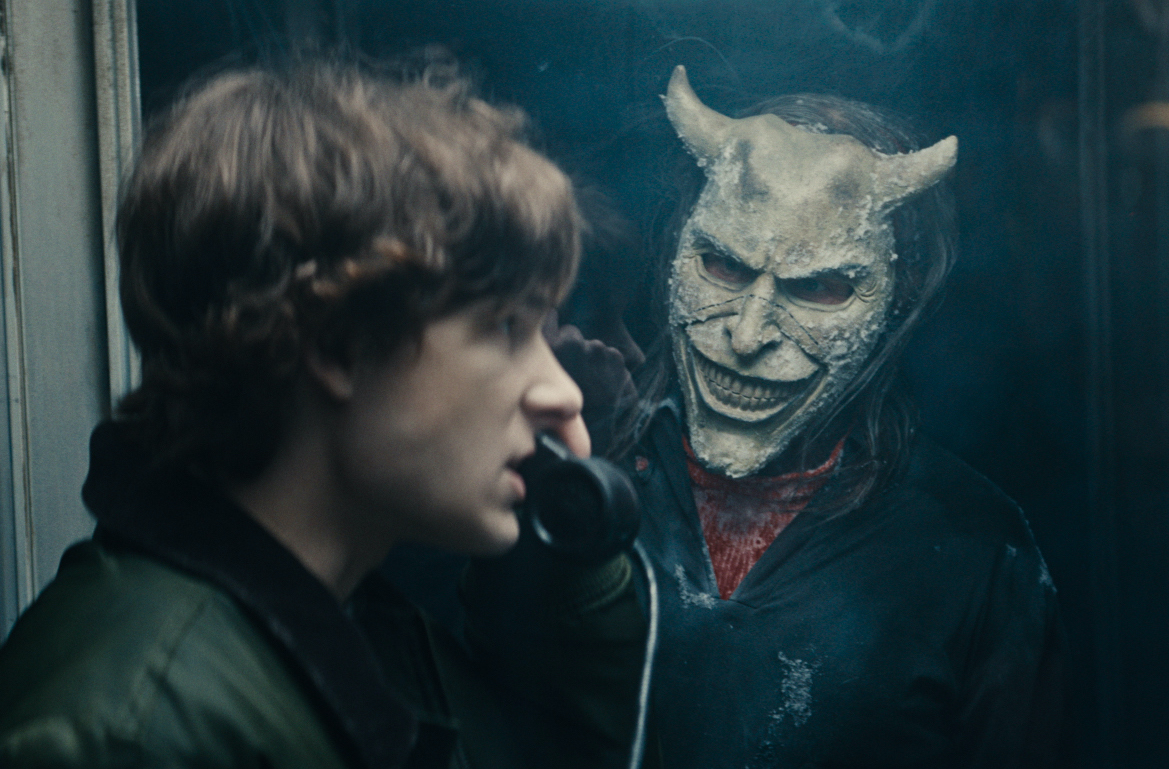
In Black Phone 2, set four years later, Hawke’s creepy “Grabber”—so named because he snatched victims off the street and sweeps them away in his black van—haunts the dreams of the younger sister of the boy who ended his reign of neighborhood terror. Then those dreams become living nightmares.

The gang’s all here from the first film. Mason Thames (from the recent How to Train Your Dragon remake) is Finny, the only known survivor of the Grabber’s basement of horrors. Madeline McGraw (from Disney’s Secrets of Sulphur Springs) returns as his sis, Gwen, now haunted by nighttime visions of the Grabber, his deeds and his victims. Jeremy Davies is back as their father, battling alcoholism and his own traumatic past.

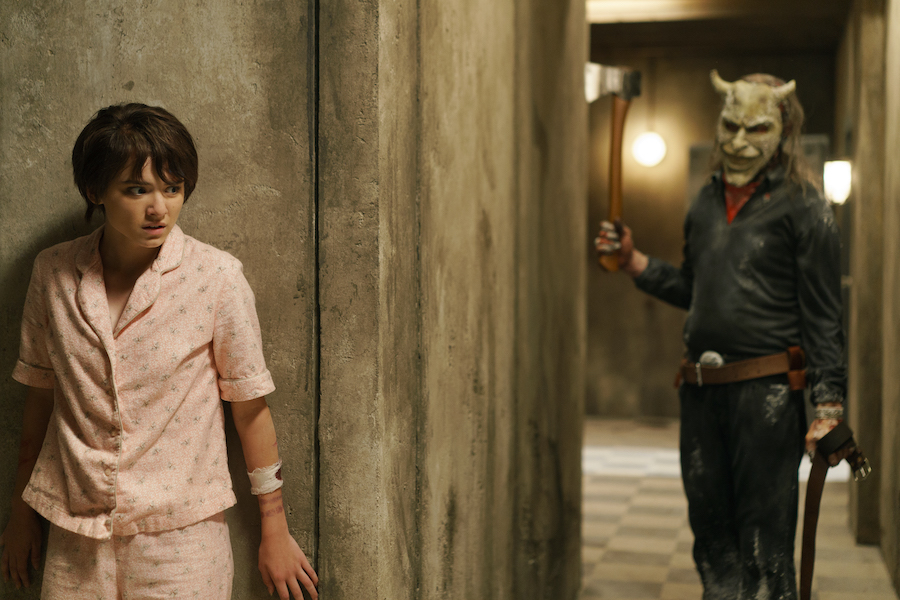
But this time around, it’s all about the ghostly Grabber being set on revenge by sinking his sinister hooks—or his hatchet—into Gwen.

There’s blood and visceral goop and terrible stuff going down, but not a whole lot of bone-chilling scares or shocks. And right off the bat, we know the Grabber is dead, right? The sequel is set in 1978, back when there were still wall-mounted telephones and payphone booths. Gwen’s dreams are shot in a way that looks, appropriately enough, like grainy, 8mm home movies. And a ringing phone likely means someone from the “other side,” or the Grabber himself, wants to talk. There’s a remote Colorado winter youth camp, a blinding snowstorm, and a group of mutilated kids killed by the Grabber, entombed under the ice of a frozen lake, their lost young souls crying out for eternal rest.

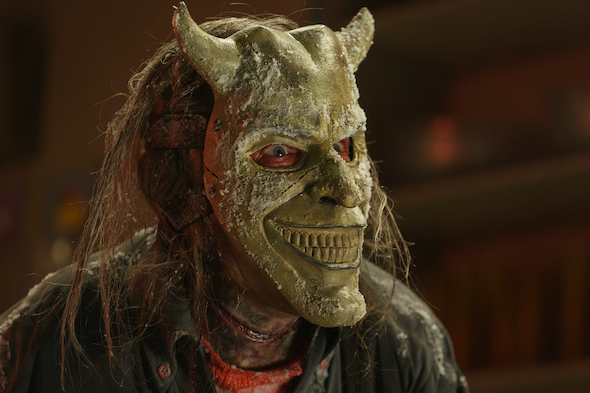
And Hawke gets star billing, but he spends almost the entirety of the movie hidden behind the grinning devil mask that became the Grabber’s must-have accoutrement. Oh, the masked Grabber also ice skates, in a finale that suggests ax hockey might be hell’s most popular pastime.

The original Black Phone was a big box-office success. But maybe it was best just to let it rest in peace, rather than bring it back with a story that feels like a strained hodgepodge of horror-show cliches and stereotypes—the snowstorm, zombie-ghost children, a lakeside camp, a young woman accused of being “possessed,” bad dreams that bleed into reality. It’s like The Shining, Friday the 13th, The Walking Dead and Carrie all showed up in A Nightmare on Elm Street and took a Wrong Turn into The Exorcist before heading to an Ice Capades show.

And it also gets sidetracked by what seems to be an unfocused obsession with religion, with lots of scenes showing crosses and Bibles, recited lines of Scripture, and a foul-mouthed spew of venom at overly pious Christians. Most of the story is set in a Christian youth camp. But it never connects faith to the rest of the narrative.

“O death, where is thy sting?” Gwen asks the Grabber at one point, quoting the New Testament’s book of 1 Corinthians.

Fans of the first Black Phone might be asking the same question about this scattershot sequel with little of its predecessor’s sting. Where is the monstrous mojo of a phone call from beyond the grave? As creepshows about phone booths go, this one feels like a misdial.

—Neil Pond

Movie Review: “After the Hunt”

Julia Roberts and Andrew Garfield star in this heady sexual-accusation psychodrama set in the world of academia

After the Hunt
Starring Julia Roberts, Andrew Garfield, Ayo Edebirl, Michael Stuhlbarg & Chloë Sevigny
Directed by Luca Guadagnino
Rated R

In theaters Friday, Oct. 17

When a Yale doctoral student accuses one of her professors of sexual assault, it sets off a chain reaction of consequences in this provocative psychodrama set in the heady world of academia.  

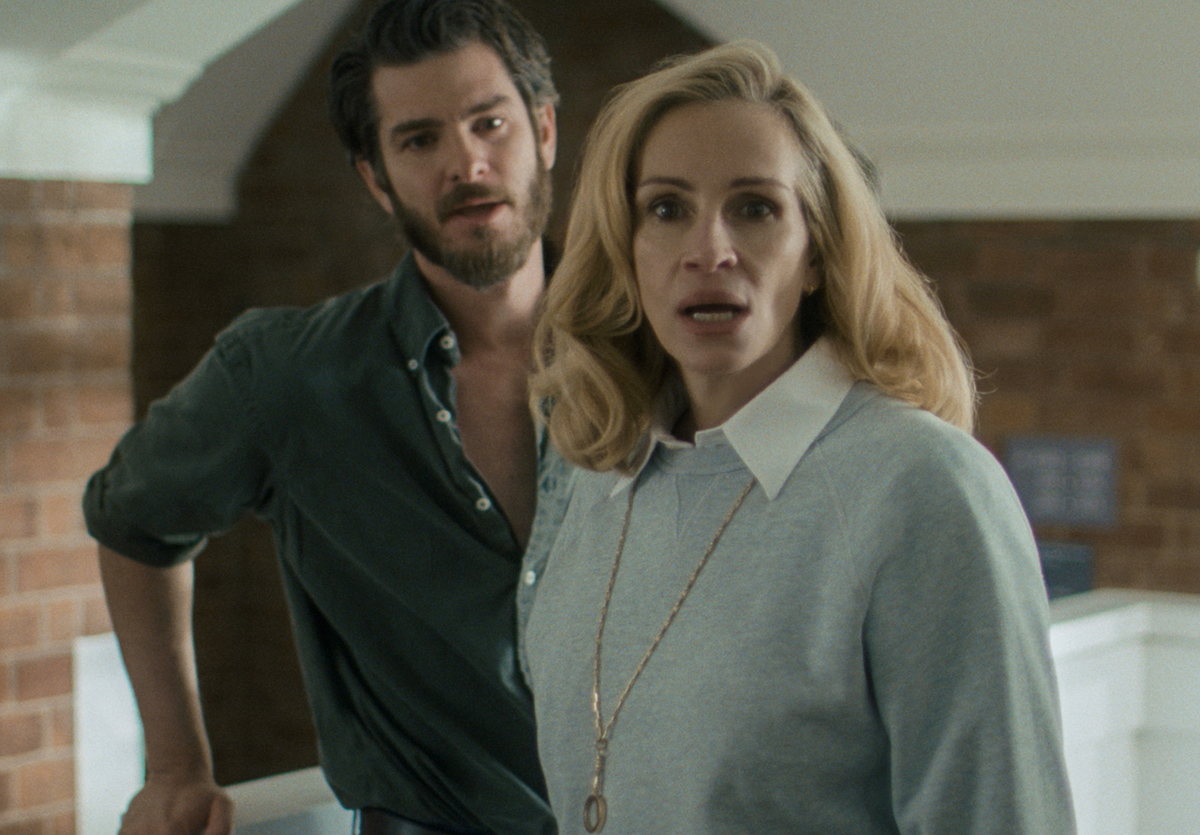
Julia Roberts leads the stacked, all-star cast as Alma Imhoff, an adjunct psychology prof suffering from some internal mystery malady (she heaves over the toilet a lot). Maybe it’s stress related, since she’s certainly anxious about getting tenure—and mired in conflict when one of her students, Maggie (The Bear’s Ayo Edebirl), claims she was raped by one of Alma’s professorial colleagues, Hank (Andrew Garfield).

The situation is further complicated by the fact that Alma really likes both Maggie and Hank. Maggie insists she was raped. Hank proclaims his innocence. Who does Alma believe? Who do you believe?

Another professor (Chloë Sevigny) sniffs about Yale’s “entitled” student body, and how they’re quick to claim victimization of any kind. Michael Stuhlbarg plays Frederick, Alma’s doting psychiatrist husband.

After the Hunt is a-swirl with recriminations, he-said/she-said ambiguity, long-buried secrets, career-altering revelations and smoldering sexual tension. It’s about a “hunt” for truth, and assigning blame. It’s interwoven with talk about white male patriarchy, female solidarity, #MeToo, sexual misconduct, morality, restorative justice and racial inequality. There are conversations dense with banter about Aristotle, Freud, Arendt, Nietzsche and Kierkegaard. Sometimes it feels like a philosophy crash course.

It’s a knotty, complex story, largely told through Alma’s perspective as she reacts to what’s going on all around her—and realizes the need to reconcile her own past with her present. Roberts and the rest of the cast are terrific. The soundtrack (by the three-time Oscar-winning duo of Trent Reznor and Atticus Ross) scores what we’re seeing onscreen with a sometimes-unconventional sonic undercurrent effectively conveying the sense of creeping uncertainty and growing dread. Director Luca Guadagnino continues his interest in exploring the many ways passion, sexuality and amour can be twisted into dysfunction and dysphoria; After the Hunt certainly slices into a thematic vein shared with the Italian director’s previous films Challengers, Queer, Call Me by Your Name, Bones and All and Suspira.

It’s all very handsome, tony, provocative and well-crafted, but it asks a lot from the audience—including, with a running time of over two hours, more than a bit of patience. And it presents some truly thorny ideas and issues without really resolving or wrapping them up in the end—even though a hospital scene in the final stretch offers some insight, if not a tidy little bow. A “five years later” coda adds to the sense that time may not, in fact, heal all wounds. It’s not a feel-good movie, by any means. It challenges you to watch, listen, think and stew along with its characters.

As Alma snaps to Maggie in a heated up-close encounter, “Not everything is supposed to make you feel comfortable.” That obviously includes After the Hunt.

—Neil Pond

Tagged , , , , ,

Movie Review: “A House of Dynamite”

Are you ready for doomsday? Directory Kathryn Bigelow’s latest makes us think about the unthinkable.

Rebecca Ferguson gets a troubling phone call.

A House of Dynamite
Starring Idris Elba, Rebecca Ferguson, Gabriel Basso, Tracy Letts & Greta Lee
Directed by Kathryn Bigelow
Rated PG-13

In theaters Friday, Oct. 10 / On Netflix Friday, Oct. 24

As an intercontinental ballistic missile bears down on the United States, everyone scrambles to find out who fired it and what to do before it reaches its target in about 20 minutes. That’s the ultra-high-stakes situation in A House of Dynamite, which plops a bona fide doomsday scenario into our laps and forces us to think about the unthinkable.

Oscar-winning director Kathryn Bigelow (The Hurt Locker, Zero Dark Thirty) expertly tightens the screws and amps up the tension with every taught, fraught second, inventively overlapping timelines to show us how different politicians, advisors, generals, military personnel and Washington insiders grapple with the toughest decision they’ve ever made, from the U.S. President (Idris Elba) on down the chain of command.

Confusion, dread and disbelief abound. Who launched the missile, headed straight for Chicago? Was it Russia? North Korea? China? Why didn’t America’s intercept-and-destroy defense network work? “That’s what $50 million buys us!??” barks the incredulous Secretary of Defense (Jared Harris). Should the U.S. makes its own retaliatory strike, before it’s too late? What VIPs and essential personnel will be evacuated to safety deep inside a mountain bunker, and who’ll be left behind? Will a governmental communications expert (Rebecca Ferguson) ever see her husband and young son again?

And what about the 10 million citizens expected to die when the missile hits its target?  The horrific specter of all-out nuclear Armageddon looms large, with one bomb likely to start a chain reaction of mutually assured destruction. As one character notes, we’re living in a house full of dynamite.

Bombers scramble to take out a Russian submarine in the Pacific.

The impressive ensemble cast includes Greta Lee, Anthony Ramos, Gabriel Brasso, Jason Clarke, Kaitlyn Dever and Tracy Letts. How does WNBA basketball star Angel Reese fit into things? Or a date with an Appleby’s waitress, elephants in Kenya, Civil War re-enactors or young soldier-sentries standing guard at a remote Alaskan outpost? The movie unnervingly depicts the wide-ranging ripple effect, across a spectrum of geography and life, about to be affected in the worst possible way.

It’s like Stanley Kubrick’s brilliant Dr. Strangelove, but without any of that 1964 film’s scathing satire—this is deadly serious stuff. And it takes on even more gravity with current events being what they are, global politics fraught with growing tensions, and nuclear proliferation a very real thing and a very real threat. How would today’s leaders—generals, cabinet members, and yes, the president—respond if faced with that situation?

And consider this unnerving premise from the film: Despite America’s expansive, high-tech defense systems, such an attack is well within the realm of possibility.

In one early scene, Rebecca Ferguson’s character toys with a tiny plastic dinosaur, handed to her by her son before she left for work that fateful morning. As she wonders if life as she knows it may be ending, that little prehistoric creature comes to represent an even more discomforting mega scenario, one in which all humankind might very well become extinct, extinguished like the dinosaurs. And, in a grim irony, done in by our devices.

A House of Dynamite is a sobering countdown, a colossally jarring wake-up call about the fragility of our very existence…and about a time—and a day, in a span of minutes—that we can only hope never comes.

Neil Pond

Tagged , ,

Movie Review: “The Smashing Machine”

The Rock takes on a new kind of role—and a pounding—in this bruising sports drama about a real-life “extreme fighter”

The Smashing Machine
Starring Dwayne Johnson and Emily Blunt
Directed by Benny Safdie
Rated R

In theaters Friday, Oct. 3

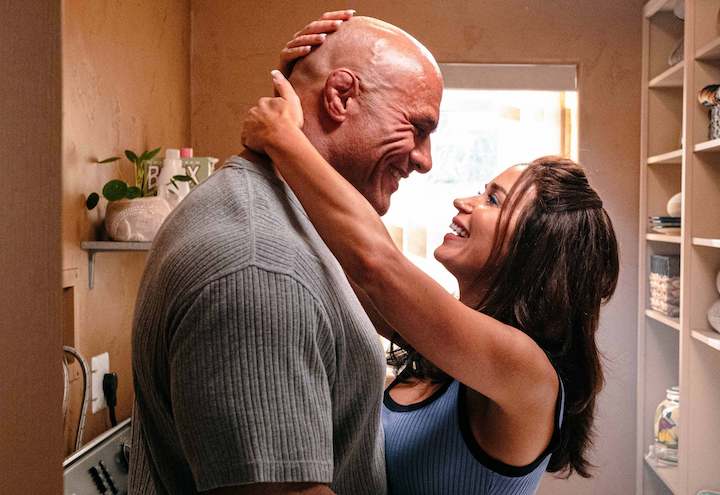
The Rock’s latest role finds him taking a beating—and giving even more of them out—in this gritty drama about real-life mixed martial arts “extreme” fighter Mark Kerr, one of the pioneering superstars of the hybrid wrestling sport some 25 years ago.

As fans of extreme fighting know, MMA is a combo platter of combative styles from around the world, from judo and jiu-jitsu to boxing and street fighting. There’s a lot of grappling, eye gouging, neck choking, head kicking and fist pummeling. Sometimes the fights are staged in “cages.” The events of the film take place between 1997 and 2000, when Kerr was a rising star in the MMA global arena, especially in Japan. It’s kinda like Rocky, with saki!

Johnson—who was himself a pro wrestler known as the Rock before beginning his acting career—immerses himself in the role, making an almost phenomenal transformation into Kerr by using multiple facial prosthetics. The muscles and sculpted body look familiar, but you sometimes have to keep reminding yourself that it’s really the Rock in there, underneath the false nose, cheekbones, forehead and ears. It’s more than a few movie miles from the upbeat, popcorn-y roles Johnson became known for in pumped-up, action-adventure romps like Jumanji, Skyscraper, the Fast and Furious franchise and San Andreas, or animated family fare like Moana, Hercules or DC League of Super Pets.

Although we see plenty of Johnson’s character doing his thing in the ring—the brutal fight scenes are very convincing—we also watch Kerr in psychological battles with himself and with his girlfriend, Dawn (Emily Blunt). We see how the fighters may try to beat each other’s brains out, but they can be friends—even besties—when the show’s over. An actual former MMA fighter, Ryan Bader, has an integral supporting role as Kerr’s good buddy Mark Coleman, who’s also his direct competitor.

Eventually, Kerr becomes dependent on opioids and painkillers, and there’s little wonder why. He is indeed a human smashing machine; he even smashes a door to splinters in a burst of anger. All that smashing takes a toll on his body. But he loves it, loves the winning, loves soaking up the cheers of the crowd. “It’s orgasmic,” he says. “The highest of highs.”

For all its brawn and brawl, the movie’s a bit lite on the drama. There’s not a lot of conflict, or emotional highs and lows, or surprises, in Kerr’s fight-club sphere. We’re never told about his prior life, as a high school wrestler in Iowa, or how worked his way up into the pros. It’s not so much a biopic as a window on a compressed period, much like the 2002 documentary about Kerr (from which this movie takes its title). Director Benny Safdie, whose previous films include the edgy Good Times and Uncut Gems, keeps the edges messy, showing us the sweaty, unglamorous and often bloody world of “outlaw” wrestling, where combatants keep fighting because they need the money, they’re addicted to it…and they can’t really do anything else.

The movie overlays some highly appropriate music onto its scenes. It’s hard to miss the messaging when we watch Kerr training to the tune of Elvis singing Sinatra’s “My Way” (and its line about “But through it all / When there was doubt / I ate it up and spit it out”). Bruce Springsteen’s “Jungle Land” orchestrates a particularly stressful, combustive interlude between Kerr and Dawn. And it’s quite appropriate that it all ends with the Alan Parsons Project and “Limelight,” about how the limelight, the spotlight, was “all I ever wanted since it all began / Shining on me, telling the world who I am.”

The Smashing Machine shows the who-I-am about an ultimate fighter who ultimately finds himself on the other side of the spotlight. But more impressively, it also shows how Dwayne Johnson has found the other side of the showbiz coin, as a serious actor in a substantial role, a smashing success at playing a real person instead of exaggerated, often cartoonish caricatures.

Neil Pond

Tagged , , ,

Movie Review: “Him”

Stylish horror show stabs at the brutality of a sport worshipped by Americans every weekend

Him
Starring Marlon Wayans, Tyric Withers and Julia Fox
Directed by Justin Tipping
Rated R

In theaters Friday, Sept. 19

With phantasmagoric imagery, religious references and vicious stabs into the heart of American football, this high-toned horror show wants to make you think about the destructive brutality of the game that a young college quarterback (Tyric Withers) feels like he was destined to play.

Withers’ character, Cameron Cade, grew up with a football-obsessed father idolizing a (fictitious) NFL team, the Saviors (religious reference!), and their star quarterback, Isaiah White (Marlon Wayans). Ever since he was a child, little Cade dreamed of being the GOAT, the greatest-of-all-time QB. “I’m him!” he shouts.

When Cade gets a concussion, his plans of becoming the new Saviors quarterback are sidelined and he goes to train for a week at White’s private compound. There he enters a nightmarish swirl of violent drills, unsettling visions and bloody psychological games. Wayans, best known for his comedy work, shows that he’s more than capable playing a menacing, duplicitous mentor—a buddy-bro friend one moment, a grinning demon the next—in a HQ that looks like a cross between the lair of a James Bond villain and a massive desert monastery. And turns out White isn’t so ready to give up his own GOAT mantle.

Director Justin Tipping—working under the banner of producer Jordan Peele’s horror-centric Monkeypaw Productions—throws in a mad swirl of stylistic touches, mostly to heighten the sense of Cade’s increasing disorientation. Was Cade attacked (twice!) by a pickaxe-wielding mascot? Did he choke an overzealous fan to death, or was that a bad dream? Was he really seduced by White’s sexy wife (Julia Fox)? Are those NFL owners actually wearing pig masks? Sometimes it feels like an extreme Twilight Zone, or an episode of the British series Black Mirror, with dabs of grotesque, Fellini-esque weirdness—like a quick flash of a dinner staged to look like Jesus and his disciples in da Vinci’s The Last Supper.

At a party, the team doctor toasts Cade with what the New Testament notes as Jesus’ last words on the cross: “It is finished” (yet another religious reference.) But Him isn’t finished until it’s drilled home the intense commitment—and sacrifices—required to become a professional football star. “No pain, no gain,” we hear more than once. It’s a sport where players are “groomed” to conform to rules and learn to be ruthless, to become “killers”—or to get grievously injured. It’s a sport with violence and combative terms in its very vocabulary; a pass can be a “bomb” or a “bullet,” or “lobbed,” like a grenade. And it’s a sport that encourages the glorification—bordering on deification—of its star performers.

But it’s no rah-rah endorsement of the game, by any means. It reminds viewers that football can chew up its players, break them inside and out. When it all ends, in a grand-guignol splash of severed heads, fountains of blood, slit throats and a body sprawled atop a pentagram, on a playing field surrounded by faceless cheerleaders and pompoms, it’s not exactly a rousing halftime show.

Him is a clash of the titans, a gladiatorial battle to the death, an angels-and-demons war exposing the ruthless soul of a sport that many Americans openly “worship.” And somehow, it makes sports mascots even creepier than they already are.

—Neil Pond

Tagged , , , , ,

Movie Review: “Downton Abbey: The Grand Finale”

Concluding big-screen period-piece drama shows change afoot in Crawley Manor and its upstairs/downstairs world

Downton Abbey: The Grand Finale
Starring Michelle Dockery, Joanne Froggatt, Elizabeth McGovern, Hugh Bonneville & Paul Giamatti
Directed by Simon Curtis
PG

In theaters Friday, Sept. 12

It’s time for one more—and one last—trip back to post-Edwardian England to gaze upon the Crawley family as they deal with a final, brow-furrowing wave of high-society scandal, a financial fiasco…and the hubbub of an American celebrity coming to dinner.

In this seqel to the 2022 movie, it’s 1930 and the Downton estate is rocked when everyone finds out Lady Mary (Michelle Dockery) is a divorcee—gasp! Then her uncle (Paul Giamatti) arrives on a visit from America, bearing some not-good news about the family’s investment assets. Can a posh dinner—with a guest appearance by flamboyant American playwright Noel Coward (Arty Froushan)—restore some high-society shine to this upper-crust Yorkshire world created some 15 years ago by British writer Julian Fellowes?

Downton Abbey, which began as a PBS series back in 2010, ran for six seasons before leaping onto the big screen. Fellowes returns in this third movie adaptation as screenwriter, and director Simon Curtis mostly picks up where he left off with 2022’s Downton Abbey: A New Era.


Laura Carmichael as Lady Edith and Michelle Dockery as Lady Mary

Fans will recognize a slew of familiar faces—in addition to Dockery and Giamatti—reprising their TV and movie roles. There’s Hugh Bonneville as Lord Grantham, showing the stress of years atop “the throne” of Downton alongside his wife, Lady Grantham (Elizabeth McGovern). Joanne Frogatt is Anna Bates, a Downton servant now expecting a baby with her valet husband (Brendan Coyle). There’s Mr. Mason (Paul Copley), a farmer married to a Downton cook (Leslie Nicole). And Daisy (Sophie McShera), a rising star in the kitchen, finds her voice in the community at large. Missing, though, is Dame Maggie Smith, who died in 2024. But her framed portrait, as matriarch Violet Crawley, looms large.

Among the new characters is Alessandro Nivola as a dashing, horse-racing “Yank” who captures Lady Mary’s fancy. But what are his true intentions? Can Lady Mary prove herself suitable to take over as the admin of Downton, to usher it into the next generation? How will the extended Downton “family” cope with the changes afoot in a world rocked with upheaval—a World War, the stock market crash of ’29, plus rising hemlines, same-sex relationships and the sloughing off of old stigmas, like marriages that just don’t work out?  

The Downton series and its movies have always depicted its era’s strictly enforced “segregation” of classes, from the upstairs aristocracy to the downstairs workers, and this one shows change afoot, as well, down in the servant quarters. Will Downton’s lords and ladies eventually progress to the point of having to (yikes!) cook for themselves?

It’s a posh, sumptuous-looking period piece, festooned with rich details, from dresses and ball gowns to top hats and a fleet of shiny vintage vehicles. There’s a fancy ball, a day at the races and a spirited county fair, where the two “classes” meet on common ground, a merry-go-round metaphor for equal social footing as Great Britain heads into its future.

There are no earthquakes, no space aliens, superheroes or serial killers. Just the retro highs and lows of a bygone era, a concluding look inside the lush manor where everyone looks sumptuous, tea is served in fine china and gleeful kids play cricket on manicured lawns. It doesn’t look like anything in anyone’s real experience, and that’s always been part of Downton Abbey’s deep-dish fan-fantasy appeal. And this dressed-up version of the past couldn’t last forever, and now it’s time for everyone to move on.

“It’s hard to accept that it’s time to go,” says Lord Grantham, facing the inevitable. In one scene toward the end, Paul Giamatti’s character sends up a rousing cheer for a moment of joyous entertainment, giving it hearty “Bravo!”  Most Downton Abbey fans will probably feel the same way.

—Neil Pond

Tagged , , , , , , , ,

Movie Review: “The Long Walk”

Latest Stephen King movie adaptation is a bleak, unpleasant slog

The Long Walk
Starring Cooper Hoffman, David Johnson, Charlie Plummer & Roman Griffin Davis
Directed by Francis Lawrence
Rated R

In theaters Friday, Sept. 12

A bleak dystopian parable set in a too-close-for-comfort future, The Long Walk depicts America as a militaristic totalitarian police state and an entire generation so traumatized by war and economic collapse that a death march seems like a good idea.

Based on an early novel by Stephen King (the first he ever wrote, back in the 1960s when he was a freshman at the University of Maine), it’s about a grueling annual walking contest in which young men are “chosen” from every state to compete on a course of more than 300 miles. There’s no stopping for any reason, and everyone receives penalty “warnings” for rule-breaking infractions—like pausing to pee or poop, walking too slow, falling behind, collapsing, or stepping off the pavement. Get three warnings, and you’re eliminated. That’s permanently eliminated—blam, you’re shot. The walk is over when there’s only one walker left alive—the ostensible winner.

The thought of winning—surviving—is the carrot on the stick, the thing that keeps the men trudging ahead: The lone survivor will receive whatever their heart desires, “more riches than you could possibly imagine,” says the Major (Mark Hamill) who runs the show. The walkers fantasize about what they’d do with such limitless wealth.

And it’s all televised.

King is widely recognized as a maestro of the macabre for the many adaptations of his work that became horror touchstones, like Carrie, It, The Shining, Children of the Corn, Salem’s Lot, Creepshow and Cujo. But others of his writings—like the ones that became The Shawshank Redemption and Stand By Me—were slim on the supernatural and rooted instead in human drama.

It isn’t a horror movie, per se, even though it depicts some truly horrific human drama, like young men getting brain-spattering kill shots to the head. And the walk itself is a monstrous event, ghoulish entertainment for looky-loos desperate for any kind of diversion. But it won’t ever bask in the same glow as The Shawshank Redemption or Stand By Me.  

You might recognize some of the walkers. Cooper Hoffman, the son of the late actor Philip Seymour Hoffman, made an impressive debut in Licorice Pizza back in 2021. David Johnson had a recurring role in HBO’s Industry. Roman Griffin Davis was the kid, Jojo, in Jojo Rabbit.

There are messages swirling around, about brotherhood and friendship, family, forced allegiance, how a society can easily slide into madness, our appetite for “extreme” entertainment. Director Francis Lawrence certainly knows dystopia; he helmed four flicks of the Hunger Games franchise, with a fifth in the works for next year.

But lofty messages can’t rise above the mire of this relentlessly dreary downer. It’s basically a movie about guys walking…and walking…and walking. And talking… talking… talking. Dying, dying, dying. There are exploding heads, pools of blood and other awfulness; a bloated, maggot-filled animal carcass on the roadside, a crucified crow strung up on a fence, a walker crushed to gristle underneath the treads of an armored car. It’s an ugly world; we get it. But the messaging is mired in the downer murk of one of the most visually unpleasant movie experiences of the year.

The Long Walk wants to lead viewers into a socially relevant cautionary tale. Too bad it takes such a nasty, depressing road-trip slog to get there.

—Neil Pond

Movie Review: “Caught Stealing”

Austin Butler is the VIP in this action-packed crime drama with baseball roots

Caught Stealing
Starring Austin Butler, Zoë Kravitz and Regina King
Directed by Aaron Aronofsky
Rated R

In theaters Friday Aug. 29

Austin Butler shook us up as Elvis, oozed Manson-cult menace in Once Upon a Time in Hollywood and rip-roared across the Midwest as one of The Bike Riders. Now he really brings the heat in this brisk, bracing action-thriller as a good-guy everyman who finds himself caught up in a messy, dangerous and deadly web of underworld crime—all because he agreed to cat-sit for a neighbor.

Butler plays Hank Thompson (from the book series by Charlie Huston), a bartender in Manhattan’s gritty Lower East Side in the late 1990s. We learn how Hank’s youthful, fresh-faced baseball dreams were derailed a decade ago by a car accident. The movie leans into the baseball motif, reflected in its title, in more ways than one; as a transplanted Californian, Hank remains a big Giants fan, talks about games long-distance with his mom, and still knows how to swing a bat—which, it turns out, can come in quite handy.

The movie has a terrific cast of supporting players. There’s Zoë Kravitz as Hank’s sexy paramedic girlfriend; the sensuality of their chemistry together is palpable. A colorfully mohawked Matt Smith, from Dr. Who and The Crown, is Hank’s across-the-hall neighbor. Vincent D’Onofrio and Liev Shreiber are a hoot as Orthodox Jewish gangsters (who can’t drive on Shabbos). Rapper Bad Bunny (whose real name is Benito Martínez Ocasio) is a terrifying thug. Regina King plays a compromised cop with a fondness for black-and-white cookies. You’ll also see Carol Kane, get a glimpse of Laura Dern, and discover Griffin Dunne as a grizzled bar owner.

Along the way, there’s also a missing key to something, some $4 million in purloined cartel cash, a car chase around the Unisphere in Queens, and much ado about a squeaky rubber coin purse that looks like poop. But these are minor distractions in a movie that belongs to Butler, who carries it with sexy, sculpted heft start to finish—along with the very charismatic cat, Tonic, a real scene-stealer. Director Aaron Aronofsky (The Black Swan, The Whale, The Wrestler) keeps this wild ride twisty, turn-y and crazily unpredictable, while adding emotional depth and backstory to Hank’s character.  It’s violent and bloody as the bullets fly, bodies pile up and Hank gets the bejesus beaten out of him eight ways from Sunday. But there’s also a vein of humor woven throughout, even in the psycho taunting of a runt-y mobster (Russian actor Nikita Kukushkin) who loves making baseball jokes while throwing punches.

The real power punch, though, is delivered by Butler, the VIP in this action-packed bruiser of a crowd-pleaser. The camera loves him, and it’s easy to see why: He’s a real charmer, even when scampering—and fighting—for his life. You’ll get caught up in the crazy, propulsively spunky high energies of Caught Stealing, watching the actor who memorably hunka-hunka’d Elvis now matching wits with monstrous Russian mobsters. Butler comes out swinging and knocks it out of the park.

Neil Pond

Tagged , , ,