Category Archives: Movie Reviews

Movie Review: “Speak No Evil”

James McAvoy goes into full creep mode as a monster hiding behind a friendly face

Speak No Evil
Starring James McAvoy, McKenzie Davis, Aisling Franciosi & Scoot McNairy
Directed by James Thomas Watkins
Rated R

In theaters Friday, Sept. 13

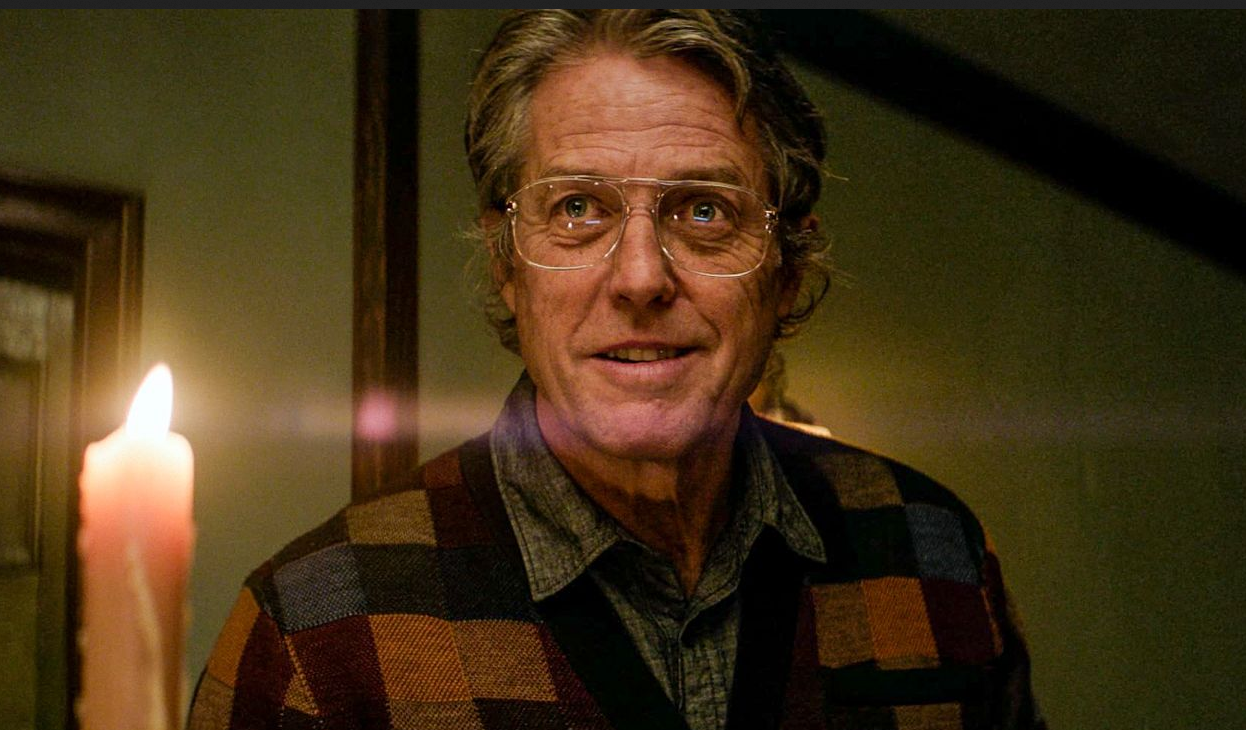
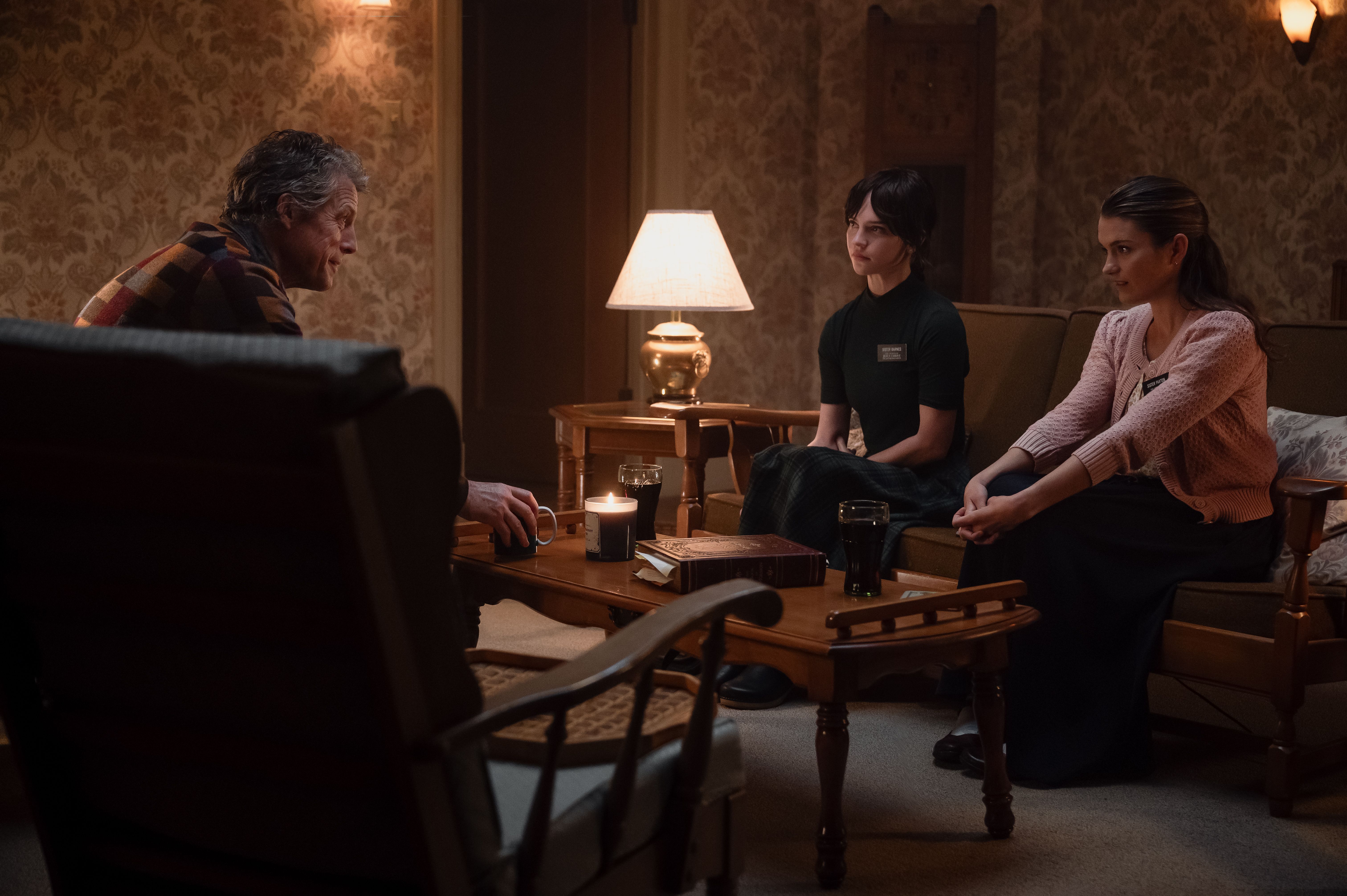
James McAvoy is a very versatile actor who’s been in dozens of TV shows, plays and movies since the 1990s. But he seems to have a special knack for masked malevolence, like the creepiness and coiled, rip-roaring craziness of his characters in M. Night Shyamalan’s Split (2016) and its follow-up, Glass (2019). In this psychological horror thriller, he’s Paddy, a crudely boisterous Brit who lives off the grid in the scenic rural countryside, loves hunting and bemoans the conveniences and lifestyle choices of the modern world.

When Paddy and his wife, Ciari (Aisling Franciosi from Game of Thrones), meet a more refined, citified London couple, Louise (MacKenzie Davis, who starred in AMC’s Halt & Catch Fire) and her milquetoast husband Ben (Scoot McNairy), on a vacation in Italy, they all become tentative friends.  But something seems a bit off right from the start, and it starts feeling even more off after Paddy invites Ben, Louise and their preteen daughter (Alix West Lefler, who plays Genevieve on TV’s Fire Country) to visit them at his rural home.

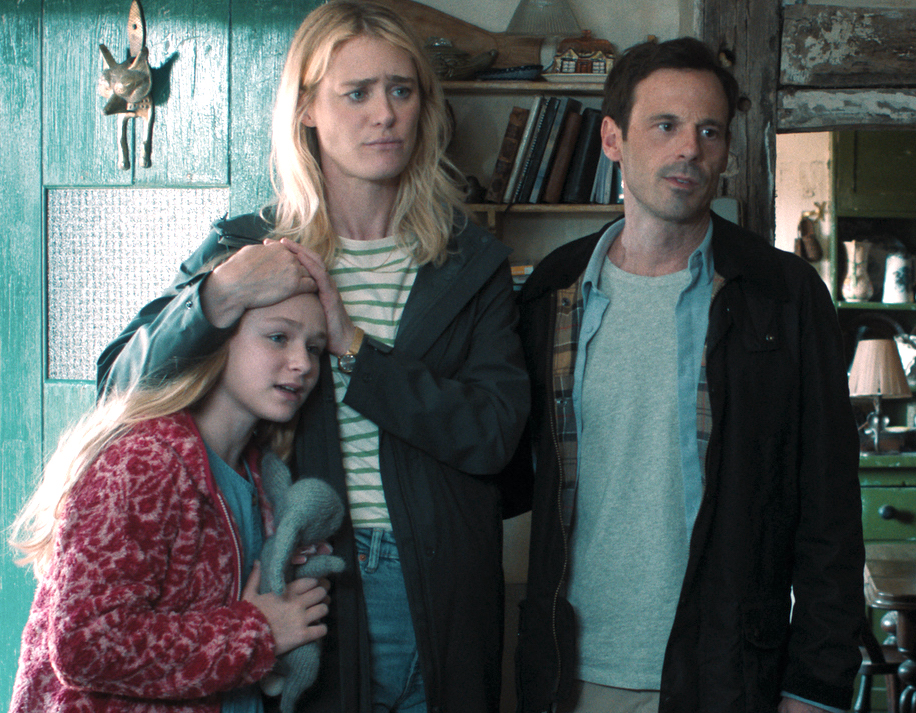
Alix West Lefler, MacKenzie Davis & Scoot McNairy play a London family whose countryside holiday turns into a nightmare.

Paddy and Ciari also have a young child, a boy named Ant (newcomer Dan Hough) who is unable to communicate beyond moans and mumbles. Ant’s “condition”—and don’t worry, you’ll find out more about it—gives the movie its title. But it also refers to how Ben and Laura try to act polite and mannered and not complain, speaking no evil as their pastoral retreat starts to go off the rails, before Paddy’s mounting transgressions and bothersome behaviors build to shocking revelations and a bloody fight for their lives against a sadistic psychopath.

Director James Watkins certainly knows how to tighten down the screws in a horror movie, as he did in Eden Lake (2008) and The Woman in Black (2012). In this remake of a 2022 Danish film of the same title, he remains faithful to the devilish dread of the original but gives it some new violently nasty tweaks at the end, and that’s all I’ll tell you about that.

The movie is spiritual kin to Straw Dogs, Get Out, Funny Games and other flicks that use normalcy as the jumping-off spot before deep-diving into something much darker, disturbing and deviant. One of the things I liked about Speak No Evil is how it’s not a “slasher” flick; it’s more subtle than that. The terrors at its core worm their way into our awareness without a need to see them. That might disappoint some gorehounds, attracted to the film’s BlumHouse production banner, but just knowing—and leaving some details to the murky recesses of the imagination—is supremely unsettling and jarringly nerve-wracking.

Beneath its surface, it touches on toxic masculinity, marital discord, motherhood, feminine empowerment, lost childhood and parenting, with a modern-world nod to classic Old World fairy tales about the dangers lurking in deep forests full of trolls, witches and demons. And it’s certainly a cautionary tale about stranger danger—and the twisted intentions that might be hiding behind a friendly face.

And for sure, you’ll never again hear The Bangles’ “Eternal Flame” the same again after you hear it hijacked by Paddy, a monster whose initially friendly smile becomes a scowling grimace of unspeakable acts in a real house of horrors. Speak No Evil and James McAvoy work hard to get under your skin, and they certainly come through loud and clear.

—Neil Pond

Movie Review: “Beetlejuice Beetlejuice”

Michael Keaton returns as the ghost with the most in Tim Burton’s majestically gonzo encore of the hereafter

Beetlejuice Beetlejuice
Starring Michael Keaton, Winona Rider, Catherine O’Hara & Jenna Ortega
Rated PG-13
Directed by Tim Burton

In theaters Sept. 6, 2024

After just a tad over 35 years, the ‘Juice is again on the loose.

Michael Keaton is back and doubling down on his memorable role as moviedom’s quippiest gross-out ghoul, while Winona Rider and Catherine O’Hara return as older versions of their characters from the first film and new additions (Jenna Ortega, Willem Dafoe, Monica Bellucci) freshen things up with a new wrinkle or two.

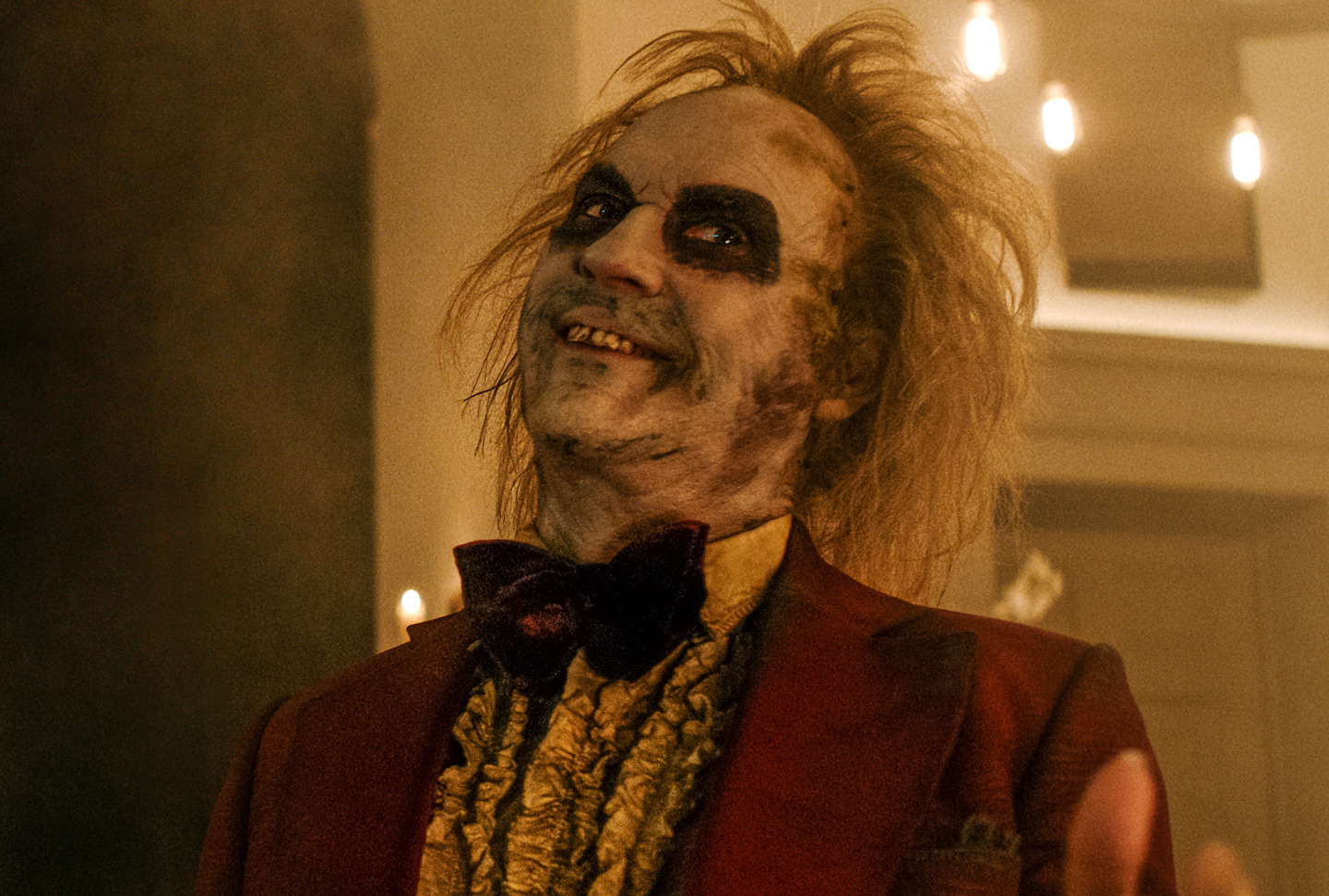
And director Tim Burton also resurfaces for this majestically gonzo encore of the hereafter, a cinematic carnival ride festooned with quirky stop-action oddities, subversively dark humor and wildly unpredictable bursts of imagination. It’s like Pee-Wee Herman on a playdate with Edward Scissorhands in Dante’s Inferno. But the star of the show is clearly Keaton, as unhinged and untethered as he should be, the ghost with the most, a cadaver of cad, the lewd ladykiller slob from beyond still lookin’ for love.

And like Beetlejuice, Keaton is game for anything, throwing himself into the crazy comedic churn of a storyline that includes ghostly office drone workers with teeny shrunken heads, an RIP’d actor (Willem Dafoe) policing crime in the underworld, a soul-sucking spurned lover (Monica Bellucci), a jaded undead janitor (Danny DeVito) and a teen girl (Jenna Ortega) whose crush on the boy next door (Arthur Conte) gets her pulled into the afterlife. There’s a hustle-bustle subway to the great hereafter—the Soul Train—pulsing with disco, and a pull-out-the-stops grand finale to “McArthur Park” that out-wows even the original film’s “Banana Boat (Day-O)” scene for wonderful weirdness.

There’s a lot of connective tissue to the first film, both stylistically and thematically, with sight gags and throwback references to the original. Ortega, the star of two Scream flicks as well as the TV series Wednesday (the spinoff of The Addams Family), brings a full-circle generational spin to her role as the daughter of Rider’s Lydia Deetz, now working as a TV spiritualist. Absent: Geena Davis and Alec Baldwin, who played a ghostly couple central to the story back in 1988, as is Jeffrey Jones, whose conviction as a sex offender now keeps him mostly out of Hollywood’s spotlight—but whose former character nonetheless “appears” here in a couple of inventive workarounds.

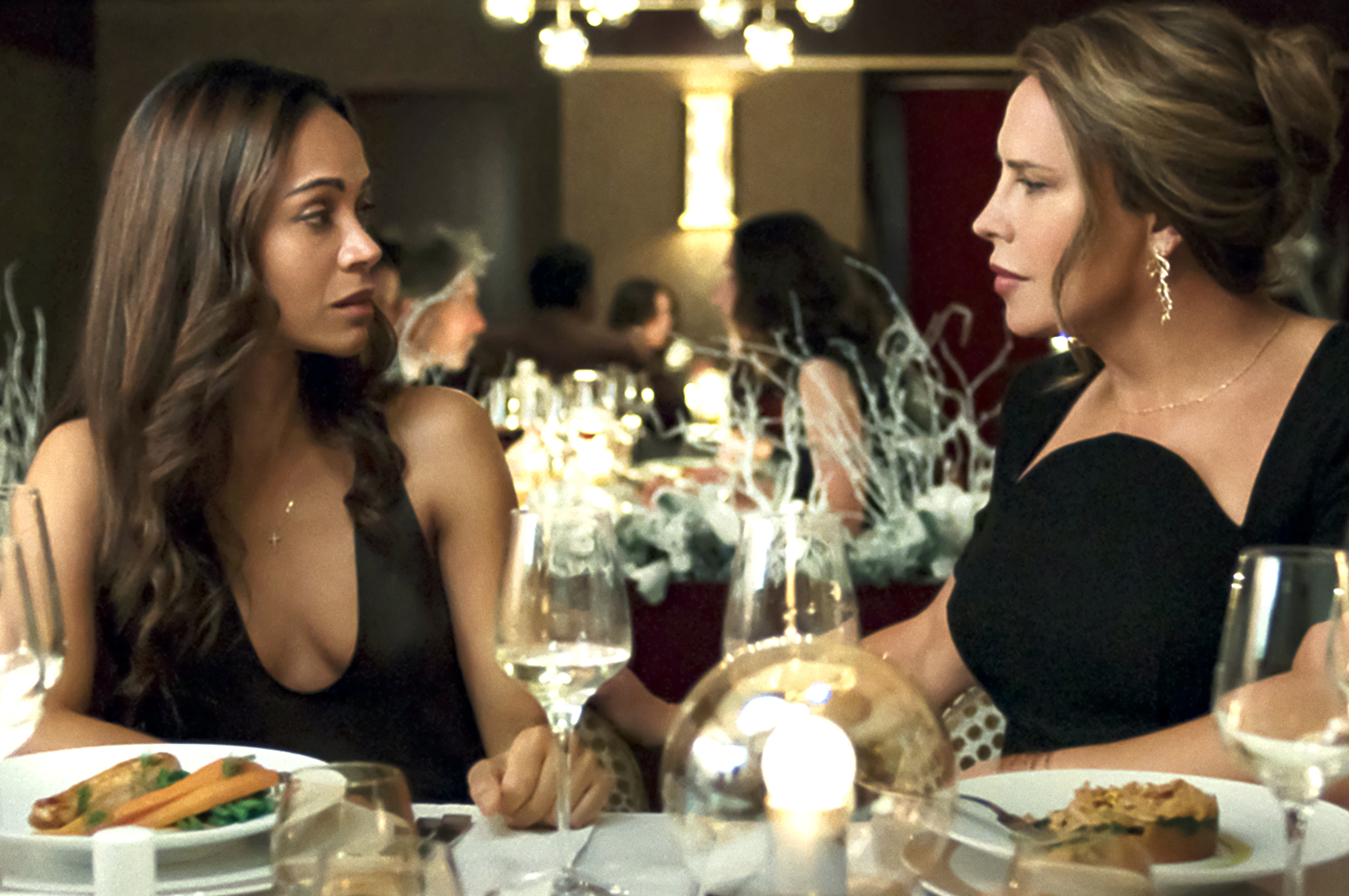
But there’s so much going on, the no-shows are barely missed. And Monica Bellucci (above) gets the film’s hands-down best new-character entrance, as her seductive wraith Delores literally pulls (and staples) herself together after spending centuries with severed body parts scattered hither and yon. It’s perhaps Burton’s wry cinematic nod to the career of the multi-lingual Italian model-turned-actress, a journey made up of bit parts and odds and ends including portraying the bride of Dracula, Mary Magdalene in Mel Gibson’s The Passion of the Christ, a rape victim in the controversial Irreversible, and the oldest “Bond girl” in the history of the franchise (Spectre). In the new Beetlejuice, she’s certainly the gal to die for—and as Beetlejuice remarks, she’s certainly looking very put-together.

And Tim Burton’s grand-guignol resurrection of the bawdy Beetlejuice puts together a new dose of movie moxie for a familiar franchise that’s already expanded into TV animation, videogames and a Broadway musical. It proudly unfurls its freak flag and lets it fly anew, a spooky-fun and retro-riffic way to spend 90-odd minutes with a spunky spirit who’s apparently still got a load of afterlife left.

—Neil Pond

Movie Review: “A Different Man”

Sebastian Stan has a face-off with himself in this wild-twist parable about people who “don’t belong”

A Different Man
Starring Sebastian Stan, Renate Reinsve & Adam Pearson
Directed by Aaron Schimberg
Rated R

In theaters Wed., Oct. 4

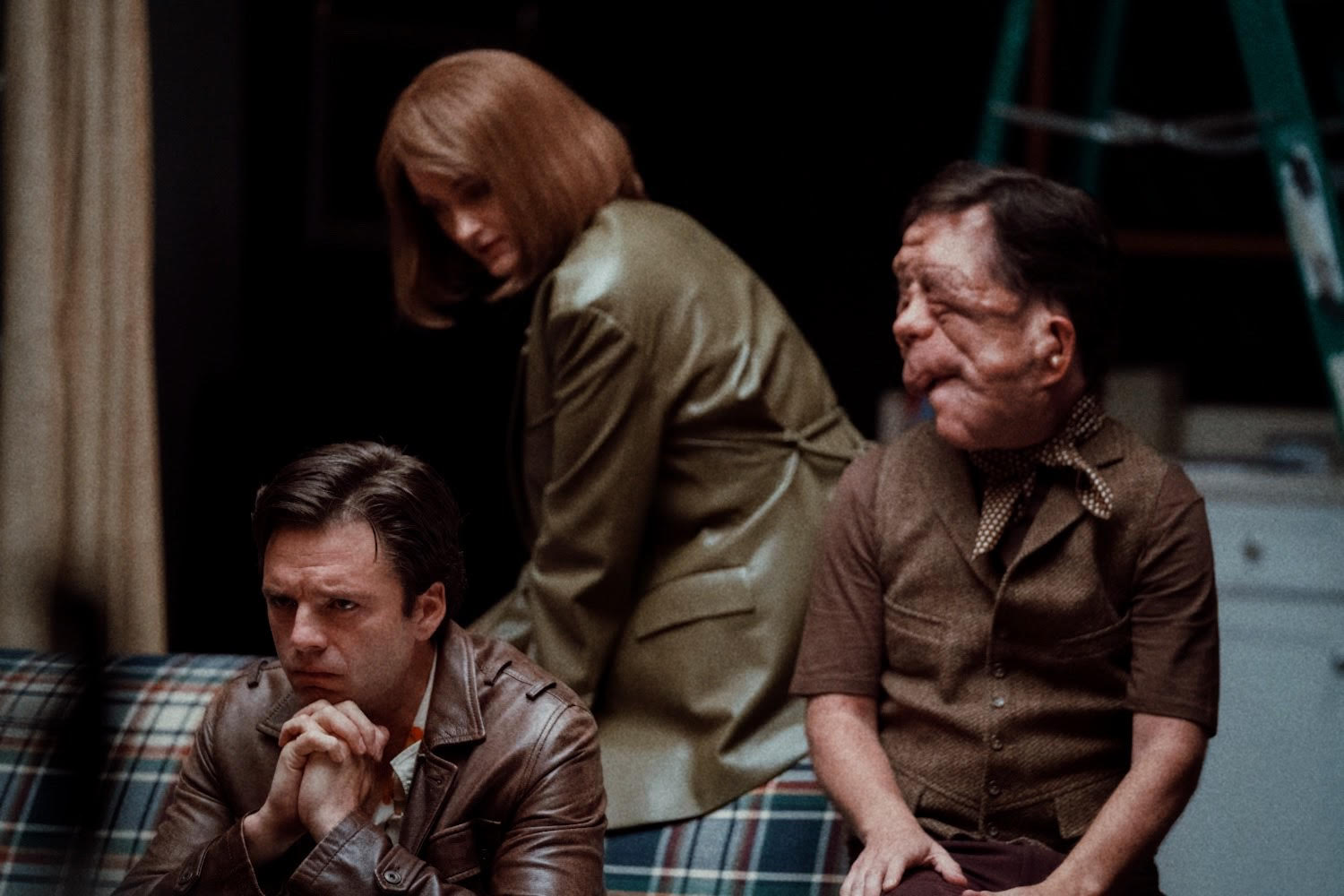
 A struggling actor with a disfigured face gets a miraculous second chance at life in this wild, inside-out parable about identity, self-awareness, longing to belong and our perceptions of beauty and ugliness. Sebastian Stan (so good in Pam & Tommy and I, Tonya) is center stage as Edward, a glum recluse whose advanced neurofibromatosis makes him look like The Elephant Man. He’s a shlumpy sad sack as he moves around New York City, shunning people, trying to be inconspicuous, wishing he could be invisible. But he perks up a bit to a new neighbor, Ingrid, an aspiring playwright (Norway’s Renate Reinsve) who seems to “see” him as a person, not as a freak.

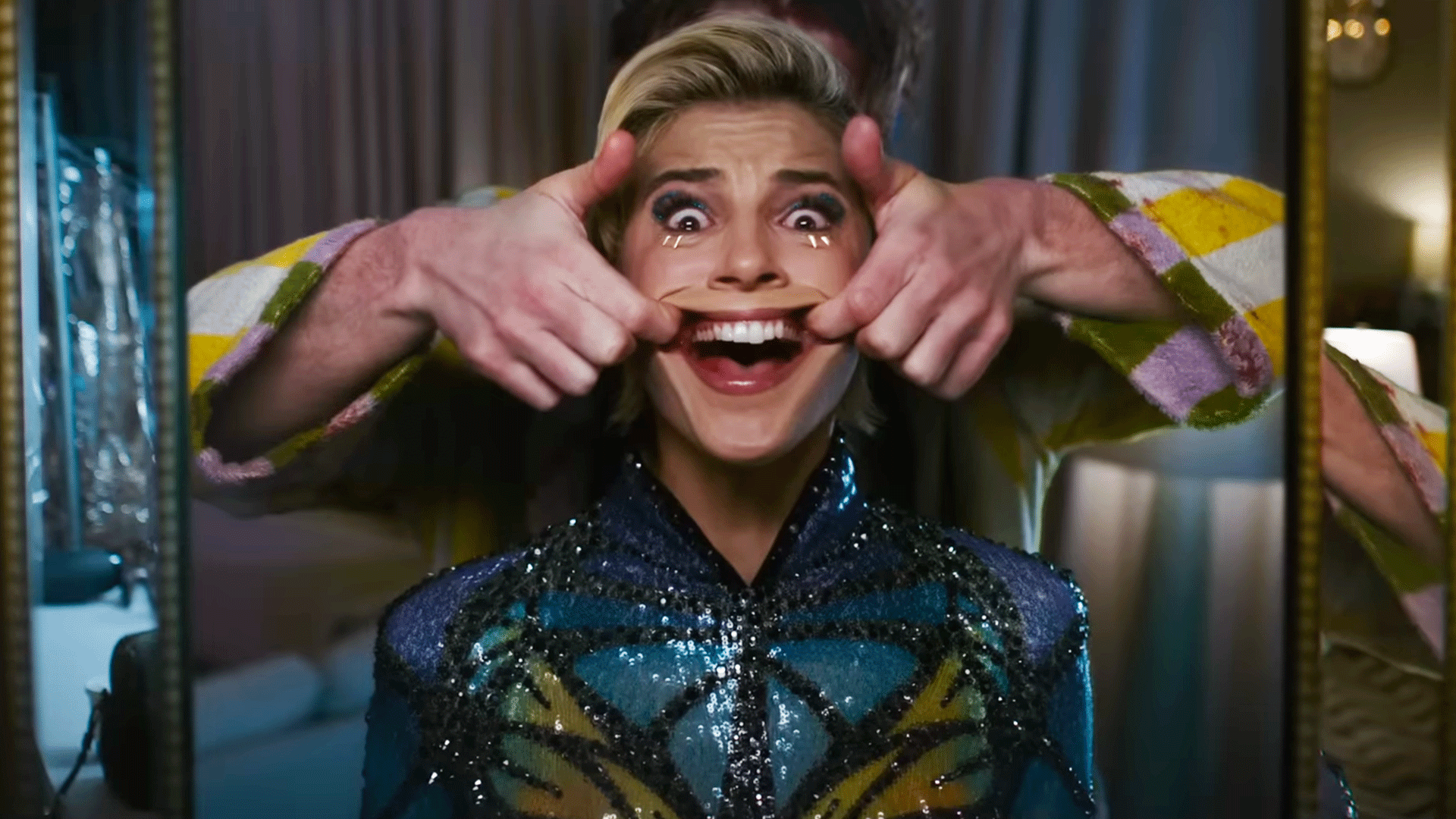
An experimental medical procedure offers a possible cure for Edward’s condition, and his face soon starts to peel off in goopy clumps. And as it does, voila—underneath is something crazy: a “normal” face, and an exceptionally handsome one at that. Edward becomes a different man entirely, taking a new name, Guy, burying his painful past and reveling in his dashing new looks as he becomes a hotshot New York real estate broker. His coworkers celebrate his success, admitting that he’s a fine piece of “man candy.” At a bar, a young woman takes him into the bathroom and pulls down his pants for a quickie. Edward can’t believe how things have turned around.

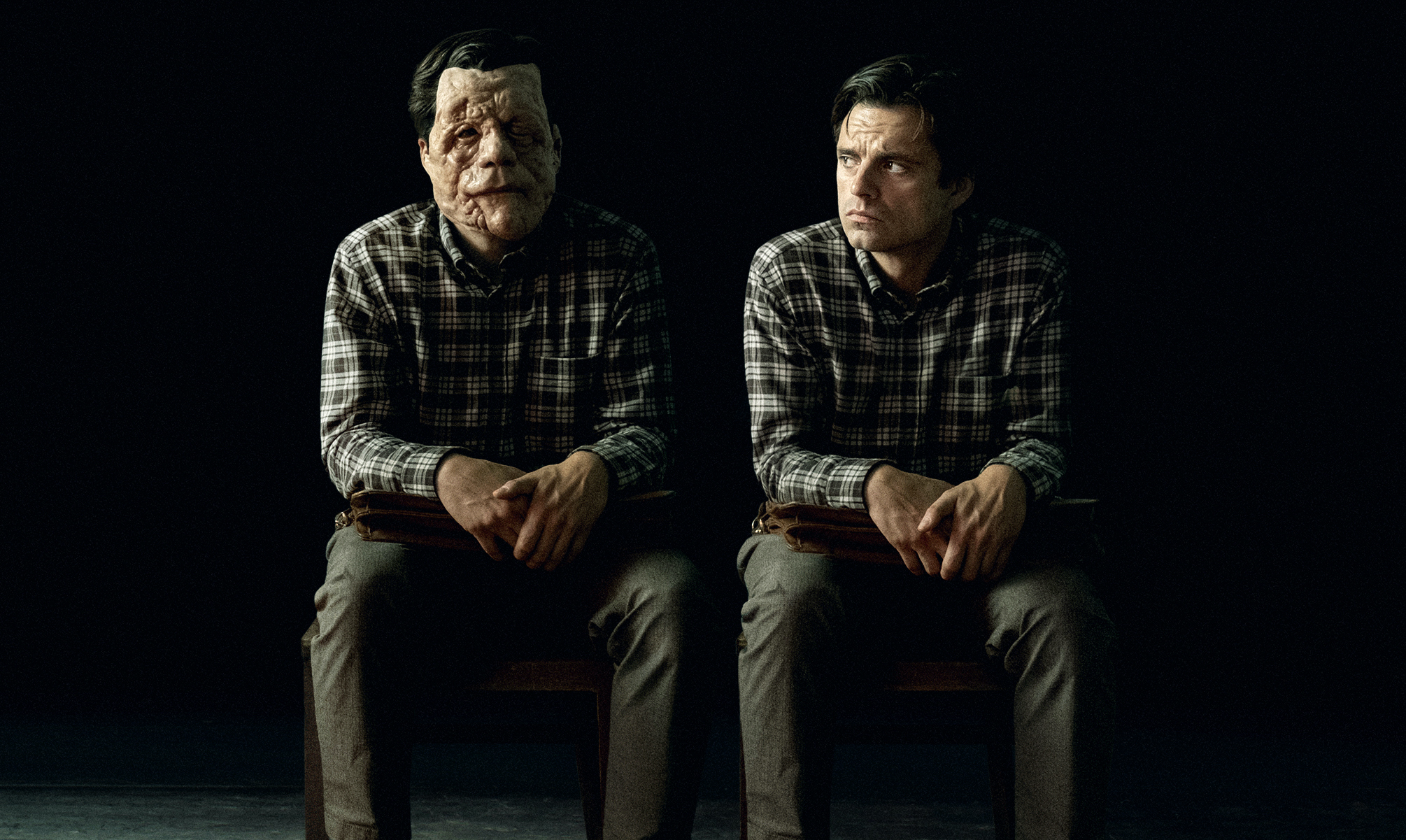
But he keeps the latex mold—a mask—made by his doctor of his “former” face to gauge how his treatment was going. It’s a reminder of the person he used to be.

What happens next, well, it’s no Beauty and the Beast, although that folktale is certainly referenced, along with Cyrano de Bergerac, Woody Allen movies and an acclaimed book by Toni Morrison, The Bluest Eye, about a little Black girl who wishes for blue eyes to better fit in with the Caucasians around her. Edward, who also once anguished because he didn’t fit in, finds that the grass isn’t always greener (or bluer) on the other side, especially when he meets another man, Oswald (Adam Pearson), with the same facial disfigurement he once had.  (And that’s no makeup job on Pearson, a British actor who really does have neurofibromatosis and campaigns to prevent bullying of people with deformities.)

Unlike Edward the Elephant Man, Oswald is outgoing, glib, brimming with personality and self-confidence. He plays the saxophone and has a young daughter. Oswald has embraced his face and his life, and women swoon before him when he soulfully croons the Rose Royce hit “I Wanna Get Next to You” at a karaoke bar. And Edward/Guy can only watch in awe, and seethe with envy.

The film loops itself into a Möbius Strip of art imitating life and life imitating art when “Guy” and Oswald both compete to star in an off-Broadway play about Edward and his disfigurement. And guess what? It’s written and directed by Ingrid—who has no idea that “Guy” used to be Edward. In rehearsals, Guy wears his Edward mask, and Ingrid even wants him to put it on when they’re rooting and rutting around in the sack. Edward doesn’t know if she’s turned on by it, or just finds it freakishly funny.

As Edward’s frustration, jealosy and resentment build with Oswald, everything boils over into yet another reversal of fortune—and actor Michael Shannon pops up for a Christmas meal.

In an early scene, a rat plops out of a dark, dank hole in Edward’s ceiling, falling with a sloppy splash into a bucket of yukky water. Much later, in a new upscale apartment, “Guy” is repulsed to find a cockroach has dropped into his coffee. Rats and cockroaches, things that were once hidden, things that repulse us, have now come into plain view, like Edward after his “mask” comes off.

A Different Man gives you a lot to ponder, suggesting that we can change our masks—our faces—but we can’t change what’s underneath. It might be beautiful, but could also turn out to be beastly.

Neil Pond

Movie Review: ‘Sing Sing’

Colman Domingo leads a cast of former inmates in this inspiring drama about the power of the arts

Sing Sing
Starring Colman Domingo and Paul Raci
Directed by Greg Kwedar
Rated R

In theaters Friday, Aug. 9

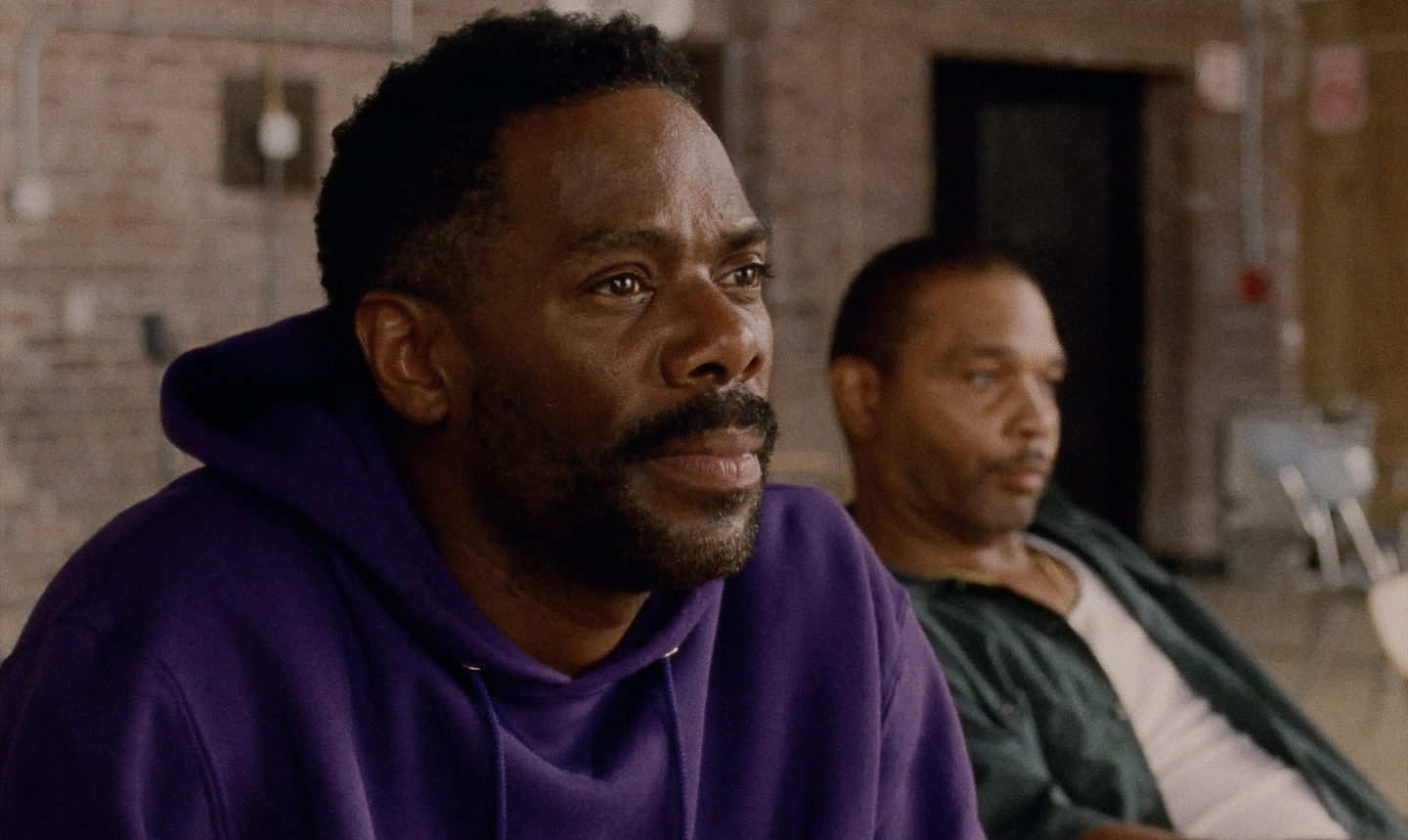
Prison inmates find an emotional outlet on stage in this moving drama based on a real incarceration program, Rehabilitation Through the Arts, that began at New York’s Sing Sing Correctional Institute in the 1990s. Colman Domingo, nominated for an Oscar for Rustin and so damned good at playing bad in The Color Purple, stars as Divine G, one of the leaders of the troupe, spurring on his fellow inmates as they mount their latest production behind bars.

Domingo may indeed be looking at another Oscar nod for his galvanizing performance here as a wrongly imprisoned man hopeful about his upcoming parole hearing. A poignant image in the film is a dialogue-free shot of “G” putting his hand outside the bars of a window, gently turning his palm in the gentle breeze. You can feel his longing to be in that outside air—so close he can touch it, but still impossibly out of reach.

In a brilliant creative twist, the film uses actual former inmates involved in the RTA program for most of its supporting cast, grounding everything to an almost palatable sense of reality as we hear them express their hopes, regrets, and memories of sons and daughters and wives and lives before ending up in Sing Sing. It “humanizes” these incarcerated characters, while never excusing the misdeeds that may have put them behind bars. Sing Sing was filmed at a decommissioned (and un-airconditioned) penal facility in New York State, adding to the stifling, almost suffocating feel of being locked up.

It’s like Shawshank Redemption meets Shakespeare. But the inmates here are trying to escape not by tunneling into a sewage pipe, but by channeling the Bard. Theater is their release, their mechanism to cope with the harsh realities of incarceration, their flickering flame of pretending to be someone else, doing something else, somewhere else.   

Paul Raci plays the “outside” director helping with the program, and Colman’s real-life long-time theatrical collaborator Sean San José plays Mike-Mike, G’s cellmate neighbor and close friend. The movie gets some extra dramatic traction when one of the prison’s tough yardbirds, Divine Eye, joins the group, with a toothy grin—and a shiv tucked into his waistband. He’s played by Clarence Maclin, making his movie debut and drawing on his own experience as a Sing Sing inmate.

The troupe’s production-in-progress is an anything-goes comedy built around Hamlet, reshaped into a time-traveling, to-be-or-not-to-be spoof incorporating Roman gladiators, Old West Cowboys and Freddie Krueger from Nightmare on Elm Street. The wide spectrum allows everyone to have an acting part, and a say in the story, as the film reinforces the idea that every man—every person—has worth, and feelings, and deserves a place in the world, even in prison. 

The whole film is a big booster shot for the arts, in general, and how the RTA program—in the movie and the real world—provides inmates with life skills, emotional release and essential coping mechanisms. Research has shown that prisoners involved in the program have much higher chances of “getting straight” and being successful once back in the free world.

Another shot in the film shows a coil of razor wire at the prison perimeter, with a small bird perched temporarily inside. Unlike the prisoners, the bird can take wing away anytime. The inmates have given up the unrealistic hope of busting out or flying away. But their theater program lets them feel like they’re out, if only for a little while.

Sing Sing is an inspiring reminder of the rejuvenating powers of creativity and how a growing number of incarcerated men find balm for their troubled souls by pouring them out on the stage.

—Neil Pond

Tagged , , , ,

Movie Review: ‘Twisters’

Add an ‘S,’ new stars, more tornadoes and stir for what’s almost assured to be the summer’s hottest popcorn movie

Twisters
Starring Glen Powell, Daisy Edgar-Jones and Anthony Ramos
Directed by Lee Issac Chung
Rated PG-13

In theaters Friday, July 20

Nearly three decades ago, the original Twister movie blew audiences—and most of its competition—away, barely missing becoming the highest-grossing film of 1996. Now, to paraphrase a line from a Chubby Checker hit, let’s twist again like we did last summer, with more stars, more tornadoes, more wind-shearing wowza and more big-screen wallop.  

Adding an “s” to the original movie, the newly pluralized Twisters returns to the tornado alley of Oklahoma, where a wave of monster funnel clouds is marching across small-town America. Can Kate, a young meteorologist (Daisy Edgar-Jones), figure out how to shut down the killer storms? Will Tyler, a tornado-chasing adrenaline-junkie YouTuber (Glen Powell), convince her he’s not really such a cad? Can Javi, her former college bud (Anthony Ramos), win her heart after the tragedy five years ago that tore them apart? The answer, my friend, is blowing in the wind.

And there’s a lot of wind in Twisters, with all kinds of snarl coming down from the skies. The tornadoes are CGI wonders, much more sophisticated special-effect creations than back in the mid ‘90s, when large-scale computer-generated imagery was still in its infancy. There are several pulse-pounding sequences as the intrepid storm wranglers head into funnel clouds of all shapes and sizes, including a roaring pillar of fire picking up steam after it mows down an oil refinery. The movie makes you feel about as up-close and intimate as you’ll ever want to be to a tornado.

Director Lee Issac Chung brings the same detailed sense of setting that he demonstrated in his Oscar-nominated Minari (2020), about South Korean immigrants resettling in rural Arkansas. His cameras capture the sweeping spectacle but also the intimacy—of dandelions in the breeze, fields of grain in a shifting wind, the heartbeats of heartland life. On one such occasion, at a rodeo event, Kate learns that Tyler used to be a bull rider, and he compares what he did then with what he does now. “Tornadoes, bulls—same thing,” he says. “You don’t just face your fears, you ride ‘em.”

And to ride out these storms, you’ve got some extremely eye-catching companions in the romantic triangle of main actors. You might recognize Britain’s Edgar-Jones from Where the Crawdads Sing, and Ramos from the musical In the Heights. But it’s Powell who really steals the spotlight from the sky. Coming off of two other well-received flicks, Anyone But You and Hit Man, he’s the movie man of the moment, now as a hunky, cowboy-hatted slice of sex appeal, for sure. Is it hot and humid in here, from the summer swelter and the falling barometric pressure of a tornado getting ready to rumble? Or is it just Glen Powell, strutting onscreen in a torso-hugging white tee, flashing a megawatt smile? In between the twisters, you can practically hear the audience swooning.

There’s a lot of sorta-science banter about tornadoes, what they do, how they’re formed and how they’re designated. You even hear the name of the meteorologist, Ted Fujita, who devised the now-standard system of tornado classification—EF-1, EF-2, and so on—back in the ‘70s. But nobody will be going to see Twisters be tutored about science. They’ll be going to see churning monsters from above, vehicles picked up and strewn around like toys, people sucked screaming into their dooms in a swirling abyss of wind and debris.

And, of course, Glen Powell smiling, strutting, poured into a white T-shirt.

The movie’s final tornado scene is a real gollywhopper, with the chasers herding the citizenry of a small town, during the rip-roaring “the storm of the century,” into the only shelter readily available. “Everybody into the movie theater!” someone shouts.

And getting you into the theater is exactly what Twisters is all about. So hang on—and hold on—for this summer’s wildest, windiest must-see popcorn movie.

—Neil Pond

Movie Review: ‘Fly Me To The Moon’

Stars shine in this fanciful space-age screwball spoof spinning around a faked moon landing

Fly Me to the Moon
Starring Scarlett Johansson & Channing Tatum
Directed by George Berlani
Rated PG

In theaters Friday, July 12

In this space-age screwball comedy-slash-love story, it’s the late 1960s and America is falling behind in the moon race. The Russians have beat us in getting a satellite into orbit, then putting a man into space, and NASA is playing catchup. Can we make it to the moon before the Commies? Enter Madison Avenue spin specialist Kelly Jones (Scarlett Johansson), sent by shifty White House agent Moe Berkis (Woody Harrelson) to drum up support for America’s space program—where Kelly immediately butts heads with NASA’s beleaguered all-American launch director Cole Davis (Channing Tatum).

That’s the “meet cute” in this comedically farcical yarn with a fictional Hollywood romcom grafted onto real historical drama. Will NASA get the funding it needs—and the public support—to launch a successful moon mission? Will Johansson and Tatum’s characters fall in love? Will we learn about her secretive past, or the reason he didn’t become an astronaut? Will a stray black feline—a universal omen of bad luck—derail everything, like in Disney’s 1965 comedy That Darn Cat?

Yet another layer gets added to the story when Harrelson’s special agent demands that a fake moon landing be staged and filmed for backup in case the real one has a glitch—and Kelly brings in a flamboyant, over-the-top director (Community’s Jim Rash) to make it happen. You’ll also see Ray Romano, but mostly underused in a supporting role as a veteran NASA engineer.  Johansson’s real-life hubby, SNL’s Colin Jost, gets a cameo as a moonstruck senator.

As a kid in the 1960s, I was deep into space—wanted to be an astronaut, had toy spaceships and spaceman figures, launched model rockets and knew all about NASA’s Mercury, Gemini and Apollo missions, gleaned through copies of Life magazine and TV news. I have to say, the kid in me geeked out at just how closely this movie aligns with the way things really were, or at least seemed to be, down there in Florida at Cape Canaveral. Fly Me to the Moon is a bright blast of nostalgia for anyone who grew up interested in America’s real space race, and how our program had to scramble once the Ruskies got ahead in the game—and what fashions, and hairdos, looked like in the 1960s. In the movie, everything falls under the long shadow of the tragedy of the first Apollo mission in 1967, which resulted in the fiery deaths of three astronauts before it could even get off the ground.

The movie is also a sly nod to how advertising began to creep into everything during that era, including the space program—with breakfast drinks, wristwatches, even kids’ underwear. Kelly knows all about stretching the truth to sell a product, and Cole insists he won’t compromise NASA’s integrity by turning its space program into a flying billboard.

The romance part might not be true, but you’ll be charmed by how it all falls into place with a couple of lead actors who happen to be very easy on the eyes. Director George Berlani brings a wealth of experience as a successful TV writer and producer (Dawson’s Creek, Brothers and Sisters, Riverdale) to his role, basking his stars in a classic-Hollywood retro glow resembling something in vogue when the 1950s song from which the movie takes its title was first on the radio. And meanwhile, the war in Vietnam rages offstage, threatening to take America’s gaze off the heavens.

You probably know how the true part of this story ends, that America (spoiler alert) really did plant our flag on the moon, the Vietnam war ended and President Richard Nixon resigned in disgrace. But the real objects to set your eyes on in Fly Me to the Moon isn’t the moon, but the two stars who soar through this zippy romcom romp that jauntily blurs the lines between fact and fantasy, providing a sparkly romantic grounding to a story that’s otherwise out of this world.

—Neil Pond

Tagged , , , ,

Movie Review: ‘Maxxxine’

Mia Goth returns to role of the monstrously troubled young woman who won’t let life stand in her way

Maxxxine
Starring Mia Goth, Kevin Bacon, Elizabeth Debicki, Bobby Cannavale and Michelle Monaghan
Directed by Ti West
Rated R

In theaters Friday, July 5

In the third film of director Ti West’s cult-favorite slasher-flick franchise, young Maxine Minx (Mia Goth) has set her sights on Hollywood stardom. But her violent past comes back to haunt her, as the only survivor of a horrific massacre when she was younger with some truly effed-up layers of deep trauma passed along from her sex-obsessed grandmother.  

At the screening I attended, I saw dozens of young women dressed like Goth’s character from previous films, in overalls, boots and bandanas, or blood-red 1900s dresses. One told me she loves these movies because Maxxxine has become an emblem of female empowerment, a young woman with life stacked against her who won’t let that stop her. Even if that means using an axe, a shotgun or a junkyard car-crusher to get there.

In Maxxxine, it’s now the mid-1980s and Goth’s character has added a couple of x’s to her name to reflect her success as a porn actress. But she wants more, to become famous as a mainstream star. A serial killer, murdering young women, is stalking Hollywood, and Maxxxine’s friends and coworkers are turning up dead and maimed. When she gets her big break, with a role in a non-porn horror movie, the icy female director (Elizabeth Debicki, below)warns Maxxxine to focus on her career, and to quash anything that might stand in her way. And you know she will.

Returning director Ti West has again created a super-stylized window into Maxxxine’s smeary world, swirling with grungy ‘80s esthetic and music. (In the opening scene, she struts out from an audition to ZZ Top’s “Gimme All Your Lovin’.”) It’s a meta-movie, a horror flick that stylistically recalls other horror flicks of its era. There’s over-the-top gore, extreme violence and intentionally campy dialogue. And like the previous films, it explores the seedy underbelly where promiscuous sex, pornography, hyper violence and religious extremism root around in the same grimy bed. Add some Hollywood dream-machine toxicity, and voila, you’ve got Maxxxine.

But it feels like more of a loose gorehound grab bag than a firmed-up story, with stabs of dark humor, lurid sights and grindhouse grit meant as a horror-movie homage to “exploitative” flicks from an earlier era. You know, exploding heads, mangled bodies and slashing knives.  And suitcases full of severed body parts.

Kevin Bacon has a hammy ball as a slimy private “dick,” an investigator hired to trail Maxxxine. Bobby Cannavale and Michelle Monaghan are L.A. homicide cops trying to sniff out the killer terrorizing Tinseltown. Giancarlo Esposito, from Breaking Bad and Better Call Saul, is her slick fixer of a manager.  Lily Collins plays an ill-fated horror-movie costar. And there’s Sophie Tucker, from TV’s Yellowjackets, and the singer Halsey, who plays a short-lived porno pal.

But everybody and everything revolves around Maxxxine. And model-turned-actress Mia Goth is once again riveting as the young woman at the messy, macabre center, fighting “the devil” inside her as she charges into the fame she always wanted, grabbing for the life she insists she deserves.

Maybe her deeply troubled path left Maxxxine starving for attention while fating her for heinous acts of vengeful retribution. The movie opens with a quote from the late, great Hollywood diva Bette Davis, about how “until you’re known in my profession as a monster, you’re not a star.” Maxxxine is indeed a movie-star monster in stiletto heels, stabbing now into the dark heart of Hollywood, drawing new blood—and appeasing legions of fans who see her as more victim of circumstance than villain.

—Neil Pond

Movie Review: ‘Despicable Me 4’

Babbling Minions again make this franchise frolic a river of fun & laughs

Despicable Me 4
Voices by Steve Carell, Kristen Wiig & Will Farrell
Directed by Chris Renaud and Patrick Delange
Rated PG

In theaters Wednesday, June 3

What’s the most successful animated series of all time? Shrek? Toy Story? Frozen? Nope, it’s this kid-centric movie-funhouse franchise frolic about a reformed bumbling supervillain, Gru, and his clattering, chattering yellow-nubbin assistants, the Minions. Its three previous films (and two spinoffs) have topped $4.6 billion at the box office.

The latest installment finds the reemergence of an old grudge between Gru (Steve Carell) and a former rival, Maxime Le Mal (Will Farrell), while the prankish Minions are being groomed to become superhero crime busters. It’s light and lively, infectiously clever and boisterously brisk as the Minions’ slapstick shenanigans continue to steal much of the comedic spotlight—although Carell and Farrell make a superb sparring pair, still smarting over schoolyard slights from their bad-guy academy days in the French Alps at Lycee Pas Bon (translation: Not So Good High School). And Kristen Wiig (as Gru’s wife, Lucy, a former agent herself) gets her own hilarious subterfuge subplot, masquerading in witness protection as a hair stylist who makes a very dissatisfied customer. This time around, Gru’s all about being a daddy to his babbling baby boy, which gives all the far-ranging fun a foundation in his hectic home life, as he’s flummoxed by milk choices at the supermarket and mixes up the diaper bag for his satchel of spy gear.

Jokes abound in the zippy script (co-written by The White Lotus’ Mike White) and the crazily creative visual riffs on everything from James Bond gizmos to Tom Cruise aerial stunts, Austin Powers outlandishness, Transformers, the Chitty Chitty Bang Bang car and even Elvis’s Jailhouse Rock, by way of A-Ha. You won’t find many other movies with such an eclectic mix of plot devices and sheer throwaway sidelines gaggery, including a hyper honey badger, Minion-officiated tennis, a giant flying robotic cockroach and a baby billygoat that confuses the command to “sit” with, well, something decidedly messier on the floor.

Listen closely and you’ll also hear the voices of Steve Coogan, Stephen Cobert, Miranda Cosgrove, Joey King and Sofia Vergara coming from other colorful characters of all shapes and sizes. But no one works harder than Pierre Coffin, who provides the jibber-jabber babble of all the Minions. It’s hard not to love this little army of mayhem-making micro sidekicks, and it’s easy to see why—their childlike antics and nonsensical gibberish are the silly source that feeds this franchise’s river of nuttily creative nonsense and makes these Despicable flicks so darn delightful for kids of all ages.

—Neil Pond

Movie Review: ‘A Quiet Place: Day One’

Alien invaders descend on New York. So, what else is new?

Lupita Nyong’o and Joseph Quinn traverse the mean streets of a decimated Big Apple.

A Quiet Place: Day One
Starring Lupita Nyong’o & Joseph Quinn
Directed by Michael Sarnoski
Rated PG-13

In theaters Friday, June 28

Shhhhhh! Be very quiet—I’m hunting wabbits.” Maybe you recognize that line from Elmer Fudd in a Bugs Bunny cartoon, decades before this horror franchise launched in 2018 with its scarifying tale of space aliens using supersonic hearing to gobble up humans who made any sound.

There aren’t any “wascally wabbits” in this prequel spinoff about the fateful day the aliens arrived, turning New York City into smoky piles of flaming rubble. But there is a calm little feline—Frodo—and a terminal cancer patient determined to make her way through the decimated core of the Big Apple. Because all Sam (Lupita Nyong’o) wants—all she’s living for—is one more slice of pie from the Harlem pizzeria near her childhood home.

Well, alrighty then—New Yorkers must really love them some pizza, even when under attack by space monsters.

Day One doesn’t have the sheer, pee-your-pants terror of the first movie, or its 2020 follow-up—mainly because we now know what we’re dealing with, the aliens’ ravenous M.O. and how steep the odds are stacked against humanity. “We’re all gonna die!!!!” screams one guy on a rooftop, and well, he’s not entirely wrong. A lot of people do perish, although we never really see them meet their messy ends; we just assume that’s what happens when they’re standing there one second, then—whoosh—an alien swoops in and they’re gone. Like hunting wabbits.

But the handfuls of survivors who somehow avoid becoming alien grub never seem very shell-shocked or shaken about the terrors they’ve been through, or the very dire possibility than any wheezy breath they take could be their last. Ah, those stoic, seen-it-all urbanites, jadedly shuffling off to their doom…or the pizza parlor.

Indie director Michael Sarnoski takes over the reins from John Krasinski, who also starred in the first two films. The former actor from TV’s The Office sits this one out on the sidelines, as a producer, and the movie really misses his touch and the star power he brought with his wife, actress Emily Blunt, to the other films. This movie’s secondary cast (Alex Wolff, Djimon Hounsu) is way secondary to the convoluted story of Sam, her jazz-loving late father and the young British man (Joseph Quinn) who becomes her tagalong. But most of the characters, even the main ones, don’t invite much connection or empathy, unlike the imperiled “family members” of the previous films. And transplanting the story from the rural countryside to the hustle-bustle-y Big Apple…meh. We get it: New York’s a noisy place, a cacophony of chaotic sound, a melting pot that now includes aliens from another world. So, what else is new?  

And for a prequel, we never learn anything about the aliens that we didn’t already know, or not know. They’re still an enigmatic invading force from out there somewhere, scampering about like CGI spider monkeys, making a mega mess of things and apparently intent on wiping out humanity. There are a lot of jolt-y scares and some inventive sequences, like a life-or-death chase in a submerged subway. But the “suspension of disbelief” is really stretched, not by the armada of alien invaders, but by wondering how anyone could ever get a cat to be in or under water without having it totally freak out.

And maybe you won’t question how, in a city with no electricity, no running water, and almost everything alien-blasted to smithereens, can you still get pizza?

Early in the film, Sam watches a creepy marionette puppet show in a New York theater, just moments before all hell breaks loose on the streets outside. What did that scene have to do with anything? I’m clueless, except maybe it’s because, when it’s all over, a lot of viewers are going to feel like this Quiet Place was really just pulling their strings, drawing them into a franchise that feels like it’s already whispered all there was to say.  

—Neil Pond

Movie Review: “The Bikeriders”

Motorcycle gang roars through the Midwest in gritty drama with ring of ’70s authenticity

Austin Butler leaves ‘Elvis’ in the dust on his Harley.

The Bikeriders
Starring Austin Butler, Jodie Comer & Tom Hardy
Directed by Jeff Nichols
Rated R

In theaters Friday, June 21

“I’ve never felt so out of place in my whole life,” says a doe-eyed young Chicago woman in this tale of rip-roaring greasy riders in the Midwest, recalling her first time being around a bunch of grungy, wild-ass, hog-straddlin’, born-to-be-wild biker-bar dudes.

Since the odds are that you don’t hang with a motorcycle gang, you might feel a bit out of place too, on the outside looking in at this burly subculture of bikes, brawls and broken bones based on a book by Danny Lyons, a gonzo photographer and journalist who rode with Chicago’s Outlaws Motorcycle Club—the oldest in the world, founded in the 1930s—for nearly five years in the 1960s. Lyons’ book, published in 1968, is now considered a bona fide classic of photojournalistic documentation.

The movie revolves around the relationship of brooding bad-boy biker Benny (ElvisAustin Butler) and a romantically smitten local gal, Kathy (Killing Eve’s Jodie Comer), as their lives become more entrenched and entangled in a gang called the Vandals, a fictional group but clearly based on the Outlaws. When the club progresses beyond the margins of society into real crime, Kathy wants Benny to leave.

But for biker clubs, loyalty is a big deal. In the opening scene, we watch Benny get a brutal beatdown because he won’t take off his Vandals jacket, his “colors,” in the presence of hostile non-riders. Later, another Vandal member is harshly disciplined when he expresses his plan to leave the group. There’s a code, rules and an unspoken expectation of lifelong fealty. Staying might not be easy, but quitting is even harder.

Motorcycle riders have long been romanticized and iconized as roguish delinquents, freedom-loving rovers and nonconformist brothers of the road, in movies like The Wild One (1953) with Marlon Brando, the countercultural classic Easy Rider (1969) and even the dopey comedy Wild Hogs (2007).  But in the real world, Chicago’s Outlaws and the California-based Hell’s Angels competed in an escalating competition for biker supremacy and notoriety, leading to a “war” with bombs and guns in Canada. The Bikeriders doesn’t go that far, but it does allude to other clubs and rivalries. With an almost tactile ‘70s aesthetic enhanced by an overlay of deep-cut soundtrack tunes from the era (like Gary U.S. Bonds’ “New Orleans,” the Animals’ “Talkin ‘Bout You” and Johnny Soul’s “Come and Get It”), its depictions of the Vandals’ increasingly dirty work sometimes give it the look and feel of a Goodfellas for gearheads, even down to the closing image.

Tom Hardy (left) plays Johnny, the mentor of Sonny.

It’s a scrappy, scruffy world, where baths and dental floss seem to have been long ago replaced by testosterone and booze, and disagreements are settled with fists, knives and guns. The Victors proudly sport the colorful nicknames that fit their personalities and status, like Cockroach, Wahoo, Big Jack and Corky. There’s Tom Hardy as Johnny, the club’s founder and leader, worried about the changes brought by the influx of younger, more volatile members. Norman Reedus from The Walking Dead is Funny Sonny, a hulking hippie biker from California grinning through a mouthful of rotting teeth. And Michael Shannon—who has so far been in every movie ever made by director Jeff Nichols, including Mud, Midnight Special and Loving—is the melancholy Zipco, lamenting how the Army once deemed him too “undesirable” to join.

The Bikeriders shows how a group of weekend dirt-bike off-roaders became a bigger, much more diverse and unruly cult, and ultimately devolved into a violent hierarchy of organized trafficking in drugs, gambling, prostitution and murder. But even outside the law, we see how the Vandals are bound by the ties to their community of like-minded outliers, like when they respectfully show up en masse (and unwanted) to a funeral of one of their own.

It’s ain’t always pretty, but it always feels pretty real—and feels true to the book by Lyons, who’s even a character in this film, interviewing and photographing these white guys on their loud bikes and the women who love them, in bars and pool halls, partying, chilling and brawling. Comer, from Britain, drives much of the movie’s narrative structure (through Kathy’s “flashback” interviews) and does a terrific job nailing a Midwestern accent and the brassy ‘tude of a true-blue Chicagoan. So does Hardy, also from England, who deftly wields all the “deez” and “doze” and “disses” and “dats” as handily as a switchblade. Butler, who most recently played a diabolical, ghostly white villain in Dune Part Two, seems to be distancing himself as far away as possible from the sanctifications of Elvis, this time zooming past stop signs, cops and corn fields on a noisy Harley.

Ready to get your motor runnin’ and head out on the highway? This ruggedly authentic immersion into a boisterous biker-verse of yesteryear might not be everyone’s cup of genteel movie tea. But if you’re curious about life in a rough-and-ready motorcycle club, well, hop on with the Vandals. Just bring your own switchblade—and, oh yeah, a toothbrush and some soap.

—Neil Pond