Category Archives: Movie Reviews

MOVIE REVIEW: ‘Back to Black’

Amy Winehouse musical biopic sidesteps the slurry complexities of the self-destructive ‘Rehab’ singer

Back to Black
Starring Marisa Abela, Eddie Marsan & Jack O’Connell
Directed by Sam Taylor-Johnson
Rated R

In theaters Friday, May 17

The late, infamously troubled chanteuse Amy Winehouse was nobody’s f*uckin’ Spice Girl, as she reminds a group of record exes in this dutiful biopic that shows how the British singer struggled with addiction while turning her personal pain into musical gain—like “Rehab,” the sassy signature song that helped her sweep up five Grammys in 2008.

Marisa Abela, who formerly starred in the HBO office drama Industry (and had a smaller role, as Teen Barbie, in Barbie) is a knockout as Winehouse, even doing her own singing instead of lip-synching to Winehouse’s slurry vocals. And when she dons a sky-high beehive, puts on some truly formidable eyelashes, covers her body with tattoos, affects a Cockney brogue, pulls out a prosthetic tooth and pops in a piercing above her lip, well, the transformation can really fool your eyes as well as your ears.

And the movie shows how Winehouse was a gloriously talented mess, finding success and acclaim while floundering in a downward spiral of spiral of drugs, booze, bulimia (we see her vomiting over a toilet once), blackouts and toxic codependency. The crux of the film is her relationship with a charming rouge, Blake Fielder-Civil (Jack O’Connell), who eventually became her husband and inspired many of her songs on her second and final album, Back to Black—and has been blamed for introducing her to hard drugs like cocaine and heroin.

Eddie Marsan plays Winehouse’s fretful, Sinatra-loving father, Mitch, ever concerned about his daughter’s self-destructive bent but helpless to stop it. (He does eventually drive her to rehab, though—despite the lyrics in her song that protest “No, no, no.”) Lesley Manville is her doting grandmother, Cynthia, a former singer herself who inspired much of Amy’s affection for jazz, a formative ingredient in her unique musical cocktail of ska, soul, R&B and reggae.

Back to Black reminds us of the spectacular talent of a singer who literally drank herself to death at age 27, in 2011. But it often soft-pedals over the wrenching traumas of drug addiction and Winehouse’s other deep-rooted demons—like depression and bipolar disorder—while focusing primarily on her on-again, off-again relationship with Fielder-Civil as the main root of her problems. I suspect that getting the stamp of approval from Winehouse’s family may have softened what could have otherwise been more gut-punch depictions of her sad derailment and eventual demise.

We see Winehouse singing in pubs, in arenas and on her bed, strumming and writing jabby tunes about her exes (like a British Taylor Swift). We watch her and Blake in a musical montage at a zoo as they observe lions and gorillas, suggesting that their relationship is going to likewise be wild and feral. A later sequence, with them swimming nude in a pool at night, shows the deep, dark dive they’ve taken into each other. But Winehouse’s professed desire to become a mother is never really explored, nor is her strained, distanced bond with her own mum (Mathilda Thorpe).

The movie uses Winehouse’s pet canary, Ava, as another kind of metaphor—suggesting that Winehouse was also a pretty little songbird in a cage, a captive of forces she couldn’t control. She comes to accept her fate as tabloid fodder and a prisoner of her own fame, with the whirr of the of paparazzi cameras sounding like the drone of swarming cicadas.

It’s all good, but it’s not great, and I liked it without loving it. It’s a fairly safe, serviceable and frequently somber story of a spiky, often combative subject who refused to conform. But does it offer many eye-opening revelations about the spectacular trainwreck that eventually claimed the life of a fiery superstar, who streaked across the music scene like a blazing meteorite? As the refrain goes in the song that will always be Amy Winehouse’s legacy, “No, no, no.”

—Neil Pond

Tagged , ,

MOVIE REVIEW: ‘Kingdom of the Planet of the Apes’

Ferociously entertaining reboot shines with dazzling effects, action and emotion

Kingdom of the Planet of the Apes
Starring Owen Teague, Freyda Allan & Kevin Durand
Directed by Wes Ball
Rated PG-13

In theaters Friday, May 10

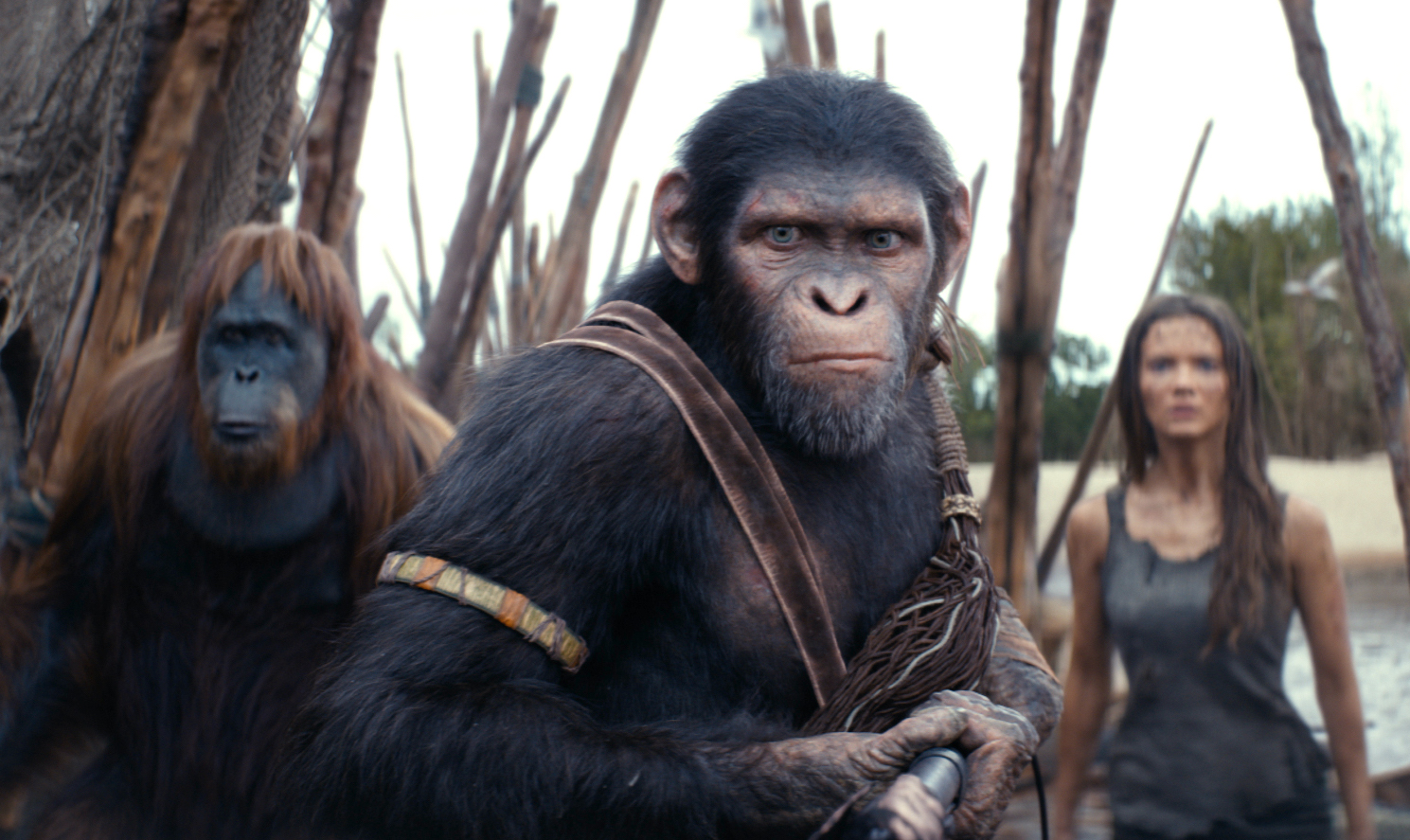
In the newest installment of the durable film franchise about a world in which apes and humans coexist, a young chimpanzee squares off with a fearsome bonobo leader as all civilization hangs precariously in the balance. It’s a rip-roaring dystopian survival tale, a heroic journey, a parable about caring for our planet and an emotionally resonant tale about families, friends and the future.

But Curious George Goes to the Zoo, it isn’t. There’s some seriously muscular monkeyshine going on in this depiction of what happens when our young protagonist chimpanzee, Noa, sets out on a journey to find his clan, which has been subjugated into slavery by a cruel alpha-ape tyrant who calls himself Proximus Caesar. (All you Latin scholars will know that proximus means “next” or “nearest,” which is this monstrous monkey’s only relation to the late, great benevolent ape leader Caesar, who died at the end of the previous movie, 2017’s War for the Planet of the Apes.) And Noa soon finds out just how the new Caesar is totally, despotically different from the old Caesar.

The new movie—the ninth in the canon—plunks us again down on Earth hundreds of years from now when apes have supplanted humans. We learn that the cause was a mutated virus with a world-changing side effect: It led apes to become fluent in speech (we know they know at least one common curse word!) and civilized, and dethroned humans into bands of feral, mute scavenging pests. The apes call humans echoes, suggesting their distant, faint resemblance to mankind of yore.  

As you might suppose, most of the characters here are apes, played and voiced by actors underneath deep layers of motion-capture effects and CGI. Owen Teague is Noa, Kevin Durand is Proxiumus, and Peter Macon is Raga, a sagacious old orangutan. There’s also a host of talent behind the performances of Noa’s ape clan, Caesar’s merciless foot soldiers, and hundreds of supporting simians. There are only a couple of non-monkeys in the mix—William H. Macy is a human now ill-advisedly serving as a lackey for Proximus, and The Witcher’s Freyda Allan plays Mae, an uneasy female echo who becomes an ally of Noa and Raga—but with an agenda of her own that is revealed later.

It’s an ape-tastic epic, action-packed and full of feels that will touch your (human) heart, tapping back into the sci-fi soul of the original Planet of the Apes in 1968. (There’s a scene with apes on horseback, snatching up men and women with nets, that will definitely give you Charlton Heston vibes.) The tech is nothing short of amazing, showing just how much SFX has evolved and progressed—to make ape characters look, move and behave like apes, instead of human actors in monkey suits and prosthetics. With fully emotive CGI faces and bodies, these apes feel like they’re on the vanguard of the next movie-effects breakthrough, the same way Avatar set a new motion-capture standard more than a decade ago.   

A couple of vertiginous “climbing” sequences, with the apes swinging like trapeze artists from mountainous peaks and scaling a sheer rock coastal cliff, will really get your blood pumping. The ape-on-ape fighting scenes have a fierce intensity that “human” actors can’t realistically match, with teeth-baring, chest-thumping, body-slamming brawls that might leave you feeling a bit bruised yourself.

In addition to allusions to politics, Roman history and power run amok, there are other touchstones. Monstrously menacing apes snarl like mini Kongs, ruling a brutish “kingdom” that resembles Col. Kurtz’s compound in Apocalypse Now.  Even little Curious George gets a wink-wink shoutout, in a children’s book found by the apes. Some of the apes-on-horseback scenes, clopping along with conversational banter, reminded me of Butch Cassidy and the Sunday Kid. The abandoned shells of human civilization—from rusted ship hulls to hollowed-out shopping malls and observatories overtaken by ivy—are stark suggestions about where humanity might end up someday, marked by decayed relics of long-forgotten science, advancement and history.

This ferociously entertaining franchise reboot (from director Wes Ball, who also directed The Maze Runner trilogy) lets us revisit a planet still evolving, a place where apes and humans still haven’t fully worked things out. Will they ever, or will one or the other always get the upper hand? In a closing scene as humans and apes both look above, gazing at the same stars in the same night sky, we’re left to wonder what they’re thinking—and wait, perhaps, for the next return to the Planet of the Apes.

Neil Pond

Movie Review: ‘The Fall Guy’

Ryan Gosling and Emily Blunt put the heart in this slam-bang salute to Hollywood’s unsung heroes

The Fall Guy
Starring Ryan Gosling & Emily Blunt
Directed by David Leitch
Rated PG-13

In theaters Friday, May 3

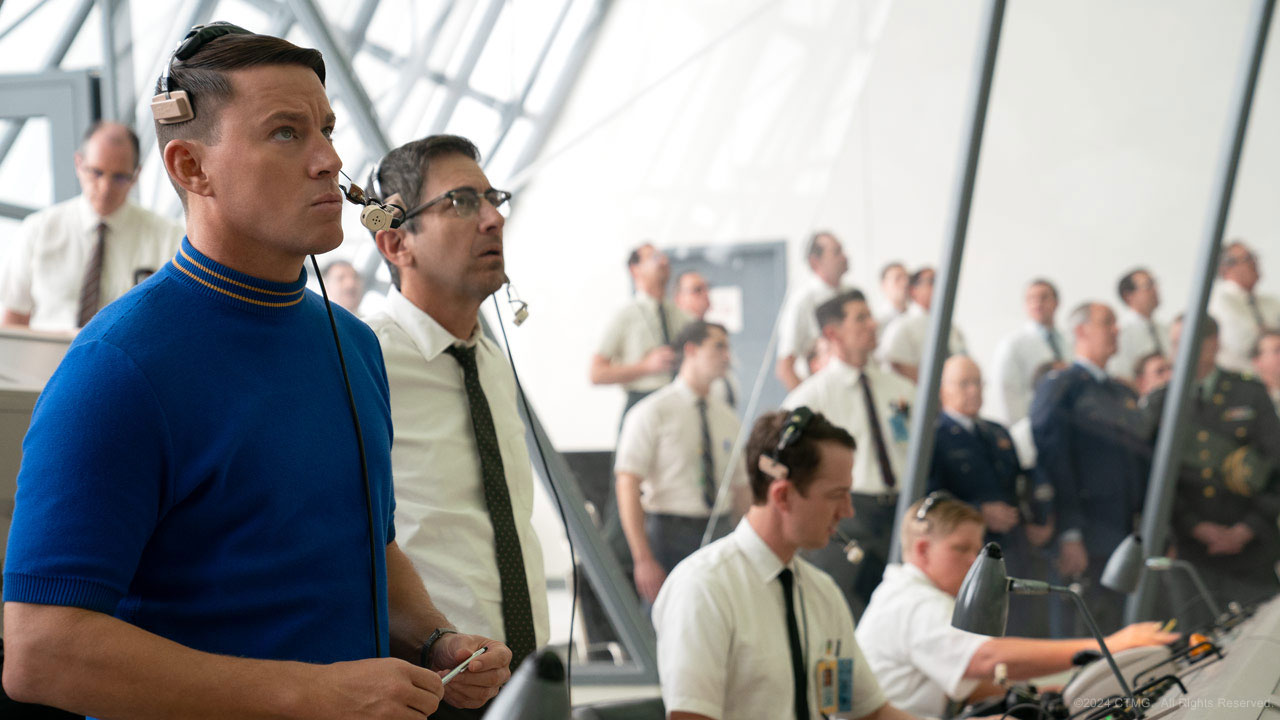
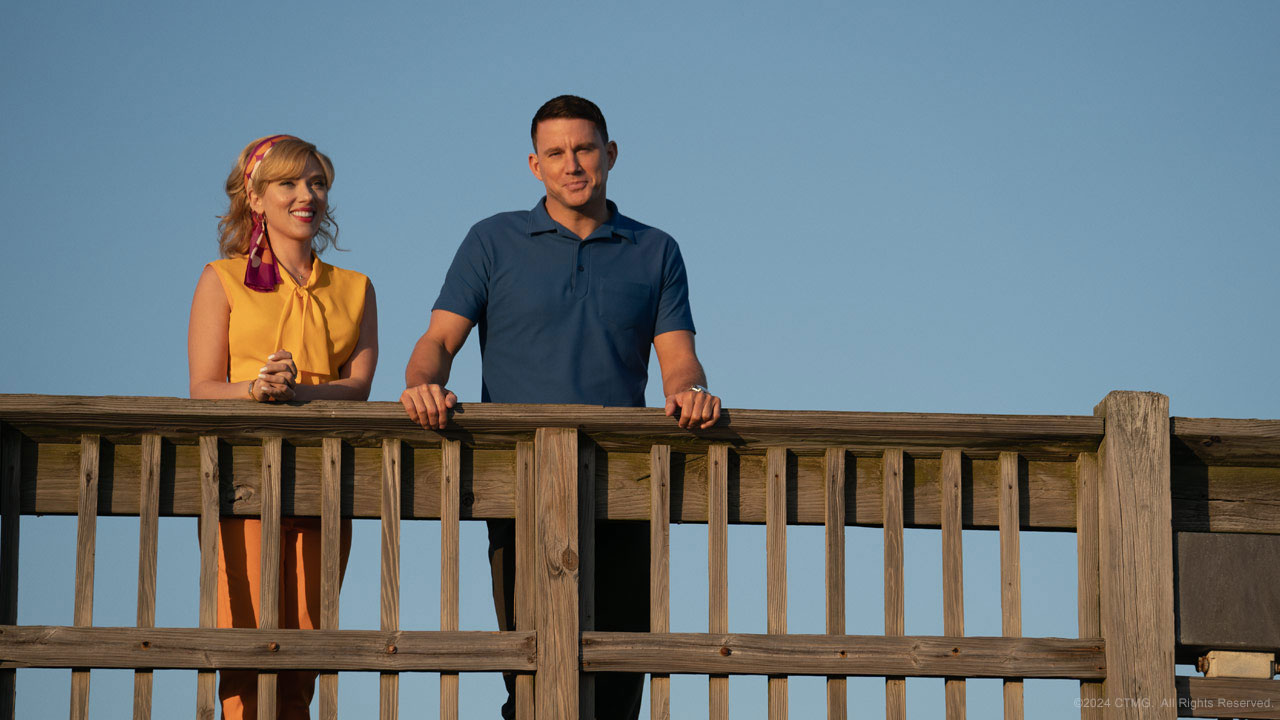
Stunt professionals “take it on the chin” in nearly every movie, getting punched and pummeled, tumbling out of cars, plummeting off buildings and doing everything else deemed too dangerous for the stars. They’re the “fall guys,” like Colt Severs (Ryan Gosling), who’s found a steady gig as the slam-bang stunt double for a world-famous action hero, Tom Ryder (Alex Taylor Johnson).

But Colt’s career is interrupted when a stunt for Tom goes catastrophically wrong. Months later, when he’s recovered and returned to work, he’s reunited on another film with Ryder—and finds himself in the middle of a missing-person mystery and a conspiracy to connect him to a crime he didn’t commit. Will Colt “take the fall” in more ways than one?

It’s a lively, wildly entertaining ride into behind-the-scenes Hollywood, full of surprises, twists and turns, super-sized action, wink-wink comedy, hissable villains and standup good guys, and an eye-popping, ever-escalating cascade of sheer cinematic chutzpah. And there’s a soft, cuddly heart in the middle of all the explosions, car crashes and fisticuffs as Colt rekindles his old flame with a camera operator turned director (Emily Blunt) struggling to finish her first movie—a sprawling post-apocalyptic sci-fi epic—on location in Australia.

The many meta references to other movies and the film’s detailed immersion into the realm of professional stunt work comes from director David Leitch, himself a stunt performer before moving behind the camera for action-packed movies like John Wick, Atomic Blonde, Deadpool 2, Bullet Train and the Fast & Furious spinoff Hobbs & Shaw. Stay for the credits and you’ll get a look at the stunt pros who stepped in for popcorn-jostling scenes in which Reynold’s character dangles from a helicopter, gets set on fire (repeatedly), is thrown through a windshield and pilots a speedboat with his hands literally tied behind his back. (It’s a handy skill that Colt, we find out, learned to do in his first stunt job, for TV’s Miami Vice.

There are also knowing nods to the new, modern era of movie AI deepfake effects—at the roots of Hollywood’s recent acting strike—as well as prop guns (Alec Baldwin, anyone?) and the TV show on which the movie’s loosely based, the early ‘80s series starring Lee Majors as a stuntman who moonlights as a bounty hunter. (Again, stay for the credits—where you’ll also hear the theme song to the TV series, performed anew by country star Blake Shelton, and see a couple of surprise appearances.) The name of another recognizable actor pops up on a random Post-It note before the star himself later pops up on screen. Or is he a deepfake?

Ted Lasso’s Hannah Waddingham plays a pitbullish producer, Ben Knight is a bruising bad guy, and The Black Panther’s Winston Duke is one of Cole’s stunt colleagues. You’ll see the heavily tattooed Aussie actor Matuse Paz (he’s in the nightclub scene) again in Furiosa: A Mad Max Saga.

Gosling and Blunt make a wonderfully matched movie couple, firing up some feisty, old-school Hollywood romcom chemistry and cheeky quippery. The music is on point too, from the recurring theme (Yungblud’s cover of KISS’s “I Was Made for Lovin’ You”) to a karaoke version of Phil Collin’s “Against All Odds,” delightfully used as a backdrop for a bruising brawl in the back of a garbage truck careening crazily out of control. You’ll love how Taylor Swift’s “All Too Well” brings Colt to tears.

As things zip and zing along, you’ll see how unicorns, prosthetic alien hands, space cowboys and a dead body in a bathtub all fit into things. I love the attack dog that only takes commands in French, and there’s more than one reference to another Tom, a real-life action superstar who—like Tom Ryder—likes to boast about how he does so many of his own stunts.          

It’s an adroitly clever and finely crafted cinematic ode to the rough-and-tumble world of the “unsung heroes” who make action look so easy—and get consistently overlooked by the Oscars, as Colt dryly notes.   

If you’re looking for a gonzo good time, crackling with star charisma, spinning around a sweetly romantic core and driven by a genuine love for what makes movies tick, buckle up for The Fall Guy. And hold onto your popcorn!

—Neil Pond

Movie Review: “Abigail”

Slip on a tutu and sink your fangs into this feisty, freaky new vampire tale

Abigail
Starring Alisha Weir, Kathryn Newton, Melissa Barrera & Dan Stevens
Directed by Matt Bettinelli-Olpin & Tyler Gillet
Rated R

In theaters Friday, April 19

What’s scarier than a vampire? A kid vampire! In this ferociously entertaining fright flick, kidnappers get a big surprise after they nab the daughter of a bigshot millionaire, only to find themselves trapped in a spooky old house with a shrieking, bloodsucking monster tot who’s in no mood to play nice.

Young Alisha Weir, who starred in Netflix’s Matilda the Musical, is Abigail, a preteen ballerina (the code name for the abduction is “Tiny Dancer”) who loves doing the sauté to Swan Lake almost as much as slicing into a juicy jugular vein. The crew of kidnappers (Dan Stevens, Kathryn Newton, Will Catlett, Melissa Barrea, Angus Cloud and Kevin Durand) have all signed on for the snatch job, hoping to split a hefty ransom of $50 million. But Abigail has other plans.

The small ensemble cast is game, in more ways than one, as they find themselves on the defensive—and on the menu. “I like to play with my food,” Abigail admits. Blood gushes, bodies burst like viscera-filled balloons, and heads roll once she bares her mouthful of pointy teeth. It’s no coincidence that an Agatha Christie classic, “And Then There Were None,” is tucked away on the bookshelf.

And it turns out little vampires can have daddy issues, too.

Pint-sized terror is nothing new in Hollywood, from Children of the Corn, The Exorcist and The Omen to The Ring and Village of the Damned. And Dracula and Nosferatu may be the OGs of bloodsuckers, but could they twinkle-toe in a blood-smeared tutu along a balcony railing, doing a dainty pirouette before pouncing? Now there’s fresh blood, a new kid in town. And it feels she’s ready to sink her fangs into a feisty, freaky new horror franchise.

—Neil Pond

MOVIE REVIEW: ‘The Ministry of Ungentlemanly Warfare’

Henry Cavill leads a bunch of rogue-rascal Brits on a super-secret WWII mission

The Ministry of Ungentlemanly Warfare
Starring Henry Cavill, Alan Richson, Babs Olusanmokun & Eiza Gonzáles
Directed by Guy Richie
Rated R

In theaters Friday, April 19

A group of rip-roaring rapscallions plots to wipe out a nest of nasty Nazis in this World War II action romp inspired by a true story. Director Guy Richie’s latest baddie-laddie ensemble flick is based on a 1942 covert mission by British operatives to sabotage the supply chain for German submarines making the Atlantic so treacherous for Allied Forces.

That’s just a bunch of blah-blah, though, in this movie mainly about hot bods and bang-bang. Germans are dispatched by the dozen with just about every weapon imaginable—guns, grenades, shivs, an axe and a bow and arrows. There are bombs on boats, bombs in bunkers, bombs on beaches.

Alan Richson also stars in TV’s ‘Reacher.’

And bombshells all over the screen. Hunky Henry Cavill (known for his recurring roles as Superman) and equally hunky (if not even hunkier) Alan Richson (who stars as the title character in the Prime action series Reacher) look like they just came from a Britbox special on history’s hottest stealth fighters. Eiza Gonzáles (below), the only female in the cast, plays another real-life character (model-turned-Hollywood actress Margie Stewart) whose actual role in the real mission is historically vague—although she sure vamps it up here as a sexy spy, at one point dressed as a bare-midriff Cleopatra, seducing a smitten SS officer (Til Schweiger) and sashaying onstage through “Mack the Knife” for a group of cheering, leering Nazis. (For some reason, it made me think of Madeline Kahn cavorting for a saloon full of cowboys in the saloon as Lili Von Schtupp in Mel Brooks’ Blazing Saddles.)

The movie’s mission is a high-stakes hail Mary pass by Great Britain, desperate to keep Hitler’s forces from marching ashore after stomping across Europe. Although Winston Churchill himself (Rory Kinnear plays the famous Prime Minister) has sanctioned them, these brazen Brits know they’ll be arrested for war crimes if they’re snared by the British navy—and certainly executed if captured by the Nazis. Churchill gives the go-ahead for the group to do whatever it takes to succeed, even if it means breaking the rules and stooping below wartime “conventions.” It’s a job for ungentlemanly gentlemen and their dirty tricks.  

And as a kind of pseudo-historical bonus, the movie offers a thru-line to the world’s most famous superspy. James Bond’s creator, Ian Fleming, was a British intelligence officer in WWII, and his fictional, suave 007 was inspired by the character Cavill plays in the film—the quippy, dashingly handsome, caddish commando Gus March-Phillips, who was the real-life husband of actress, model (and maybe special agent) Margie Stewart. In the film, Fleming is also around, without much to do but observe, and played by British actor Freddie Fox.

The appearance of Bond’s creator in a movie also featuring an actor rumored to be under consideration to play the next movie Bond (Cavill)….portraying the real-world inspiration for James Bond….makes everything feel a bit like a mobius strip with historical facts on one side and pop fiction on the other.

There’s a lot of adrenaline-stoked action, retorts of snappy British banter and spasms of highly choreographed violence—all hallmarks of director Guy Richie’s other projects like his Gentleman franchise, Snatch and Lock, Stock and Two Smoking Barrels. But there’s also the sense that The Ministry of Ungentlemanly Warfare is siphoning off mojo from a couple of other WWII-adjacent films, including The Dirty Dozen from the 1960s and Quentin Tarantino’s Inglourious Basterds.

The plot is a bombs-away jumble and gets particularly chaotic toward the end. Much of the mostly British ensemble cast—Henry Golding, Cary Elwes, Alex Pettyfer—gets lost in the crossfire…and the undercover “darkness” of night, which envelopes almost the entire second half of the film. But at least most of the “name” actors fare far better than almost all the cardboard-villain Nazis. The fearsome SS is a bunch of easily dispatched doofuses only there to be mowed down by this cheeky crew of hunky Brits in a sailboat.

“They’ll thank you for this one day,” someone remarks to March-Phillips. And indeed they did, as the real characters were ultimately recognized for their bravery and their under-the-radar dirty deeds. But as a movie, I don’t predict a lot of accolades for this lad-fest blowout, a distinctly Guy Richie concoction of glib violence, gabby retorts and implausibly smooth subterfuge, with studly, scruffy scallywags and a foxy, pistol-packing siren—plus a pop-cultural nod to another dapper “gentleman” who’d come along a couple of decades later with his own license to kill.

Neil Pond

Life During Wartime

Kirsten Dunst plays a photojournalist in a battlezone that hits uncomfortably close to home

Kirsten Dunst & Cailee Spaeny in ‘Civil War.’

Civil War
Starring Kirsten Dunst, Cailee Spaeny, Wagner Moura & Stephen Henderson
Directed by Alex Garland
Rated R

In theaters Friday, April 12, 2024

As a team of journalists traverses a country that’s become a deadly battlefield, what they witness looks all too familiar to things we’ve seen on the evening news. But this war is different: It’s here, and it’s now—or it could be.

Set in an unspecified future that looks very much like today, Civil War follows a war-weary photographer (Kirsten Dunst), her adrenaline-junkie colleague (Wagner Moura), a young newshound wannabe (Cailee Spaney) and an older rival reporter (Stephen Henderson) on a perilous trek to the nation’s capital, where they hope to interview the besieged U.S president (Nick Offerman) before D.C. and the government fall to insurrectionist forces.

Nick Offerman is the besieged U.S. President.

Civil War never defines or specifies the fractious divide that led to American-vs.-American infighting, but instead plunks us—and the characters—smack-dab down in the messy midst of it. There’s talk of successionist states, treason, an Antifa massacre and the disbandment of government agencies, but no direct reference to politics, parties or people. The movie suggests that, when war breaks out, ideology gets boiled down to brutal basics—an endless, senseless loop of kill or be killed, shooting because someone else is shooting at you.

Which side are you on, and what kind of American are you? It’s a loaded question, and how you answer it might cost you dearly.

It’s intentionally unnerving, unpleasant and terrifying as the journalists make their way toward Washington. Along the path of destruction, they see a crumbling civilization well on its way to collapse. A fuel stop off the interstate reveals a gruesome gas-station Gitmo; enemy hostages are hooded and executed by firing squad; highways are littered with abandoned vehicles and bodies; bombed-out buildings smoulder.

American currency is practically worthless, like “Confederate” dollars after the War Between the States—the original Civil War—ended in the 1860s. Civilians are armed with assault rifles, and Jesse Plemons adds another character to his growing catalogue of creep-out roles. And young Cailee Spaeney crawls out from a pit of corpses, which is even ickier than what she had to do as Elvis’ child bride in Priscilla.

It’s about war, yes, but it’s really about seeing war, watching it through the photos and videos of reporters in the line of fire, who risk their lives to reveal it—in the Ukraine, in Iraq, in the Persian Gulf, in Vietnam. It’s about journalism, the free press, and the media. Maybe you’ve heard that confidence in media has plummeted to an all-time low. That’s not good, but at least it’s not to the point where, as in the movie, we hear about journalists being shot on sight—at least not yet. That would give a whole new meaning to “deadline.”  

The movie asks how much death and destruction can you watch, through a camera lens or faraway, on a screen, before you become numb, burned out or even perversely pumped about what you’re seeing—images of suffering, barbarity and inhumanity. And what happens when those hard-hitting images—from those far-away places—hit a lot closer to home?

Director Alex Garland has made unsettling, thought-provoking movies before—Ex Machina, Annihilation, Men. But Civil War is in a league of its own. It’s an expertly crafted homeland horror show, an in-our-face wake-up call for a nation that seems to be on the precipice of a similarly polarized abyss, with no bridges left to cross.

Think it couldn’t happen here? Think it couldn’t happen a second time? Civil War pointedly asks us to think again.

—Neil Pond

Ghost Busted

After 40 years, the spooky-fun franchise feels like it’s run out of ‘Ghostbuster’ gas

Ernie Hudson & Bill Murray are back in the new ‘Ghostbusters.’

Ghostbusters: Frozen Empire
Starring Paul Rudd, Carrie Coon, Finn Wolfhard & McKenna Grace
Directed by Gil Kenan

In theaters Friday, March 22

Time to strap on those proton packs—here come the Ghostbusters, again.

Has it really been 40 years since the first Ghostbusters, back in 1984? Yep. Hasn’t there already been a couple of sequels (1989 and 2021), an all-female reboot (2016) and a slew of spinoff cartoons, comic books, theme park attractions, toys, and a hit song by Ray Parker Jr.?

Yep, yep, yep and yep.

So, is there any afterlife left in this spooky sci-fi comedy franchise?  Frozen Empire reunites stars from the original movie with later sequels for a gang’s-all-here retread of familiar faces, snappy quips, supernatural hijinks and Scooby Doo-ish scares that works hard to connect four decades of nostalgic movie dots and ghostbusting lore from before. It will likely find a decent audience of true-blue fans who dig its boisterous, noisy amusement-park vibes, but this overcrowded mashup and its complicated, convoluted plot feels like a franchise that may have finally run out of ghostbusting gas.

In this latest romp, the extended family of newbie ‘busters (Paul Rudd, Carrie Coon, Finn Wolfhard and McKenna Grace) have relocated from the Midwest (in Ghosbusters: Afterlife) to New York City (the original setting), where they join forces with OG stars Bill Murray, Dan Aykroyd, Ernie Hudson and Annie Potts when an ancient artifact unleashes a malevolent force that threatens to turn the world into a giant ice cube. Is it getting cold in here, or is it just a banished Byzantine demon doing his Mr. Freeze thing?

Patton Oswald makes the most of his one scene with Mckenna Grace, Logan Kim and Dan Aykroyd.

New additions this time around include Kumail Nanjiani and Patton Oswald, who provide bits of comedic freshness to the somewhat stale shenanigans, in which much of the fun is choked out by the overloaded, overcooked plot. Emily Alyn Lind (she was young Tanya Harding in I, Tonya) plays a chess-loving friendly ghost (no, not Casper) with an agenda of her own, furthering the teen-misfit plotline of Phoebe Spengler (Mckenna Grace). Turns out Nanjiani’s character has ties to a long-ago group of Old World ghostbusters, and if you’ve ever wanted to see the prolific actor/comedian in Mesopotamian body armor, hurling fireballs at a giant horned demon, well, here’s your chance.  Some classic spooks (the cartoonish Slimer) make encore appearances, along with new apparitions (like the Hell’s Kitchen Sewer Dragon). There are all the gizmos—proton blasters, ghost traps, the Ectomobile converted hearse and the Ectocycle. There’s a bunch of cutesy little marshmallow men, the bite-size spawn of the movie’s original menace, the gigantic Stay Puft monster that lumbered through Manhattan.

Aykroyd blathers earnestly about parapsychology, Murray looks bored and bemused, and Rudd plays the decent, do-the-right-thing kinda guy that’s become his acting trademark. Potts gets a handful of lines, but not much else. And I’m not sure what to make of one of the movie’s other new “characters,” a spirit called the Possessor, which can take over inanimate objects. Honestly, the Possessor doesn’t seem much of a threat, inhabiting a garbage bag, a folding chair and a tricycle. And by all appearances, ghosts and those who bust ‘em have all but taken over one of North America’s most bustling, heavily populated metropolises, muscling out everyone except a scant handful of pedestrians and ordinary citizens. Or maybe the film spent all its budget on ectoplasmic dodads, and couldn’t afford to hire a lot of extras.

In an early scene, one of the kids (Wolfhard) complains that he’s not getting paid for being a ghostbuster. “We’re all being paid,” Rudd’s character tells him, “in memories.”

Memories are about all that Ghostbusters seems to have left in this sequel that does little to recapture the magic or fresh comedic surprises that were once essential ingredients, as necessary as green slime. Like you’d feel after scarfing a bagful of little marshmallow men, it’s mostly running on empty movie calories.

—Neil Pond

The Things We Do For Love

Kristen Stewart stars in a gritty neo-noir story of muscles, mullets and murder

Love Lies Bleeding
Starring Kristen Stewart, Katy O’Brian, Ed Harris & Dave Franco
Directed by Rose Glass
Rated R

In theaters now

There’s love, lies and bleeding aplenty in this gloriously gritty love story about two young women, toxic family ties and good things that go bad and keep getting worse.

In her second feature film (after the acclaimed Saint Maude in 2019), British director Rose Glass bears down on mullets, muscles and murder in late ‘80s America, where a mousy gym manager, Lou (Kristen Stewart), falls for a hunky female bodybuilder, Jackie (Katy O’Brian). Pretty soon there’s hot sapphic sex, crazily bulging biceps, Ed Harris caressing a caterpillar, and a growing body count at the bottom of a smoldering New Mexico gorge.

It all meshes in the bold, brutally unpredictable twists of Loves Lies Bleeding, which (in case you’re wondering) has no connection to the Elton John song of the same title from 1973’s Goodbye Yellow Brick Road. The road in this movie is a dark desert highway, and the movie barrels down it with bruising neo-noir propulsion as Lou and Jackie find themselves falling ever deeper into each other, bound together in a hopelessly tangled web of lust, rage and vengeance, and racing to cover up a crime.  

The performances are all wowza. Stewart adds to the growing breadth of her wide-ranging career arc, from swooning over sexy vampires and werewolves in the Twilight flicks to her Oscar-nominated starring role as Princess Diana in Spencer. O’Brian, who’s had roles in The Mandalorian and a couple of Marvel movies, flexes her real-life background as a former bodybuilder into full, brawny play as Jackie, who dreams of oiling up and winning a big competition in Las Vegas. Ed Harris (above) is pure seething menace as Lou’s estranged father, sporting a Crypt Keeper ‘do and determined to keep the skeletons of his violent past buried.

There’s also James Franco is a philandering sleazeball and Anna Baryshnikov, who costarred in the AppleTV+ series Dickenson, as the local meth head, Daisy, whose sexual obsession with Lou becomes a fatal attraction.

It’s wild and wicked and crazily original; bodies pile up so quickly, I became concerned that Lou wouldn’t have enough rugs to roll them in and dispose of them all. When Jackie’s muscles bulge and enlarge and pop out of her skin, like the biceps of the Incredible Hulk, we’re not to meant to take it literally, but rather as a hyper-visual projection of her escalating emotions. When James Franco beats his wife (Jena Malone) so badly she ends up in the hospital, well, he’ll find out he shouldn’t have done that. And when Harris’ character crunches down on a beetle, it just shows how he’s one badass, beetle-biting hombre that you don’t want to mess with.

Throughout the movie, Jackie shoots herself up with steroids; Lou even holds the syringe, with no judgement. “Your body, your choice,” she says. The raw, visceral thrills of Love Lies Bleeding might not be everyone’s choice for a soothing afternoon matinee. But for more adventurous moviegoers, it’s a buckle-up blast about the things we do, and might do, for love—blood, lies and all.

—Neil Pond

On the Road Again

New country music movie gets some things right—and a few wrong

The Neon Highway
Starring Beau Bridges & Rob Mayes
Directed by William Wages
Rated PG-13

In theaters Friday, March 15

In The Neon Highway, an aspiring singer-songwriter (Rob Mayes) hitches up with a washed-up former country legend (Beau Bridges) to get a song recorded in Nashville. But the “new” Nashville has changed a lot since yesteryear, and the two aren’t exactly greeted with open arms when they get to Music City. It’s a modest little music-centric melodrama with humor, heart and hope, a B-movie about second chances that features cameos by a handful of real-life music-makers, including Pam Tillis, Lee Brice and former BR-549 front man Chuck Mead, providing a backdrop of authenticity.

Bridges, a veteran actor with more than 200 movie and TV roles, gives his character, Claude Allen, an aura of weary experience, worn down by the grind after the hits have stopped coming. Mayes has done primarily television work and even released several singles as a singer-songwriter, which meshes with his role as Wayne Collins, whose fledgling career never recovered from a tragic setback several years ago. His song, “The Neon Highway,” is about hitting the road, taking the stage and performing again—a dream both characters share.  

But The Neon Highway is a bit off-key, alas, in its depiction of Nashville and its best-known export. For starters, it doesn’t look like Nashville, mainly because it was filmed almost entirely in Georgia, home to director William Wages, a former cinematographer turned TV director who’s also one of the film’s cowriters. There are no identifiable Nashville landmarks, but there is a plug for Leopold’s, the Georgia-based ice cream company owned—not coincidentally—by the film’s producer.

But one thing in particular rings realistically true: The rejection and indifference felt by Wayne and Claude when they get to Nashville is echoed by the experiences of thousands of songwriters and artists who know how rough the road to success can be. The movie hits some flat notes with cliches and hokum, and often seems dated about how the wheels of Nashville’s modern music business really turn; record execs, for instance, don’t dress like Urban Cowboy extras from the ‘80s, with Western shirts and rodeo-size belt buckles. And whatever the “sound” of Music City might be, wafting on the breeze as Claude and Wayne arrive on the outskirts of what the movie pretends is Nashville—well, it’s likely not a sonorous violin version of “Danny Boy.”

In the movie, Wayne’s job—as an installer for a telecom company—proves a novel (if highly unconventional) way of getting his song released. Don’t give up your day job, as the old showbiz adage goes.

Bridges, as movie fans likely know, has a younger brother, Jeff, whose long string of popular films include The Big Lebowski, Iron Man, Tron: Legacy, the Coen Brothers’ remake of True Grit, and his own country music movie, the well-received Crazy Heart. Both actor sibs have also dabbled in music, and they’ve made a handful of flicks together; one of them, The Fabulous Baker Boys, was nominated for four Oscars. Hey, maybe they should reteam for a movie about country music singers Buck Owens and Dwight Yoakam—and call it The Fabulous Bakersfield Boys. Just a thought.

The Neon Highway means well and it has its heart in the right place, somewhere in there between three chords and the truth. And it definitely does show how, as another old Nashville songwriting adage goes, it all begins with a song—even when things look a lot like Georgia. 

Neil Pond

Love Letters in the Sand

Return to ‘Dune’ is a sandy sci-fi spectacle with overtones of a scarily familiar world

Dune: Part Two
Starring Timothée Chalamet, Zendaya, Austin Butler, Florence Pugh, Josh Brolin, Javier Bardem & Dave Bautista
Directed by Denis Villeneuve
Rated PG-13

In theaters Friday, March 1, 2024

Summon your sandworm! One of the most anticipated movies of the year has arrived.

Returning director Denis Villeneuve’s sequel to his 2021 blockbuster certainly won’t disappoint fans of the acclaimed sci-fi franchise (which was also turned into a movie in the 1980s, and later two TV miniseries). It’s a spectacular, sprawling extravaganza that shows the remarkable effects, star-studded casting and thrilling big-screen world-building wallop a budget north of $120 million can get you.

It looks epic and feels epic—mainly because it is epic, a gobsmacking, action-packed, emotionally stirring return to the characters and story based on author Frank Herbert’s 1960s novel about humanity’s future on a distant colonized desert planet called Arrakis, sometimes known as “Dune.” And it sounds epic too, thanks to another masterful soundtrack by Oscar-winning Hans Zimmer, whose grandiose orchestrations perfectly underscore the excitement, danger and drama onscreen.

You heard of “dry counties.” Well Dune is even dryer, a dry planet where water is so precious, it’s extracted from dead bodies on the battlefield. The superheated desert air and relentless sun aren’t so great for humans, but they’re fine for the sandworms, monstrously large carnivorous alien creatures that burrow just underneath the surface. The desert dwellers on Arrakis use the gigantic worms as transport, summoning them with sounding devices then jumping aboard, clamping down and holding on, surfing the sandworm highway.

And sandworms are fundamental to the reason anyone lives on Arrakis, where the nightmarishly inhospitable conditions favor a secretion of the worms called mélange, or “spice.” It was discovered millennia ago to be a psychoactive narcotic that can make life better for humans in many ways, including precognition, seeing what’s coming before it gets there. And the whole ecosystem of the planet depends on harvesting the sparkly sandworm stuff.

The Duneverse, as it’s called, is dense with its own language, nomenclature, characters, history, mythos and symbolism; it might remind you of Lord of the Rings star-crossed with Game of Thrones and The Empire Strikes Back in a massive movie sandbox—and if you just happen to wander into it unaware, you may feel a bit overwhelmed and lost in the desert. It’s about nomads and royals, blood feuds and civil wars, enemies and allies, rebels and renegades, faith and hope, spies and traitors, and a world with a rigid, sometimes cruel caste system of slaves, barons and emperors. It’s about a love story that starts in a sand-swept cauldron of war, generational grudges and power struggles, and a people who’ve been promised “paradise” and look for a messiah to lead them there.

Even though the story is set in the distant future, it has overtones and undertones of our past, and even our present—conflict, religion, politics, exploited resources, war machines on the move. One side dehumanizes the other as “rats” to be exterminated, refusing to acknowledge them as human. The desert setting gives a definite vibe of the Middle East, where “spice” could be seen as a metaphor for oil, and people have been in-fighting for, well, centuries. Dune: Part Two draws comparison to some familiar territory—Hitler’s rallies, the atrocities of the Roman arena, holy wars, and even modern geopolitical, genocidal situations.

It’s a richly detailed, fine-tooled sci-fi depiction of a culture and a people in a faraway futuristic world that nonetheless looks and feels a lot like our own—what our world has been, and what it could again become.

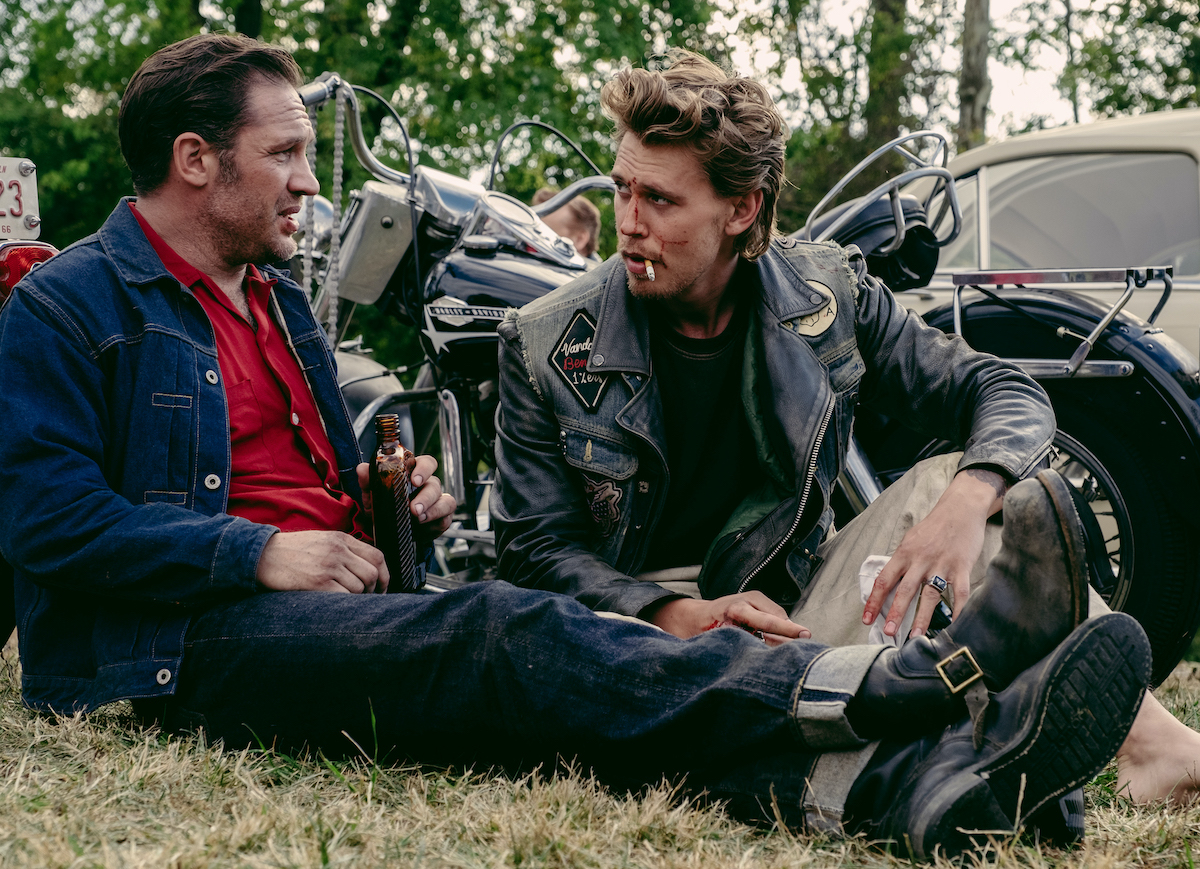
And the cast—wow. You probably won’t see more stars in one place this side of the Milky Way, with many of them reprising previous roles. Timothée Chalamet leads the ensemble as the heralded heir of a disposed royal house, continuing to seek revenge on the conspirators who destroyed his family. Zendaya is Chani, a young desert warrior who falls in love with the exiled duke. Austin Butler (above) is a million movie miles away from Graceland (and his all-American Elvis swagger) in the role of a psychotic, ghost-faced sexy-beast villain. Stellan Skarsgård is a fat-cat baron who’s often seen soaking in a tub of black ooey-goo goop. (Hey, this is Arrakis, not the Catskills.) And then there’s Florence Pugh, Josh Brolin, Dave Bautista, Christopher Walken, Rebecca Ferguson, Javier Bardem, Charlotte Rampling and Léa Seydoux. It looks like everyone wanted to be in this movie. Even Anya Taylor-Joy makes a “surprise appearance.” It’s almost easier to name actors who aren’t in it.

So, sci-fans, the wait is over. Come for the stars, stick around for the sandworms. And stay tuned for even more: Dune Part 3 is already in the works.

Neil Pond