Guillermo del Toro puts a potent new spin on the iconic tale of the man who made a monster

Frankenstein
Starring Oscar Issac, Jacob Elordi, Mia Goth and Christoph Waltz
Directed by Guillermo del Toro
Rated R
In theaters Oct. 24, on Netflix Nov. 7
With a walloping flourish of fresh Hollywood talent, some powerful filmmaking mojo and a potent message about life itself, a classic movie monster is spectacularly revived, once again, for the screen.
You know the age-old story: A mad scientist, Victor Frankenstein, creates a living creature from a dead human body. And things do not go well.
Director Guillermo del Toro’s Frankenstein hinges on the ethical questions at the root of the tale, based on Mary Shelley’s seminal 1818 novel: Is the real monster the creature or the “devil” who created him? And just because you can do something, should you do it? You might recall that Shelley’s story was subtitled The Modern Prometheus, referring to the Greek titan who stole fire from the gods—and suffered the consequences for eternity.
Del Toro also goes back to Shelley’s original narrative for much of his new staging of the tale, deviating somewhat from the seminal 1931 film starring Boris Karloff as the creature. Inventively, he breaks the movie into two parts, telling the story in reverse, first from Victor’s perspective and then from that of the creature.
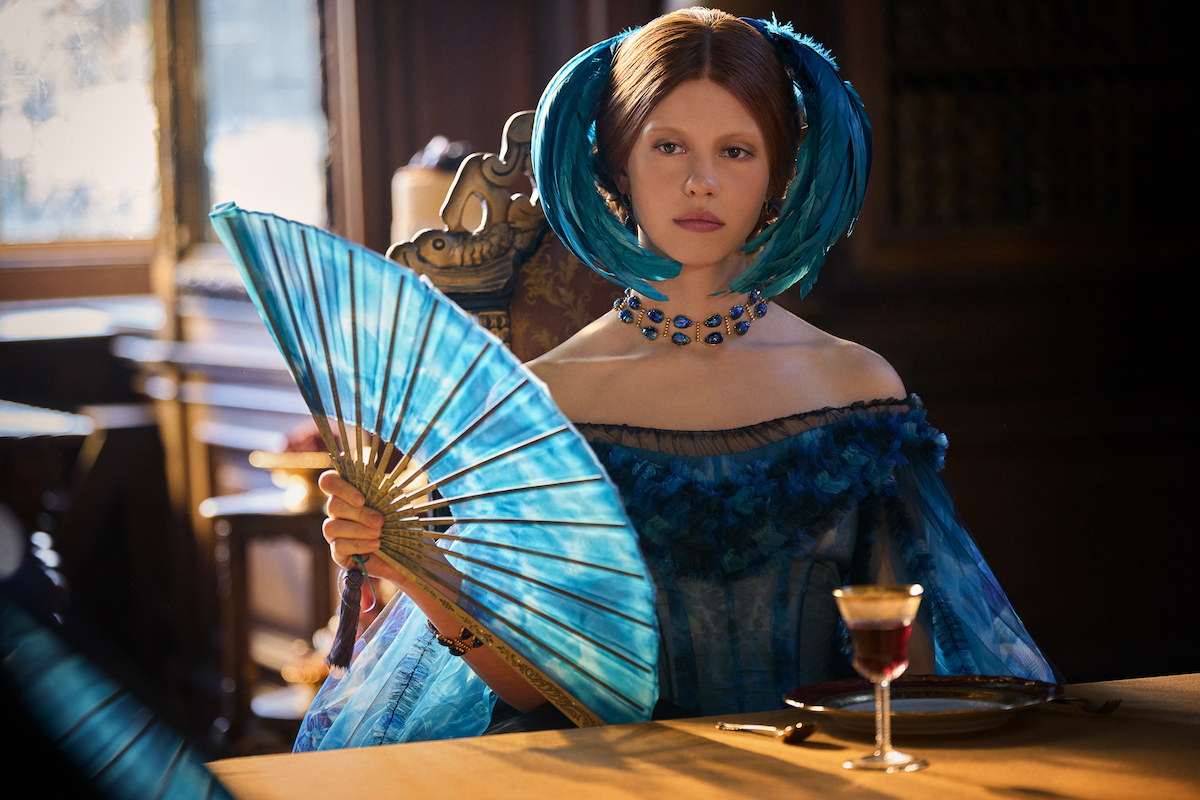
The cast is top-notch. Oscar Issac (Ex Machina, A Most Violent Year, Inside Llewyn Davis) plays Victor, driven to control the powers of life and death. Mia Goth (Pearl, X) is Elizabeth, whose shifting affections become a significant plot driver. Christoph Waltz (D’jango Unchained, Inglourious Basterds) plays Victor’s scheming German benefactor, pouring profits from the Crimean War into Baron Frankenstein’s perverse experiments.
But the real star of the show is Jacob Elordi (Nate Jacobs on HBO’s Euphoria, and Elvis in Priscilla) as the unnamed creature, a stitched-together cadaver from the battlefield brought back to life by a jolt of lightning in Victor’s lab. A magnificent, hulking patchwork of scarred flesh and long, matted hair, he’s one hella hunka-hunka sexy uber-beast. You could easily picture him as an ‘80s rock star.
We see not only how Victor and his creature came to be, but also how the creature learns to speak, to feel and to hurt—and know that he will always be loathed, outcast and hunted. He eventually begins to long for companionship (Bride of Frankenstein, there’s your cue!). A side effect of Victor’s experiment gave his “monster” the ability to regenerate, for his body to heal after injuries, and impossible to kill—and therefore unable to find relief from his loneliness and yearning through the release of death.
It’s Elordi’s creature who gives this monster movie its beauty, and its tender, beating, aching heart.
It all fits perfectly into del Toro’s directorial wheelhouse, which has often swirled with hyper-visual elements from fairytales, mysticism and Gothic horror (as in The Shape of Water, Pan’s Labyrinth and a live-action remake of Pinocchio). His Frankenstein is monstrously majestic, with immense sets and grandly detailed, baroque embellishments…and eternal existential questions.
It’s a “monster movie,” of course, but it’s also a cautionary tale, a parable about the responsibilities of bringing a new life into the world, through natural procreation or otherwise—and how Victor Frankenstein was, in effect, father to an unnaturally made, highly unconventional “son” that he came to fear and despise. And we understand what Victor’s brother (Felix Krammerer) means when he tells him, “You’re the real monster.”
Mary Shelley’s “beast” has been one of the most popular and widely known movie monsters ever, appearing in more than 400 films and spinoffs. Appropriately, del Toro’s Frankenstein ends with a quote from the English poet George Gordon Byron: “And the heart will break, but brokenly live on.” With this impressive retooling, the epic, time-honored tale of Mary Shelly—and its messages about men and monsters, and playing God—lives on, in gloriously grand fashion. And it may just break your heart.
—Neil Pond

 The Media Tourist