Bringing an anti-discrimination fighter on the sideline of history into the spotlight

Rustin
Starring Colman Domingo
Directed by George C. Wolfe
PG-13
In theaters Nov. 3, available on Netflix Nov. 17
Half a century before he was awarded the Presidential Medal of Freedom by President Barack Obama in 2013, Bayard Rustin made his mark as a ferociously dedicated anti-discrimination crusader. Though he’s been marginalized by history and somewhat shuffled into the sidelines of the bigger Civil Rights story, Rustin organized one of the largest peaceful protests ever, which in 1963 drew a crowd of some 250,000 to a massive demonstration on the National Mall in Washington, D.C., and provided the stage for Dr. Martin Luther King’s monumental “I have a dream…” speech. And it led, nine months later, to the passing of the landmark legislation of the Civil Rights Act, officially prohibiting discrimination based on sex, race, color or national origin.
Rustin’s planning for that historic day in D.C. is the framework of this stirring biopic (produced by Barack and Michelle Obama) starring Colman Domingo. The versatile Tony-winning stage actor—who’s also appeared on TV’s Fear the Walking Dead and Euphoria—gives a dynamic, Oscar-baiting star turn as the pacifist leader whose behind-the-scenes activism was often hampered by his open homosexuality, his former ties to the Communist Party and his non-mainstream (Quaker) religious background. As if being Black in America in that tumultuous era wasn’t perilous enough by itself, Rustin was sometimes slurred as a “pervert and a traitor.”
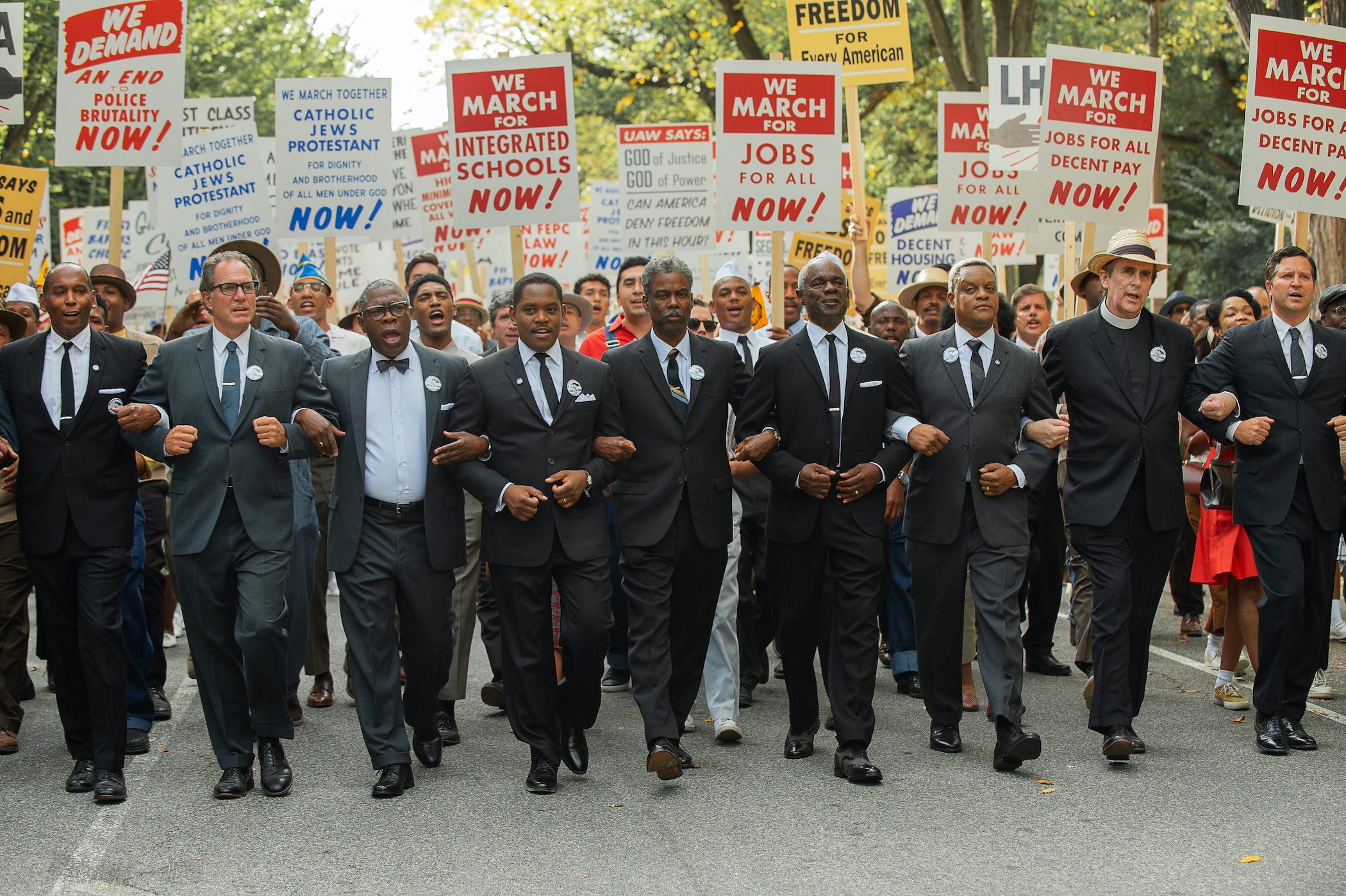
A large ensemble cast rounds out the story as various politicians, union heads and Black movers and shakers swirl—often contentiously—around Rustin. There’s Jeffery Wright as combative Harlem Congressman Adam Clayton Powell; lauded stage and screen star Audra McDonald is NAACP leader Josephine Baker; British thespian Amil Ameen plays MLK, the young firebrand Baptist preacher who became a Civil Rights icon. But Chris Rock seems a bit misplaced; the well-known comedian never really feels comfortable (or believable) in the stern and serious groove as Black activist Roy Wilkins.
The movie itself is mostly standard fare as biopics go; it’s a bit wordy, dialogue-heavy and stagey, like a play that decided to become a movie instead. But it gives plenty of room for Domingo—in real life an openly gay actor—to shine as the Black idealist on the margins of the Civil Rights movement, who believed in freedom for all through Gandhi-esque nonviolence even in the face of violence. Rustin, who’s conspicuously missing a molar from a beating by a cop, later tells someone else to hit him on the other side of his mouth, for “symmetry.”
Rustin hails this little-known racism fighter who worked from the sidelines to harness the power of peace to make walls fall, move mountains and work toward a world-changing “symmetry” of equality for everyone.
—Neil Pond




























 The Media Tourist