Category Archives: Movie Reviews

Meet Your Maker

John David Washington stars in a sprawling sci-fi drama with a mega-message about AI

The Creator
Starring John David Washington, Allison Janey & Madeleine Yuna Voyles
Directed by Gareth Edwards
PG-13

In theaters Friday, Sept. 29

Concerned about robots crashing your car, taking your job, or maybe even ruling the world? In this epic-scale sci-fi war parable, we’re a few bleak decades beyond concern—it’s already happened, and the humans are fighting back against the rising tide of AI. Robots deliver babies, quell riots and work as cops and security guards. But maybe they also set off atomic bombs, and rumor has it they’re making plans to wipe us out completely…

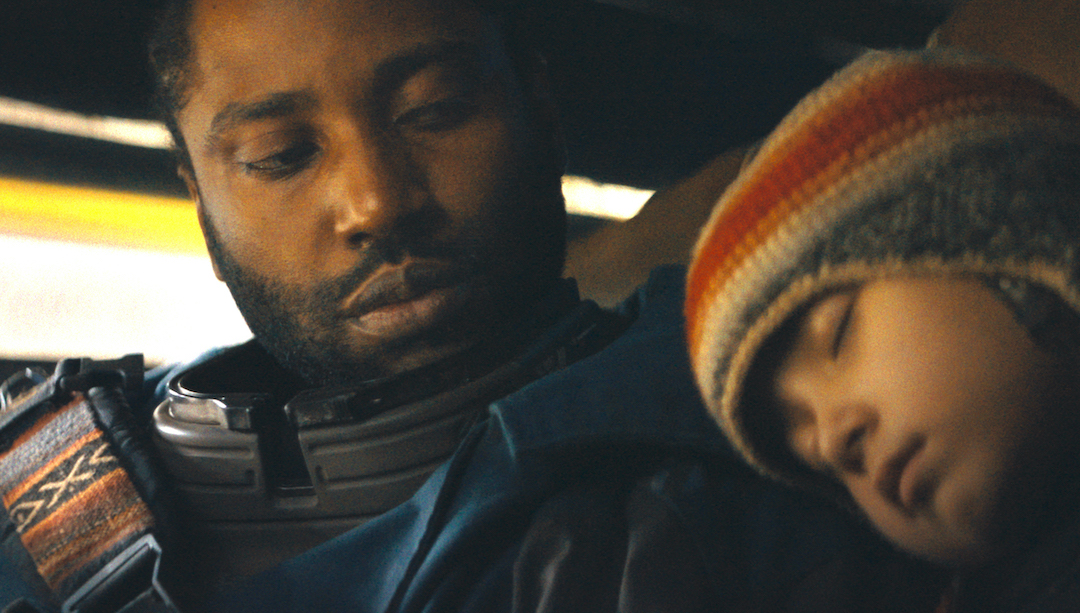
So now, in 2065, the dogs of war are howling and robots are the enemy. When a brassy U.S. Army commander (Allison Janney) gets wind of a super-secret mega-weapon being developed by artificial intelligence, she sends a war-weary special-ops soldier (John David Washington) on a covert mission to find and destroy it, along with its creator.

This wildly ambitious, extravagantly staged dystopian drama depicts a grungy futurarama that doesn’t feel too far removed from the present, just considerably more battle-scarred and damaged by America’s war against the machines—fully mechanized humanoids as well as “simulants,” hybrids that look, walk and talk like humans, but with big, hollow holes through their heads.

And the search for the doomsday device yields some surprises—in the guise of a little simulant girl (Madeleine Yuna Voyles, making her acting debut).Does she hold the key to the world’s destruction, or its path to reconciliation?

Director Gareth Edwards, who also cowrote the original screenplay, also directed the romping, stomping Godzilla reboot (2014), created space-alien creepy-crawlies in Monsters (2010) and put his creative stamp on Rogue One: A Star War Story (2016). He likes big, expansive movie playing fields, and The Creator certainly gives him one. Visually and thematically, it’s a golly-whopper, filmed in awe-inspiring locations around the globe and tackling big mega-themes of war and peace, American imperialism, colonialism, slavery, freedom, terrorism, the weaponization of misinformation and the double-edge sword of technology.

And, oh, the sights you’ll see—robot soldiers, military mega-machines, and squatty, sprinting suicide-bomber bots, like exploding trash cans with arms and legs.

It’s also, at its core, a love story.

You’ll have to wait until the end to see where and how everything ends up, but in the meantime, just sit back and enjoy the show. There are echoes of other visionary movies, sure, from Tenent, District 9 and Blade Runner, to even Wall-E. But The Creator makes its own bold claim to high ground as a meaty, immersive sci-fi spectacle with bountiful bang…and a message about how the key to survival might be simply learning to get along…even when some of us act like we have holes in our heads. 

Neil Pond

Tagged , , , , ,

In the Shark Tank

Edgy erotic thriller puts a relationship in jeopardy in the cutthroat world of Wall Street

Alden Ehrenreich and Phoebe Dynevor star in director Chloe Domont’s dynamite film debut

Fair Play
Starring Phoebe Dynevor, Alden Ehrenreich & Eddie Marsan
Directed by Chloe Domont
R

Opening for one week in limited theaters Friday, Sept. 29 (and on Netflix Friday, Oct. 6)

A tight, terrifically edgy erotic thriller, Fair Play is about a pair of young lovers whose lives are turned inside out when one of them gets a big promotion, just after they’ve become engaged to be married. Luke (Alden Ehrenreich—he was young Han Solo in Solo and singing cowboy Hobie Doyle in Hail, Caesar!) and Erin (Phoebe Dyneovor, who played Daphne on TV’s Bridgerton) are both drone-bee, grunt-work analysts at a cutthroat, high-pressure Wall Street hedge fund.

When she’s unexpectedly bumped into a coveted spot of portfolio manager, glass-walled office and all, Luke’s resentment festers and grows—especially since he was expecting to get the job for himself. He feels entitled to it, mainly because he’s always wanted it. He accuses Erin of dressing like a “cupcake” and sleeping her way to the top. Love becomes loathing, and their relationship gets pushed to frightening extremes.

It only adds to the pressure of them already having to keep their romance a secret, as it violates their company’s ban on workplace dalliances. And as Erin ascends into the company’s elite “boy’s club” of billion-dollar deals, locker-room jokes and strip clubs, she holds her own on the playing field of misogynistic sexual dynamics and office power plays while Luke sits and simmers on the sidelines.

Director Chloe Dumont, who honed her craft on TV series like Billions, Ballers and Suits, makes a terrifically impressive feature-film debut behind the camera, torquing up the wickedly smart tension as Luke and Erin’s unbridled romantic passion (wild, messy bar-bathroom sex!) turns toxic. With both competing to curry favor of the firm’s ruthless boss (veteran British actor Eddie Marsan), their shared apartment becomes a psycho-sexual battlefield. And their second bathroom-sex tryst, late in the film, takes a dynamically different turn from the first.

Eddie Marsan

The movie effectively makes us feel that Luke and Erin do, on some primal level, really love each other, and demonstrates one way love can devolve into lust, emotional assault, raging arguments, sexual battery and even worse. Ehrenreich is always adroit and watchable, but it’s Dumont who grounds the film in a performance so hot it leaves blisters, smoldering like the burning ends of the cigarettes Erin puffs when she’s nervous, sharper than the pointed heels of the stiletto pumps she wears with her power suits. Eventually, you know something’s gotta give—and something’s bound to break. All’s fair, as the saying goes, in love and war, and Fair Play paints a searing picture of lovers on an uncharted collision course in a relationship going madly off the rails.

The abrupt, ambiguous, cut-to-black ending might not satisfy everyone, but this is a movie that certainly gets in your head with thorny issues of sex, gender roles, burning jealousy, greed and the caustically competitive world of work. It’s steamy and sexy as hell, as jagged as shards of broken glass…and as pointed as the tip of a stiletto heel.

—Neil Pond

Tagged , , , ,

Crappy Halloween

The latest Agatha Christie murder mystery is more tricks than treat

Kenneth Branagh returns as detective Hercule Peroit.

A Haunting in Venice
Starring Kenneth Branagh, Michelle Yeoh & Kelly Riley
Directed by Kenneth Branagh
PG-13

In theaters Friday, Sept. 15, 2023

Here’s an early Halloween trick-or-treat for fans of the late, great queen of murder mysteries, Agatha Christie.

A Haunting in Venice brings famed detective Hercule Peroit out of retirement in Italy, pried from piddling in his rooftop garden and nibbling on breakfast cannoli. He’s been coerced—by his visiting American author acquaintance (Tina Fey)—to a local Halloween bash followed by a séance, where things take a decidedly deathly turn. Based on Christie’s 1969 novel Hallowe’en Party, it puts an otherworldly twist on the typical murder-mystery whodunnit and transplants the tale from the novel’s setting of England to the Mediterranean’s iconic “City of Water.” 

Tina Fey plays an American mystery writer who bases her books on Peroit’s cases.

Peroit (Kenneth Branagh) is skeptical about anything supernatural—like the supposed spiritualism of the medium (Michelle Yeoh) who arrives for the séance at the creepy old Venetian palazzo, the site of a former orphanage. She’s there to contact the spirit of a young girl who died on the premises, plunging out of a window and into the canal below. Was it suicide, was she insane, or was she murdered?

Peroit says he doesn’t believe in “God or ghosts,” but an unnerving night in this mysterious mansion may change his mind, especially when more bodies begin to drop—literally.

Venice marks Branagh’s third turn as Christie’s famous Belgian sleuth, following Murder on the Orient Express (2017) and Death on the Nile (2022). He’s joined by an international ensemble cast that includes London native Kelly Riley (she’s Beth Sutton on Yellowstone), Ireland’s Jude Hill (the young actor who starred in Branagh’s Oscar-nominated coming-of-age tale Belfast) and French actress Camille Cottin (who played Hélèn on Killing Eve).

Kelly Reilly also stars on TV’s ‘Yellowstone.’

As an esteemed Shakespearean-molded actor himself, and an accomplished director, Branagh certainly knows his way around both sides of the camera. He’s appeared in more than 40 films and directed nearly two dozen, including his two previous Agatha Christie outings, Disney’s live-action Cinderella, a Thor and even a Frankenstein.

The real mystery of A Haunting in Venice is why such an experienced, Oscar-winning, actor-director feels the need to trot out just about every trick in the filmmaking 101 playbook—odd camera angles, fisheye-lens views, 360-degree circular shots; jerky, jarring edits; abrupt jump-scare “gotcha” jolts every few minutes. There are a lot of ways to tell a scary story, and Branagh was apparently determined to use them all. The movie seems more interested in spooking the audience than in making its characters act and behave like they’re spending a long night with the realization they might be the next victim.

Set in 1947 and partially filmed in Venice, the movie is, however, rich in mood and atmosphere and does stir up some serious issues about the lingering traumas of war. Peroit and a young doctor (Jamie Dornan, the Irish actor who also starred in Belfast) grapple with unseen scars from the WWII battlefield. A young French sister and brother (Emma Laird, making her film debut after a role in the Paramount+ series Mayor of Eastown, and Ali Kahn), uprooted by the war, dream of a better life in faraway peacetime America. They’re all haunted by “ghosts” of a different kind, scarred by the things they’ve seen and done.  

Everyone’s a suspect, of course. So…whodunnit? You’ll have to wait for the end when “the world’s greatest detective” reveals how he solved the case, and then it’s arrivederci. But by that time, you’ll likely have figured out on your own that this overstuffed, gimmicky mystery movie is more trick than treat.

—Neil Pond

Tagged , , , , ,

Balls ‘n’ Bibles

Dennis Quaid goes gonzo for God in heavy-handed baseball biopic

The Hill
Starring Dennis Quaid, Colin Ford, Jonelle Carter, Bonnie Bedelia & Randy Houser
Directed by Jeff Celentano
PG

In theaters Friday, Aug. 25

Baseball and the Bible round the bases in this sermonizing biopic based on the real-life story of a young Texan with a degenerative spine disorder who dreams of becoming a Major League baseball player.

If you happen to already know about Rickey Hill, this story won’t yield any big grand-slam surprises. But for most mainstream viewers, not steeped in the obscure stats and historic miscellany of America’s pastime, you’ll be learning about him for the first time—how he grew up with stiff braces on both legs, how his rural-preacher daddy forbade him to play ball, how little Rickey did anyway. And how the underdog Rickey, ultimately, lived his dream.

Rickey is played as a child by newcomer Jesse Berry, making his acting debut, and he’s good—one of the best things about the movie, in fact. He’s certainly much more of a “screen presence” than Rickey as a high schooler, played by Colin Ford, a Nashville native who appeared in TV’s Under the Dome and several other series (including as a victim of Jeffrey Dahmer in last year’s Dahmer: Monster). He’s kind of a victim in The Hill, too, confined in a movie that seems unable to give him more than one dimension to maneuver.

Dennis Quaid plays Rickey’s father, dishing out fire and brimstone from the pulpit while his young son blasts rocks with sticks in the backyard, sending them sailing into the sky and over the trees—and sometimes through windshields. More than once we hear other people marvel that his talent is “phenomenal,” his batting skills a “miracle” given his condition.

Director Jeff Celentano is a former actor (whose movies you’ve likely never heard of) turned B-movie filmmaker (whose films, well, ditto). He’s playing in the big leagues now, sort of, with a handful of brand-name actors (Quaid, Bonnie Bedelia, Scott Glenn, Joelle Carter from TV’s Justified and Chicago Hope) and a movie releasing nationwide. Rickey Hill’s story is, for sure, an inspirational one—how a kid never let go of his dream, despite the odds that he’d never make it. It’s a feel-good movie for people who want a movie that wants to make them feel good, scratch their “films about faith” itch and likes their sports with a great deal of Bible thumping. It means well, but its real-life drama of the diamond, under the halos of the ballpark lights, gets lost in tedious, telegraphed tent-revival messaging.

And The Hill is Hallmark Channel quality up on the big screen, with ooey-gooey sentimentality, cringey performances, and a heavy, holy-hokum dose of Sunday School threaded by stories of David and Goliath, the strength of Solomon, sermons about water and rocks, God’s “calling” and being “tested,” admonitions about respecting “the Lord’s house,” and so many quoted Bible verses, I lost count. The dialog is laughably clunky and scripted with such a heavy hand, prone to speech-ifying and often putting words into character’s mouths that, I’m certain, they wouldn’t say. (“Hardscrapple,” for instance, wasn’t a word you would hear a lot in the rural South of the early 1960s. I was there, and I know.) And it just seems odd to hear a little girl—Ricky’s childhood sweetie—chide him about his batting and limited “body rotation.”)

In some instances, you can tell that characters mouths move to salty words that we spoken in a scene but later overdubbed into substitutions—“darn” for “dam,” “stuff” for, well, another word that stars with an “s.” This is a movie that doesn’t have the conviction it’s so preachy about—to let people talk the way they would naturally talk.

Quaid has a deep acting resume that has swung wide, as they say, over the decades, with some bona fide classics (Breaking Away, The Rookie, The Right Stuff) and some real dogs (Jaws 3, A Dog’s Purpose, I Can Only Imagine). This one leans into foul territory, as he gets all grim and clammy—and hammy—digging deep into fever-pitch fervor, insisting that his son follow his zealous path into pastorhood. It’s over the top, even for an actor who played Jerry Lee Lewis, Ronald Reagan, and Lindsay Lohan’s dad in The Parent Trip.

Bonnie Bedelia, who plays his mouthy mother-in-law, is bedecked in a wad of ghostly white granny hair and makeup to make her appear even older than her 75 years. The former soap star who made a splash alongside Bruce Willis in Die Hard looks like she entered every scene from the set of a small-town community playhouse. Oh, and she gets a deathbed scene so full of corn, it’s a real bumper crop. There should be a trail of it following her into the cemetery.

There are several moments that mimic other, better movies—a “railroad tracks” scene set to a retro tune that recalls Stand By Me, slo-mo slugfest batting a la The Natural. Church-going folks may flock to The Hill, but more discriminating movie fans can find a (sand)lot of better baseball movies to love.

—Neil Pond

Vampire Diaries

A chapter from ‘Dracula’ takes wing with a lean, mean monster out for blood on the high seas

The Last Voyage of the Demeter
Starring Corey Hawkins, Aisling Franciosi, Liam Cunningham & David Dastmalchain
Directed by André Øvredal
Rated R

In theaters Friday, Aug. 18

Everyone’s favorite vampire is back on the big screen, and this time the count is down for some real dirty work.

Dracula, the title character of British author Bram Stoker’s classic Gothic tale about the aristocratic Romanian blood sucker, has fed the voracious appetites of pop culture for more than a century, appearing in some 200 films. One of the first, director Max Schreck’s iconic German silent film Nosferatu, spooked audiences in 1922; one of the most recent, the campy Renfeld earlier this year, featured Nicholas Cage sporting the familiar fangs.

The Last Voyage of the Demeter is based on a single chapter from Stoker’s Dracula, about how Drac made the fateful hop from the European mainland to London in the late 1800s by hitching a ride on the schooner Demeter. Things didn’t end well for the Demeter, as we learn on a dark and stormy night (of course!) at the very beginning of the movie.

The recovery of the captain’s day-to-day log unspools the story; think of it as the original Vampire Diaries, detailing how Dracula got onto the ship (sneaky!), lurked in the shadows and then wrecked all kinds of hellish havoc every night after the sun went down. If you think of Dracula as a dapper, seductive, cape-draped gentleman aristrocrat—as embodied cinematically by Bela Lugosi or Christopher Lee—well, get ready for a reset. This Drac is a real monster, a lean, mean, gargoyle-like winged creature with a mouthful of spiked teeth and a thirst that can only be quenched with blood. No neck is safe when he’s around. He’s not an animal, exactly, but not human, either. He’s referred to as one point as a “thing that wears the skin of a man.” If you need some new fodder for your nightmares, here it is.

The captain and the crew, we find out, were slow to catch on when they on-boarded a shipment of big wooden (coffin-like) crates in Bulgaria. When things start to get messy on the Demeter, in the middle of the Mediterranean, terrible things begin to happen, they cast about for explanations. Maybe it’s God’s wrath for their sins; perhaps it’s the bad luck, or curse, of having a woman—a female “stowaway”—on board. It’s 45 minutes into the movie before anyone even brings up Dracula’s name; this is one of those movies where the audience knows long before the characters figure it out. Maybe the captain and crew should have paid more attention to all those ominous crates embossed with the crest of a snarling dragon—and, I swear, with what looks like a big, capital “D” smeared on the sides.

Norwegian director André Øvredal leans into the mood of the story—dark, dangerous and deadly—that makes the most of its soggy setting. The Demeter is damp, cramped and claustrophobic, with old wood, scampering rats and working conditions that would never pass an OSHA inspection. But to the sailors, it’s home, and now they have an uninvited guest threatening to turn their ship into a sarcophagus. It’s not the kind of place you’d want to be with a vampire on the loose, especially when Drac gets down to business. Even kids, dogs and other animals aren’t safe. This Dracula is a carnivore who doesn’t care where the next meaty meal comes from.

Captain (Liam Cunningham) and crew (Chris Walley and Corey Hawkins) size up the terrifying situation in ‘The Last Voyage of the Demeter.’

Corey Hawkins (from TV’s The Walking Dead and 24: Legacy) leads the cast as the ship’s Cambridge-educated man of reason. Irish actor Liam Cunningham (Game of Thrones) plays the seasoned, ready-to-retire captain; David Dastmalchian is his dependable first mate. Aisling Franciosi (also Game of Thrones) plays a Romanian girl already very familiar with the “thing” now threatening everyone onboard. Dracula is portrayed by Javier Botet, a Spanish actor who’s apparently found his niche playing creatures in horror films and creature features, including Slender Man, Crimson Peak, and Conjuring and Insidious flicks.   

If you’re not a Dracula buff, in general, you might not want to board this salty slog of a rampaging monster romp. But fans of the character, grown from seeds planted 120 years ago, might find it an interesting addition to the ever-expanding movie canon of the undead’s OG.

It’s a scarifying creature feature that gets grimmer, gorier, bloodier and more violent as it sails along, with the body count rising and the crew winnowed down, one by one, to a handful of desperate survivors who must make a fateful decision. (And you might have thought your Carnival Cruise went badly.) It’s basically a little B-movie about the big D, perhaps the most dependably deplorable monster in monster lore. Dracula keeps coming back, and you can never count out the count.

And as this ill-fated sea cruise reminds us, there’s still plenty of life left in this ol’ bat.

Neil Pond

Another Disney Dud

Disney’s haunted-house redo is haunted by movie ghosts of another park attraction

Rosario Dawson, Tiffany Haddish, LaKeith Stanfield & Owen Wilson size up the spooks.

Haunted Mansion
Starring LaKeith Stanfield, Rosario Dawson, Owen Wilson & Tiffany Haddish
Directed by Justin Simien
PG-13

In theaters Friday, July 28

You’ve heard that old saying, “If at first you don’t succeed, try again.”

Disney’s initial attempt at turning its iconic haunted-house attraction into a movie, back in 2003, was a flop, especially with critics. Now the House of Mouse is trying, trying again, with a fresh take and a new cast.

But not new enough or fresh enough.

The new Haunted Mansion may delight some Disney fans, with its “ghostly” FX that dutifully replicates many of the giggly goosebumps of the actual Disney attraction. There are rooms that “stretch,” goofy-ghoul portraits, a ballroom of waltzing spirits, a cemetery a-swirl with specters, an ominous suit of armor, and the Hatbox Ghost, a fan-favorite cadaver from the ride. (Look him up Disney.fandom.com. He’s got quite a story.)

But this movie lives in kind of cinematic netherworld, too goofy to be truly scary and too ridiculously, rampantly cheesy to be truly funny, or fun. It’s good for a few chuckles (thanks mostly to the script, by Parks and Rec ace writer Katie Leopold, which gives Tiffany Haddish some nice nuggets). But most of the humor is forced, flat, rote and predictable, mired in a gooey, sentimental subplot that feels completely at odds with the sense of untethered, otherworldly escapism on which it’s so clearly, obviously based.

The cast is game and leans heavily into the hammy premise of how they all came to be together in a creaky old house awash in pesky paranormal activity on the outskirts of New Orleans. LaKeith Stanfield is a man of science grieving his late wife; Owen Wilson plays a priest; Tiffany Haddish is a local psychic with great Yelp reviews; Danny DeVito chews the scenery as an eccentric historian steeped in supernatural lore.  Rosario Dawson is a young-professional mom with a preteen son (newcomer Chase W. Dillon, who seems to be channeling the late child actor Gary Coleman from Diff’rent Strokes).

The characters find out that, if they try to leave the mansion, the pesky ghosts will follow them home, or wherever they go. Disney buffs will recall that’s just what visitors to the attraction are warned will happen as they exit the ride.  

The house is haunted by a pantheon of out-of-control spirits, including a ghost medium (Jamie Lee Curtis), and Jared Leto brings the Hatbox Ghost back from the crypt.

Jamie Lee Curtis as Madame Leota

Acclaimed movie maestro Guillermo del Toro (The Shape of Water, Pan’s Labyrinth, Nightmare Alley) initially wanted to make this movie, or at least write its screenplay. But shakeups at Disney shook him out of the project and ushered in Justin Simien, whose previous experience includes the TV series Dear White People and the satirical horror comedy Bad Hair. With del Toro at the helm, Haunted Mansion would have certainly been a different movie—and likely a much better one.

The overstuffed, hyper comedic mayhem gets even more overcrowded with familiar-face cameos from Dan Levy and Winona Rider (as tour guides), and Marilu Henner as a tourist. Time your movie bathroom break wrong and you’ll miss ‘em. Rider’s teeny role is likely a nod to another haunted-house movie, Beetlejuice, in which she starred in 2008, when she was 17.

But this Haunted Mansion is no Beetlejuice. Heck, it’s not even its predecessor, the previous Haunted Mansion (actually, The Haunted Mansion), which at least had the manic movie-star mojo of Eddie Murphy. And it’s no Pirates of the Caribbean, Disney’s 2003 live-action version of another of its popular park attractions, which went on to be a global box-office blockbuster of a franchise. This is another misfire, another Disney dud that feels like an under-performer, despite the work and intentions that went into it.  

A houseful of ghosts, once again, turns out to be no match for boatloads of buccaneers.

Neil Pond

You Dropped a Bomb on Me

The brainy blockbuster ‘Oppenheimer’ is a big, beautiful must-see about the man who made the device that ended World War II—and created the grim specter of global destruction

Oppenheimer
Starring Cillian Murphy, Emily Blunt, Matt Damon & Robert Downey Jr.
Directed by Christopher Nolan
Rated R

In theaters Friday, July 21

It opens with a screen that tells us about Prometheus, the Greek god who “stole fire from the gods and gave it to men.” His fellow Olympians weren’t too happy with him, and they sentenced Prometheus to spend eternity in torment, shackled to a volcano.

Oppenheimer is based on the book American Prometheus, about Robert J. Oppenheimer, the New York-born theoretical physicist who led America’s Manhattan Project, the top-secret “think tank” that created the atomic bombs dropped in on Nagasaki and Hiroshima in Japan in August 1945. The bombs effectively ended World War II, but also created the grim specter of nuclear war as a reality, one that could—theoretically—lead to the destruction and doom of the entire planet.

Director Christopher Nolan’s grandiose, magnum opus of a historical biopic depicts Oppenheimer (Cillian Murphy) as a tortured, sometimes arrogant genius, wrestling with the wide-reaching global implications of what he’s doing, and later, with what he’s done. Like Prometheus, he harnessed the fire of the cosmos—splitting subatomic particles and unleashing the deadly “fire” power of a thermonuclear device—and was then pilloried for it, with accusations that he was a traitor, a spy, a Commie.

It’s a dense drama, powerful and potent, about a loaded moment in time at the intersection of politics, science, discovery, history, human emotion, psychodrama, creation and destruction, chain reactions and ethics, all swirling like protons and neutrons around something no one had ever done, or witnessed, before. It’s a cinch for year-end awards nominations, likely even some Oscars. Yes, it’s that good.

Cillian Murphy and Matt Damon

The all-star cast is outstanding, with everyone playing someone from real life, from Matt Damon as the hawkish Leslie Groves, the U.S. Air Force general who built the Pentagon and was chosen to oversee Oppenheimer and the Manhattan Project, to Emily Blunt as Oppenheimer’s wife—whose former ties to the Communist Party become a major, troublesome part of her husband’s trajectory from the classroom to the world stage.  Robert Downey Jr. is a major part of the story as Lewis Strauss, head of the Atomic Energy Commission. There’s Florence Pugh, Oppy’s Communist lover, and Casey Affleck as the military intelligence officer who commands the Allied forces during the war.  Matthew Modine plays a scientist doing high-ranking R&D for America’s war machine. Kenneth Branagh is the Danish physicist Niels Bhor, and Tom Conti plays Albert Einstein.

But everything hinges on Oppenheimer, the central character in almost every scene. Murphy, an Irish actor who’s also appeared in Batman Begins and Inception, plus the British hit TV series Peaky Blinders, gives a stunning, career-high performance, conveying the inner turmoil, passionate convictions and strong opinions of the man tasked with making a device that would weaponize the science on which he had dedicated his life. Oppenheimer’s bombs ended the fighting and brought peace to a war that had been raging across the globe for six years. But what would be the cost to him, and to the world?

Director Nolan (who also wrote the screenplay and produced) is perhaps Hollywood’s leading movie maestro, known for his densely layered, often complex dramas and intense character studies across multiple genres, including a trio of acclaimed Batman blockbusters starring Christian Bale, the mind-bending Inception, Tenet and Memento, the gripping, innovative war drama Dunkirk, and the far-out space-travel drama Interstellar. He knows better than almost anyone how to make blockbusters with brains, and Oppenheimer is queued up to be one of the most intensely brainy, monumentally majestic, stylistically soaring blockbusters of the year.

And the “test” of Oppenheimer’s nuclear device, at Los Alamos in the American desert, is as gripping, jaw-droppingly dramatic and visually stunning as almost anything you’ve ever experienced at any movie, ever.

With booming, atmospheric sound design, lavish visuals, probing questions about the role of science in the world, and a dive into the mysteries of the universe and our place in it, Oppenheimer enters the race as one of the year’s most impressive, important films. I won’t even take away any points for its nearly three-hour running time. It takes a big movie to tell about history’s biggest bang. And Oppenheimer is big, beautiful and absolutely a must-see.  

—Neil Pond

Impossible Odds

Tom Cruise returns to his leading role in the action-packed, stunt-tacular seventh installment of his blockbuster big-screen franchise

Mission Impossible: Dead Reckoning—Part One
Starring Tom Cruise, Simon Pegg, Hayley Atwell & Esai Morales
Directed by Christopher McQuarrie
PG-13

In theaters Wednesday, July 12, 2023

What does a runaway train, renegade AI, a four-sided, two-piece doodad and a doomed Russian sub have in common? They’re all part of Tom Cruise’s latest “impossible” mission.

The seventh installment of the blockbuster franchise that began more than 25 years ago finds Cruise’s iconic character, Impossible Missions Force (IMF) agent Ethan Hunt, scrambling all over the place in a race for a four-sided key that could trigger a digital geopolitical doomsday in the wrong hands.

Everybody’s trying to get their paws on that mysterious gizmo, which can unlock access to an all-knowing, all-seeing, super-processing artificial intelligence known as The Entity, “a truth-eating digital parasite” with the dark power of total domination. And everyone, it seems, is also trying to stop Ethan, which certainly adds an additional level of difficultly to his job.

“The world is gonna be coming after you,” Ethan is warned, and it sure does.

It’s a big mission for a big movie on a grand scale—golly-whopping spectacle, breathless action and a threat that’s even bigger, and so much badder, than Big Brother.

The gang’s all here, for Mission: Impossible movie fans who’ve grown up watching the IMF continue the globetrotting spy shenanigans first introduced in the 1960s TV series. Cruise, the consummate movie star, is as dapper and unflappably cool as ever, rallying his loyal team (Ving Rhames and Simon Pegg), confronting a couple of formidable old foes (Esai Morales and Vanessa Kirby) and reuniting with a former ally (Rebecca Ferguson).

New characters include Hayley Atwell (well-known to Marvel movie fans) as a cagey thief with a criminal past, and Pom Klementieff (from Guardians of the Galaxy) plays a French assassin and lets her lethal skills do the talking. We’ll likely see them again in Mission: Impossible—Dead Reckoning Part 2, which is already in the can and due for release next summer.  

Rebecca Ferguson reprises her role from previous Mission: Impossible flicks.

Director Christopher McQuarrie also returns to the franchise; he’s directed Cruise in several projects, include two previous Mission movies. He certainly knows how to move things along, make it an exciting, exhilarating ride and pepper the menu with some levity and laughs.  

The movie hinges on issues of privacy, deception, manipulation and misinformation in this modern era of digital overload. And it’s also about empathy; Ethan Hunt cares about those closest to him, and even about people he doesn’t know. The Entity, like all tech by design, is amoral and cares about nothing and no one, only about whatever its objective is programmed to be. (You think your laptop or smartphone, or Siri and social media, really care about you? Uh, no. So just imagine if they became your master and overlord.) Ethan and the Entity represent a battle between good and evil on a global stage, with the fate of the planet hanging in the balance.

But the plot is just so much blather and blah-blah, after all, when it comes to Tom Cruise and his Impossible missions—everyone wants to see the stunts, and Dead Reckoning certainly delivers. There’s a wild multi-vehicle chase through the narrow streets of Rome, with Cruise and Atwell handcuffed together (!) in a tiny Fiat, pursued by a monstrous Humvee, Italian cops and America CIA agents. Cruise zooms cross-country on a motorcycle, then shoots himself off a high cliff, out-Bonding James Bond in a jaw-dropping aerial sequence. And an extended bit through the Swiss Alps on that runaway train, well, it’s a nail-biting, death-defying, cliff-hanging choo-choo blast, a topsy-turvy, over-the-top obstacle course of everything but the kitchen sink, including pots, pans, parachutes, a flaming oven and a grand piano.

Vanessa Kirby plays a woman with a complicated past that intersected with Ethan Hunt (Tom Cruise) previously.

Everything is made even more exciting by knowing that Cruise performs almost all his own stunts. Wowza—it’s hard to imagine any other star ever even considering the elaborate, bonkers things that he’s made the lifeblood of his movies.

And, of course, there’s high-tech face-swapping, a bit of bruising street-fight physicality, plus a dash of sword fighting, knife slashing and even some sleight of hand magic.

Last year, Cruise’s Top Gun: Maverick became the must-see movie of the summer, signaling that Hollywood was ready to welcome COVID-weary audiences back into theaters. Will he re-do that summer blockbuster magic with Dead Reckoning? Can his movie once again revive a sagging box office, rejuvenate franchise fatigue (sorry, Indiana Jones and the Dial of Destiny, Little Mermaid and Fast X) and remind viewers—who’ve gotten just a little bit too comfortable with at-home streaming—why they should love the big screen?

It’s a bit early to know for sure, but I’m ready to predict: Mission: Accomplished!

—Neil Pond

Forever Young

Harrison Ford returns for one final ‘Raiders’ romp, with an extra dose of movie magic

Indiana Jones and the Dial of Destiny
Starring Harrison Ford, Phoebe Waller-Bridge and Mads Mikkelsen
Directed by James Mangold
PG-13

In theaters Friday, June 30, 2023

More than 40 years ago, we sat on the edge of our seats watching Indiana Jones outrun a big rolling boulder, the bravura opening of Raiders of the Lost Ark that became an iconic representation for a new, blockbuster action-adventure movie template.

There aren’t any giant, bowling-ball booby traps in Dial of Destiny, the fifth film in the Indiana Jones canon, but Indy is still running—all over the globe, still hunting for historical treasure, still afraid of snakes, still dodging bullets and still fighting Nazis.

This time, it’s the late 1960s, some 20 years after the events of Raiders. Neil Armstrong has just walked on the moon, America has won the space race, and there’s a scramble to locate the missing half of a doodad called the Antikythera, a dial-like “computing” device found in wreckage of an ancient sunken ship off the coast of Greece. What’s so special about it? Well, during World War II, Nazisbelieved it could forecast rips in the fabric of time, openings that would allow someone to change the way history unfolds. A dial of destiny, indeed, if only they can find the missing part…

And changing the course of history probably isn’t a good idea, especially when Nazis are involved.

Harrison Ford, just about to turn 81, makes what is intended to be his final appearance as the college professor turned rip-roaring archeologist swashbuckler. He’s helped along in the rip-roar department by some high-tech movie magic that convincingly de-ages his character with “deep-fake” cinematic wizardry, for flashback scenes in which he looks, well, like he looked in Raiders of the Lost Ark. Forget Botox—movie magic is the way to go.

Phoebe Walker-Bridge, of Fleabag TV fame, adds some new spice and sass as Helena Shaw, the now-grown daughter of Indy’s late friend and colleague (Toby Jones).  Mads Mikkelsen proves once again he can be a dandy bad guy; I’m still smarting from remembering what a ballbuster he was with Daniel Craig in Casino Royale more than 15 years ago. Antonio Banderas has a brief role as a Greek undersea diver, one of Indy’s old friends, about as crusty as the barnacles on his boat. There are a couple of other returning characters—major and minor, and one is a real doozie—and a lot of movie callbacks to things that happened in previous adventures.

Phoebe Waller-Bridge plays Helena Shaw.

It’s a full-fledged new Indy adventure, for sure, but also a look-back tribute—a closing-chapter monument to Indiana Jones, and Harrison Ford, as one of moviedom’s most recognizable screen heroes, taking on bad guys in a dusty fedora, with a trusty bullwhip.

This is the first Indy flick not directed by Steven Spielberg or produced by George Lucas. Instead, the reins have been handed over to James Mangold, who has certainly proven he knows he’s doing, with a directorial resume that includes 3:10 to Yuma, Identity, Ford v. Ferrari, Walk the Line and a pair of Wolverine X-Men films. It’s hard to follow Spielberg (duh!), but Mangold keeps the pace moving briskly and with stylish confidence, though often at a frantic pace with nearly nonstop, all-over-the-place action that becomes a chaotic wash of blurry, noisy CGI.

Indy fights on top of a train speeding through the Swiss Alps, gallops at full speed on a hijacked police horse into a New York City subway tunnel, tangles with a nest of icky eels at the bottom of the Aegean Sea, jumps out of airplane, and races through the narrow streets of Morocco on a ramshackle tuk-tuk. Things rarely sit still, and as soon as they do, they’re off and running again.

The movie picks up even more momentum toward the end, when it almost jumps the shark in a loopy battlefield sequence that veers into the realm of nearly comedic impossibility. (At one point, I wondered if Bill and Ted’s time-traveling pay-phone booth might have landed just offscreen, with Abe Lincoln, Billy the Kid and Socrates aboard.) But no matter what the movie throws at him, and at its audience, Ford is gung-ho and all-in, even if Indy admits the years, and the mileage, have taken their toll.

As the Indiana Jones films do, the Dial of Destiny gives “real history” a rowdy, rollicking, what-if spin. Here, it’s a former Nazi scientist who’s been helping America launch its space program (yes, that really happened) and an artifact that truly does exist (and is on display today in museum in Athens). But what if that Nazi wasn’t so former, and what if his intention was to use that hunk of antiquity to go back and have another crack at Dur Fuhrer’s plans to conquer the world?

And what if…well, what if we didn’t have Indiana Jones movies around anymore?

At one point, Indy tells some noisy hippie neighbors to turn down their loud music. The song they’re blaring is The Beatles’ “Magical Mystery Tour,” and it feels like a musical nod to the movie magic that brings Harrison Ford back for one final, blowout romp, letting us relive his younger years, recall his Indiana Jones exploits, reconnect him with a rush of his past adventures, and ultimately bid him a fond, sentimental farewell with a warmly nostalgic salute.

—Neil Pond

Back to the Future

Two lives connect with ancient mystical undertones in this love story that’s so much more than a love story

Teo Yoo and Greta Lee play childhood besties who meet again, years later, in ‘Past Lives.’

Past Lives
Starring Greta Lee, Teo Yoo and John Magaro
Directed by Celine Song
Rated PG-13

In wide release Friday, June 23

A little Korean girl and a little Korean boy are schoolmates who grow up together, move apart and finally reunite many, many years later in this tender, emotionally resonant slice of life relationship drama that slices into life choices and the unseen, mystical and mysterious ties that bind.

Moon-Seung-ah leaves Korea with her family and changes her name to Nora, eventually working as a playwright in New York City, fixing her eyes on a Nobel Prize, a Pulitzer, maybe even a Tony. Hae Sung stays behind in Seoul, where he puts in his mandatory time in military service, then settles into adult life as an unlucky-in-love engineer.  

Celine Song, herself a playwright who immigrated as a child with her family from Korea to Toronto, now makes her bracingly confident, immensely impressive debut as a film director in this wonderfully nuanced, decades-spanning saga of connected, intersecting lives and a mojo referred to Korean culture as In-Yun, a force of destiny that brings people together in ways that transcend time, reaching deep even into their previous lives.

The movie is full of soft textures Song uses to help tell the story, subtle visual enhancements to the existential epic—a soggy New York skyline, a glowing silent sunrise, gentle breezes stirring window curtains, reflections in a puddle. It’s as if the characters are, indeed, players in a larger drama, a force of nature writ large in the elemental world around them.  

Greta Lee (from the TV series The Morning Show) is magnificent as grownup Nora, who settles into married life in the East Village life with a writer (John Magaro) she meets at a creative residency retreat. (The marriage, to an American, helped fast-track her immigration card, we learn.) When Hae Sung (Teo Yoo) comes to the Big Apple for a visit, the two Korean “kids” find themselves face-to-face, now as grownups, for the first time in 24 years. And the ol’ In-Yun fires up once again.

This isn’t a yarn of torrid passion, galloping emotion or clashing romantic rivalry. It’s not even really a conventional love story; it’s deeper and more profound than that. There are far more chaste hugs than kisses (of which I counted exactly one). There are no heroes, no villains. But you’ll find your own heart filling, swelling and yearning in this thought-provoking, full-of-feels tale about the choices we make, the choices that make us, what we did, what we didn’t do, and what we might have done. It’s about the yin and yang of everything that ultimately becomes the life we lead, where we end up, who we end up with, and who we turn out to be.

And what is love, anyway? “It’s complicated,” Hae Sung says at one point. It is, indeed.

During one scene, when Nora is workshopping a play she’s written, an actor reads her dialogue for a scene about crossing, passing from one thing into another, like walking over a bridge—or immigrating across an ocean. Some crossings, the actor says, cost more than others; you might get something you desire by making the crossing, but you’ll desire, even more, something you left behind. And “some crossings,” she says, “you pay for your entire life.” It’s certainly no coincidence that Nora and Hae Sung’s stateside reunion brings them underneath the towering Brooklyn Bridge, a large, looming representation of time and distance for them both.

John Magaro plays Nora’s American husband, Arthur.

Nora thinks about what she gained, the price she’s paid, when she moved away and made herself over in a new, Westernized world. She loves her husband, Arthur, who accepts the improbable, epic story of which he’s clearly become a part, but he frets that he might be fated to be on the outside looking in on a relationship that’s deeper than he can fathom. Hae Sung wonders if he will keep intersecting with his childhood friend, and perhaps his true eternal soulmate, in the future.

What does your future hold? Who have you met in the past, in memories that somehow keep coming back to the present? Is coincidence predestined? What price have you paid for the crossings, the changes you’ve made in your life? Who do you love? Past Lives will make you think—and perhaps make you realize that life, in all its rewards and even disappointments, can be so much bigger, and richer, than we can even imagine.

—Neil Pond