From postage stamp to the big screen…and it’s about damn time.

Harriet
Starring Cynthia Erivo, Joe Alwyn & Janelle Monáe
Directed by Kasi Lemmons
PG-13
Maybe you’ve seen her on a postage stamp. Now you can watch her on a movie screen.
Harriet is the first major theatrical biopic about Harriet Tubman, the abolitionist who freed herself as well as hundreds of her fellow slaves, led an armed regimen in the Civil War and became an icon of the women’s suffrage movement.
British actress and singer Cynthia Erivo gives a powerful performance as Tubman, who was born into slavery—as Araminta “Minty” Ross—on a Maryland plantation. When her sadistic young master (Joe Alwyn, from Billy Lynn’s Long Halftime Walk and The Favourite) separates Minty and her husband (Zackary Momoh), she knows she’s about to be sold “down the river,” to the deeper South and a much harsher life, one from which she’ll certainly never return. So she makes a daring dash for freedom, 100 miles across the border to the north and Philadelphia.
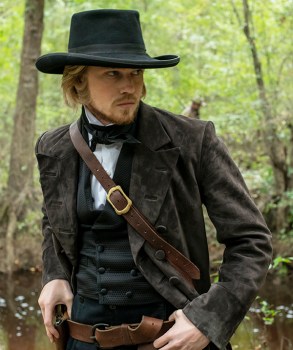
Joe Alwyn
It’s a perilous, arduous journey, but Minty makes it, indeed, following the beacon-like light of the North Star, staying ahead of baying, scent-sniffing bloodhounds and trusting in her steadfast faith. At one point, she jumps off a bridge into the rushing waters of the Delaware River, rather than surrender to slave hunters who’ve hemmed her in on both sides. “I’m gon’ be free or die,” she defiantly proclaims, plunging over the side.
That’s how the movie begins, in 1849, but—of course—there’s much more to come.
In Pennsylvania, black abolitionist organizer William Still (Leslie Odom Jr.) takes Minty under his wing, and she’s given room, board and a paying job by a glamourous free-born black boardinghouse proprietor (Janelle Monáe). Told that many former slaves shed their old names and take new ones to reflect their newfound freedom, Minty gladly does so, joining together her mother’s first and her husband’s last to become Harriet Tubman.
After a few months, she begins to feel alone, especially when she thinks about all the people still living in misery, hardship and fear in the South. But it surprises everyone when Tubman says she’s going to do the unthinkable: leave the safety of her own freedom and begin making secretive return trips to bring back other slaves, starting with members of her family.
“We’re gonna need a bigger cart,” says Walter (Henry Hunter Hall), a scrappy young free black Maryland wheeler-dealer dandy who comes aboard to help Tubman’s cause. Eventually, Tubman’s plucky raids siphon so many slaves off her former plantation that it drives the manor’s toxically racist Southern-belle matriarch (country singer Jennifer Nettles) toward a nervous breakdown.
The rest is history, as they say, and the movie does a stirring job of depicting the unbridled heroism of one of America’s real heroes. There’s simply no one who did anything like Tubman did, risking her life repeatedly, putting herself in harm’s way time after time for others, committing herself to a fiercely audacious lifetime loop of extraordinary courage, bravery and flinty resolve.
Director and cowriter Kasi Lemmons (whose previous work includes Eve’s Bayou, Black Nativity and Talk to Me) tends to lapse at times into some clumsy, distracting craftsmanship—like jarring, confusing, black-and-white flashbacks, and swells of soundtrack music that rush in to flood scenes with emotional cues instead of letting what’s happening onscreen hammer the drama home. But those are minor criticisms for such a major moviemaking milestone.
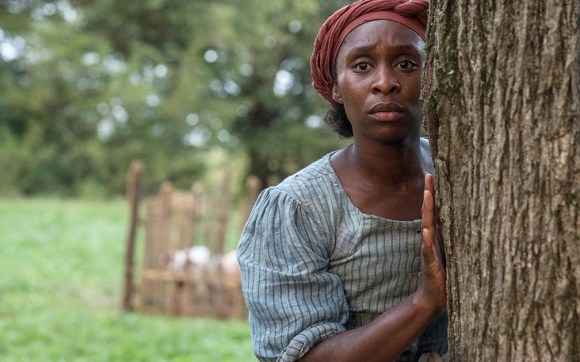
Cynthia Erivo isn’t exactly a marquee name, but she’s already won a Tony, an Emmy and a Grammy—all for her starring role in The Color Purple on Broadway—and appeared in the movies Widows and Bad Times at the El Royale. Harriet makes great use of her tremendous singing talent by integrating it into scenes that show how songs were part of the fabric of slave communities, and how Tubman sang as “code” to communicate.
The movie also shows how Harriet “communicates” with God—or at least thinks she does. Were her fainting spells really some mystical kind of divine premonitions, blackout moments during which she received heavenly direction and instruction? Or were they the results of long-term, seizure-like brain damage from getting her skull cracked open by a cruel plantation master as a child? The movie never takes a definitive side, but it does depict Tubman as righteously, rigidly religious, unwavering in her belief that something from above was literally guiding her life below.
On her first exuberant footsteps into freedom, across the open border to Pennsylvania, her chaperone—a gentle Dutch farmer—asks if she’d like him to accompany her. No need, she says, “I walk with the Lord.”
While not as intense in its depiction of the atrocities of slavery as 12 Years a Slave (2013), Harriet pointedly reminds us again of the wretchedness of an institution that—once upon a time in America, and not so long ago—legalized the treatment of a group of people as property that could be bought, sold, starved, beaten, abused, even killed.
And it reminds us of the amazing, intensely inspiring accomplishments of a woman who’s already made her mark in the history books—and, since 1978, on postage stamps. (But in 2017, U.S. Treasury Secretary Steven Mnuchin shot down plans to put her on the $20 bill.) Some things take time, as Harriet Tubman knew—maybe a lifetime, maybe even more. But Tubman’s remarkable achievements will live forever, and Harriet finally, fittingly frames her story in the big, oversized Hollywood dimensions it has long deserved.
“God has shown me the future,” Tubman decrees. “And my people are free!”
Amen to that!
In theaters Nov. 1, 2019

 Now, several years later, things are hunky-dory in the magical fairy kingdom of the moors. Maleficent is the godmother of the former Sleeping Beauty (Elle Fanning), who’s now the fairy Queen Aurora, wide awake and getting ready for a big wedding to Prince Phillip (Harris Dickinson). The prince is from the adjoining, over-the-river kingdom of Ulstead, where his father, peace-loving King John (Robert Lindsay), is excited about a union that will finally officially unite the kingdoms of fairies and humans.

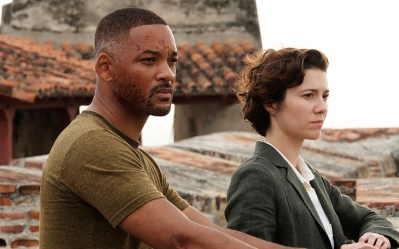
 Smith, once a king of the box office with slam-bang, fan-boy blockbusters like Independence Day, the Men in Black franchise and I Am Legend, has in recent years marinated in more meditative fare (Seven Pounds, After Earth, Concussion, Collateral Beauty). Gemini Man might be seen as a combo platter, a bit of both—it’s got guns and explosions, but it also wants to explore ideas about the dogs of war, growing old, fatherhood, nature versus nurture and the ill-advised, age-old quest to play God.
 Joker
Joker We can tell the deck is stacked against Fleck from the get-go; he’s a mentally unstable, basket-case loser and outsider who lives with his frail mother (Frances Conroy from Six Feet Under and American Horror Story) in a dingy apartment. He’s prone to outbursts of inappropriate laughter, uncontrollable spasms of jarring, hyena-like cackles. He carries a laminated card that explains, “I Have a Condition.” It doesn’t always help.
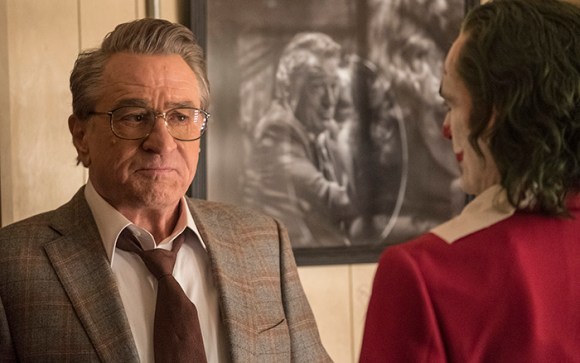
 oker brings up plenty of things to think about—not the least of which are the warnings that were issued before it was even released about the possible violence it might unleash. Its narrative is, after all, hauntingly similar to other, real-world episodes in which disenfranchised white men have gone on to tragic shooting sprees. And it reminds us how easily someone—anyone—can slip through the cracks of an overburdened system and become lost…or worse.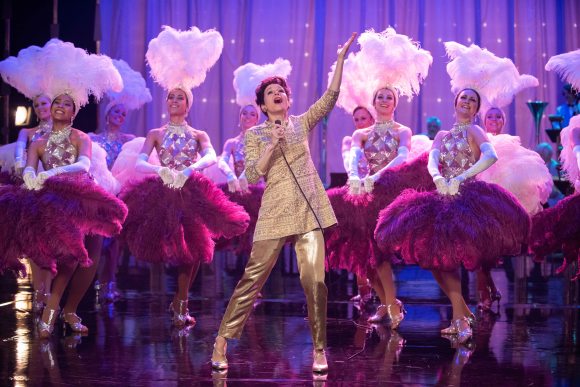
 If you only know her from The Wizard of Oz, prepare to see Judy in a totally different light and from a completely different perspective. And if you only know Renée Zellweger from Jerry Maguire, Bridget Jones’s Diary, Chicago or Cold Mountain (for which she won an Oscar)—well, prepare to be wowed.
 Her grown daughter, Liza Minnelli (Gemma-Leah Devereux, who played Lady Fitzgerald in TV’s The Tudors), is wary of her Judy’s latest suitor, and her youngest, Lorna Luft (Bella Ramsey), has grown weary of her long absences—and erratic parenting.



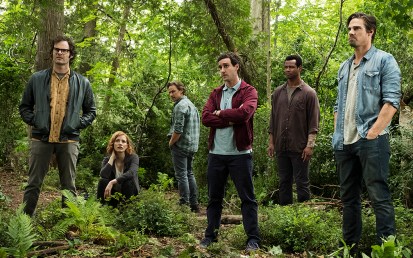


 And speaking of everyone else in Derry, where are they? The streets are always deserted. Maybe Pennywise ate everyone. I think the movie must not have had much budget for hiring extras after spending so much for CGI, including “de-aging” the young actors, shaving off a few crucial growth years to get them back to looking like the fresh-faced early teens they were when making the first movie in 2016.



 But first he and his friends, Thor (Brady Noon) and Lucas (Keith L. Williams), have to learn how to kiss. This sets them off on a frantic suburban scavenger hunt that involves internet porn; a drone; spying on two older neighbor girls (Molly Gordon and Midori Francis); accidentally coming into possession of someone else’s stash of the drug molly; an escape from a frat house; a mad dash across a busy freeway; and a close call with a cop.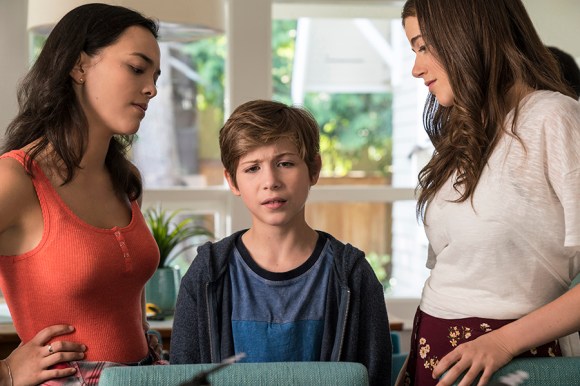

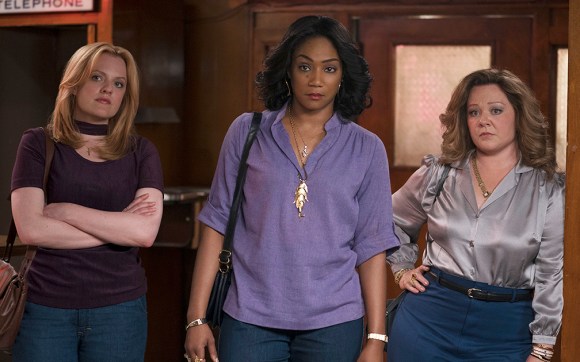
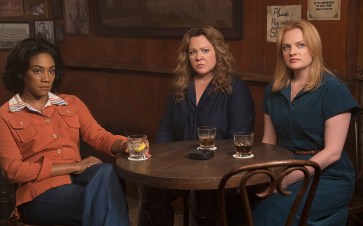 The Kitchen is a character-driven crime drama, a period-piece that rocks its time and place with serious attention to detail. The streets look appropriately grungy and grimy, down to random bits of trash and puddles of mystery goop. The fashion is right-on, even when it’s basic or frumpy. Music from Heart, the Rolling Stones, Lynyrd Skynyrd, Marilyn McCoo and Billy Davis Jr., Montrose and other acts from the era help set the scenes—as does a well-chosen cover of Fleetwood Mac’s “The Chain” by the new country-rockin’ act The Highwomen (Brandi Carlile, Natalie Hemby, Maren Morris and Amanda Shires).
 The three main characters are fully fleshed out; they’re complicated women, each in a different, difficult situation. McCarthy’s Kathy is a loving mom, raising two children with a husband (Brian D’Arcy James) who’s resentful of anything she tries to do outside the home. Haddish plays it tough and sassy as Ruby, a double outsider—she’s black and female, even though she’s the wife of the son (James Badge Dale) of the mob’s maleficent mol, Ma (Margo Martindale). Claire’s toxic relationship with the abusive Rob (Jeremy Bobb) melts away when he goes away to prison—and Gabriel, the intense Vietnam vet-next-door (Domhnall Gleeson), moves in. Moss, the Emmy-winning star of The Handmaid’s Tale, gets perhaps the movie’s sweetest—and grisliest—subplot as Claire and Gabriel bond.
 The Media Tourist