Rami Malek Rules Royally Rockin’ Queen Biopic ‘Bohemian Rhapsody’

Bohemian Rhapsody
Starring Rami Malek, Gwilyn Lee, Ben Hardy, Lucy Boynton & Allen Leach
Directed by Bryan Singer
PG-13
“We’re four misfits who don’t belong together, playing for the other misfits hanging together in the back of the room,” explains Freddie Mercury to a record company exec in an early scene of this royally rockin’ biopic about the British band Queen.
As we see, the “rooms” Queen played got bigger and bigger, as the band became one of the most successful, acclaimed arena acts in the world—and Mercury became the most flamboyant, theatrical, front-man “misfit” in all of rock music.
Rami Malek, the Emmy-winning star of TV’s Mr. Robot, pops in a set of prosthetic teeth to play Freddie, who is clearly the star of this show as well. To cop a line from one of Queen’s hit songs, he…will, he…will…rock you!

Malek with Gwilyn Lee as Queen bandmate Brian May.
Bohemian Rhapsody, titled after the group’s epic, progressive, majestic, multi-layered sonic soufflé from their 1975 album A Night at the Opera, traces Mercury’s timeline from the early 1970s, when he first met the other musicians who would become his band mates.
In an alley outside a London club where he’s just watched them perform, Freddie convinces guitarist Brian May (Gwilyn Lee) and drummer Roger Taylor (Ben Hardy) to let him replace the recently booted lead singer in their band, Smile, dazzling them with a quick vocal audition. “I was born with four additional incisors in my mouth,” he explains. “More space means more range.”
Mercury’s impressive range becomes a movie metaphor for the expansive effect he has on the group—he changes their name to the universally regal-sounding Queen and widens their horizons to a recording contract, international touring and worldwide hit records. He transforms them into a band that doesn’t sound like any other band anywhere, at any time, a unique performing and recording ensemble that doesn’t fit into anyone’s idea of a rock group, a pop act or anything else.
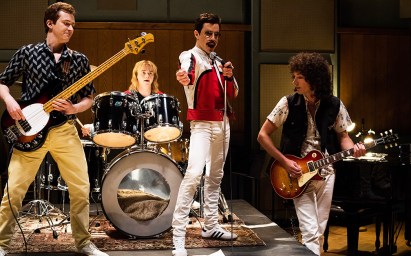 He tells the head of a record company that Queen wants to make “a musical experience rather than just another record.”
Mercury loved entertaining, experimenting in the studio, and living with his cats—and he loved other men, a fact that he discretely kept secret from the public. The movie is delicate—although direct—about how it addresses this part of his life (and lifestyle), even as it becomes the thing that leads to his eventual death from complications due to AIDS, in 1991.
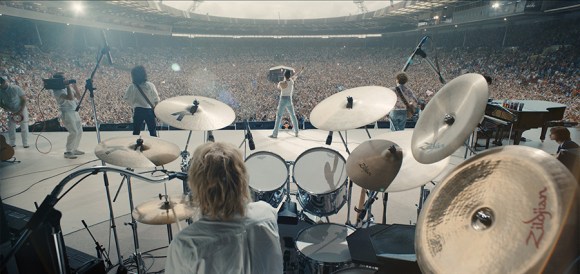
The film is dramatically bookended by the band’s triumphant reunion appearance at the Live Aid charity event in 1985, culminating in a monumental, masterful, moving recreation of the concert at London’s Wembley Stadium, where Queen performed their greatest hits in front of a rapturous crowd of more than 70,000 people. It was watched worldwide on television by an audience estimated to be nearly 2 billion, the biggest ever for a TV event, much less a rock show.
You likely know some, or perhaps even a good deal, of Queen’s music. You may even be a super-fan who knows a lot about the band itself. But you’ve probably never been where this movie takes you, particularly as it depicts the home life of teenage Freddie as he was “becoming” Mercury. Before that, he was Farrokh Belsara, the son of Parsee Indian parents who had immigrated to London after a revolution. One of the film’s most emotional parts is Freddie’s relationship with his father, who disapproves of his musical career—and his homosexuality—and who tells his son his mantra should be “good thoughts, good words, good deeds.”
And you may not know about Mercury’s romantic relationship with his early girlfriend, Mary Austin (Lucy Boynton). Their enduring bond, even beyond heartache and heartbreak, stirs one of the movie’s most tender undercurrents.
Allen Leach (he was Tom Branson on Downton Abbey) plays Paul Prenter, Mercury’s duplicitous manager. A truly delicious treat is the inside joke of casting Mike Myers as a flummoxed record exec who can’t see why his label should release “a six-minute quasi-operatic dirge” when the band brings him their latest project, “Bohemian Rhapsody.” One of Myers’ best known comedic bits, of course, is the scene in his movie Wayne’s World where his character rocks out to that very song.
Director Bryan Singer layers on the musical detail, and a parade of characters. (Queen’s bass player, John Deacon, capably played by Joseph Mazzello, unfortunately seems to disappear into the much more colorful swirl all around him.) Aaron McCusker, who played astronaut Wally Schirra in the 2015 TV series The Astronaut Wives Club, portrays Jim Hutton, Mercury’s life-mate and partner during the final seven years of Freddie’s life.
It’s a kick watching recreations of the band’s classic hits germinate and blossom, in the studio or on a piano bench, from the stomp-stomp-clap of “We Will Rock You” to the experimental rehearsal noodlings that eventually coalesce into the funky “Another One Bites the Dust.” An everything-but-the-kitchen-sink studio session—an amp swinging through the air on a rope, loose coins buzzing on a timpani head, a tambourine inside a piano—hints at how far the band wanted to push the norms of conventional pop music.
And Mercury’s rousing “Day-Oh!” chant, which could captivate massive arena crowds, also becomes shorthand for a much more private, poignant personal moment.
 Malek struts like a peacock through Mercury’s constantly churning fashion evolution, from skintight catsuits to leather military jackets, glittery glam-rock capes and finally the iconic white tank top he wore at Live Aid. His immersive acting—and the grand, sweeping arc of the story—is the kind of thing that makes Oscar voters perk up, take notice and dole out little golden men.
He doesn’t do his own singing—what you hear coming out of Malek’s toothy mouth is a combination of Marc Martel, a professional Queen tribute singer, and actual Mercury tracks isolated from Queen master recordings. But the illusion, and the performance, are perfect, Hollywood movie-music magic at its finest. Close your eyes for a moment—but just a moment, because there’s so much to see—and it’s almost impossible to detect the difference, to convince yourself that what you’re hearing, and seeing, is really a quasi-Queen with a faux Freddie.
And at the center of it all, at the apex of this magnificent, music-packed movie tribute, is Malek. His remarkable, spellbinding performance reminds us of what we had, what was lost, and of the band, the songs and the singer who once made the whole world sing and clap and stomp along.
“We are the champions,” Mercury and Queen sang. And yes, day-oh, they were.
In theaters Nov. 2, 2018


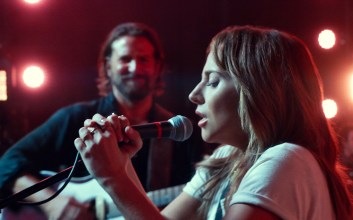 And Gaga, in her knockout debut leading movie role, sings the heck out of them. Cooper gives much of the spotlight to her, and she shines in a spectacular, rags-to-riches performance. We watch Ally emerge (we see her in the opening scene, literally, strolling past trash dumpsters in an alley) from her lowly street life to a become a dazzling, media-sensation pop princess.
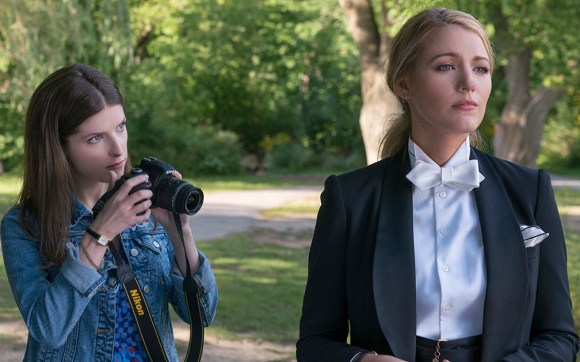


 Those kind of movies are typically pretty heavy and dark, but this one is definitely not—thanks to the spark, sizzle and snap of Kendrick and Lively, and to director Paul Feig, who brushes everything with brisk, confident comedic stokes honed from his previous work on Bridesmaids, Ghostbusters, The Heat and Spy. There are numerous laugh-out-loud moments, particularly when Kendrick is given room to romp—like scenes when she encounters a robotic office receptionist, gets “stuck” in one of Emily’s slinky dresses, or rocks out to a rap song in her car. She’s the feisty firecracker that makes this film pop with wit as well as wile.
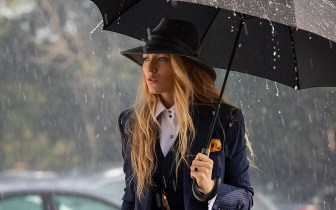 Lively has appeared in several movies (The Deep, The Age of Adeline, All I See is You, Café Society) after Gossip Girl went off the air in 2012, but this role is her juiciest yet. Emily is beguiling, manipulative, dangerous, damaged, sexy, sad and seductive—and Lively seems to relish every moment she gets to explore each luscious, plum angle of her character’s personality.
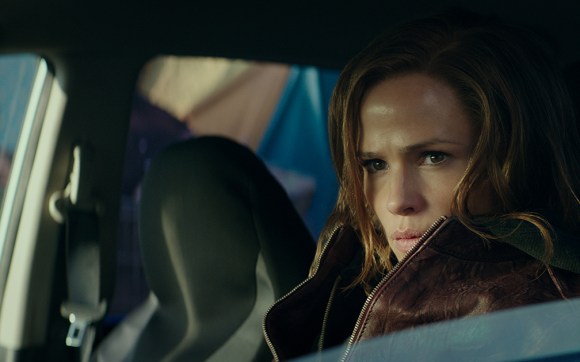 Peppermint
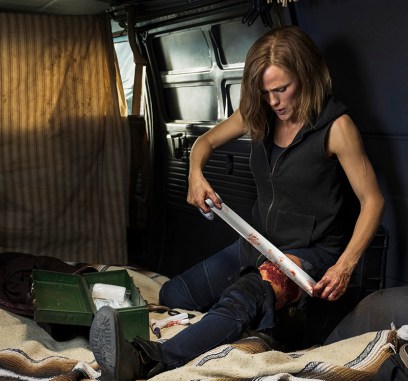 We know when we see her, in the back of her beat-up van, closing up a gaping wound with a staple gun and duct tape, she means business. A couple of LAPD detectives (John Gallagher Jr. and John Ortiz) are always one step behind her.
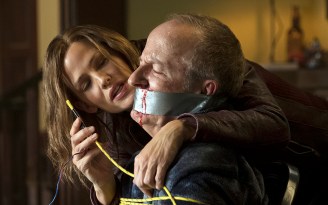 It’s not just the body count that might make you wince. The sight of a white woman laying waste to just about every Hispanic and Latino character she encounters doesn’t exactly align with what a lot people might think of as racial sensitivity, especially at a moment in time when tensions are heightened about issues of immigration and cultural assimilation.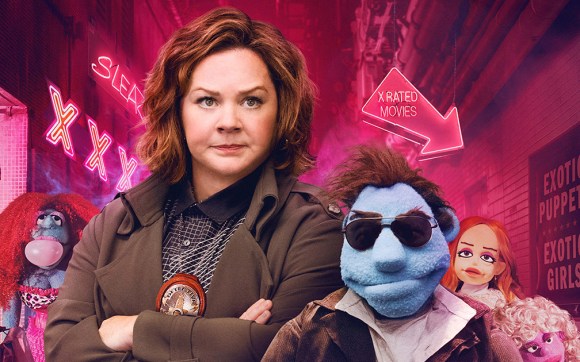
 Phil’s work brings him back in contact with his former LAPD partner, Detective Connie Edwards (Melissa McCarthy). Several years ago, during their time together on the force, they were L.A.’s first human/cop team—and then an unfortunate on-the-job incident made them the last, and cost Phil his badge.
 The movie comes from an “adult” offshoot of the Henson production company, Henson Alternative. The film’s production company was sued, unsuccessfully, earlier this year, by the producers of Sesame Street, to stop The Happytime Murders from using the tagline “No Sesame. All Street.”





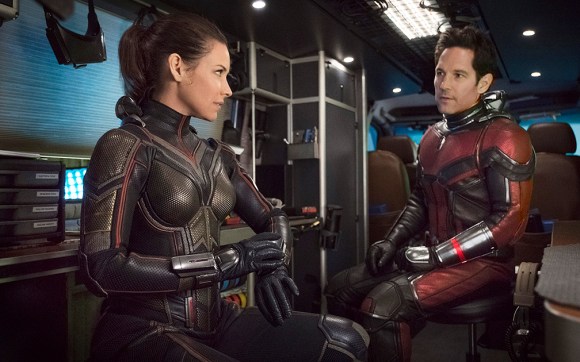
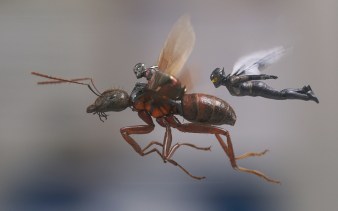 But Lilly’s Wasp wasn’t the first Wasp—that would be her mother, we’re reminded, Janet Van Dyne (Michelle Pfeiffer), who shrank down so small, 30 years ago, she was absorbed into the “quantum realm” and could not return. Pym (Michael Douglas, also reprising his role) thinks Janet could still be alive, somewhere in there…out there. The new movie hinges on a plan for Lang, Pym and Van Dyne to engineer a way to retrieve her.

 Everyone will be able to relate to Lang’s comedic frustration when his Ant-suit goes on the fritz and he can’t control when it will zap him down to a speck or swell him up to a colossus. There’s a particularly funny scene when he gets shrunk down to kid-size in a school; in another, he’s a towering titan who uses a flatbed truck as a scooter.
 The Media Tourist