Not a Princess

Disney’s new Mulan provides a rousing heroine for young girls ready to move beyond sleeping beauties and little mermaids

Mulan
Starring Yifei Liu, Donnie Yen, Li Gong, Jet Li and Jason Scott Lee
Directed by Niki Caro
PG
Available Sept. 4 on Disney+

Disney’s new princess is no princess.

Mulan, a young female warrior who leaves her family to defend her country, is based on stories dating back to 4th century China.

You might remember Disney’s earlier version, a 1998 animated musical romp for which for Eddie Murphy provided the voice of a little talking dragon and Christina Aguilera sang what would become her first hit song, “Reflections.”

There’s no talking dragon in the new, live-action Mulan, or any other cutesy animals. This Mulan is, instead, full of color, sights, action, drama, emotion and spectacle, all revolving around a young heroine with the bona fides to become a rousing role model for little girls ready to move beyond sleeping beauties, little mermaids, talking teapots and pumpkins that turn into coaches.

(You do get to hear Aguilera sing “Reflections” again, though.)

The setting is ancient China, where the Emperor issues a decree that every family must send “one man” to serve in the Imperial Army to fight against a ruthless horde of advancing invaders. Mulan (Chinese-born actress Yifei Liu), the eldest of two daughters of an honored veteran warrior who has no sons, takes her ailing father’s place so he doesn’t have to hobble onto the battlefield.

Disguising herself as a young man, Mulan goes off to training in preparation to meet the vicious warlord Böri Khan (Jason Scott Lee) and the shape-shifting witch Xianniang (Li Gong), his partner in crime.   

Along with all sorts of rigorous exorcises and combat skills, Mulan and her fellow soldiers are taught to be loyal, brave and true, the three “Pillars of Virtue.” Those pillars are so important, they’re etched into the shiny steel blade of Mulan’s sword. But Mulan struggles with the pillar of truth—she knows she’s living a “lie” hiding her true identity from her fellow soldiers, her commanding officers and herself.

But like the flaming red phoenix—the mythological bird—Mulan keeps seeing, we know Mulan, too, will soon rise up and reveal herself, in all her splendor.

Steeped in Chinese culture and capably steered by director Niki Caro (The Zookeeper’s Wife, Whale Rider, North Country and McFarland U.S.A) in China as well as her native New Zealand, Mulan is truly something to see—too bad COVID-19 kept it out of theaters, and off the big screen. There are teeming plazas, ornate palaces, fortress cities, snow-capped mountains, and training montages on wide, windswept plains. Characters pop, parade and promenade in all sorts of fabulous costumes, from suits of shiny amour to a spectrum of raiment in all colors of the rainbow; I’m sure Disney hopes to sell a ton of ruby-red Mulan cloaks. An early scene where Mulan and her sister get “made up” for a meeting with their village’s matchmaker is a spectacle in itself, a quick-course lesson in Chinese tradition.

There are clash-y showdowns, chop-socky throwdowns and one especially acrobatic battle atop what looks like a bamboo construction site, with a face-off on a piece of lumber hanging precariously by a strand of rope; I halfway expected Tom Cruise or Daniel Craig to step in and take over for a Mission: Impossible stunt or a James Bond cliffhanger.

Liu, who stars as Mulan, may be a newcomer to most Americans. But at 33, she’s already an established, award-winning actress, singer and model who’s starred in some two dozen films and television shows in China. Mulan’s father, Hua Zhou, is played by Tzi Ma, a Hong Kong-born actor with a long list of American acting credits, including TV’s Bosch, Veep, Madam Secretary and The Man in the High Castle.

The rest of the cast is similarly pedigreed, with many actors who are already stars in Chinese cinema, though they may be somewhat unfamiliar to mainstream U.S. audiences.

Some action scenes seem a bit clunky and choreographed, like they were staged for a Broadway production instead of film. I was disappointed that the movie didn’t do more with the idea that “chi” warriors could run on, up and down walls, like spiders; it’s more of a gee-gosh gimmick than a concept that could have been really cool to explore more visually. And for all the progressive, culturally forward progress of having Mulan’s central character be a fearless warrior heroine, instead of a lovestruck princess, there are still some durable, dependable Disney-touchstone throwbacks. I’m almost certain one of Mulan’s fellow recruits—the doughy, comical Cricket—shares some strands of DNA with Dopey from Snow White and the Seven Dwarfs.

“We’re going to make men out of all you,” barks Mulan’s drill sergeant to his greenhorn troops at the start of their training.

He doesn’t know, of course, that the greatest soldier in his entire legion, in the history of his empire, will turn out to be a woman, rising like a phoenix through the centuries as an emblem of achievement, loyalty, bravery and honor.

And she’s not a princess, she’s Mulan.

The Blue Wave

All-star cast delivers scathing socially distanced satire in timely, topical quarantine comedy


CE_BM

Bette Midler

Coastal Elites
Starring Bette Midler, Daniel Levy, Issa Raye, Sarah Paulson & Kaitlyn Dever
Directed by Jay Roach
Sept. 12 on HBO

In this “quarantine comedy,” five socially distanced characters grapple with politics and the COVID-19 pandemic in a back-to-back series of monologues, rants and confessions delivered directly into the camera.

It’s a timely, extremely topical movie for these extreme, extraordinary, even apocalyptic times—in more ways than one.

Each individual “segment” was filmed separately, during the pandemic, in a socially distanced, quarantined environment, with each actor performing remotely. A punchy, prickly political satire from Bombshell director Jay Roach, it was originally intended for live presentation at the Public Theater in New York—and written by acclaimed playwright Paul Rudnick—before the pandemic quashed those plans.

The cast is top-notch, putting an A-list spin on the comedically caustic concept of how liberal “elitists” are suffering under the right-wing rigors and ripple effects of the Trump administration. The term “coastal elites” is a more recent spin on just simply “elites,” a longtime pejorative political label used to stir up mainstream, grassroots voters and rile them against big business, big banks and—most recently—the perceived affronteries of science, research and education.

These elitist bogeymen were originally based in big Eastern waterway access cities of culture and commerce, like New York, Chicago, Philadelphia and Boston, or San Francisco and Los Angeles to the West. The political divide eventually widened to include ideology—particularly Hollywood—so that “elites” came to represent a certain upper-class of people, beyond geography, whose liberal lives and lifestyles, morals, intellectual pursuits, values and vested interests were markedly different from those of more conservative so-called “real Americans” in the heartland.

Coastal Elites introduces you to five of them, all with a different take and a different situation to share.

Singing, songwriting and acting icon Bette Middler kicks things off as Miriam Nessler, a New York City schoolteacher and gabby Jewish widow. Why is she in a police station? It’s something about a guy in a MAGA hat, and her finally getting pushed past her breaking point. But she’s been close to the breaking point for a few years now, especially when she picks up her beloved New York Times or turns on the TV, encountering a barrage of news about something the president said or did that makes her blue blood boil. “Since the election, I haven’t been able to stop cursing,” she admits.

CE_DL

Daniel Levy

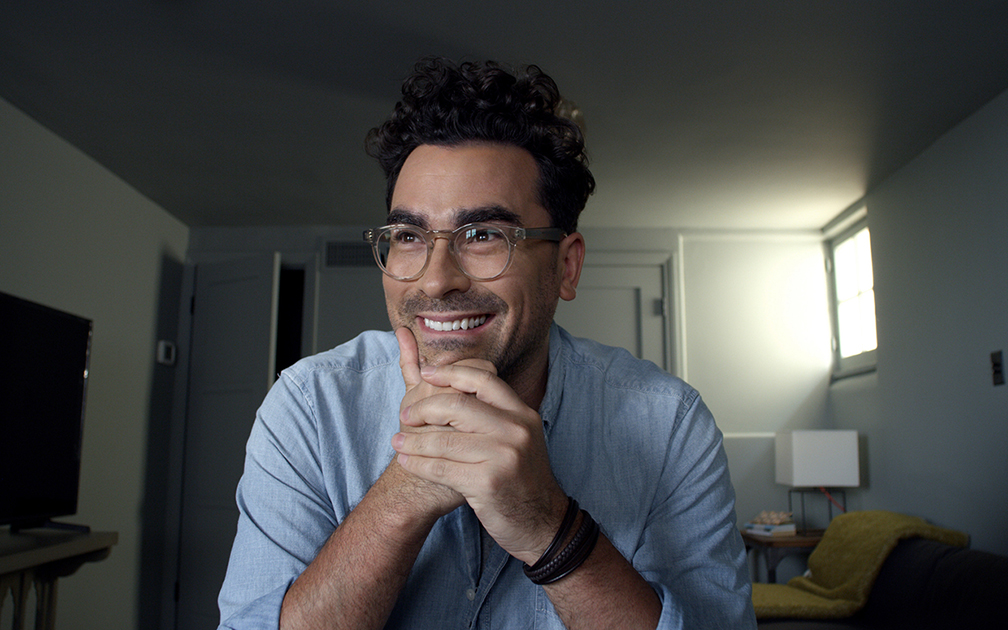
Schitt’s Creek star Daniel Levy is Mark Hesterman, a struggling Hollywood actor teleconferencing with a therapist from his apartment during a moment of career crisis. After finally feeling fully emerged as a gay actor, he’s nailed a big callback audition for his dream role—a gay superhero called Fusion in a new Avengers-like franchise. But his high spirits are crushed after hearing about Vice President Mike Pence’s strident anti-gay agenda.

CE_IR

Issa Rae

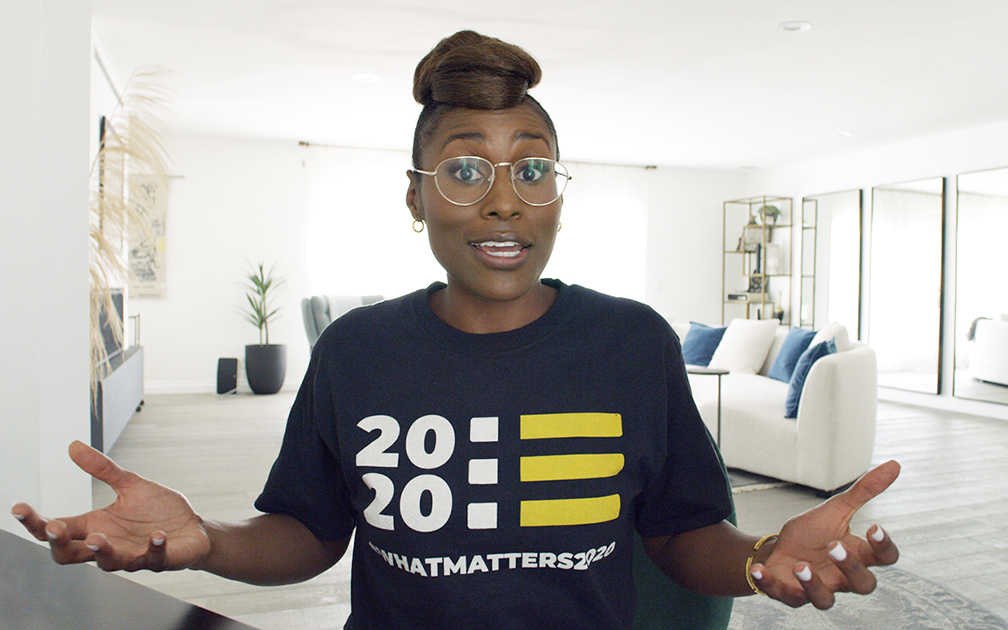
Issa Rae, the co-writer, creator and star of TV’s Insecure, is New Yorker Callie Josephson, who’s having a Zoom call with one of her besties. Callie is well-educated, well-heeled and very well-off, like her dad, a super-rich, super-successful Black businessman whose connections lead them both to an unlikely dinner at the White House. There Callie reconnects with someone she once knew as a little girl when they attended the same Manhattan prep school, where Callie mainly remembers Ivana Trump’s big, fake-y smile—and it haunts her.

CE_SP

Sarah Paulson

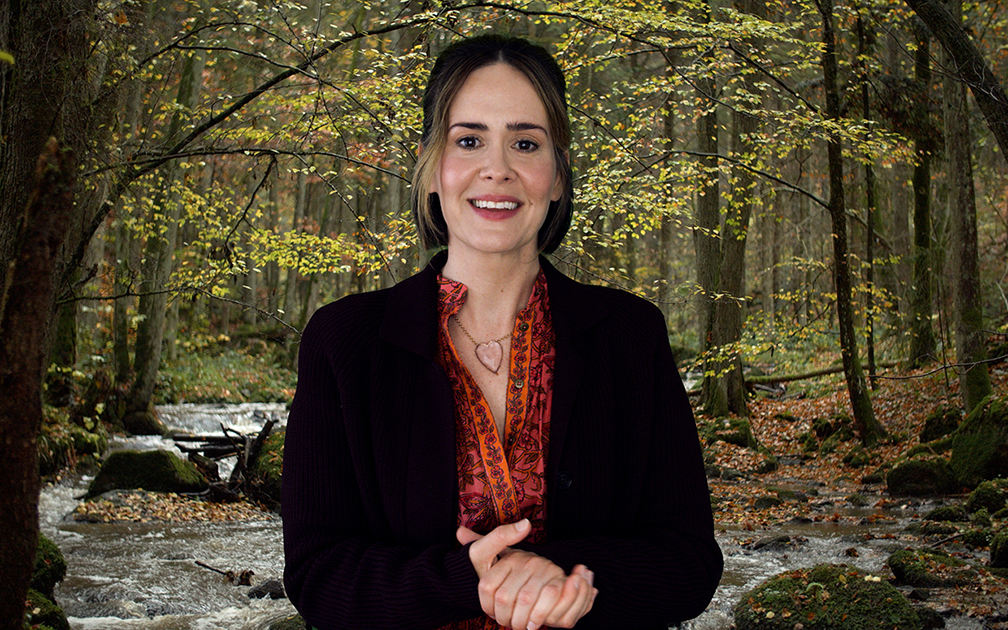
Sarah Paulson, whose many movie and TV credits most recently include Mrs. America and American Crime Story, plays Clarissa Montgomery, a soothing, self-styled motivational YouTuber who breaks down in the middle of a taping to tell viewers about an unsettling visit to quarantine with her extended family during the pandemic. Heading out of the city to rural Wisconsin, she recounts how she felt like a tiny fleck of blue flotsam in a sea of bright red, baited into traps by her overbearing Republican brothers. Then her father confesses something to her that floors her.

CE_KD

Kaitlyn Dever

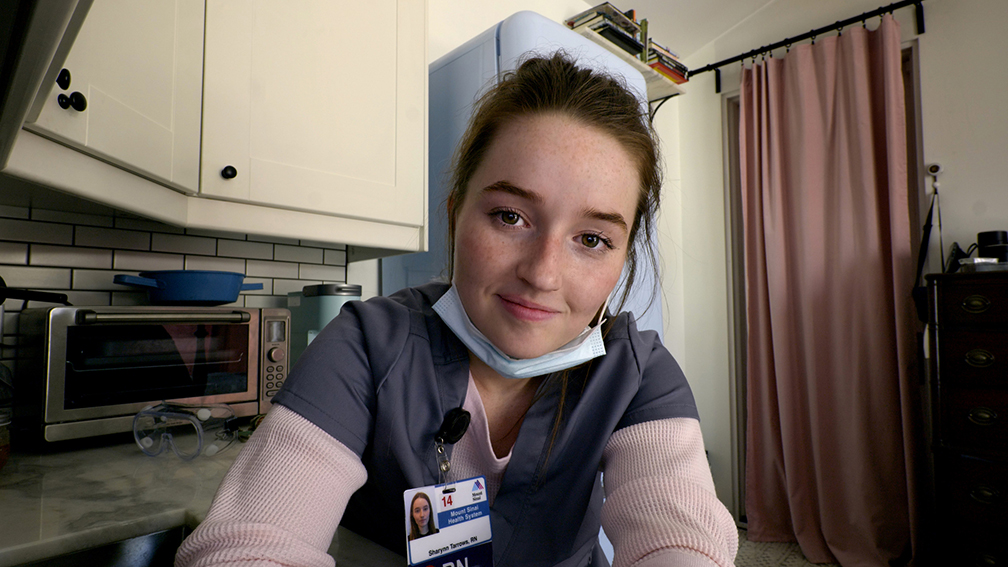
And finally, Kaitlyn Dever from Booksmart is a Sharynn Tarrows, a young nurse who’s flown in from Wyoming to work triage at New York City’s Mt. Sinai Hospital, ground zero in the pandemic’s hot zone. As she looks into the camera—we never know who, exactly, she’s talking to—she poignantly tells about meeting, treating and getting to know a certain patient who changes the way she looks at life—and the way she’s going to vote.

And then, that’s it—it’s over. Five characters, five mini-stories.

It’s a “satire,” yes, but this comedy has razor-sharp teeth. And the blood it draws, when it bites down to the bone, flows bright, bright red. So beware: If zingy political humor wrapped in barbed wire’s not your bag, maybe you should stay inland, away from these churning, deep-blue “coastal” waters.

The writing is brilliant, and the performances are perfection—no supporting players, no pros, just pure delivery and straight-up acting chops. Often the characters seem all too “real,” and the emotions too raw; if someone wanders in while you’re watching it, they might even think it’s a documentary, fact instead of fiction.

But it’s fiction wrapped in fact; audio of actual Trump quotes weaves in and out between each segment: “I’m a very stable genius,” “No one respects women more than Donald Trump,” “I know more about ISIS than the generals.” In such a surreal setting, we know the people we’re watching are actors, sure. But their characters are so representative, so tapped into this unhinged moment in time, this ghastly gestalt of global pandemic and polarizing politics—they seem like genuine people, people you might really know, really revealing themselves, unloading their concerns, responding to a world gone mad.

Because yes, the world really has going mad.

Coastal Elites won’t make the madness go away. No movie has that kind of mojo, alas. But it might make you smile and even laugh, here and there, make you feel a little less alone, help you look at some things with some renewed optimism and hope—and maybe make you stop cursing, for at least 90 minutes.


Road Trip Riddle

Jessie Plemons & Jessie Buckley take a mind-bending ride to crazy town

I’m Thinking of Ending Things
Starring Jessie Buckley, Jesse Plemons, Toni Collette and David Thewlis
Directed by Charlie Kaufman

Jesse Plemons & Jessie Buckley star in ‘I’m Thinking of Ending Things.’

A young woman and her new boyfriend set out in an Oklahoma snowstorm to visit his parents, but she’s already having misgivings about their relationship.

“I’m thinking of ending things,” Lucy says—or thinks, just after getting in Jake’s car. We hear her stream-of-consciousness thoughts, as the movie’s running commentary.

And Jake hears her thoughts too, apparently. “Did you say something?” he asks her.

“No… I don’t think so,” Lucy says.

So, Jake can hear what Lucy’s thinking? Weird. Indeed! And things quickly get even weirder, and then much weirder, in this mind-poking psychodrama from director Charlie Kaufman, who adapted the 2016 book of the same name by writer Iain Reid. I’m Thinking of Ending Things, Reid’s debut novel, a wild-ride, road-trip riddle, had fans in knots trying to unkink its puzzling plot and digest its haunting, gut-punch, brain-buster shocker of an ending.  

This movie is a brain-buster of its own, from a writer and director known for some cult-famously quirky films, including Adaptation, Being John Malkovich, the stop-motion Anaomalisa and the Oscar-winning Eternal Sunshine of the Spotless Mind, in which a couple undergoes a procedure to have each other erased from their memories.

But good luck erasing I’m Thinking of Ending Things from your memory, once you see it. And have fun figuring it out, too, an especially challenging task if you’re unfamiliar with the book. Kaufman’s creative overhaul of Reid’s novel is meticulously crafted to tease out its deep, dark disturbia of secrets.

It’s scary and unnerving and tense and edgy, but it’s not a horror movie—at least not exactly. Ominously bleak and yet sometimes lyrically, mystically beautiful, it shifts its tones like a dream you can’t control. And like a dream you can’t quite interpret, it’s certainly not an easy nut to crack. But it leaves clues, like breadcrumbs in a Grimm’s fairytale, sprinkled everywhere. If you like tackling movie mind games, try diving into this phantasmagoric golly-whopper.     

The centerpiece of the film is the visit of Jake (Jesse Plemons) and girlfriend Lucy (Jessie Buckley) to isolated farmhouse of Jake’s childhood, for what becomes a completely bizarro evening with Jake’s oddball mom and dad (Toni Collette and David Thewlis).

Plemons, so good in so many things—from TV’s Fargo and Breaking Bad to movies like The Irishman and Game Night—has a boyish face that looks like it was made for hiding something else, probably something devious and unsavory, which serves him well here. Buckley, so hugely impressive as a country singer in the movie Wild Rose (2018) and on HBO’s Chernobyl, is about to wow you again in the new season of Fargo. Already acclaimed as one the most promising young actors in her native Ireland, she plays Jake’s girlfriend (unnamed in the novel) as if Lucy is as confused and clueless as we are.

And Collette and Thewlis—you can’t take your eyes off them as they create a three-ring circus of master-class crazy, pulling things into a Twilight Zone-ish madhouse swirl of delirium.

Lucy gets ominous messages on her phone—even when she calls her own number. “There’s just one question…” a male voice tells her. But there are a lot of questions. What happens in Jake’s house? Why can’t Lucy remember much of anything? Who is the old man, a high school janitor, who seems to be spying on Lucy?

The movie is dripping with metaphysical concepts—physics, psychology, aging, suicide, death, desire, obsession, longing, regret, the meaning of life. As Lucy and Jake plow through the snowy night, they banter about authors, poets and philosophers, movies and music, reality and perception, and the car windshield wipers click out a rhythm, like the tick-tock of a clock. Lucy says she feels like time itself is moving through her, blowing like a cold wind…

And the wind is blowing especially hard when they make a stop at a creepy ice-cream stand, where the vibe is even more chilling than the freezing air. One of the servers gives Lucy an eerie warning with her milkshake: “I’m scared for you,” she tells her. “You don’t have to go.”

Go where? You’ll find out, as your neurons work overtime trying to process a finale that includes a pair of blue slippers, a dance in high-school hallway and a song from Oklahoma, Jake’s favorite Broadway musical.  

So, as the snow falls and the wind blows, bundle up, baby—it’s a cold, lonely world out there. You won’t snatch much feel-good comfort from the melancholy maw of I’m Thinking of Ending Things. But it’s a hyper-stimulating journey of the senses, a deep dive into the recesses of a wrinkled road map of the mind, to find out where the journey ends. And this devilishly dark gem of a demented dreamcatcher will remain lodged in your head a long time after the snow stops, the sun comes up and the puzzle pieces fall into place.

It’s no jolly joyride. But if you’re a fan of the way director Kaufman typically puts a wickedly unique spin on the world, sending things careening into complex, unexpected, crazy-town places, you may come to treasure this diabolically twisted, freaky, bleak-y, existential-enigma relationship movie—about a relationship that turns out to be, well, not the kind they make a lot of Broadway musicals about.

Sept. 4 on Netflix

‘Hearts’ Breaker

Riverdale‘s Lili Reinhart is brainy enigma in YA teen-savvy fantasy

Chemical Hearts

Austin Abrams and Lili Reinhart play high school seniors in ‘Chemical Hearts.’

Chemical Hearts
Starring Lili Reinhart & Austin Abrams
Directed by Richard Tanne
Not rated

Back in 2016, YA fans feasted on the debut novel by Aussie writer Krystal Sutherland, a kinda-love-story snapshot of two high schoolers whose quirky friendship turns to romance as their young brains surge with the complicated “chemistry” of attraction.

All those fervid readers are a prime audience for this new movie adaptation, which features leading performances from a couple of stars whose TV series are already hugely popular with young viewers.

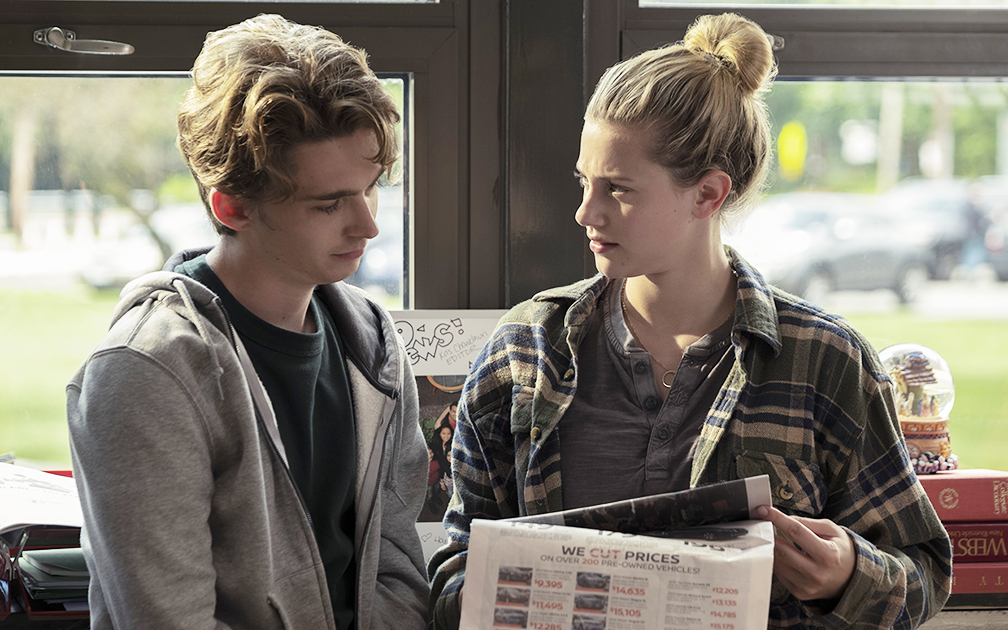
Fans of HBO’s teen drama Euphoria will likely recognize Austin Abrams as the recurring character of Ethan Edwards—but here he’s Henry Page, looking forward at the very beginning of his senior year to one main thing: finally becoming editor of his school newspaper. That’s where he meets Grace, a new transfer student, who comes aboard as his associate editor.

Grace is played by Lili Reinhart, who rocks the part of “Southside Serpent” Betty Cooper on Riverdale, the hit CW series based on characters from the Archie comics. Reinhart, no stranger to movies, either, has already appeared in Hustlers, Charlie’s Angels, Miss Stevens and Galveston.

Henry’s intrigued by Grace, who limps and walks with an aluminum cane, wears baggy boys’ clothes and has a car, but doesn’t use it. “I don’t like to drive,” she says.

That ambulatory riddle is just one of the enigmas of Grace, and Henry’s intrigue quickly turns to infatuation, then to something more.

Director Richard Tanne, whose only previous feature was Southside With You (2016), about the first date of Barack Obama and his future First Lady, Michelle, also wrote the script, and his sensitive, tactile, teen-savvy approach to Sutherland’s novel—titled Our Chemical Hearts—brings the characters to screen life in a way that makes them seem real, honest and true to how teenagers really talk, act, think and behave. And Reinhart and Abrams, both under 23 at the time of filming, still looked young enough to easily pass for high-schoolers just shy of their diplomas.

Chemical Hearts

The young cast includes Coral Peña, Kara Young and C. J. Hoff (with Abrams, second from right).

Using Sutherland’s template of literate, dreamy, brainy, poetic romance, burnished with the modern technology of texting, social media and music, Tanne creates a movie mood that will feel like both an escapist, teen-crush fantasy, as well as a vibrantly recognizable reality, to many young adults—and even to many not-so-young adults.

“Meet me here at six?” Grace asks Henry one afternoon, standing in the middle of the suburban street in front of his house. “And bring a loaf of bread.”

Henry does, of course, and that turns into what could be considered their first kinda-date, a trek to an abandoned factory where Grace leads him deep inside, finally wading waist-deep into a long-abandoned water garden. There she feeds a school of multi-hued koi, then gazes up through a skylight into the stars above—and lays a bit of cosmic heaviness onto Henry.

“People are just the ashes of dead stars,” she muses. “We’re just a collection of atoms that come together for a brief period of time, then fall apart.”

Falling apart, and breaking, is a recurring theme in Chemical Hearts, from Henry’s hobby—breaking pottery, then putting it back together with gold lacquer—to Grace’s limp.

And of course, there’s breaking hearts.

Grace points out to Henry that many literary classics in their high school library—Romeo and Juliet, The Catcher in the Rye, Ordinary People—are about broken, misfit, awkward, “scarred kids.” Being a teenager is “so painful,” she says.

During one particularly painful moment for Henry, his big sister (Sarah Jones), a nurse who’s studying to be a neurosurgeon, tells him that love “is a chemical reaction,” and that the surge of chemicals that make us feel good, like dopamine, as well as the ones that make our hearts ache, “come and go.”

A lot of things come and go in the capably crafted Chemical Hearts, and they probably won’t be terribly surprising to viewers familiar with the YA movie genre, a diverse field that includes The Fault in Our Stars, Me and Earl and the Dying Girl and The Spectacular Now. There’s a sensual, discretely handled sex scene; a Halloween party where a dejected Henry gets totally wasted, then lifted deliriously high out of his doldrums; a somewhat startling discovery; a dramatic, romantic, oh-so-meaningful kiss against the scenic backdrop of New Jersey’s Benjamin Franklin Bridge, followed by a montage of smooches in the school cafeteria, the library and the hall; and a cascading soundtrack of totally rad, contemporary Pandora-ready tunes by artists like The XX, MEDUZA, Tinashe, Perfume Genius, SYML, Black Marble and Sharon Van Etten.

Chemical Hearts

I won’t give away any spoilers, but you’ll find out why Grace wears those baggy clothes, why she uses that cane, why she never invites Henry to come over to her place, why she doesn’t like to drive, and why the song “Take Care” by Beach House makes her sob.

You’ll find out there are scars of all kinds, and that love, like chemistry, can be complicated indeed. And you’ll discover why Chemical Hearts’ Lili Reinhart and Austin Abrams are clear front runner for the year’s hottest YA couple—no, they probably won’t win any Oscars, but come the next MTV Awards, trust me, they’ll be shoo-ins for Kiss of the Year.

Available Aug. 21 on Amazon Prime

The Future is Now

Ethan Hawke brings tale of overlooked visionary inventor whirring to hip, flip movie life

20190520_Tesla_CH_0037.CR2

Tesla
Starring Ethan Hawke, Eve Hewson, Kyle MacLachlan & Jim Gaffigan
Directed by Michael Almereyda
PG-13

Chances are you don’t think much about what happens when you flip on a light, turn on an appliance, talk on your smartphone or casually change your TV with the remote.

But Nikola Tesla did—a long, long time before those things ever became things.

Director Michael Almereyda brings the story of the visionary—and largely overlooked—inventor whirring to life in this fluid and freewheeling biopic, which shows how Tesla, an immigrant from the Austrian Empire, arrives in America in the late 1800s determined to put his dreams and his ideas to work.

Specifically, and most significantly, Tesla believes that electricity can be conducted more efficiently—and more safely—through “alternating current,” or AC, than through surging direct current, or DC. He just has to design a machine that can do it. This puts him at odds with America’s greatest inventor and capitalist, Thomas Edison, who’s rushing to get his DC electrical inventions into homes and cities.

It’s no coincidence that the movie begins with Tesla (Ethan Hawke) on roller skates, setting off for a leisurely spin across the floor of a stately sitting room, glancing both behind him and ahead. This lyrical, artful movie itself glides across time and plays fast and loose with its moorings; it’s never content to stay in one place—namely, the past. Tesla was all about the future—a future where feats of science and engineering would “do the work of the world [and] set men free.”

Tesla 2

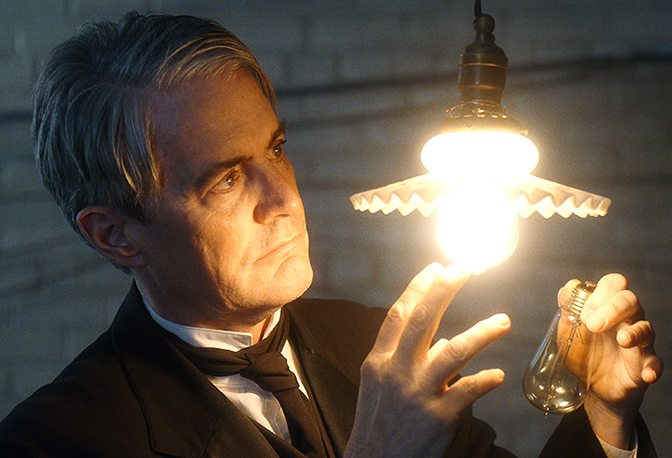
Kyle McLachlan as Thomas Edison

And likewise, this jazzily innovative cool-cat movie looks ahead, in ways that remind you that Tesla’s “future” is indeed now, and we’re using many inventions that were born from his ideas. A haughty Thomas Edison (Kyle McLachlan, channeling some unmistakable Twin Peaks vibes) casually pulls out an iPhone at a bar. The daughter of super-wealthy Wall Street tycoon J.P. Morgan (Donnie Keshawarz), the headstrong Anne Morgan—played by Eve Hewson, from TV’s The Knick and The Luminaries—often pauses to flip open her MacBook and take us through Google search results about Tesla and other characters as she narrates.

And Anne carries a torch for Tesla, one that never heats up beyond a smolder. She’s the movie’s “love interest” that never really finds love, only admiration, forever trying to break through to the heart of a man totally consumed by what’s going on in his head. In an early scene, where she first meets Tesla, she’s fascinated by his invention, a tiny object that generates electricity by magnetic fields instead of moving, whirring parts that create friction, things that actually touch and connect. Tesla’s electricity is clean and safe, no friction, no sparks; nothing to rub against anything else, nothing to generate heat.

And no sparks, no friction, no heat, Anne comes to realize, is a bit too chilly for her.

Tesla 6

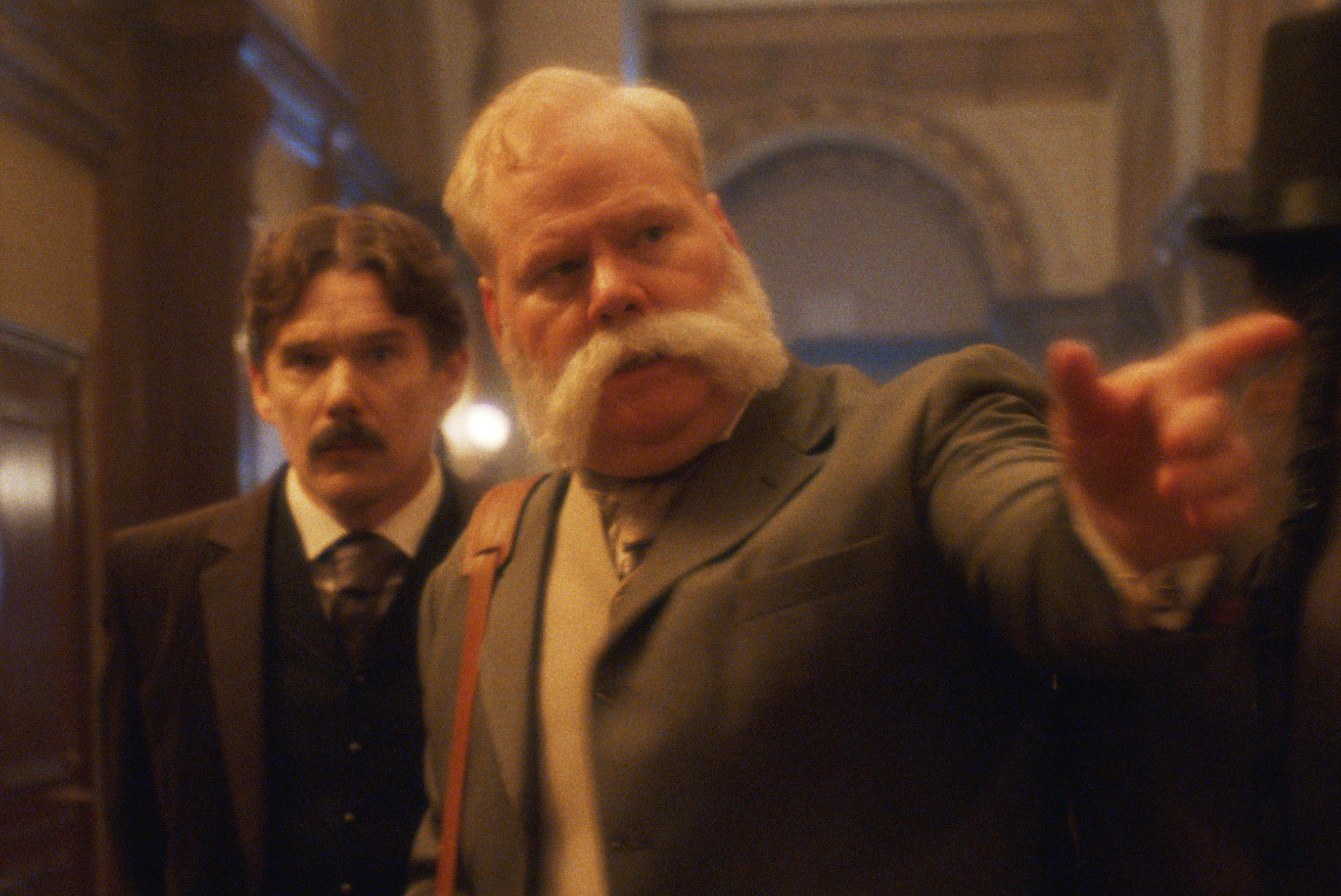
Railroad tycoon George Westinghouse (Jim Gaffigan) takes young Tesla under his entrepreneurial wing.

Jim Gaffigan waltzes in, his face almost overtaken by a bushy walrus moustache and enormous muttonchops, as railroad industrialist George Westinghouse. Former model Rebecca Dayan provides some electrical sizzle of her own as the French stage-actress Sarah Bernhardt, an international touring sensation with whom Tesla is positively starstruck.

Tableaus played out “seriously” against obviously fake backdrops of outdoor scenery—Niagara Falls, the Colorado sky, a train depot, the 1893 Chicago World’s Fair—remind us that we’re watching reenactments being tweaked, manipulated and flexed, like in a pageant or a play. Anne helpfully reminds us when something we’re seeing that “almost certainly didn’t happen that way,” reinforcing a film-festival statement from the director that one of his influences in making Tesla was TV’s Drunk History. It’s a safe bet, for instance, that Tesla never smooshed an ice cream cone into Thomas Edison’s face, or grabbed a microphone and laid down an off-key karaoke groove to a popular ‘80s—and I’m talking 1980s, not 1880s—tune with lyrics uncannily right-on about the power struggles of the industrial conglomerates of his day wanting to “rule the world.”

Hmmm…maybe Tesla really could see the future.

Anne Morgan (Eve Hewson) sometimes uses a laptop (!) to aid her narration.

It’s a hip, flip, time-twisting trip, and Hawk—an extremely versatile, often-overlooked actor whose impressively varied career spans films of just about every kind of genre, from slow-burn indie dramas to gritty cop thrillers, immersive musical biopics and chilling horror flicks—intensifies this mesmerizing portrait of a largely forgotten inventor genius by underplaying him, drawing us inward to ponder the deep, churning energies underneath his quiet surface.

Tesla knew that his innovations—advancements that today live in technologies from x-rays and MRIs to florescent lights, wireless communications and laser beams—would shake up the world, perhaps even change it forever. He boldly predicts the impact. “Humanity will be like an anthill stirred with a stick,” he confidently proclaims.

This trippy livewire of a movie suggests a modern world dreamed to life by an immigrant visionary a century ago, a man some of his contemporaries tried to dismiss as a mad scientist, an enigmatic Euro-crackpot who sometimes babbled about talking to planets and photographing thoughts. But Tesla’s clean, alternating AC/DC won the “current war,” and his accomplishments factor into just about everything we do today—even if most people may know his name.

At one point, Anne asks him what he would do if his dreams ever came true.

“All of my dreams,” Tesla replies, “are true.”

Indeed, they are, or were—eventually, if not in his actual lifetime. But Tesla the movie creates a world teeming with ideas where the inventor and his inventions, the dreamer and his dreams, actually do fuse together, at least temporarily, for one time out of time and in one crazily, wildly inventive place.

In select theaters, and available on digital/VOD, Aug. 21, 2020

Bombs Away

Gripping new doc commemorates the explosive 75th anniversary of the end of WWII

Apocalypse 45_ss2
Apocalypse ’45
Directed by Erik Nelson

On Aug 14., 1945, the fighting in World War II came to an end.

A few weeks later, on Sept. 2, on the deck of the battleship U.S.S. Missouri in Tokyo Harbor, it was official, and Japanese officials signed their country’s unconditional surrender, bringing the global conflict to a close after four gruesome and exhausting years.

Apocalypse ’45 recounts the final year of the bloody conflict in the Pacific, where Japan—even after Germany had already surrendered, months earlier—vowed to continue to fight to their last man, woman and child, even though they knew the war was lost.

This quite remarkable film brings the final year of the Pacific conflict “alive” with newly restored materials from the National Archives, most of it never before seen, and the enhancement of new sound effects. And it becomes especially monumental and moving, on the week of 75th anniversary of the end of World War II, with its use of voices of actual U.S. military veterans who served in the Pacific.

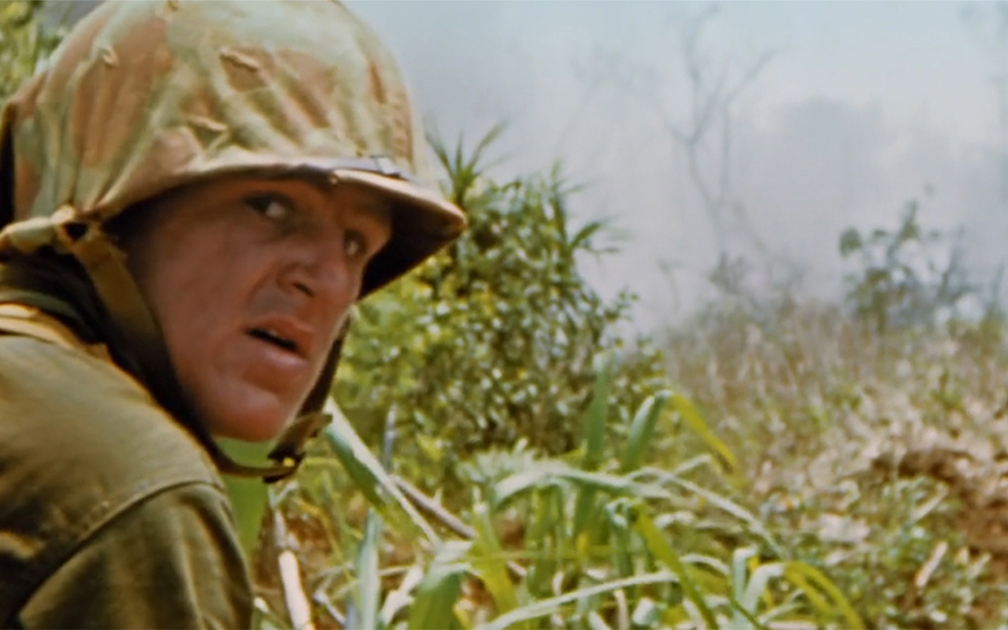
The number of living World War II veterans is dwindling nearly every day, but director Erik Nelson found 24 men whose words provide a first-person, you-are-there narrative of war from the people who were in the middle of it—the sailors and soldiers and airmen, who recall vicious ground combat at Okinawa, terrifying suicide blitzes by Japanese kamikaze pilots, and the victorious, iconic flag raising after the hell-on-Earth campaign to take of the island of Iwo Jima.

Saving Private Ryan? Full Metal Jacket? Dunkirk? 1917? Apocalypse Now? All great war movies, sure. But not in the same league as this—because this is about as real as a war movie gets.

Taps (John Ford Image) (72)The veterans talk about being frightened, about watching their buddies get blown to bits, and about being young men, sent to the other side of the world on a do-or-die, kill-or-be-killed mission—against an enemy who was fully prepared give up his life in order to take their’s. The interviews provide the film’s dramatic foundation as we watch scenes of brutal combat and carnage, sailors on aircraft carriers and battleships, dangerous and deadly aerial dogfights and, ultimately, the devastation of the atom bomb dropped on Hiroshima the morning of Aug. 6, 1945, which killed some 150,000 men, women and children. Another bomb, dropped on the city of Nagasaki, finally led to the end of the Japanese resistance less than a month later.

Ah yes, the bomb. The specter of the bomb frames the movie; the film begins with a prelude about the bomb, and it then marches steadily toward the war’s concluding chapter. It wants us to think long and hard about the atomic bomb, America’s original weapon of mass destruction. Military officials knew it would level the entire city and kill countless civilians; the movie notes that its use was not without controversy. Newsreel footage by an American medical team, taken in Hiroshima the following year, shows the ghastly after-effects.

The bomb ended the war—and started the so-called “nuclear arms race,” an era in which many wary nations worried about which other nation might drop the next atomic device. As one veteran notes, “It put us in the position of, ‘We’ve dropped an atomic bomb,’ so now anyone else in the world can drop an atomic bomb.” The end of WWII ushered in the beginning of a new era, an era of even more potential destruction and existential dread, an even wider Armageddon.

The film opens with the words of someone talking, then singing a 16th century Japanese ballad, an ode to peace. We find out his name is Itsei Nakagawa, and that in 1945 he was a Japanese teenager trapped in Hiroshima with his family the day the city was obliterated. We meet him again, at the close of the film.

Iowa Jima vets at WWII Museum.

Iwo Jima vets at WWII Museum.

The movie never otherwise identifies its two dozen narrators—at least not until the end, when they’re all introduced individually, telling us who they are, when and where they served, and finally appearing side-by-side with vintage photos from their military youth. It’s one of the film’s most poignant segments.

Director Nelson, a frequent collaborator of noted German filmmaker Werner Herzog, has an esteemed pedigree as a documentary producer and director. He produced Grizzly Man (2005), about an Alaskan grizzly bear activist, which swept film festival awards; and he combed through some 15 hours of “lost” Hollywood film footage for his 2018 HBO documentary The Memphis Belle: A Story of a Flying Fortress, about the B-17 bombers of World War II.

With Apocalypse ’45, he’s made a gripping, emotional snapshot of history and heroism that honors the greatest day of World War II—the day it ended—and a precious handful of the men who made it possible. A stately, somber reminder of the soul-scarring god-awfulness of war and its catastrophic consequences, it’s also a heartfelt salute to those who answered the call of something much bigger than themselves.

“We all had different religions, different faiths, different political positions,” one vet tells us at the beginning of the film. “But the most important thing of all was being American. We were unified in that. That gave us strength. We were one in those days.”

As we remember those days, 75 years ago this summer, Apocalypse ’45 is a powerful reminder of a war that changed the world—and the men who helped bring it to an eventful end, and lived to tell the tale.

In select virtual theaters Aug. 15, and Sept. 2 on the Discovery Channel

Rip Van Pickle

Seth Rogen doubles down in surprisingly sentimental satirical comedy

Pickle Day 06

An American Pickle
Starring Seth Rogen
Directed by Brandon Trost

Worlds collide in Seth Rogen’s new movie.

A fanciful tale of past meeting present, it’s a comical, century-spanning social satire in which he doubles down to play two roles—and strides confidently into new movie territory.

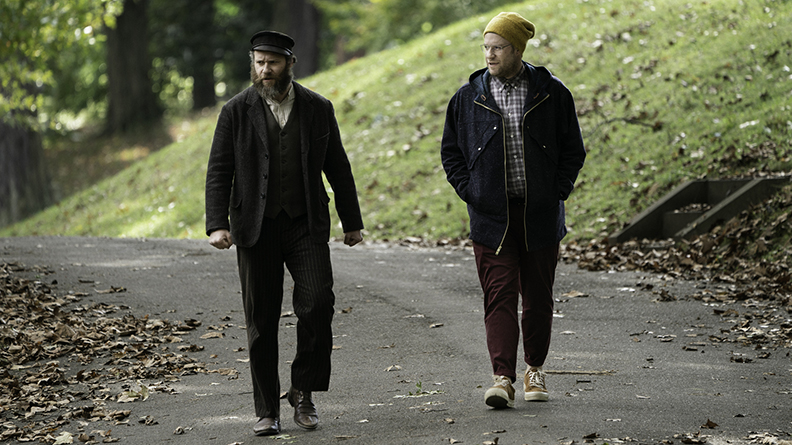
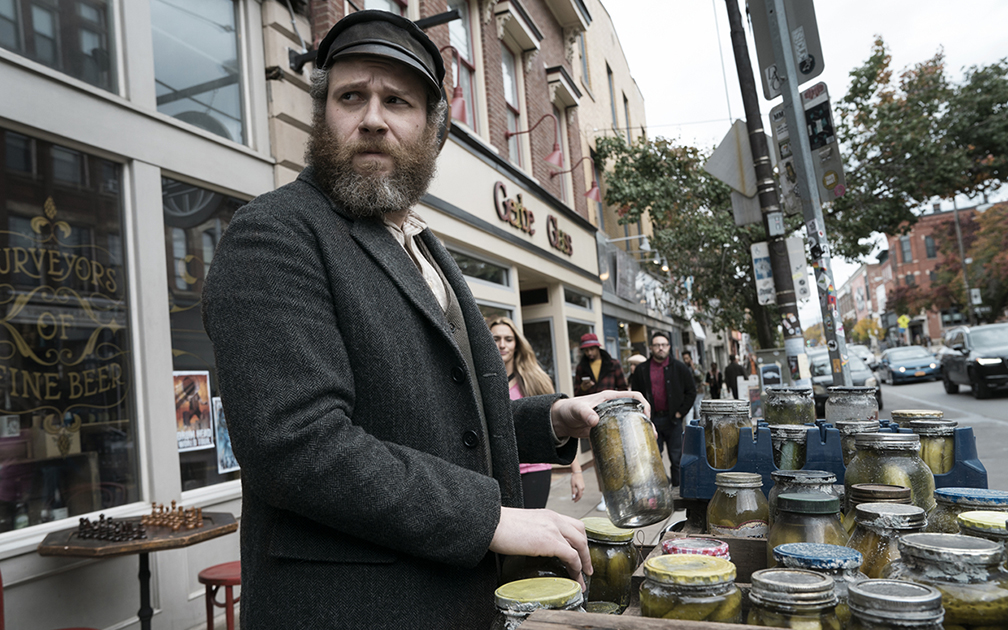
First, he’s Hershel Greenbaum, an immigrant worker from Eastern Europe whose American dream is cut short when he falls into a vat at a Brooklyn pickle factory. Nobody knows Hershel is inside when he’s accidentally sealed into the oversized wooden barrel just as the factory is condemned and closed, leaving poor Hershel there to marinate, with cucumbers and salt, for 100 years.

When he’s discovered in the present-day 21st century, well-brined but miraculously alive, preserved and otherwise hale and healthy, he’s is a medical miracle, a time-traveling curiosity suddenly adrift in a strange new world of the future.

That’s the setup for An American Pickle, a contemporary comedic upgrade on Washington Irving’s classic tale of Rip Van Winkle, the early American colonist who dozed off for 20 years, woke up and discovered he’d missed the whole American Revolution. You might think of Hershel as Rip Van Pickle—a whole century of life in America has gone by while he’s been hibernating in brine, and everyone he ever knew is long gone, including all his relatives…except one.

Hershel is overjoyed to learn he has a great-grandson, who happens to live nearby.

Pickle Day 10

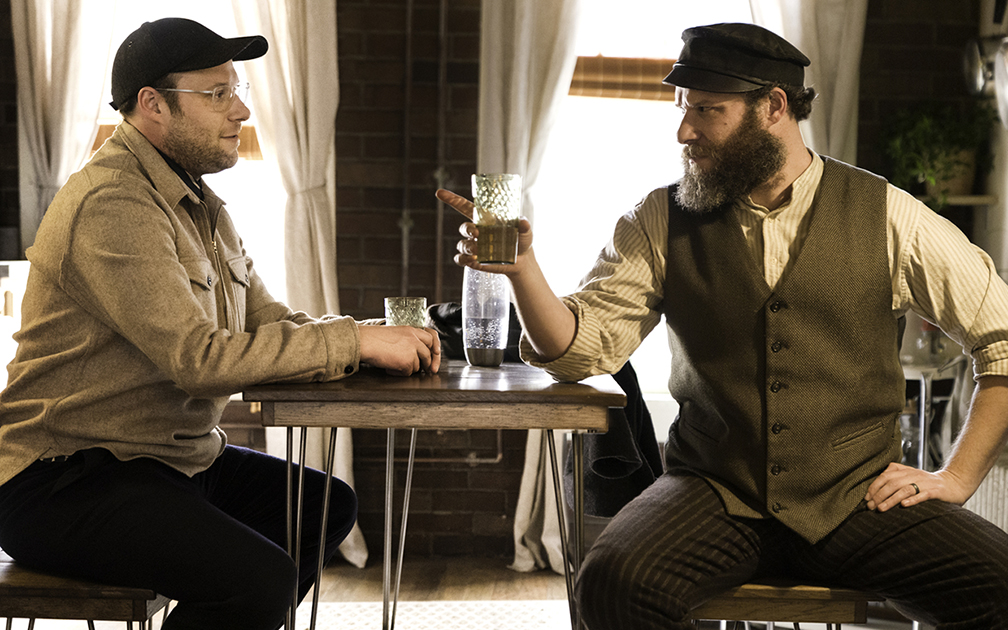
Rogen also plays Ben Greenbaum, a single, struggling freelance software developer—who’s about the same age as his great-grandfather, just wearing much trendier threads, and living in an apartment with everything remote-controlled by Alexa.

Ben, whose parents are deceased, never thought he’d reconnect with another offshoot of his Greenbaum family tree—especially one who was born more than 130 years ago.

Though he’s appeared in other films, like the biopic Steve Jobs, Rogen is best-known for playing stoner-schlub-slacker characters in such broad, raunchy comedies as Pineapple Express, This is the End, Neighbors, Long Shot and The Night Before.

An American Pickle is a kinder, gentler comedy than any of those, as Ben offers Hershel something to drink from his fridge—macadamia milk, cashew milk, maybe pea milk. “They’re milking everything these days!” he tells his bewildered great-grand-dad. Or when Ben introduces Hershel to “oldies” music, coaxing him to clomp, horah-style, to the 1960s Maurice Williams and the Zodiacs hit “Stay.”

Ben, we learn, has been working for five long years on an idea for a product launch, an app that lets consumers check out the ethics of products and companies before they make a purchase. Hershel, not surprisingly, doesn’t understand apps—or why it’s taking Ben so long to decide on a logo color, or to submit his idea.

Hershel has what he thinks is a much better idea, about a business that he and Ben can do together—and Ben and Hershel find themselves in a real pickle, a predicament of a disagreement that quickly deepens into rift and resentment. How will these two Greenbaums, from two different cultures, different countries and different centuries, ever get along?

Everything leads to a subversively witty lampoon of business and competition, a wickedly funny satire on the dangerous double edge of fame and a timely parody about how easily someone can rise to the top, then crash and burn in America, the venerated land of opportunity.

Pickle Day 02

Rogen, who’s often been pigeonholed as an actor, does a refreshingly adept job in both roles—characters so vastly, obviously different, and yet also so alike, so irrevocably connected by their very roots. Director Branton Trost, Rogen’s comedic collaborator on several previous films, hones in on the funny, and also the tenderness, as Ben introduces Hershel to present-day New York City, his life and modern wonders—scooters, taxicabs, racial diversity, kosher hot dogs, and why on earth any human, with only two feet, would need more than 25 pairs of socks.

And the special effect, combining both characters into the same frame, is done so cleanly and seamlessly, you’ll forget you’re actually watching one actor in two roles at the same time. That, in itself, is a modern marvel.

An American Pickle is a comedy, sure, but its sentimental silliness is built on a heartwarming foundation that might surprise you—especially if you come to the film expecting the kind of guffaws you usually get from a Seth Rogen movie. This is a more mature, more grown-up comedy—one that happens to be delightfully clever, pointedly sharp and charmingly funny—with an unmistakable underpinning of (get ready now) family and faith, one that it tweaks gently with a few jokes but ultimately takes very seriously, and with much sensitivity. Hershel’s old-world Orthodox Judaism is a major part of the story, as is Ben’s lack of religious affiliation and his apparent abandonment as an adult of his Jewish heritage. (“I had a Jumanji-themed bar mitzvah,” he mumbles sheepishly to Hershel.)

And Ben’s late parents factor significantly into the story in a way you won’t learn about until near the very end.

Clearly, this pickle fable has more than just pickles—or goofball laughs—on its plate.

“It’s never too late to do things differently,” a young business prospect tells Ben. Rogen does things a bit differently with An American Pickle, double-decking genuine laughs with well-earned warmth for a wholly satisfying modern folktale about family, faith, pickles—and the power of letting things that can keep us apart instead bring us together.

Available Aug. 6, 2020, on HBO Max  

Forbidden Love

The sweet surprises of a charming little WWII British seaside romance—with a twist

Summerland Feature Film Stills by Michael Wharley

Summerland
Starring Gemma Arterton, Gugu Mbatha-Raw, Tom Courtenay & Lucas Bond
Written and directed by Jessica Swale
PG

British actress Gemma Arterton got her big break in the movies as ill-fated “Bond girl” Strawberry Fields, an intelligence operative in Quantum of Solace (2008) opposite Daniel Craig.

Compared to that Bond blockbuster, Summerland is a much smaller, much more genteel film, but it certainly provides Arterton a far bigger role—and it’s a project that obviously means more to her personally, as she’s one of its executive producers.

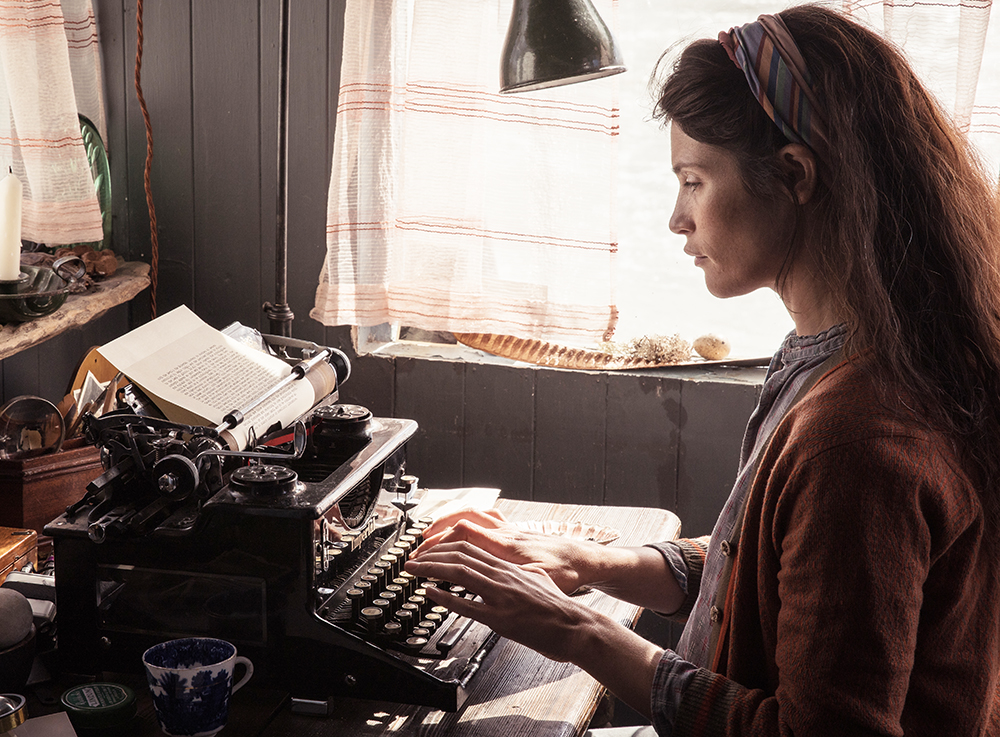
She stars as Alice Lamb, a reclusive writer holed up in her seaside cottage in Sussex, England, comfortably distanced from the ravages of World War II across the Channel. Alice is content—even though the locals think she’s a bit of a reclusive, prickly oddball, and prankish children whisper that she might be a Nazi spy, or even a witch—as she tends her garden and pours herself into her latest literary project, researching the connections between folklore, mythology and science.

And she certainly isn’t all-aboard when a young moppet boy, Frank (Lucas Bond), shows up one day, literally at her doorstep—he’s a refugee from London, about an hour away, which is being bombed in nightly air raids by the Germans. As part of the English war effort, as many children as possible are being evacuated and temporarily resettled with host families in safer havens, like Alice’s coastal hamlet.

Alice protests that Frank will interrupt her routine and her work. “We’ve all got to do our bit,” the local schoolmaster (veteran British actor Tom Courtenay) tells her.

Summerland Feature Film Stills by Michael Wharley

As Alice and Frank gradually warm to each other, Summerland gradually widens and deepens. Conversations about Alice’s writing and research lead to discussions with Frank about afterlife, and how Alice doesn’t believe in heaven. “It was just made up by the Christians,” she says. “People want to have something to believe in—like magic, or God. Hokum, all of it.” Pre-Christian pagans, she says, had a concept of Summerland, a layer of “restless souls” that ancient mariners had stories of seeing as an island floating above the water.

Alice is convinced there’s a basis in science, or fact, or some real-life experience, for the legends of Summerland—or just about anything. “Stories have to come from somewhere,” she says.

And Alice has her own story, one she’s kept hidden from almost everyone—a love story that’s at the very heart of Summerland. We see it in unfolding in flashbacks, and when she finally reveals it to Frank, it’s both glowingly beautiful and wrenchingly sad.

“Would you think it was strange,” she asks him, tentatively, “if a woman loved another woman?”

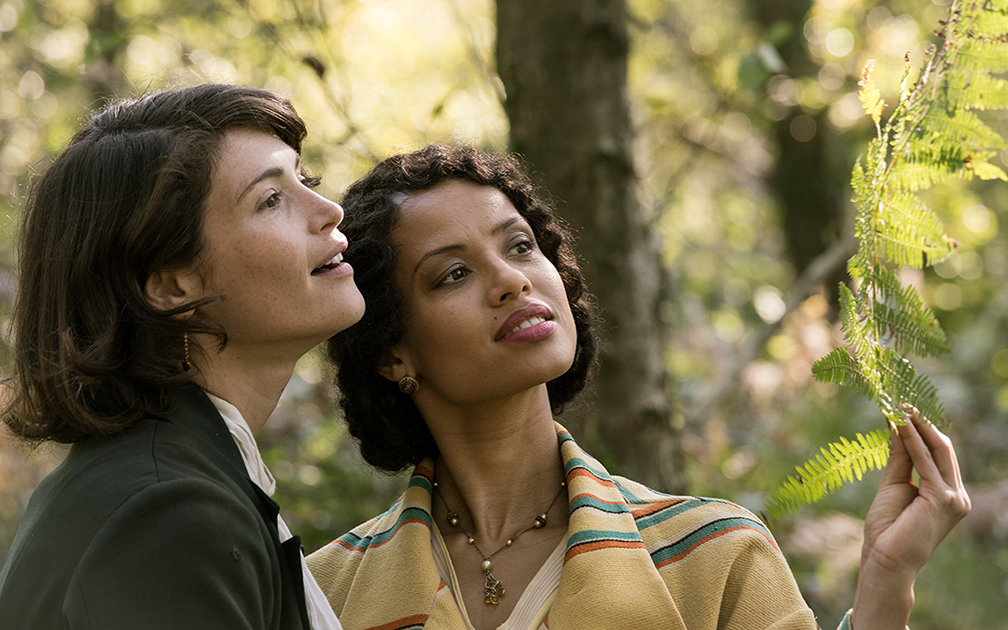
The other woman is Vera (Gugu Mbatha-Raw, from Apple TV+’s The Morning Show), and the “forbidden” same-sex relationship between her and Alice, back in the 1920s, was made even more forbidden because of the brown color of Vera’s skin. Their breakup—and the reason why—devastated Alice.

Summerland Feature Film Stills by Michael WharleyFrank tells Alice he doesn’t understand why anyone would think it’s strange for two women to fall in love, and Alice sheds a tear for his innocence—and for the harshness of the world he has yet to encounter.
The movie doesn’t dwell on the era’s resistance to the sapphic relationship between Alice and Vera. But the message is clear—especially to women who know what it feels like to live in a world—in any era, under any circumstances—that wants to box them in, box them up, box them out or simply classify them as “a temptress or a virgin,” as Alice says, “bound to get blamed for something.”

In one flashback scene, when Alice gets a door slammed in her face, cutting her off from Vera and her family, the sound will ring like a painful slap to women, anywhere, everywhere, who’ve ever felt the sting of rejection and dismissal, of being made to feel invisible, unwanted or unnecessary.

Penelope Walden (Isabel Crawley on Downton Abbey) plays “present-day” Alice, and young Dixie Egerickx is Edie, Frank’s tomboyish schoolmate, who—like Alice—doesn’t quite “conform to the feminine ideal.”

Summerland is the feature debut for writer-director Jessica Swale, an award-winning playwright now making the transition to film; both Arterton and Mbatha-Raw have starred in her stage productions. Proudly fem-centric—with women as the surging creative force of its substance and the focus of its story—this “little” independent film has a lot of big things on its mind: female independence, imagination and intellect; life, death and the power of love; and the beauty of all loving relationships.

Stories have to come from somewhere, but they have to go somewhere, too—and where Summerville goes will likely surprise you, wrapping up World War II, model airplanes, Viking funerals, floating islands, the clackety-clack of a typewriter and a span of many decades into the warm hug of a cozy conclusion.

It’s certainly not James Bond, but it is a great piece of romantic escapism for anyone who wants a well-mannered British drama with a huge heart, good humor, lovely ocean-side chalk hills scenery and a feel-good message that reverberates across time, as powerful and as potent as ever.

Available Friday, July 31, on digital and cable

Watch Out

Dave Franco’s directorial debut is a cautionary tale of sicko high-tech horrors

The Rental
Starring Alison Brie, Dan Stevens, Jeremy Allen White & Sheila Vand
Directed & co-written by Dave Franco
R

Rental_AR_05.24.19_154.ARW

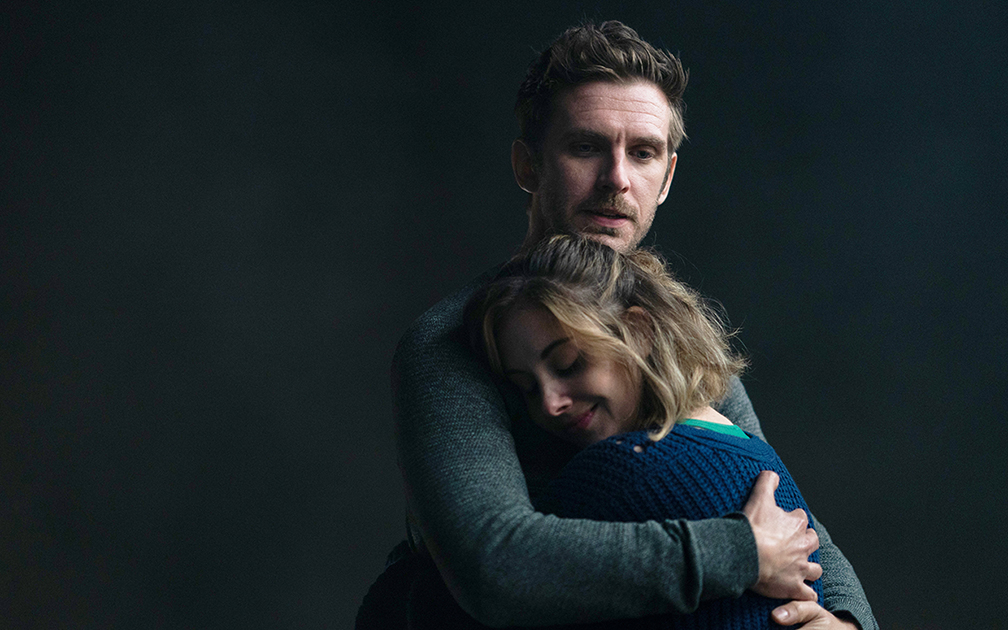
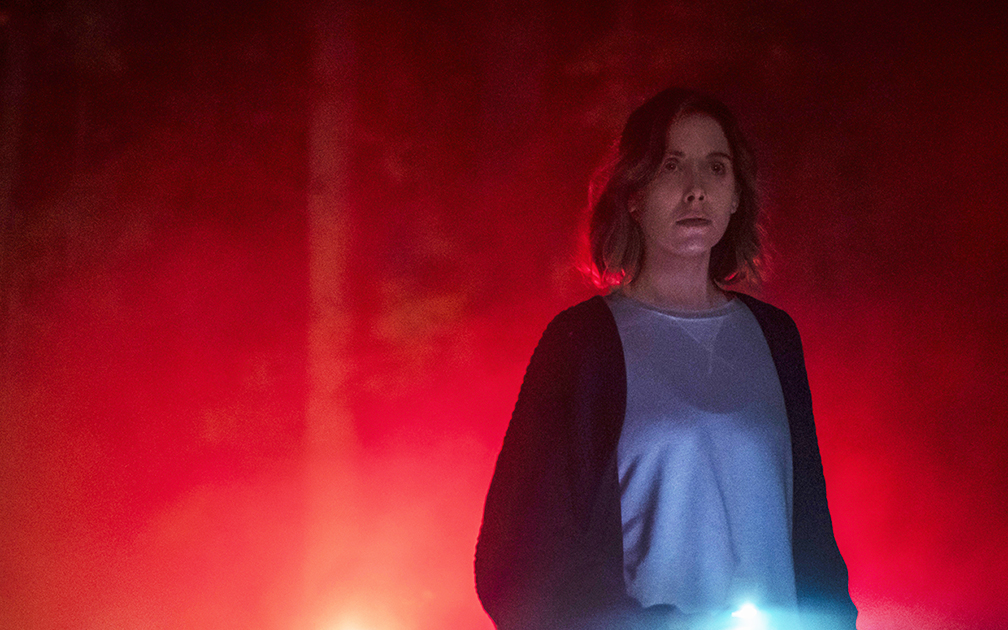
Dan Stevens and Alison Brie star in ‘The Rental.’

Who’s watching you?

In this day and age, the answer is more likely than ever to be anyone, with surveillance cameras, drones, doorbell cams and every other kind of doodad capable of peeping into our personal spaces. Spy gadgets are a booming industry. That guy’s ink pen—it’s got a tiny camera in it. So does that smoke alarm, those sunglasses and that clock.

This terrifically tangled little nerve rattler of a horror movie takes that thoroughly modern idea and melds it to some sturdy, old-fashioned ‘80s slasher vibes as it zooms in on two young city couples who decide to haul out of town for a fun weekend getaway.

Rental_AR_05.23.19_234.ARW

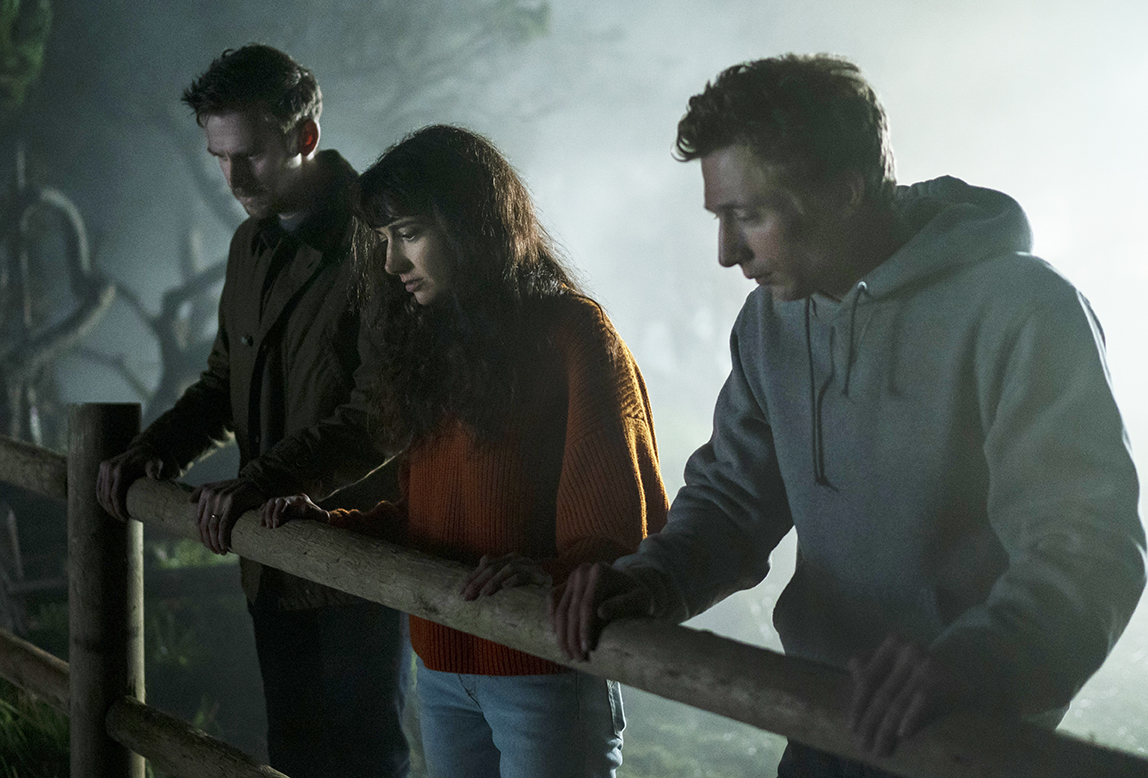
Charlie (Dan Stevens), Mina (Sheila Van) and Josh (Jeremy Allen White) on the edge of a taking a bad decision and making it even worse.

Snatching up a sweet deal on a lovely seaside vacation cottage rental, Charlie (Dan Stevens) books it for a weekend with his wife, Michelle (Alison Brie), and his little brother, Josh (Jeremy Allen White), and his girlfriend, Mina (Sheila Vand).

But right off the bat, there are signs of trouble, beginning when they arrive and meet the creepy property owner (Toby Huss, recognizable to Reno 911! fans as Big Mike) who gives off racist vibes that unsettle Mina, whose brown skin makes her stand out from her whiter friends.

And all the “bro” jokes and joshing between Charlie and Josh can’t mask the fact that Charlie thinks his little brother—who got kicked out of college and spent time in jail—is a first-class screw-up. Josh, meanwhile, confides to Michelle that he’s just a little bit jealous of all the time her husband spends with Mina; she’s Josh’s girlfriend, but also Charlie’s business partner.

Add a steamy hot tub, some Ecstasy and a couple of flirty indiscretions, and suddenly this friendly little weekend frolic feels like it could be doomed for disaster.

Especially, after one of those indiscretions, they find a hidden camera in the shower—and a dead body ends in the bathtub.

As the movie heads into its super-serious scares, it’s in the capable hands of Dave Franco, who builds on his years of acting experience to now hop behind the camera for this most impressive debut as a director. Franco is probably best known for his comedic film roles in Neighbors and its sequel; the 21 Jump Street franchise; and three Now You See Me flicks, in which he played magician Jack Wilder, a master of misdirection.

He certainly pulls off another misdirecting act in The Rental, taking a story about four more-or-less normal, imperfect but somewhat sensible people, putting them in a not-so-unusual situation, slowly torqueing up the tension—and then ratcheting everything into a full-blown horror show, with a real sicko jaw-dropper at the end.

I don’t want to give too much away, but it’s got a bit of Psycho as well as Friday the 13th coursing through its nasty-fun, fright-night veins, and it not only wants to make you jump, it wants to make you think—about mistrust, how bad decisions lead to more bad decisions, and particularly about the scariness of this modern world, and who might be watching everything you do, anytime, anywhere.

Rental_AR_06.01.19_163.ARW

Alison Brie

The small ensemble cast has a great pedigree. It’s terrific to see Brie, from TV’s GLOW and Community, get to stretch out in a movie. Stevens further expands his growing resume beyond Downton Abbey, Beauty and the Beast and the television series Legion. Shameless fans will recognize White as that show’s wastrel son, Lip Gallagher. And Vand’s most recent role is night-car passenger Zarah Ferani on TV’s Snowpiercer.

Franco—who’s been married to Brie since 2017—and his actors create a situation in which we can relate, mostly, to these characters, their flaws and their reactions to something that becomes a perfect storm of isolation, paranoia, lies, frustration and fear—of someone who sees them, but they won’t see until…well, you’ll have to wait, and see for yourselves.

Franco wants us to “see” that people aren’t always who they seem to be, that none of us may be who we want others to think we are, and that perhaps we can’t always trust…well, almost anything.

Especially the showerhead in a vacation rental.

The characters talk, a couple of times, about “peeping toms.” It’s almost a running joke, who’s watching who. Who’s watching you? I guarantee, after sitting through the final minutes of the The Rental, and the very final scene—which may very well leave you breathless—you won’t think it’s so much of a joke.

At select drive-ins and theaters, and On Demand July 24, 2020


High Hopes & Hoop Dreams

Basketball drama gives Ben Affleck his most personal role yet

THE WAY BACK

The Way Back
Starring Ben Affleck, Al Madrigal, Michaela Watkins & Janina Gavankar
Directed by Gavin O’Connor
R
In theaters Friday, March 6, 2020

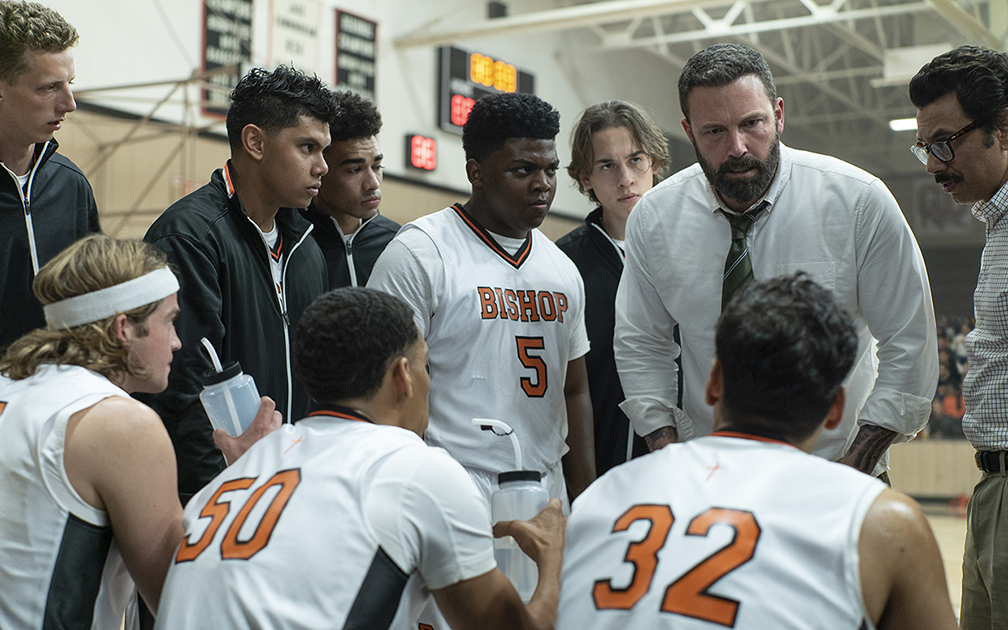
In this hoop-dreams underdog tale, a washed-up former high-school basketball star comes back to his old alma mater to coach its ragtag team. Can he turn these losers into winners—and shake off the ghosts of his own troubled past?

OK, ok, ok—you’ve seen this movie before, right? But you really haven’t.

The Way Back sounds like a sports cliché. And it is, in a way that’s pretty unavoidable—especially for any movie that dares to step into the long shadow cast by the iconic Hoosiers (1986). But it’s actually structured around something else, a stirring human drama that transcends its basketball story.

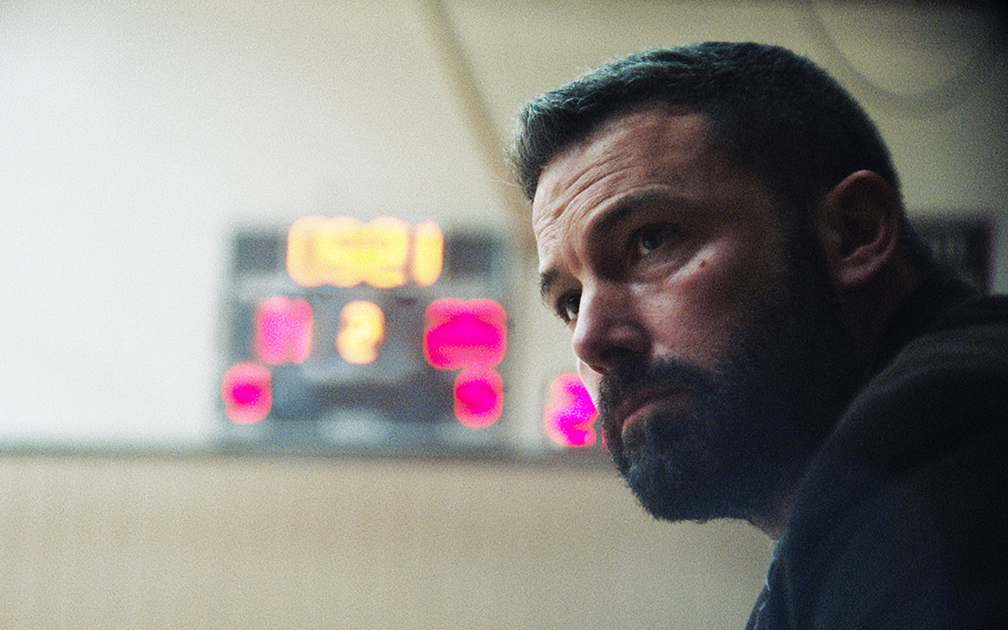
Ben Affleck stars as Jack Cunningham, whom we meet on his dead-end construction job in Los Angeles. The first thing we learn about Jack is that he drinks—a lot. He sips during his lunch break. He pops a top in his pickup for the drive home. He gets hammered at a local back-alley pub with his buddies every night. He drinks in the shower as he scrubs off the grime of his job.

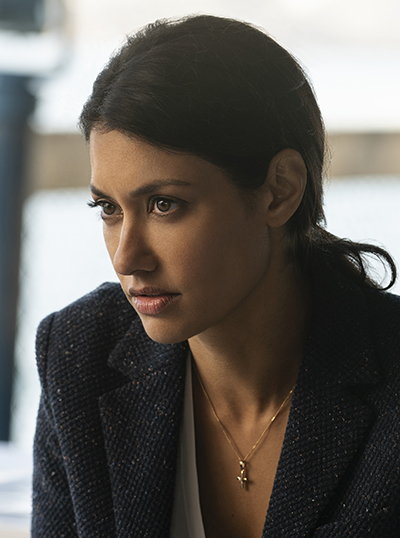
We learn that Jack’s sister (Michaela Watkins, who plays Delia on TV’s The Unicorn, and Ali on Get Shorty) is worried about him, his isolation and his excessive drinking; so is his ex-wife, Angela (Janina Gavankar, from The Morning Show).

Then we learn what a hotshot basketball player Jack used to be, back in the 1990s, when he played for a local Catholic high school and took them all the way to the state championship. That’s why he gets a phone call from the parish priest (John Aylward—remember him as Dr. Donald Anspaugh from TV’s ER?) asking him to come back as coach when an emergency leaves the school in a lurch just days before their first game.

TORRANCEJack doesn’t really want to take the gig; he tries to talk himself out of it in half a dozen ways one evening before running out of excuses (and beer), then showing up, somewhat reluctantly, the next morning for the job. That sets the movie’s wheels in motion, and we meet the capable, likeable assistant coach (comedian/actor Al Madrigal), and the team’s chaplain, Father Whelan (Jeremy Radin), who’s soon fighting a losing battle trying to reign in Jack’s salty language and his intensely competitive courtside behavior.
The team is a mixed bag, with barely just enough players to fill out the bench. Kenny (Will Ropp) is a smooth ladies’ man with the cheerleaders; the cocky Marcus (Melvin Gregg, from TV’s Snowfall) has chops, but an attitude that gets him in trouble; Brandon (Brandon Wilson) is held back by a situation at home that affects his performance on the court.

Where this is all headed won’t be surprising to anyone who’s ever watched any sports-themed movie. But again, this movie is about more than basketball. It’s about how Jack finds something—well, himself—on a journey that takes him back to a place where he started, which happens to be his old high school and its basketball court.

TORRANCE

Janina Gavankar plays Jack’s ex-wife, Angela.

Why does Jack drink? What dark, almost bottomless emotional hole is he trying to fill? Why did he and Angie divorce? Why did Jack turn down a lucrative, full-ride basketball scholarship, walking away from the game that he once loved?

You’ll find out, eventually. And what you find out will probably dig deeper, and pull harder, on your heartstrings than you’ll likely see coming.

Director Gavin O’Connor worked previously with Affleck for The Accountant (2016), and he found the tender soul of the gritty martial-arts brother-vs.-brother boxing drama Warrior (2011), with Tom Hardy and Joel Edgerton. And he directed the rousing Miracle (2004), about the 1980 U.S. Hockey Team victory over the seemingly invincible Soviets. Here he has a feel not only for basketball—the scenes of high school games look raggedly authentic and genuine, instead of staged and overly dramatic—but also for the bigger, more personal, much more somber drama surrounding it. His early shots of Los Angeles depict a hazy, sprawling, faceless metroplex, which reflects the fog of Jack’s solitude and his booze-saturated apathy.

This is a very personal movie, as it turns out, for Affleck, who has been very forthcoming about his own struggles with alcohol and recovery over the past three years. He was in rehab, in fact, when the film was in pre-production. To say his performance feels authentic, honest, sometimes painful and lived-in is an understatement.

“We can’t change the past, Jack,” a counselor tells him. “What we can do is change how we move forward.”

The Way Back feels like an old-fashioned sports movie, a step back in a way, but also a step forward for a widely accomplished actor—who’s already won two Oscars, for directing (Argo), and screenwriting (Good Will Hunting)—with a statement about who he is, where he is now, and the kind of grownup, emotionally nuanced movies he’s interested in making.

It’s a movie that reminds us that life—like a basketball game—is almost always moving, sometimes very fast, that small decisions can often be the difference between losing and winning, and that little things matter greatly. Jack spurs his team—usually from behind—by telling them to keep up the pressure, that every little thing adds up, and to always be chipping away, chipping away.

“You worked hard to be here,” Jack tells the players at one point, just before a big game. “You earned this.” So has Ben Affleck, and it shows, perhaps in his most personal—and most personal-feeling—movie, and movie role, ever.