Emily Blunt Soars as Disney’s Magic Nanny 2.0
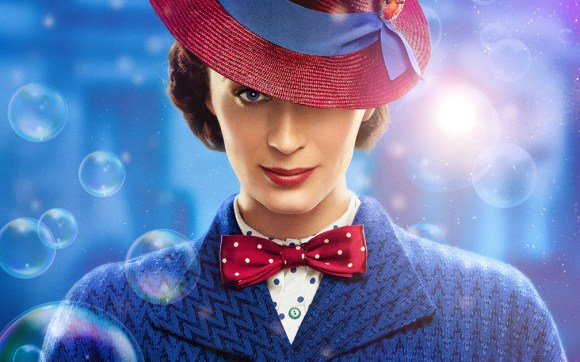 Mary Poppins Returns
Starring Emily Blunt & Lin-Manuel Miranda
Directed by Rob Marshall
PG
If you’ve been waiting for your movie Christmas present, here it is: Walt Disney’s super-nanny is soaring again.
Mary Poppins Returns, the long-awaited sequel to the 1964 crown-jewel classic, is an eye-popping charmer of song and dance with an all-star cast, cascades of old-school, feel-good warmth, audaciously entertaining showmanship and massive dollops of Disney enchantment.
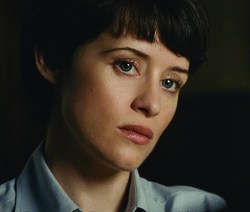
All hail Emily Blunt as the new Mary, floating down from the sky on a kite, like a Disney deity, to sprinkle her mesmerizing mojo on a new generation. She’s not Julie Andrews, of course, who won an Oscar for the role—one of five Academy Awards bestowed on the original Mary Poppins, now enshrined in the National Film Registry for its cultural significance.
But Blunt is a pitch-perfect 2.0, fresh and familiar at the same time as she drops in as moviedom’s most famous nanny on 1930s Depression-era London—some 25 years after the events of the first film. She’s come to help the now-adult Michael and Jane Banks (Ben Whishaw and Emily Mortimer), the siblings who were tykes in the original and have now aged into adulthood.
Now they’re grownups with grown-up problems. Michael is a widower raising three precocious young children (Pixie Davies, Nathanael Saleh and Joel Dawson) with the help of Jane and a harried housekeeper (Julie Walters). But there’s a wolf at the door of the beloved Banks home on Cherry Tree Lane: the dastardly banker (Colin Firth) who won’t cut them any slack on their dangerously overdue mortgage.
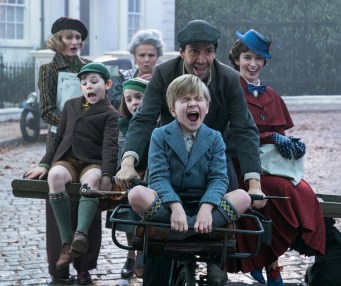 Broadway’s award-winning Hamilton virtuoso Lin-Manuel Miranda is a singing, dancing dynamo as Jack, the plucky street lamplighter whose street smarts include knowing all about Mary. The great Meryl Streep has a (goof)ball in her scene as the ditzy, over-the-top Topsy, Mary’s gypsy-like cousin in her flippity-flopped fix-it shop. Angela Lansbury fills the sky with colorful balloons and a buoyant message of optimism.
Dick Van Dyke, the only star from the original Mary Poppins, makes a very special VIP character appearance. He’s 93, still hoofing and hamming!
But the heart and soul of the movie belongs to Blunt as the lovely, mysterious, magical Mary, who first appeared in the novels of P.L. Travers beginning in 1934. After starring in the gritty Sicario, the mystery-thriller The Girl on the Train and alongside her director-husband, John Krasinski, in his acclaimed horror chiller A Quiet Place, she’s now in a role where the sky’s the limit, quite literally.
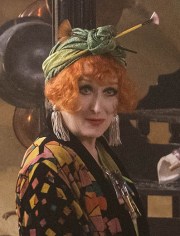
Meryl Streep
Fans of the original Mary Poppins will have a lot of fun connecting the nostalgic dots in the movie all the way back to 1964—the kite from “Let’s Go Fly a Kite,” the dancing cartoon animals (those penguins!), the eccentric, canon-firing neighbor, Admiral Boom (David Warner), among many other things.
But audiences will be most excited about what’s new, particularly the slate of terrific all-new songs by Marc Shaiman and Scott Wittman (Hairspray)—from wistful ballads (“The Place Where Lost Things Go”) to full-on Broadway-style production numbers (“Trip a Little Light Fantastic”). There’s a zippy, zany comedic nugget, “Turning Turtle,” and a rousing finale, “Nowhere to Go But Up.” Listen closely and you’ll catch wonderful wafting notes of classic Sherman Brothers’ songs from the original film woven into the background score.
Nannies are hired for children—remember, Jane and Michael Banks were kids in the first movie. Mary’s message has always been about how adults so easily lose their childhood joys: play, imagination and the boundless embrace of life before it becomes such a burden, drain and drag. “Grownups forget—they always do,” says her talking, flying umbrella, its head shaped like a parrot.
She knows that sometimes you have to turn back time to recapture that feeling. Mary reminds us—and encourages us—that it might be as simple as flying a kite, singing a song, engaging in a bit of silliness or holding the string on a balloon and wondering about where it might take you.
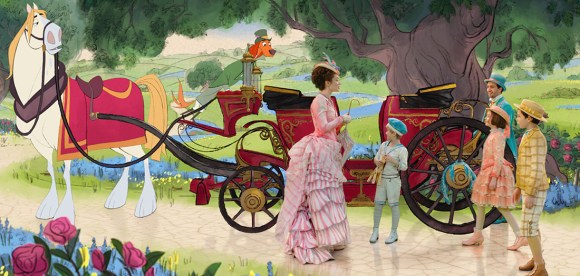 In one scene with unmistakable retro overtones of classic Disney, Mary, Jack and the kids are transported onto the glazed decorative surface of a cracked china bowl, where they talk with animals and find themselves on a daredevil “runaway-train” adventure. In another, Mary draws a bath for the children that becomes an amazing nautical escapade.
Director Rob Marshall (who also directed Streep and Blunt in the fairy-tale musical Into the Woods) draws heavily on Miranda’s Broadway chops. The show-stopping song-and-dance sequence for “A Cover is Not the Book” is a surprisingly cheeky, somewhat bawdy dancehall bit with Blunt which suggests that prim-and-proper Mary might have been reading something other than Wuthering Heights in her time off.
 Speaking of which, where does Mary go when she leaves? What does she do when she’s there? Where does her magic come from? We never find out. But so what? “One thing you should know about Mary Poppins,” Jack says. “She never explains anything.”
We don’t need to know—it’s enough that Mary Poppins has returned, she’s still got it, whatever it is, and Emily Blunt brings it. So don’t ask questions. Just sit back, soak in the wonder, the music, the sights, songs and magic of Mary Poppins Returns—and Mary’s timeless, Disney-delight spirit of uplift, optimism, imagination and positivity, a message that never grows old, no matter how old we get.
“I never thought I’d feel this much joy and wonder all over again,” Michael Banks says. “Thank you, Mary Poppins.”
Yes, thank you, Mary Poppins!
In theaters Dec. 19, 2018

 Miles is surprised, to say the least, when he meets another Spider-Man (Jake Johnson, who plays Nick Miller on TV’s New Girl). This one is Peter B. Parker, who’s lived a completely different but parallel life in his other dimension. Peter B. has been out of action for a while; he’s got a bit of a paunch, he’s divorced from Mary Jane (Zoë Kravitz) and his spandex pants don’t quite fit anymore.
 It’s full of fun, driving with energy and pumping with heart. There’s a lot of bang, swoosh and boom, but it packs a pretty substantial emotional wallop, as well, with themes of family, friendship, loyalty, decision and choices, and leaps of faith.
 Ben is Back
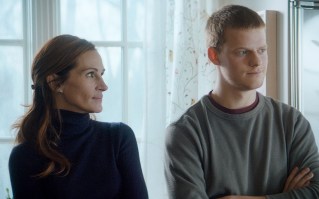 As tensions mount, a Christmas Eve break-in kicks things into gear for the film’s second half. Ben sets out into the night to hopefully make things right, and his mother follows on a desperate pursuit as he descends into a dark, dismal den of drug dealers, users and other rough reminders of his dangerous past.
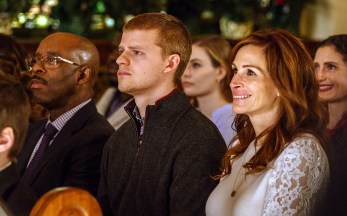 The writer-director, Peter Hedges, is actually Lucas’ father, which gives everything a much more personal edge—one that cuts deeper when Holly goes on a mini-tirade against pharma, government services and insurance, or berates a family physician for over-prescribing prescription painkillers that she feels started Ben down his road to addiction.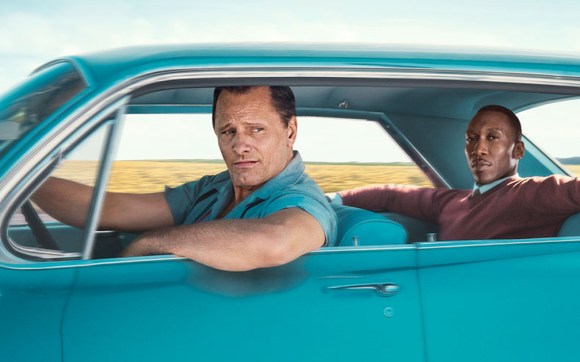
 This Green car is full of gold—Oscar gold. Ali won the Supporting Actor trophy last year for Moonlight, and Mortensen’s been nominated twice, for his outstanding star turns in Captain Fantastic (2017) and Eastern Promises (2008). Both are pitch-perfect in their roles here, and the buzz is that either could be a strong contender again this season for more awards.
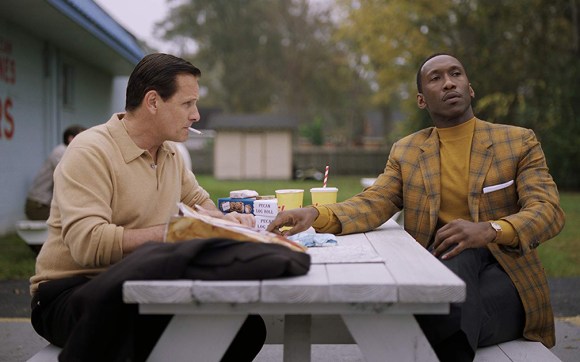
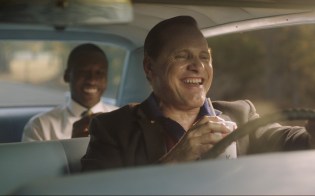 At one point, Tony shows Don with typical gusto how to dig into a bucket of Kentucky Fried Chicken while rolling down the road. You gotta get greasy, he says, not worry about the crumbs and just toss the bones out the window. “Whatever you do,” Tony says, “do 100 percent.”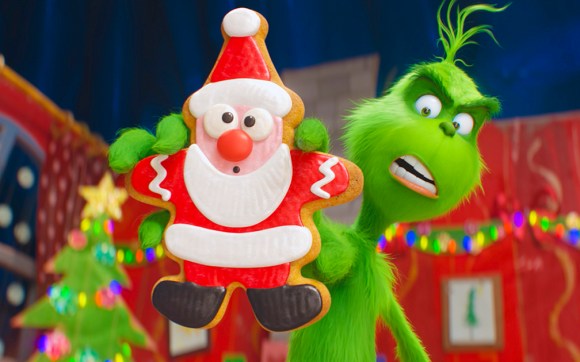
 Co-directors Scott Mosier and Yarrow Cheney keep things brisk, light and lively, fleshing out the familiar storyline with visual flair, additional characters and witty details that hew closely to the wildly creative imagination of Dr. Seuss’ curiously surreal illustrations and the spirit of inspired anarchy that ran throughout all his work. When the Grinch tells Max about his new “gizmos and gazmos,” he’s not kidding—and he uses them all in the nifty Christmas-stealing sequence as he sweeps, siphons and stows away every scrap of Christmas from every home in Whoville.
 And of course, it wouldn’t be a story about the Grinch without Little Cindy Lou Who (voiced by Cameron Seely, who played Helen, the young daughter of P.T. Barnum in The Greatest Showman). The precocious tiny tot hatches a plot of her own—a ploy to trap Santa Claus on Christmas Eve—that accidentally provides a twisty, fateful encounter with the Grinch.
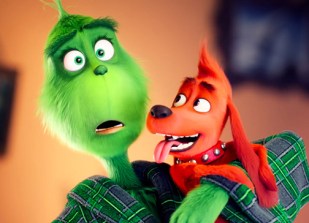 Max the dog is a real scene-stealer, as is Fred, the extremely rotund reindeer the Grinch corrals to pull his sleigh. “Santa had eight,” the Grinch grumbles, sizing up Fred. “He looks like he ate the other seven.”


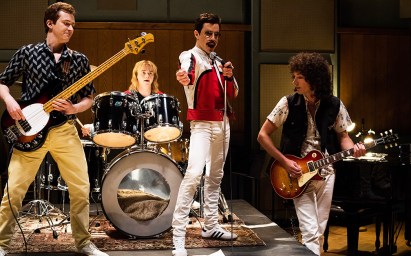 He tells the head of a record company that Queen wants to make “a musical experience rather than just another record.”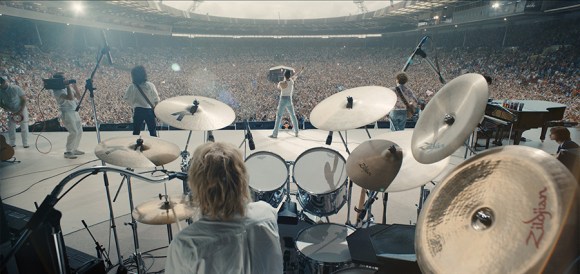
 Malek struts like a peacock through Mercury’s constantly churning fashion evolution, from skintight catsuits to leather military jackets, glittery glam-rock capes and finally the iconic white tank top he wore at Live Aid. His immersive acting—and the grand, sweeping arc of the story—is the kind of thing that makes Oscar voters perk up, take notice and dole out little golden men.




 The Media Tourist