Director Tim Burton puts his curveball twist on Disney’s flying-elephant tale
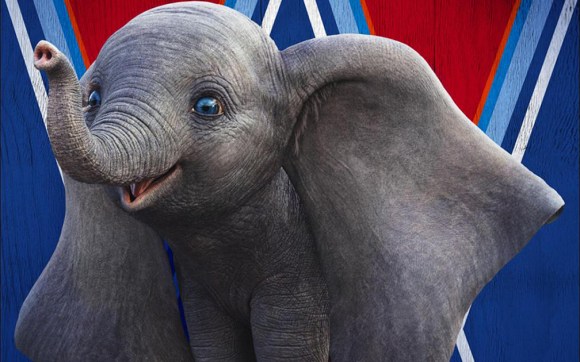
Dumbo
Starring Colin Farrell, Danny DeVito, Eva Green & Michael Keaton
Directed by Tim Burton
PG
I’ve been, done, seen about everything—goes an old song—when I see an elephant fly.
That tune is from the beloved 1941 Disney classic Dumbo, about a baby circus elephant who does just that, thanks to oversized, floppy ears that become wonder wings.
Disney’s new live-action Dumbo fleshes out the animated original with colorful new characters, layers of sumptuous detail and dashing retro drama, and all the dazzle and wonder that modern CGI effects can provide—especially when it comes to making you believe you’re actually watching a precious little pachyderm soar, somehow, into the air.
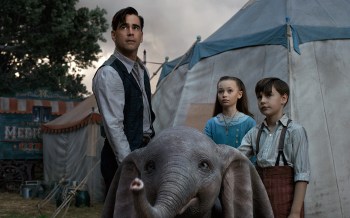
Colin Farrell with Nico Parker and Finley Hobbins
Set around 1920, the story begins when World War I veteran Holt Farrier (Colin Farrell) returns stateside to reunite with his children (Nico Parker and Finley Hobbins) and saddle back up for his old job as a trick rider with the traveling Medici Brothers Circus. Wartime has been tough on Holt; he lost an arm in battle, and his wife died of influenza while he was away. And now circus owner Max Medici (Danny DeVito) tells him he had to sell the horse that Holt used to ride.
So no more giddy-up for Holt, who is reassigned to care for the elephants, including Max’s latest investment—a large, pregnant female named Mrs. Jumbo. Max is ecstatic that the arrival of a cute little baby elephant will give his struggling circus something big to promote.
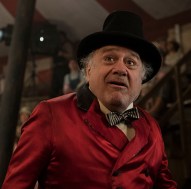
Danny DeVito
But when “baby Jumbo” is born, Max is bummed to discover the newborn has enormous ears, so cumbersome the poor little feller trips and stumble-bumbles over them when he walks. Circus roustabouts dub him a “monster,” and audiences members jeer at him and give baby Jumbo a cruel new nickname, Dumbo. To add to the heartache, Max sells off Dumbo’s mom after a tragic big-top incident.
But things begin looking up, so to speak, when Holt’s children discover Dumbo’s hidden talent—whenever he inhales a feather, he’s clear for take-off.
And baby, this baby soars!

The jeers turn to cheers, newspaper headlines blare the amazing news—and a smarmy Coney Island entertainment mogul named V.A. Vandevere (Michael Keaton) comes calling with an offer that Max and his little traveling circus troupe can’t refuse. But is it too good to be true?
Director Tim Burton certainly understands Dumbo’s plight. The veteran filmmaker, so adept at telling eccentric tales of oddballs, outcasts and misfits in films including Edward Scissorhands, Beetlejuice, Pee-wee’s Big Adventure, Ed Wood, Frankenweenie and Miss Peregrine’s Home for Peculiar Children—and even his gloomy take on Batman—syncs up with this heart-tugging fantasy about a little elephant alone and afraid, humiliated and abused, finally emerging as a humble hero.
Burton’s telltale touches are everywhere, from the swelling soundtrack provided by his longtime musical collaborator, Danny Elfman (this is their 19th movie together), to the quirky characters that make up the cast of Max’s circus—like multitasking muscle-man Rongo (played by British actor DeObia Oparei), who also provides the big top’s beat behind a slapdash drum kit, keeps tabs on the books, and handles Max’s PR.
Burton’s signature, curveball spin on Dumbo edges into some deliciously dark corners, but the movie’s big—and big-top—heart throbs with the rousing, high-spirited pulse of family, togetherness and freedom.
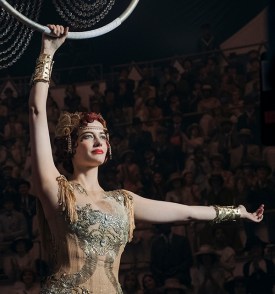
Eva Green
Casino Royale Bond girl Eva Green, who also starred in Burton’s Dark Shadows and Miss Peregrine’s Home, plays Colette, a French acrobat. Vandevere wants the aerial “Queen of Heaven” to team up with Dumbo as a high-flying duo for his curiously Disney-like amusement park, Dreamland, but she soon realizes that Dumbo’s dreams are far beyond any circus tent. Alan Arkin shows up as a fat-cat banker with dollar signs in his eyes.
Burton jams and crams a lot into this little elephant’s trunk. The original Dumbo was barely an hour long, and this one’s nearly doubles that. In addition to dozens of characters, there are undertones about animal rights, especially in the closing scenes. There’s a mischievous monkey, a group of trained mice and a “Nightmare Island” of captive, “dangerous” creatures. If you’re familiar with the original Dumbo, you’ll appreciate the reappearance of the Oscar-winning song from 1941, “Baby Mine,” and a “bubble” sequence that nods to “Pink Elephants on Parade,” another musical number in the original.
There’s also a modern girl-power subplot that certainly wasn’t there back in the less-enlightened 1940s. Holt’s daughter, Milly, is a budding scientist who doesn’t want to become a circus sideshow act. “I want to be known for my mind,” she says.
Disney movies, from Bambi onward, have frequently had a thing about children who’ve lost, or had to grow up without, a parent. But it’s hard not to think about the timely real-world connection—the wrenching scenes of separation and detainment of children apart from their mothers or fathers—when Mrs. Jumbo is loaded into a dark, dismal cart, the door slams shut and it’s driven away, and little Dumbo is left wailing, with big tears in his big eyes, as she goes.
You’ll probably have tears in your eyes, too, and more than once—but don’t worry, not all of them will be so sad.
Nobody really expected Dumbo to be a big hit, back in 1941. The animation was relatively simple, nothing groundbreaking, and done on the cheap. But the little airborne cartoon elephant won over audiences and became one of Disney’s biggest success stories of the decade. The film went on to air on TV and get theatrical re-releases later in the ’40s, in the 1950s, and in 1972 and 1976.
And even if you’ve never even seen it, you still probably know about the endearing, pint-size pachyderm who represents hopes, dreams and the impossible becoming possible, no matter how impossible it seems. He’s become part of pop culture, and it’s great to see him soaring again.
“That’s my elephant!” shouts Vandevere at one point.
But no, sir—that’s our elephant.
In theaters March 29, 2019
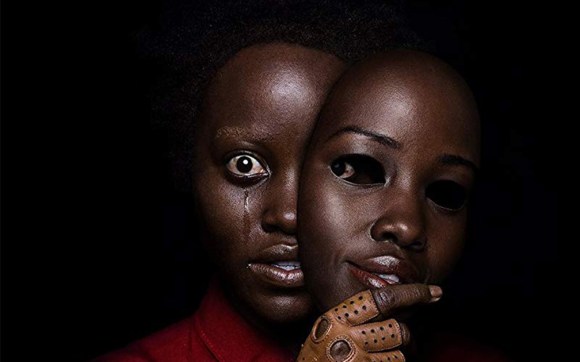
 Then things really shift into creepy overdrive that evening. “There’s a family in our driveway,” says Jason. That one line sends shivers down the spine, because the “family” outside looks exactly like the family inside. They easily break into the house. They overpower Adelaide, Gabe and the kids. Things get violent and threatening.
 You may want to look up the movie’s repeated references (you’ll see it visualized at least twice) to the Old Testament verse Jeremiah 11:11. (It’s heavy.) If you’re old enough to remember the 1986 charity campaign Hands Across America, well, that will come in hella-handy. Did you know that there are hundreds of miles of unused tunnels, deserted mine shafts and abandoned subway systems underneath the surface of the United States? How can bunnies be creepy and cuddly at the same time?
 Captain Marvel
 And she certainly doesn’t know that she’ll become a pivotal figure—perhaps even a cornerstone—for the entire Marvel franchise.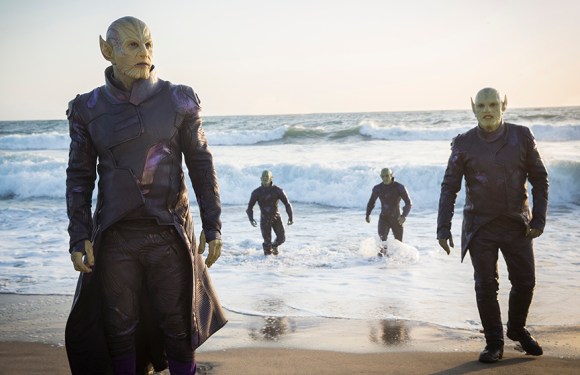

 But Captain Marvel is Brie Larson’s movie, certainly—even if her character is never actually called Captain Marvel. The closest we get is “Mar-vell,” one of the earlier incarnations from the comics; you’ll have to bore down into Marvel lore to find out just how deep Captain Marvel goes, back to 1967, how the mantle of character passed over gender lines in the 1970s and finally became fully female around 2012.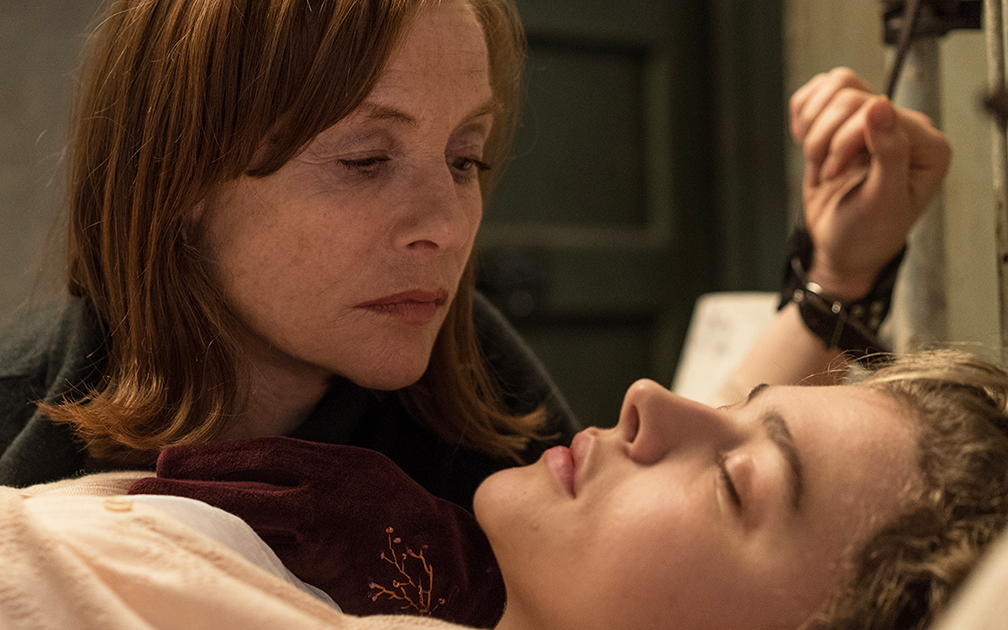

 At only 22, Moretz already has more than 60 movie and TV roles on her resume, including last year’s horror film Suspiria, the 2013 remake of Carrie and the 2016 comedy Neighbors 2: Sorority Rising. Here she’s certainly believable as a smart, sensible “good girl” trying to do the right thing, who quickly gets sucked into a situation that turns icky, then ugly, then downright dangerous and dire.


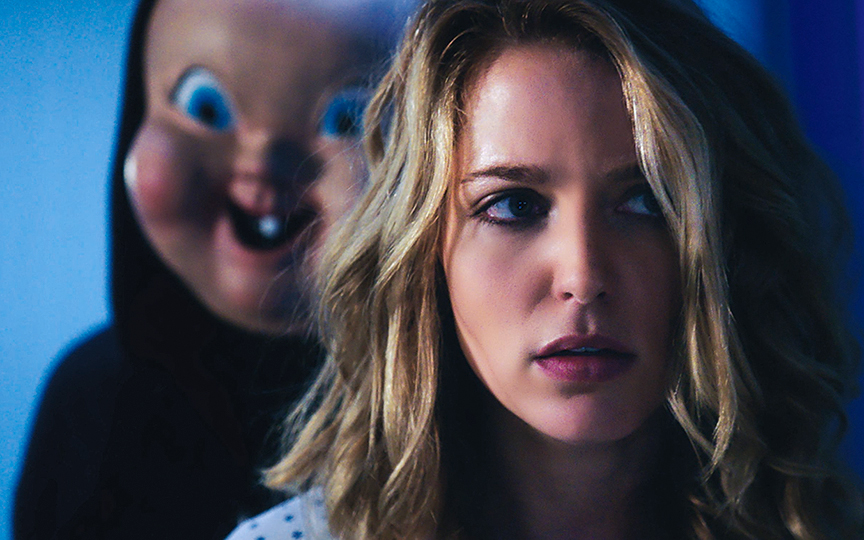
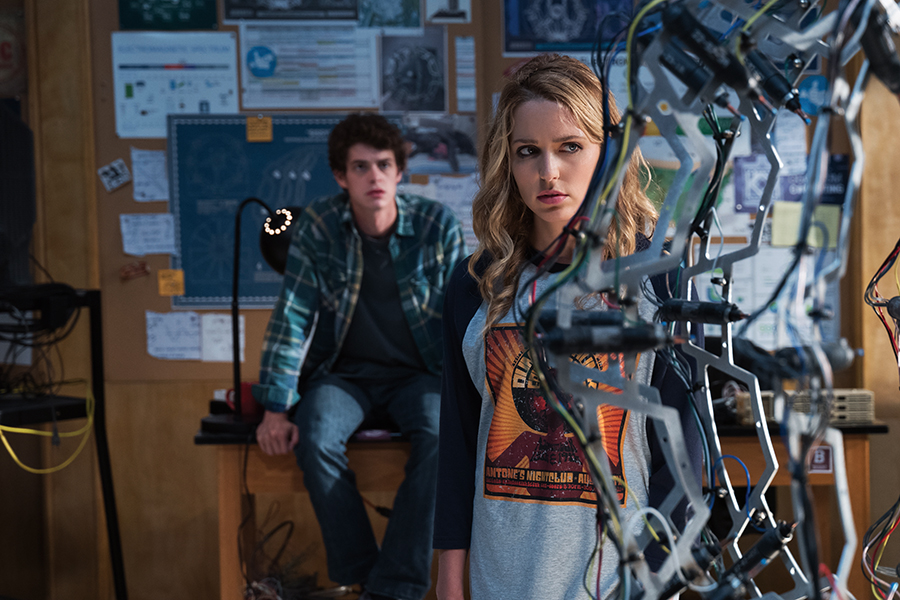
 Death can be a drag, but when it’s an everyday thing, you might as well get some laughs out of it, right? In in one darkly whimsical montage sequence, Tree takes matters into her own hands, causing her own demise in several creative ways to explore various loops—seeking the “right” one to close—without having to wait to be murdered.

 And I loved a quick shot of a magazine cover about the world’s tallest new building, which becomes a plot point. The headline reads, “A True Marvel,” a nod to the name of the iconic comic-book company that gave the world Spider-Man, Daredevil, Iron Man, Thor and dozens of other famous superheroes and villains.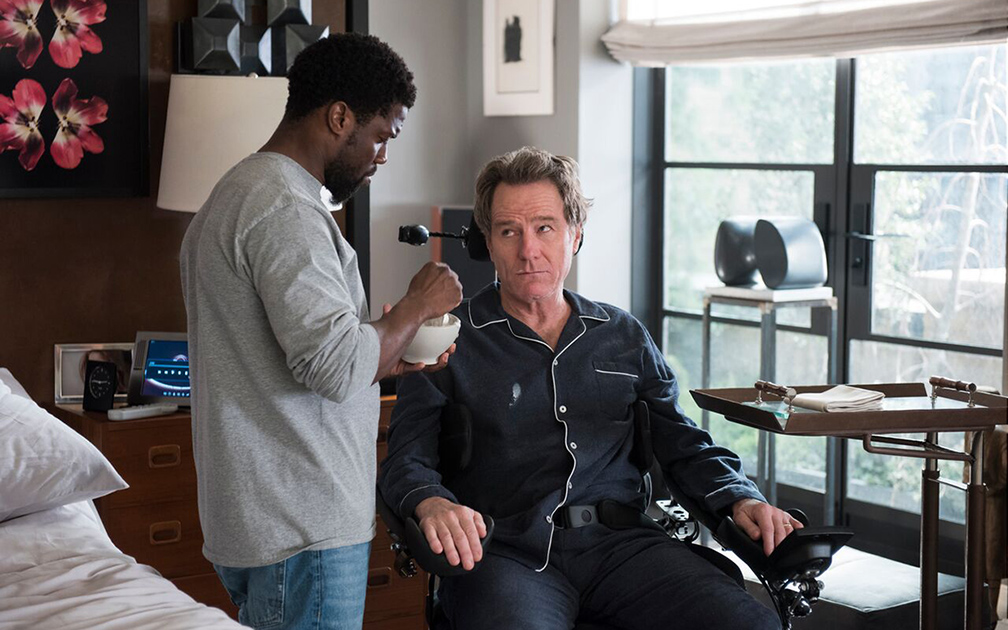
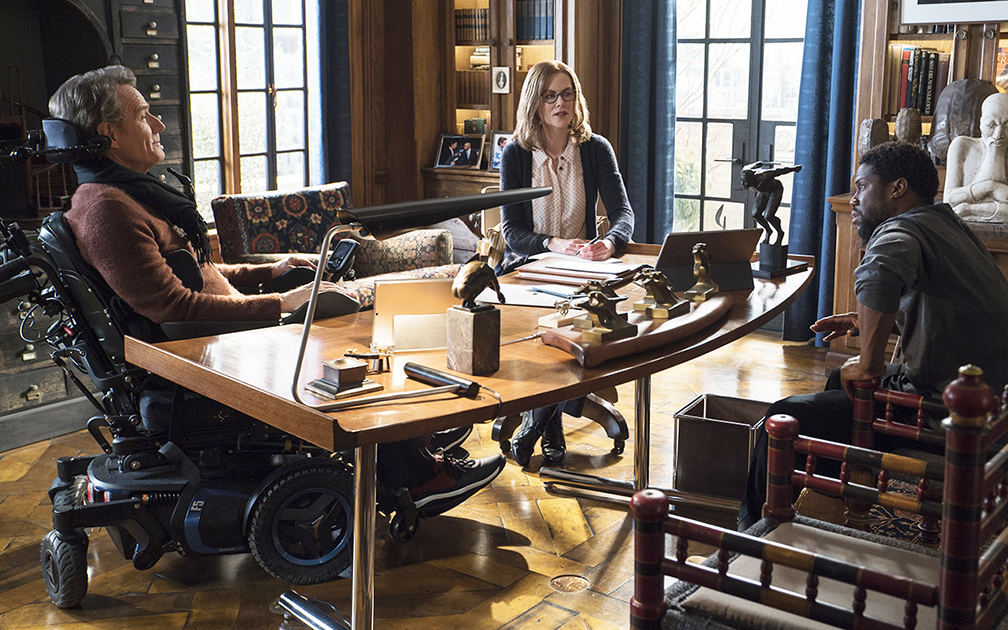
 There’s not a lot of other surprises in The Upside, however, which follows a pretty standard Hollywood buddy-movie template and clicks off many character stereotypes with which audiences are very familiar. Phil is white, successful, super-rich, buttoned-up and bitter. Street-smart Dell is a quippy, zippy, quick-witted sprite from the opposite end of the socio-economic spectrum.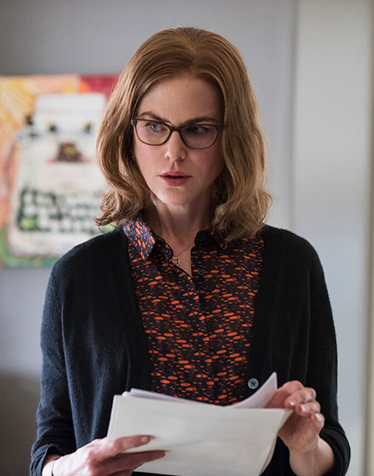
 The Media Tourist