Tag Archives: Guillermo del Toro

Movie Review: “Frankenstein”

Guillermo del Toro puts a potent new spin on the iconic tale of the man who made a monster

Frankenstein
Starring Oscar Issac, Jacob Elordi, Mia Goth and Christoph Waltz
Directed by Guillermo del Toro
Rated R

In theaters Oct. 24, on Netflix Nov. 7

With a walloping flourish of fresh Hollywood talent, some powerful filmmaking mojo and a potent message about life itself, a classic movie monster is spectacularly revived, once again, for the screen.  

You know the age-old story: A mad scientist, Victor Frankenstein, creates a living creature from a dead human body. And things do not go well.

Director Guillermo del Toro’s Frankenstein hinges on the ethical questions at the root of the tale, based on Mary Shelley’s seminal 1818 novel: Is the real monster the creature or the “devil” who created him? And just because you can do something, should you do it? You might recall that Shelley’s story was subtitled The Modern Prometheus, referring to the Greek titan who stole fire from the gods—and suffered the consequences for eternity.

Del Toro also goes back to Shelley’s original narrative for much of his new staging of the tale, deviating somewhat from the seminal 1931 film starring Boris Karloff as the creature. Inventively, he breaks the movie into two parts, telling the story in reverse, first from Victor’s perspective and then from that of the creature.  
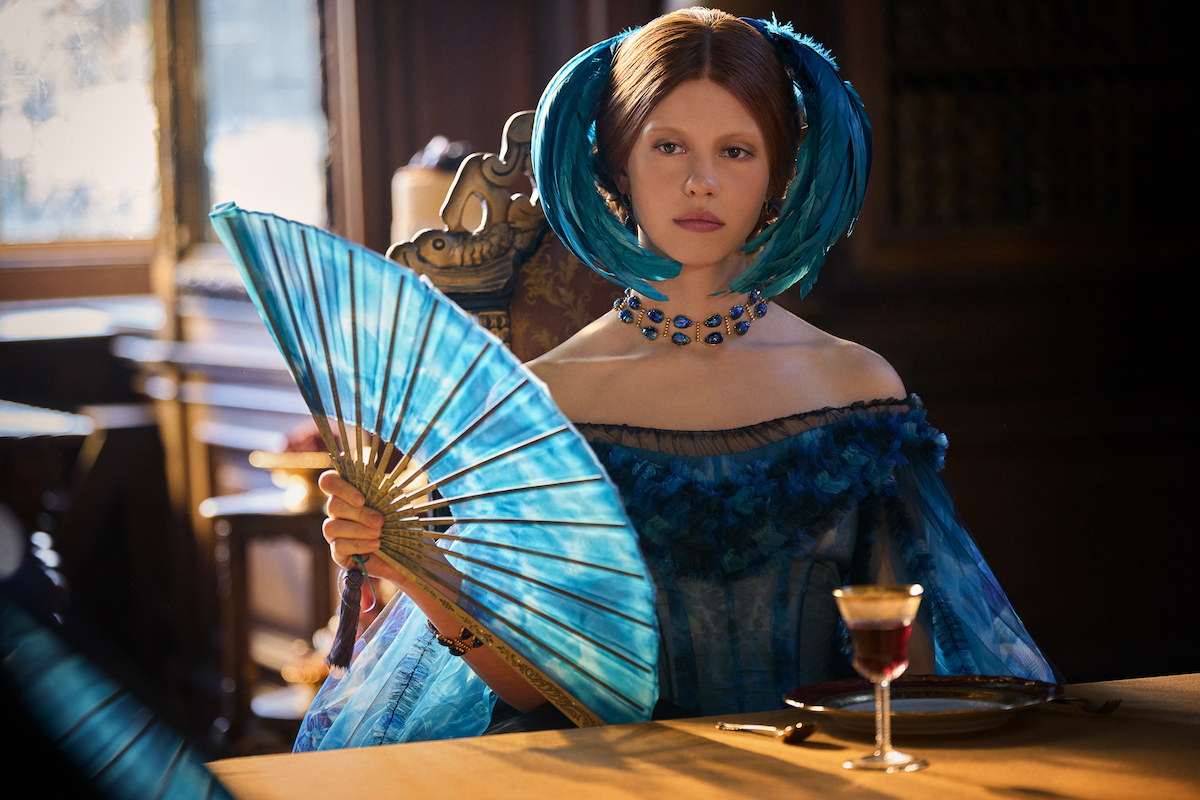
Mia Goth as Elizabeth

The cast is top-notch. Oscar Issac (Ex Machina, A Most Violent Year, Inside Llewyn Davis) plays Victor, driven to control the powers of life and death.  Mia Goth (Pearl, X) is Elizabeth, whose shifting affections become a significant plot driver. Christoph Waltz (D’jango Unchained, Inglourious Basterds) plays Victor’s scheming German benefactor, pouring profits from the Crimean War into Baron Frankenstein’s perverse experiments.

But the real star of the show is Jacob Elordi (Nate Jacobs on HBO’s Euphoria, and Elvis in Priscilla) as the unnamed creature, a stitched-together cadaver from the battlefield brought back to life by a jolt of lightning in Victor’s lab. A magnificent, hulking patchwork of scarred flesh and long, matted hair, he’s one hella hunka-hunka sexy uber-beast. You could easily picture him as an ‘80s rock star.

We see not only how Victor and his creature came to be, but also how the creature learns to speak, to feel and to hurt—and know that he will always be loathed, outcast and hunted. He eventually begins to long for companionship (Bride of Frankenstein, there’s your cue!). A side effect of Victor’s experiment gave his “monster” the ability to regenerate, for his body to heal after injuries, and impossible to kill—and therefore unable to find relief from his loneliness and yearning through the release of death.

It’s Elordi’s creature who gives this monster movie its beauty, and its tender, beating, aching heart.

It all fits perfectly into del Toro’s directorial wheelhouse, which has often swirled with hyper-visual elements from fairytales, mysticism and Gothic horror (as in The Shape of Water, Pan’s Labyrinth and a live-action remake of Pinocchio). His Frankenstein is monstrously majestic, with immense sets and grandly detailed, baroque embellishments…and eternal existential questions.

It’s a “monster movie,” of course, but it’s also a cautionary tale, a parable about the responsibilities of bringing a new life into the world, through natural procreation or otherwise—and how Victor Frankenstein was, in effect, father to an unnaturally made, highly unconventional “son” that he came to fear and despise. And we understand what Victor’s brother (Felix Krammerer) means when he tells him, “You’re the real monster.”

Mary Shelley’s “beast” has been one of the most popular and widely known movie monsters ever, appearing in more than 400 films and spinoffs. Appropriately, del Toro’s Frankenstein ends with a quote from the English poet George Gordon Byron: “And the heart will break, but brokenly live on.” With this impressive retooling, the epic, time-honored tale of Mary Shelly—and its messages about men and monsters, and playing God—lives on, in gloriously grand fashion. And it may just break your heart.

—Neil Pond
Tagged , , ,

Guillermo de Toro’s Pinocchio

Deliciously dark new take on the classic folktale takes you far beyond Disney

Guillermo del Toro’s Pinocchio
Voices by Gregory Mann, Ewen McGregor, Christoph Waltz & Finn Wolfhard
Directed by Guillermo del Toro and Mark Gustafson
Rated PG

See it: On Netflix Friday, Dec. 9

Guillermo del Toro has always had a soft spot for monsters and misfits.

The Oscar-winning director of The Shape of Water, Pan’s Labyrinth, Crimson Peak and Nightmare Alley puts a deliciously dark, fantastically original spin on the enchanted tale of the wooden puppet who longs to become a real boy.

This isn’t the Pinocchio you grew up with, particularly if your baseline is the beloved Disney version from 1940, or even Disney’s ambitious hybrid (computer animation plus live action) from earlier this year, featuring Tom Hanks as Pinocchio’s creator,  Geppetto. With a vision rooted in the source material, the 1883 fantasia novel by Italian author Carlo Collodi, del Toro gives the fable a boldly creative, explosively imaginative retooling of magical enchantment, grotesque beauty, mythological mysticism, sweeping human emotion and existential wonder.

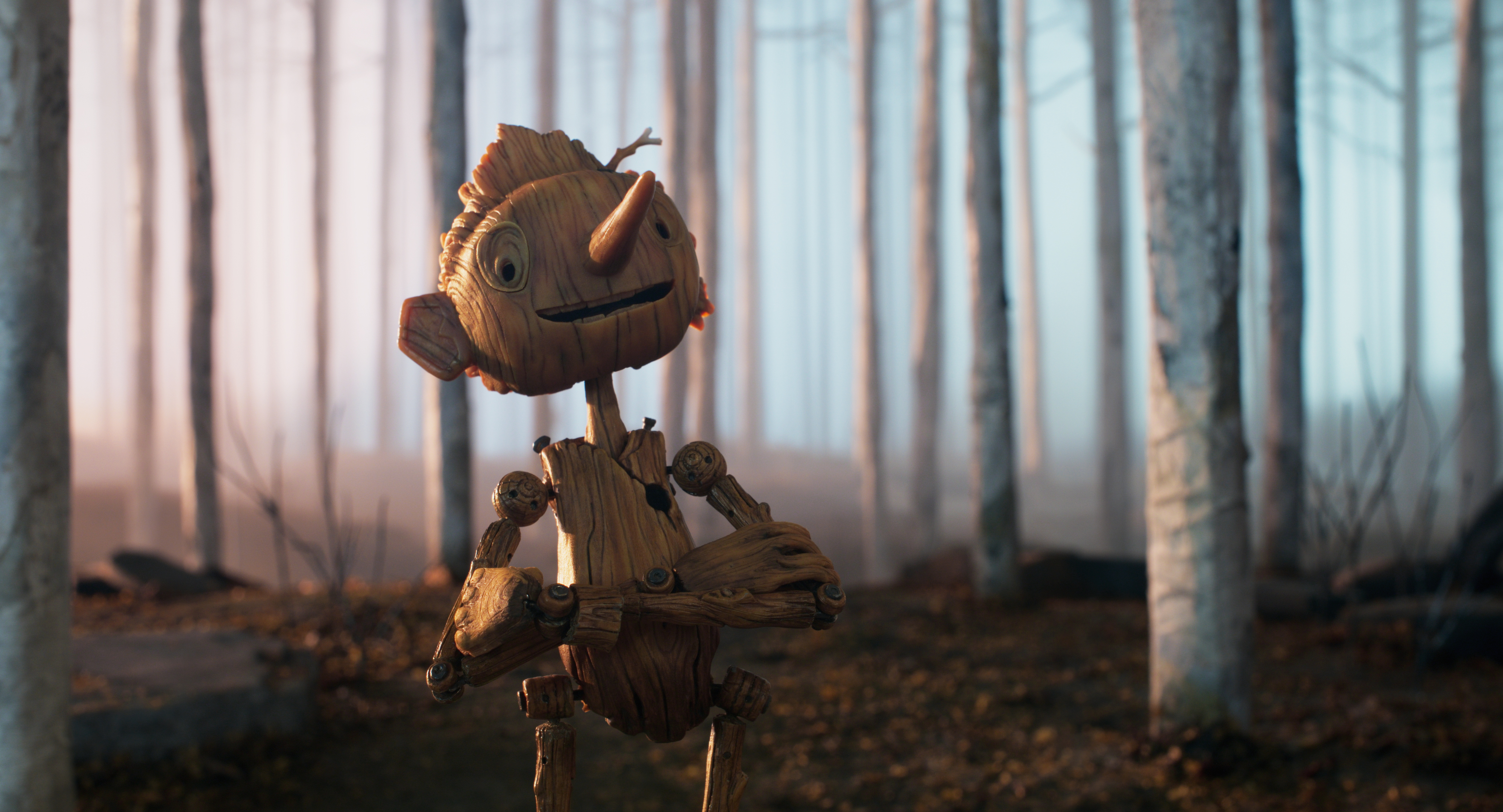
This Pinocchio has an eye-popping wow factor that’s practically off the charts. Visually resplendent and bursting with detail, its magnificent stop-motion animation (courtesy of Mark Gustafson, whose other work includes Fantastic Mr. Fox) elevates the craft far above cartoon-y kids’ stuff and into the rarified upper echelons of high art.  Resetting the story in 1930s Italy (as opposed to the vague, 19th century “once upon a time” of earlier versions), it uses the rise of brutal far-right fascism in Italy—dictator Benito Mussolini even makes an appearance—for a real-world, pre-World War II militaristic backdrop that becomes an integral part of its tale…and a callout to today’s unsettled modern world.

Ewan McGregor provides the voice of the movie’s narrator, Sebastian Cricket.

There are all-new songs (with a resplendent original soundtrack by Oscar-winning composer Alexander Desplat) and other enhancements to the familiar tale, including a recurring afterlife setting with grousing, poker-playing black rabbits, and a poignant backstory to the pine tree that provides the wood for Pinocchio. (And pinecones become a potent symbol of life, rebirth and regeneration.) Jiminy Cricket is now Sebastian Cricket (voiced by Ewan McGregor), a dapper bon vivant who lives in a knothole in Pinocchio’s chest—quite literally, inside his heart.  The glowing, translucent, blue-hued wood sprite (voiced by Tilda Swinton), peering into Pinocchio with hundreds of inscrutable eyes, is an otherworldly, awe-inspiring winged serpent that bestows Geppetto’s creation with life—and grants Sebastian Cricket a single, significant wish.

As for the puppet boy (evocatively voiced by young Gregory Mann), he’s a gangly, twiggy, wobbly oddity of a creature with more than a passing connection to another “unnatural” being, Frankenstein’s monster. And he has a fascination with yet another wooden creation, the life-size Jesus on the crucifix Geppetto makes for the village church. Pinocchio is puzzled why villagers adulate the somber figure on the cross, heaping high praises to him in song, but they hurl cries of “monster” and “demon” at him. “Why do they like him, and not me?” PInocchio asks Geppetto.

And like a crucified Christ, Pinocchio also rises again, in yet another twist to the story. The puppet boy discovers that since he’s not really “alive,” in a human sense—he’s made of wood, after all—so he can’t really die. At least, not for long: He keeps bounding back from various mishaps that turn him into heaps of splintered wood scraps. But there’s a difference, he finds out, between existence and truly experiencing life.

Like many “boys,” Pinocchio is full of energy, enthusiasm, curiosity and spunk. As a newcomer to the world of the living, he has a lot to learn—that hot chocolate is yummy, fire can burn, and other creatures—other creations—have feelings. He learns empathy. He stands up to the cruel carnival master (Christoph Walz) abusing his monkey assistant (Cate Blanchett), and he offers to work at the carnival’s puppet show, in a kind of indentured servitude, to keep his father out of a crippling debt. His infectiously sunny personality disarms a young village boy who starts out as his tormentor, turning him eventually into a friend and ally.

The A-list vocal cast also includes David Bradley as Geppetto, the lonely woodcarver who longs for Pinocchio to fill the aching hole created by the untimely death of his young son. Finn Wolfhard is Candlewick, the son of the town’s sternly militaristic podesta (Ron Pearlman), who sees the “stringless puppet” as an ultimate soldier who can’t be killed, conscripting him as fodder for the nation’s war machine. (Instead of a wild-boy romp Pleasure Island, there’s a major scene in a “youth camp” where Pinocchio and Candlewick are forced to compete in a high-stakes war-game exercise.) John Turturro is the village padre, a priest under the thumb of the oppressive regime.

This finely refashioned fairytale is a story of outsiders and nonconformists, imperfect boys and imperfect fathers, the heartbreaking burden of loss, about learning to love, and accepting people (and puppets) for who they are, not who, or what, we want them to become. It’s a reminder that no one lives forever but life goes on, that some rules—like telling the truth—aren’t absolute, and everyone “must try to do their best—and that’s all anybody can do.”

Even after nearly 150 years, this little puppet still has a few things he can teach us. And Guillermo del Toro has created one of his best, a film that spins magisterial new magic into an age-old folktale.

Tagged , , , ,

Gollywhopper of a Ghost Story

Sumptuous ‘Crimson Peak’ is full of deliciously dark surprises


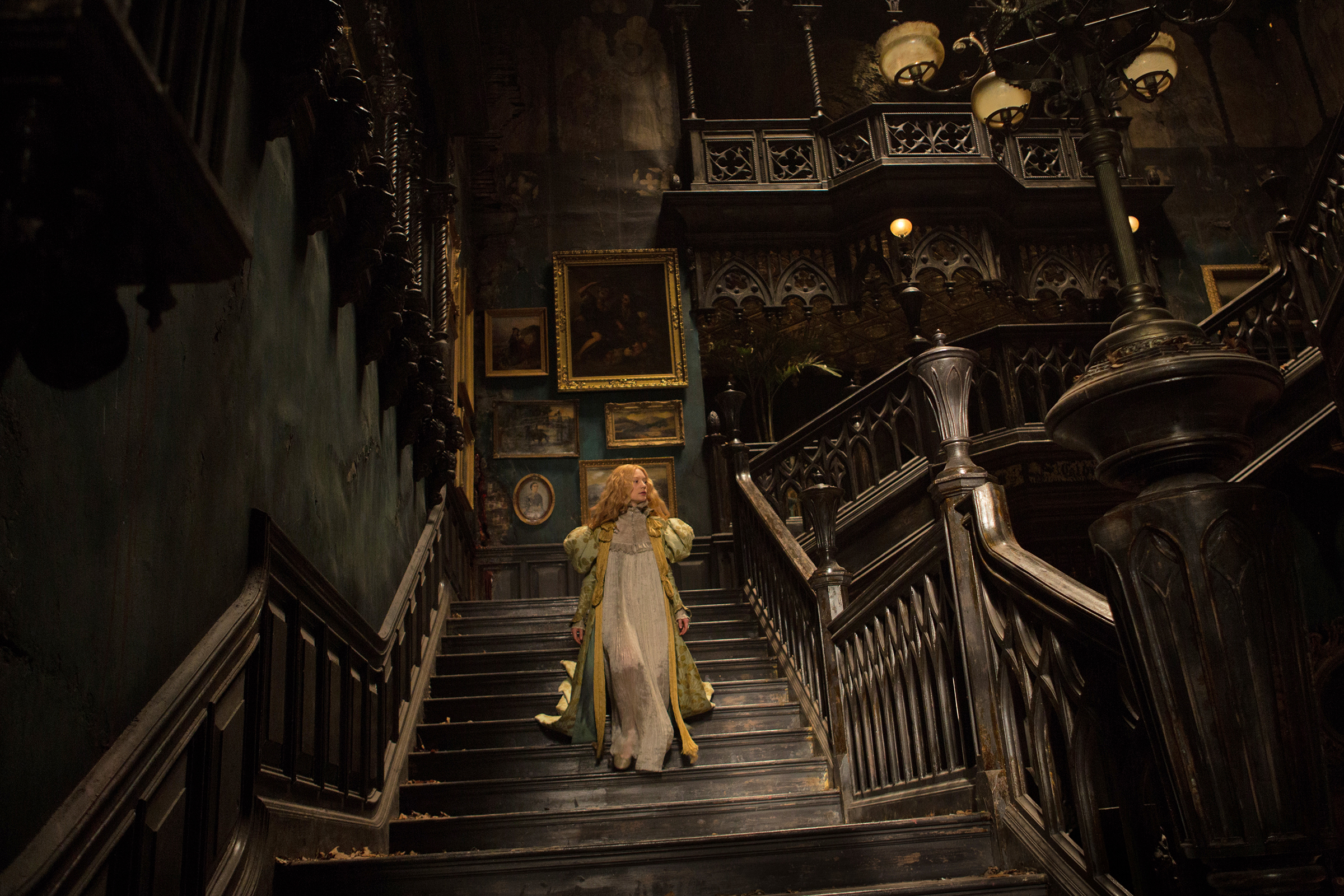
Crimson Peak

Starring Mia Wasikowska, Tom Hiddleston & Jessica Chastain

Directed by Guillermo del Toro

Rated R

Released Oct. 16, 2015

Crimson Peak is a ghost story with a capital G—a couple of them.

The first is for writer-director Guillermo del Toro, the acclaimed Mexican filmmaker renowned for the dark-fantasy, supernatural-horror and sci-fi blowout movies Pan’s Labyrinth, Hellboy and Pacific Rim. Just having his name attached has kept fans and industry insiders buzzing for months.

The other big G: This ghost story is a real gollywhopper, a voluptuous, sumptuously festooned saga of love, lust, jealousy, money, madness, secrets, ambition and spirits that refuse to let go, all set in a gigantic Gothic manor on a barren hillside in early 19th century England.

Tom Hiddleston and Mia Wasikowska

Mia Wasikowska plays Edith, a young New York heiress who falls in love with a visiting British baronet, Thomas Sharpe (Tom Hiddleston). An aspiring writer, Edith believes in ghosts, ever since she was visited as a child by the wraith of her departed mother, who ominously warned her to “Beware Crimson Peak.”

“Where I come from, ghosts are not to be taken lightly,” the baronet tells Edith, which is one reason she falls for him over the objections of her father (Jim Beaver from TV’s Supernatural), who tries to send Sharpe and his coldly aloof sister, Lucille (Jessica Chastain), packing. But a gruesome incident—that wasn’t the “accident” everyone seems to think—leaves Edith to make her own decisions. She decides to follow her heart and marry the handsome Brit.

When she arrives in England with her new hubs, Edith finds his big, creaking, groaning house, Allerdale Hall, with a hole in the ceiling, leaves in the foyer, and gloopy blood-red clay oozing through the wooden slats of the floor. She also finds things that howl, scream, creep, crawl and go bump in the night.

Crimson Peak

And she learns that estate is nicknamed Crimson Peak—and that ghosts aren’t the scariest things inside the house.

Audiences accustomed to the cheap thrills and gutbucket carnage of many contemporary horror flicks might be a tad disappointed that del Toro is much more interested in meticulous, old-school storytelling and creating a spectacular world for his characters to inhabit. Blood does flow and there are moments that will make you gasp, but they jarring red punctuation marks on a much bigger tale, one with horrors on an even grander, more operatic scale.

And in this big, big-looking, super-stuffed spook-fest, the attention to detail is astounding, from rooms, costumes, furniture, jewelry, kitchenware and candelabras, down to the tiniest of trinkets. The haunted house of Allerdale is a thing of wonder in itself, a real-life, three-story-tall cathedral of gloom (constructed especially for the movie) with a rasping, decrepit elevator, a sweeping grand staircase, murky hallways, hundreds of moths on the walls, locked vats of goo in the basement, and some deliciously dark, twisted surprises.

Sometimes everything feels like a phantasmagoric Downton Abbey nightmare knocking around a forbidden section of Disney’s Haunted Mansion.

“Ghosts are real,” a battered-looking Edith tells us twice, bookending the movie at its opening scene as well as its violent, sprawling finale—during which she discovers not only the power of her pen, but also the brutal effectiveness of a coal shovel. If you ever get put through the wringer like she does in Crimson Peak, you’ll believe they’re real, too.

—Neil Pond, Parade Magazine

Tagged , , , , , , , , ,