Category Archives: Movie Reviews

Night Howl

Masterfully unsettling ‘Nocturnal Animals’ really gets under your skin
NOCTURNAL ANIMALS

Nocturnal Animals
Starring Amy Adams, Jake Gyllenhall, Michael Shannon & Armie Hammer
Directed by Tom Ford
R
Wide release Dec. 9

Have you ever read a book that really got to you, got under you skin and burrowed into your head?

Well, the book Amy Adams’ character devours sure does that to her in Nocturnal Animals, a chilling, neo-noir psychological thriller that explores the fine lines between love and brutality, art and life, regret and revenge, and having it all and losing everything.

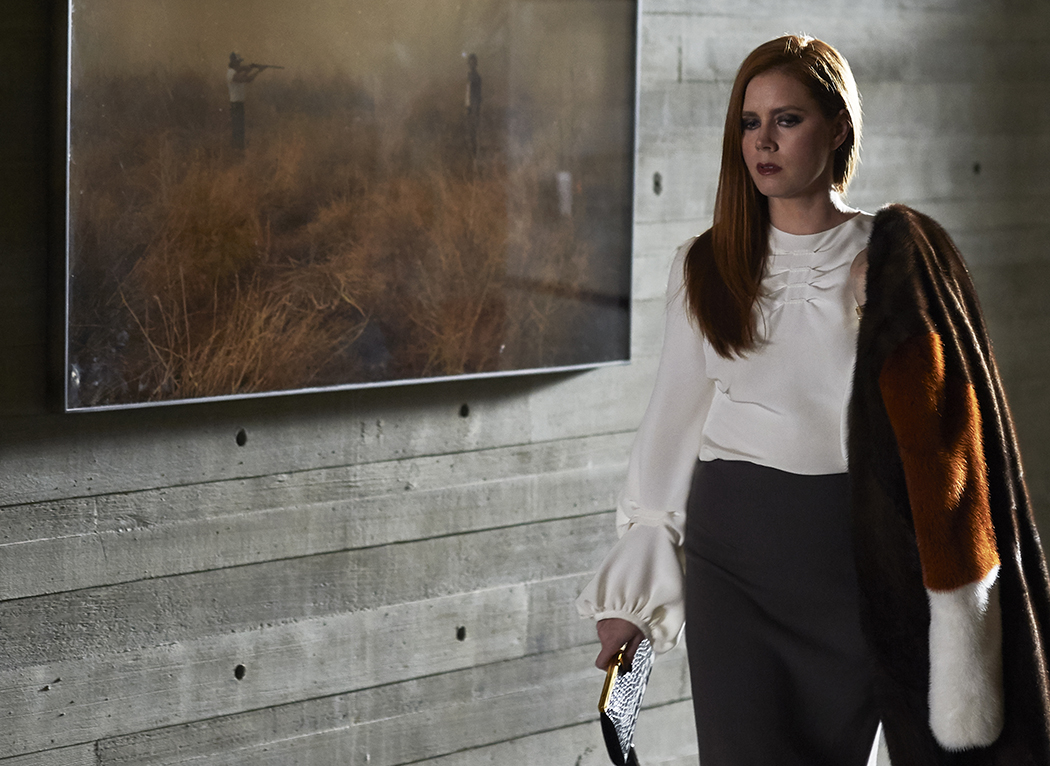
Based on a 1990s novel and adapted for the screen, directed and co-produced by Tom Ford, the chi-chi clothing designer who was once the fashion director for Gucci and Saint Laurent, the film begins when Susan Morrow (Adams), a wealthy but unhappy owner of a tony L.A. art gallery, receives a package in the mail. It’s the manuscript for a novel from her ex-husband, Edward (Jake Gyllenhall).

Tellingly, Susan gets a paper cut on her finger opening the parcel, drawing blood.

NOCTURNAL ANIMALSAs Susan begins to read the manuscript—titled Nocturnal Animals—the movie quickly takes its basic shape: a story within a story, cutting back and forth between the events of the book and Susan’s reactions to it. There’s a third storyline, as well, about Susan’s flashbacks to her previous life with Edward, whom she met as a college student more than a decade ago, and whom her parents implored her not to marry.

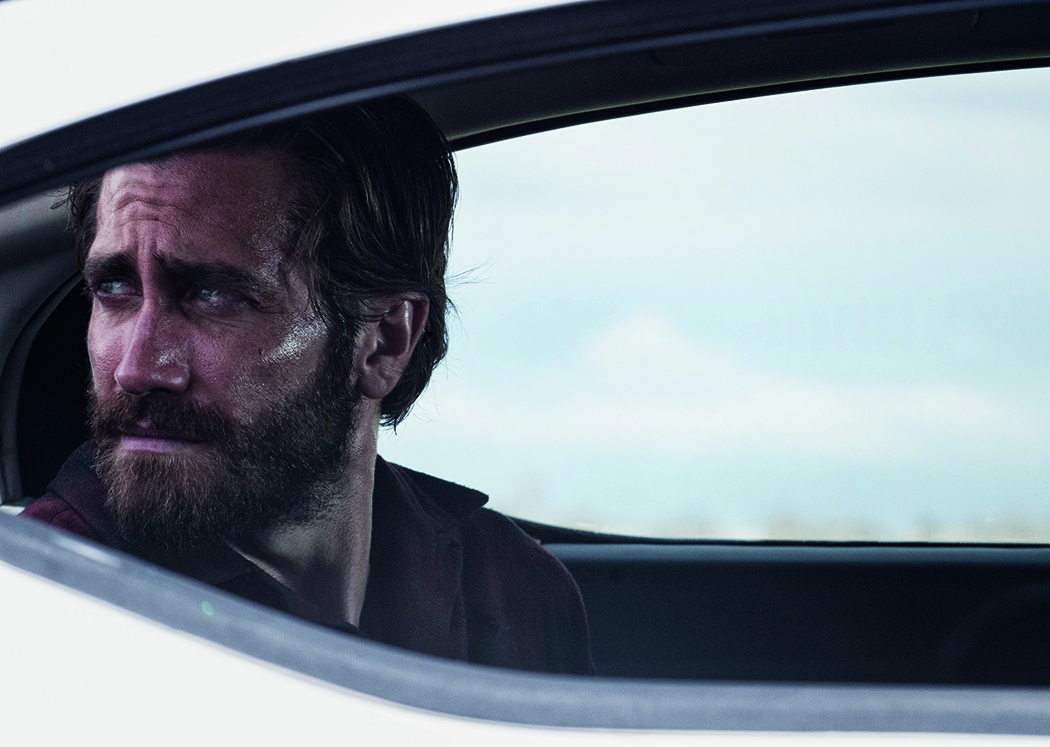
Edward’s book is about a young family—a couple and their daughter—who run afoul of two carloads of brutish men on a dark West Texas highway one fateful night. For the father (also played by Gyllenhall), it becomes a quest of justice that turns to vengeance.

The movie gradually reveals how all three stories interweave and intersect, why Susan is so deeply interested in the tale, why things went south between her and Edward, what all that has to do with Edward’s book—and why he sent it to Susan.
Jake Gyllenhaal

Jake Gyllenhaal

The movie looks arty and often gorgeous; you can tell the director—whose resume also includes the critically acclaimed A Single Man (2009)—comes from world of high fashion. But this isn’t a happy, uplifting tale. A Hitchcock-ian sense of malice and dread pervades every scene, swept along by the haunting classical score by composer Abel Korzeniowski. Award-winning cinematographer Seamus McGarvey (Anna Karenina, Atonement) depicts Los Angeles as a chilly, post-modernist fortress of sharp, cold steel edges and soulless night; Texas is a harsh, merciless wasteland of tumbleweeds, sun and grit.

Naked corpses dissolve into a shot of nude, intertwined bodies of sleeping lovers. There are visual clues of distress and malaise everywhere, from the dead bird Susan discovers outside her window to the grotesque, disturbing “contemporary” exhibits in her museum—naked, obese, slow-motion baton twirlers; a life-size sculpture of a bison, punctured with arrows; an oversize, ominous-looking photo of a man in a field pointing a rifle at another man, point-blank, execution-style.

Think No Country For Old Men meets CSI: West Texas, by way of Twin Peaks.
NOCTURNAL ANIMALS

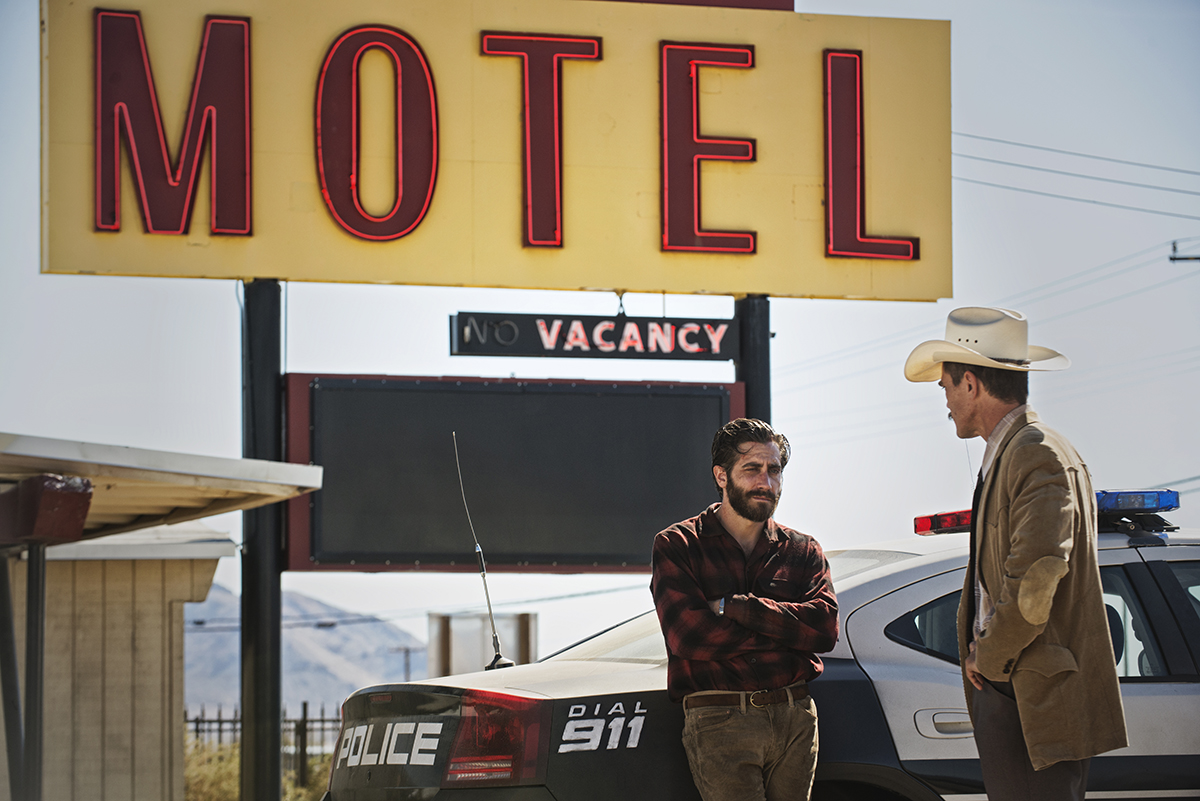
Michael Shannon (right) is terrific in a supporting role as a local detective.

Gyllenhall gives (another) great performance; he’s essentially playing two different roles. Michael Shannon, who adds a live-wire spark to anything in which he appears, gets one of his best supporting roles yet as Det. Bobby Andes, who’s assigned to the fictional case but willing to bend the rules when time begins running out. Armie Hammer plays Susan’s philandering second husband. Laura Linney has only one scene, as Susan’s Texas socialite mom, but it’s pivotal.

Edward dedicates his book to Susan and titles it after his nickname for her—a night owl who had trouble sleeping. After seeing the impressively crafted but intentionally haunting Nocturnal Animals, you might have a bit of trouble dozing off for the next few evenings, too.

—Neil Pond, Parade Magazine
O, Jackie

Natalie Portman drills deep to the dark, complex core of ‘Jackie’

image-04afa3ee-f8cc-4059-8c62-8208612a44bc-72

Jackie
Starring Natalie Portman, Billy Cruddup, Peter Sarsgaard and Greta Gerwig
Directed by Pablo Larraín
R
In theaters Dec. 2, 2016

More than 50 actresses have portrayed Jacqueline Kennedy Onassis on TV and in the movies, including Jacqueline Bissett, Blair Brown, Katie Holmes, Gennifer Goodwin, Roma Downey, Minka Kelly and Gilda Radner on Saturday Night Live.

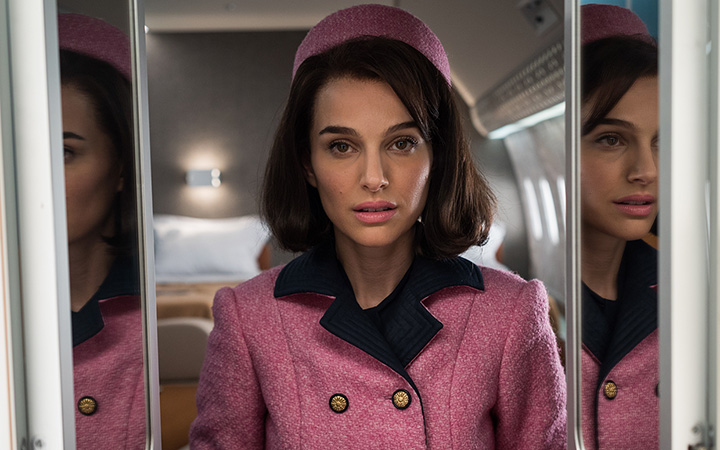
But everyone else might as well just put away the pink Chanel suit and pillbox hat, because now Natalie Portman owns the role.

In the simply titled Jackie, the Oscar-winning actress delivers a powerful, awards-worthy performance as the former first lady, focused on the days after the assassination of her husband, John F. Kennedy, in November 1963. The movie unfolds through the framing device of Jackie’s flashback recollections, as told to a Life magazine reporter (Billy Cruddup) interviewing her for an exclusive after the event, during which she reminds him that “people like to believe in fairy tales.”

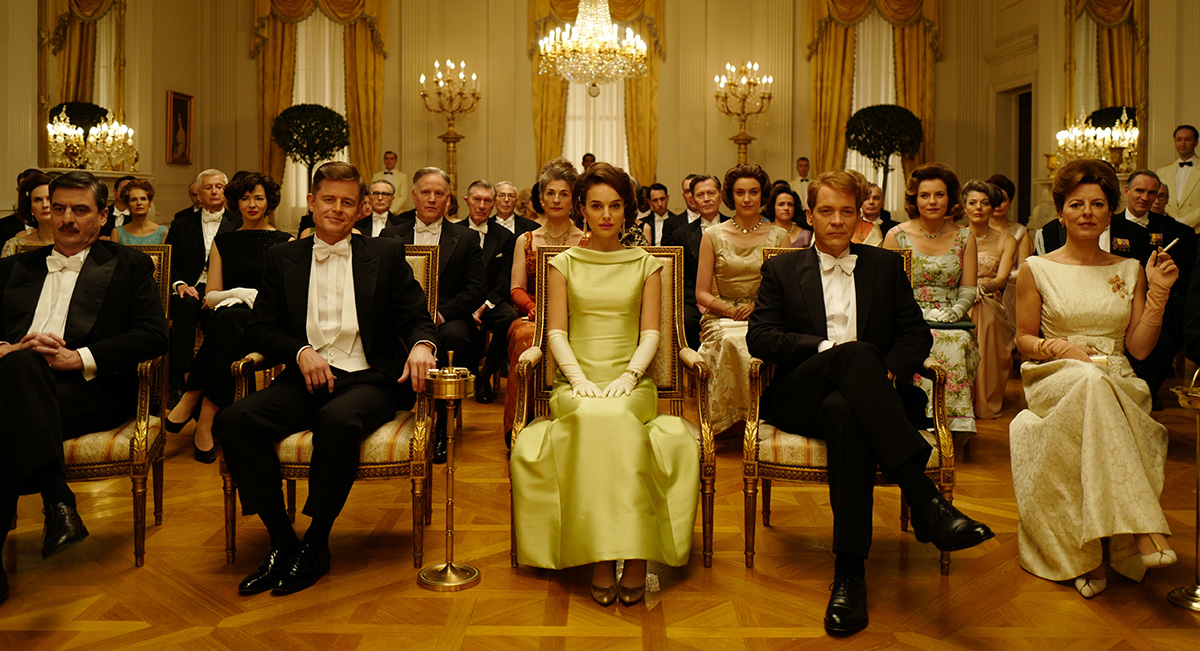
image-31f4e978-7411-4519-9780-0c990636519eThe movie dives into the mind of the grieving Jackie as she deals with the emotional fallout of the loss of her husband, his legacy, and of her place in a world—now without him—as a Kennedy-in-law. It’s not a conventional biography, or even a historical drama. It’s deeper and darker than that, and Portman bores down to the complex, most challenging parts of its core.

Portman anchors every scene, surrounded by an exceptional supporting cast. Peter Sarsgaard plays Bobby Kennedy, her grieving brother-in-law. Greta Gerwig is Nancy Tuckerman, Jackie’s loyal White House social secretary. John Carroll Lynch does a fine job as Texan Vice President Lyndon Johnson, swept into the Oval Office after the tragic campaign motorcade in Dallas, Texas. Beth Grant is his wife, Ladybird.

John Hurt, as a priest at a cemetery, gets to the heart of the movie, and Jackie, in a conversation during which she reveals her fears and anxieties.

Danish actor Caspar Phillipson plays JFK, and he’s well cast, but you don’t see very much of him. This is Portman’s film, and the camera locks onto her like it doesn’t want to let her go.

image-14ab5e32-76ca-4363-b8d8-01408dbdf553The movie does a terrific job of recreating scenes that live in history from newspaper photos and newsreels, such as the swearing in of President Johnson aboard Air Force One and Kennedy’s funeral. Moments of Jackie alone, removing her bloodied pantyhose, looking for Kennedy’s burial site in the rain and mud at Arlington, smoking cigarettes she didn’t want the public to see, or simply wandering around her empty bedroom, alone, are haunting.

The “fairy tale” that Jackie lived at the White House, the movie suggests, was like the one depicted in the legends of King Arthur and his legendary castle, Camelot—noble, idealistic and romantic, laden with symbolism, and potent with the stuff of myth. In one moving and melancholy scene, Jackie tries on several outfits—and gets progressively more inebriated—while the iconic theme from the classic Broadway musical Camelot plays on her stereo.

image-0bdcebd6-18f3-4d74-9b21-72810110b5d4

“Don’t let it be forgot,” she tells her interviewer, “that for one brief, shining moment, there was a Camelot.” She pauses before adding, “There won’t be another Camelot.”

And there won’t be another Jackie like Natalie Portman, at least anytime soon.

—Neil Pond, Parade Magazine

Tagged , , , , , , , , , ,

Hughes Corporation

Warren Beatty salutes Howard Hughes in gauzy, farcical rom-com

RULES DON'T APPLY

Rules Don’t Apply
Starring Lily Collins, Alden Ehrenreich, Warren Beatty & Matthew Broaderick
Directed by Warren Beatty
PG-13
In theaters Nov. 23, 2016

Warren Beatty’s long-awaited Howard Hughes movie is a nostalgic love letter to old Hollywood, a farcical rom-com about a couple of young Tinseltown transplants and a semi-sympathetic portrait of one of 20th century America’s most famous, successful and eccentric business tycoons.

Howard Hughes was a huge deal back in the previous century. His tremendous wealth, high-profile enterprises, dashing daredevil antics and widely reported quirks made him one of the most famous personalities on the planet until his death in 1976. He made headlines and newsreels as a do-er, dreamer, inventor, movie mogul, Las Vegas developer and aviation pioneer.

Actor-director Warren Beatty caught a rare, fleeting glimpse of Hughes in a Hollywood hotel in the early 1970s and vowed to make a movie about him. He’s been chipping away at it ever since.

Lily Collins

Lily Collins

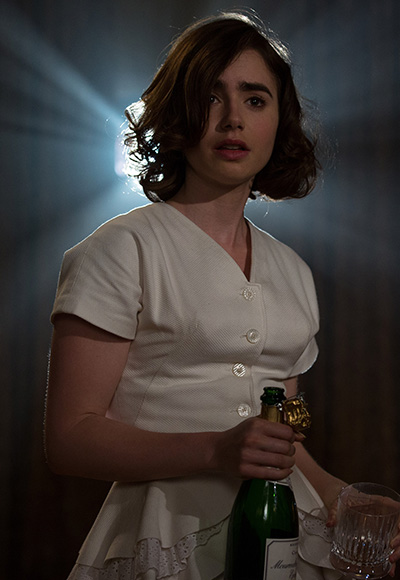
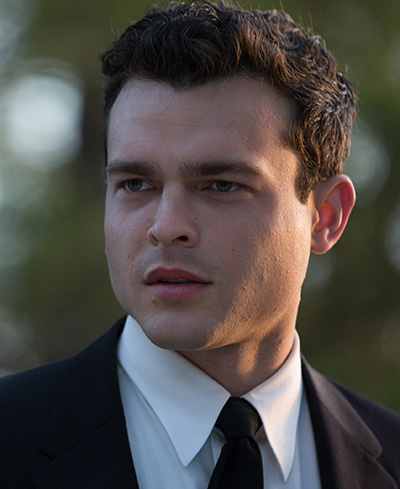
In Rules Don’t Apply, set in the late 1950s, Marla Mabrey (Lily Collins), a young, devoutly religiously beauty queen from Virginia, is summoned to Hollywood to become one of Hughes’ female contract players at RKO, the movie studio he took over in 1948. She and her overly protective mother (Annette Bening, Beatty’s wife) are assigned a lavish house in the Hollywood Hills and provided studio transportation. Fresh-faced Frank (Alden Ehrenreich), himself a Hollywood greenhorn just off the farmlands of Fresno and also a Sunday-go-to-church kind of guy, is appointed as one of their drivers.

Marla discovers she’s among the many young female hopefuls under contract to Hughes, a well-known Hollywood womanizer. But even though she’s paid well and treated royally, she’s dismayed when days—then weeks—go by and she doesn’t get to meet her famous boss and benefactor, doesn’t get a screen test and doesn’t get any sign that her Hollywood career is going anywhere.

She laments that she doesn’t look like the other—mostly blonde, all busty—starlets, doesn’t feel worldly and with-it like them, and, as more of a musician and songwriter, she’s not even really an actress. “I’m a square,” she pouts.

Frank consoles her, tells not to worry about everyone else. “You’re an exception,” he says. “The rules don’t apply to you.”

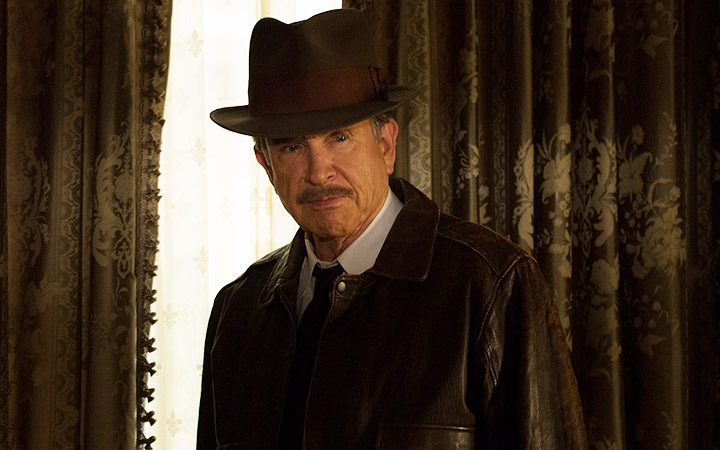
Love blossoms between Frank and Marla. But it whirls and swirls around Hughes, who’s given a gauzy, wistful gloss-over by Beatty, who also directed, co-produced and wrote the screenplay. This movie feels like a project he’s been thinking about, and working on, for a long time: It’s jam-packed with nearly everything and everyone. Matthew Broderick is Levar, Frank’s fellow driver who warns him to keep his hands off the movie “merchandise,” since Hughes prohibits any employee hanky-panky. There’s Candace Bergen, Ed Harris, Martin Sheen, Amy Madigan, Dabney Coleman, Steve Coogan, Alec Baldwin and Paul Sorvino. Watch for Haley Bennett, from The Girl on the Train and The Magnificent Seven, and Broadway actress Megan Hilty, as other contract players.

The movie meanders through several themes and ideas—daddy issues, the splash of Frank and Marla’s puritanical upbringings in Hollywood’s cauldron of vice, and Hughes’ various quirks, fetishes and fixations. Award-winning cinematographer Caleb Deschanel washes them all in the same gorgeous, golden tones that got him Oscar nominations for The Right Stuff, The Passion of the Christ, The Natural and The Patriot, making the whole film glow like a time capsule from a L.A.’s picture-postcard past. The details—Rayon fabrics, rabbit-ear TV antennas, clunky rotary phones, big shiny tank-like Buicks, Cadillacs and Oldsmobiles—are pure eye candy.

Lily Collins, the daughter of pop star Phil Collins, who launched her movie career as the teenage daughter in The Blind Side (2009), is radiant as Marla, with the freshness and spark of a young Elizabeth Taylor, especially in adoring close-ups. One of the movie’s sweetest spots is when her character sings “Rules Don’t Apply” (by Lorraine Feather and Eddie Arkin), the tune Marla is inspired to write based on Frank’s advice that becomes the movie’s theme and its theme song.

Alden Ehrenreich

Alden Ehrenreich

And Alden Ehrenreich, who was a standout as singing sodbuster Hobie Doyle in the Coen Brothers’ Hail, Caesar!, has the chiseled, classic looks of a 1950s leading man, as if he were sculpted specifically for his role. For one of his next ones, he’ll be fast-forwarding into the future as the new Han Solo in the Star Wars’ character’s origin story, due in theaters in 2018.

Beatty, himself a Hollywood living legend, has more than 30 film and TV roles to his credit, including Bonnie and Clyde, Shampoo, Heaven Can Wait, Dick Tracy, Bulworth and Reds, for which he received an Oscar for directing. Even with Collins and Ehrenreich, this is still his movie through and through, and it all revolves around the sad, odd gravity of its soft-focused central character, a man who loved women, airplanes and banana nut ice cream and who lived out his final days in strange shadows of seclusion and self-isolation as a prisoner of his obsessions, phobias and kinks.

At one point in the film, there’s comedic confusion about an actress whose initials are MM—is it Marla Mabrey, or another Hughes contract player, or Marilyn Monroe? It’s sorted out onscreen, but the bigger issue for today’s multiplex crowd—especially younger viewers—will be with another pair of initials. To really appreciate Beatty’s passion project, it would help to be old enough to remember something about HH and all the hoopla and the hype that became part of his personal history.

One of Hughes’ most publicized projects was the so-called Spruce Goose, a gigantic transport seaplane made entirely of wood, born from the need to move troops and materials across the Atlantic Ocean during World War II. The task was made even more challenging by wartime shortages of steel and aluminum.

Skeptics doubted the Goose, six times bigger than any other airplane of its era, would ever fly. But it did, for one flight at an altitude of 70 feet, for one minute. After proving it could at least do what it was designed to do, it was done, spending the rest of days in hangars and never flying again.

Rules Don’t Apply also does, at least, what it was designed to do, fulfilling Beatty’s quest begun 40 years ago. But also like the Goose, it’s a big, cumbersome, well-intentioned project that just gets off the ground but never really soars, and it’s probably not going to go very far with contemporary audiences.


—Neil Pond, Parade Magazine

Tagged , , , , , , , , , , , , , , ,

Coming to America

Eddie Redmayne brings Harry Potter legacy stateside 

FANTASTIC BEASTS AND WHERE TO FIND THEM

Fantastic Beasts and Where to Find Them
Starring Eddie Redmayne, Katherine Waterston, Colin Farrell & Dan Fogler
Directed by David Yates
PG-13
In theaters Nov. 18, 2016

The “boy wizard” Harry Potter exited the movies in 2011 after a $10 billion box-office run of eight hugely popular films. But he never really left.

But author J.K. Rowling kept the character alive and well in a London stage play, Harry Potter and the Cursed Child, and in new tales on her Potterworld website. And the legacy certainly thrives in Fantastic Beast and Where to Find Them, a spin-off “prequel” that takes place 70 years before the events depicted in the first Harry Potter movie.

Beasts—written and co-produced by Rowling and directed by David Yates, who also directed the final four Harry Potter flicks—is the story of Newt Scamander (Eddie Redmayne), a young Hogwarts-trained “magiczoologist” who comes to New York City in 1926 on a mission to “rescue, nurture and protect” the world’s magical creatures.

FANTASTIC BEASTS AND WHERE TO FIND THEMNewt is also documenting his travels, like a wizard-ing Charles Darwin, for a book that will be called Fantastic Beasts and Where to Find Them—which will also, decades later, become one of Harry Potter’s textbooks.

But the Big Apple isn’t a very hospitable place, at that particular time, particularly for wizards. As Nazi fascism spreads abroad, the dark specter of an evil wizard-warlord, Gellert Grindelwald, looms even larger, and the public views anyone with any twinkle of magical abilities with fear and suspicion. A sect of witch-hunting fanatics, the Second Salemers, rallies to ferret out wizards in New York City, putting America’s own benevolent Magical Congress on the defensive.

So when some Newt’s “beasts” get loose from his carry-on, it creates quite a stir—and sets off something like a 1920s version of the game Pokèmon Go as Newt scurries and scrambles trying to find them all.

FANTASTIC BEASTS AND WHERE TO FIND THEMIn a movie called Fantastic Beasts, you’d expect some fantastic beasts, and you can indeed find them here. There are teeny green Bowtruckles, whimsical, shy, plant-like sprouts that can come in quite handy, say, if you’ve got a lock to pick. The regal Thunderbird, an enormous avian creature (the Hippogriff in later Potter lore), can sense danger and create storms. The primate-like Demiguise has shiny silver fur, when he’s not invisible. An Occomy, a plumed, dragon-like bird, hatches from pure silver eggs worth a fortune and can grow—or shrink—to any size, filling up a department store or diving into a teacup. The Erumpent, a love-stuck, rhino-like behemoth, has a gigantic glowing horn.

But everyone’s favorite will be the Niffler, a rascally, kleptomanic cross between a mole and a platypus that can’t keep his tiny paws off coins, watches or anything worth snatching.

FANTASTIC BEASTS AND WHERE TO FIND THEM

Katherine Waterson

Percival Graves (Colin Farrell), the director of security for the Magical Congress, comes down hard on Newt for smuggling creatures into the states—but, as his last name suggests, Graves may also have other, hidden, more sinister motives. Katherine Waterson is Tina, a witch who becomes Newt’s ally. Alison Sudol, from TV’s Transparent, plays Tina’s free-spirited sister and roommate, Queenie. Ezra Miller is Credence Barebone, a troubled young man with a painful past. Tony Award-winning Broadway actor Dan Fogler steals his scenes (and the hearts of the audience) as Jacob Kowalski, a loveable-lug “No-Mag” (non-magical) factory worker, World War I veteran and aspiring baker exposed to the world of magic through his new friendship with Newt.

Fantastic Beasts will delight Harry Potter fans who’ve been pining for more big-screen magic for six years. It has moments of humor, whimsy and fun, and it creates a new world of fanciful characters and detail. But its overall tone is dark, casting its fantasy adventure against a very serious backdrop of dread, paranoia and oppression that recalls not only history’s long shadows but also many of today’s pitched, polarized emotions. And it seems like a Hollywood fizzle when a movie so rich in wizardly wonders and escapist marvel builds to a standard, blockbuster-y blowout, with 10 minutes of crashing, booming CGI destruction and noise. Yes, a major city gets demolished once again, and yet no one seems to get seriously injured or killed—just like in almost every modern superhero smash-fest.

Early in the film, Tina watches Newt catch one of his creatures, place it back in his grip and quickly snap it shut. “What else have you got in there?” she asks him.

A lot! And in more ways than one—there are four more Beasts movies planned. Expect to see a lot more of Newt, Tina, Queenie and Jacob.

Redmayne, an Oscar-winning actor, is fine in his role—gangly, earnest, a bit bumbling, striking the right tones as a scientist devoted to his work and his precious supernatural subjects. But Newt’s valise: Man, that’s one crazy road case, and it deserves its own star billing. It holds his magical menagerie, all his clothes and toiletries, and it serves as the portable portal to his fabulous, other-dimensional workshop, lab and zoo. And somehow it’s a zip to get through customs.

So if you’re getting me anything for Christmas, please look into one of those nutty suitcases. That would be a totally fantastic present.

—Neil Pond, Parade Magazine

Tagged , , , , , , , ,

Cosmic Conversation

Amy Adams cracks alien communication code in moving, contemplative ‘Arrival’

ARRIVALArrival
Starring Amy Adams, Jeremy Renner & Forest Whitaker
Directed by Denis Villeneune
PG-13
In theaters Nov. 11, 2016

Whenever space aliens plunk down—as they’ve steadily been doing, courtesy of Hollywood, for some 75 years—it’s always a priority to figure out why they’re here, what they want and if they have a message for us.

All little E.T. wanted was to “phone home,” then to go home. The friendly “greys” in Close Encounters communicated with a blast of now-iconic musical notes. In a classic episode of The Twilight Zone, people of Earth learn too late that a space alien’s book was not a humanitarian help manual, but a collection of recipes—To Serve Man!

In the moving, contemplative Arrival, people around the world wake up one day and discover gigantic, dark, featureless, pod-like spacecraft, all hovering silently a few yards above the ground—a dozen of them, in various locales around the planet.

What do they want? What’s inside? Extraterrestrial tourists? Scientists? Warriors? Should we welcome them? Fear them? Blast them out of the sky?

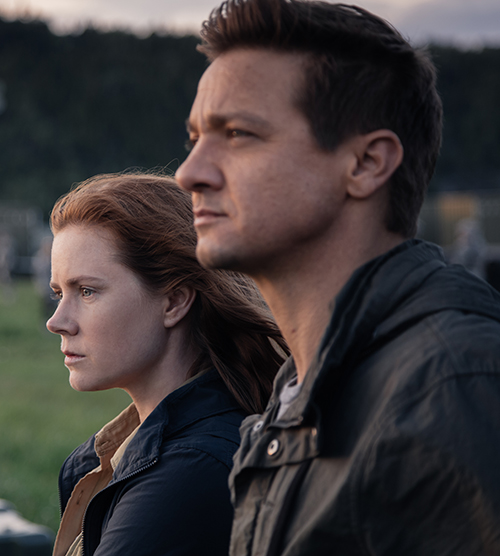
Amy Adams and Jeremy Renner

Amy Adams and Jeremy Renner

In the United States, one of the pods has “landed” in Montana and an elite team is scrambled to find out what’s going on. A key member is college professor Louise Banks (Amy Adams), a linguist and communications expert whose outstanding translation chops are already renowned by the U.S. military, especially to Col. Weber (Forest Whitaker).

Whisked away in the middle of the night on a military chopper, Louise is teamed with a mathematician and man of science, Ian Donnelly (Jeremy Renner). Can the two of them decipher the extraterrestrials’ language, decode their message and determine their intentions—before the rest of the world freaks out and starts shooting?

Working from a screenplay based on a short story by Ted Chiang, director Denis Villeneune, best known for the taut Prisoners (2013) and the gritty drug-war thriller Sicaro (2015), creates a trippy, timely tapestry about the power of communication—and about the possibilities of “language” far beyond simply spoken or written words.

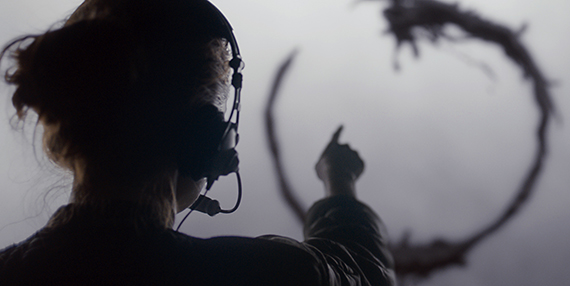
ARRIVALOnly hours later, inside the pod, Louise and Ian interact—on the other side of a large window—with a pair of aliens, enormous, seven-legged, squid-like creatures that communicate in dark, circular “squirts.” These circles, Louise and Ian discover, are the aliens’ alphabet, their language, and pieces of a much larger puzzle—the keys to unlocking something much, much bigger and infinitely more mind-blowing.

To reveal much else ventures into spoiler territory, but suffice it to say that when Louise cracks the code, there’s an ambiguity about a word that sends everyone into an international panic. A prequel to the whole alien “arrival,” at the very beginning of the film, sets up the entire movie and becomes its heart and soul in ways you won’t know until the ending twist. Amy Adams is brilliant as Louise, and it’s refreshing to see a whip-smart sci-fi movie that powers through so strongly and confidently on a character, an emotional human story and a performance, instead of special effects.

And coming on the heels of such a rancorous, noxiously loud political season, in an era of so much noise blasted ceaselessly over so many channels, this movie’s uplifting message about the unifying power of communication—to reach beyond time and space, as a tool instead of a weapon, to heal instead of harm, and to build bridges instead of barriers—is a welcome Arrival, indeed.

—Neil Pond, Parade Magazine
Tagged , , , , ,

The Doctor Is In

Benedict Cumberbatch makes big-screen magic in ‘Doctor Strange’

null

Doctor Strange
Starring Benedict Cumberbatch, Tilda Swinton & Chiwetel Ejiofor
Directed by Scott Derrickson
PG-13

I never really got Doctor Strange. A neurosurgeon who became a sorcerer, he just didn’t capture my youthful imagination—or my comic-book coinage—the way other superheroes did. Spider-Man was a zippy, zappy teenager. Thor was a god. The Silver Surfer was a surfer…and silver!

Doctor Strange was some older, kinda creepy grown-up dude with a moustache, a soul patch and a big red cape, who always looked like he had a swirl of mist coming out of his hands.

Well, after seeing him portrayed on the big screen, I clearly underestimated—or just plain overlooked—the guy. But I’m certainly a believer now.

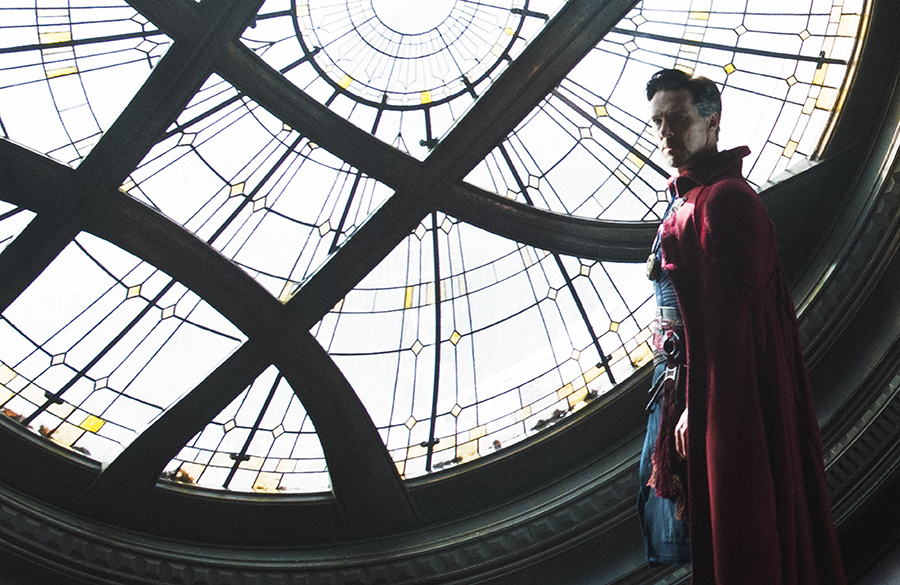
The newest entry in the long line of Marvel Comics superhero sagas, the new Doctor Strange introduces Oscar-nominated Benedict Cumberbatch as the arrogant, self-centered and wildly successful brain surgeon whose career is shattered—along with his million-dollar hands—when his Lamborghini crashes off a curvy California roadway one rainy night.

doctorstrange570e9c2256226

The Ancient One (Tilda Swinton) gives Dr. Steven Strange an astral wallop.

Seeking “alternative healing” when all traditional efforts fail, Strange ends up at Kathmandu and the foothills of the Himalayas, where he meets the supreme sorcerer known as the Ancient One (Tilda Swinton). She shows him how “to reorient the spirit to better heal the body,” among other things—which include indoctrinating him into her secret society of wizard warriors, who’ve learned to harness and master all sorts of powerful secrets about space, time, consciousness, physics and matter.

The sorcerers, Strange also learns, are around to protect the Earth from dark forces of the cosmos who would do it harm—especially one particularly nasty malevolent entity and his zealots who want to conquer the planet.

null“I came here to heal my hands,” protests Strange, “not to fight in some mystical war.” But that’s exactly what happens—this is, after all, a Marvel movie. But it’s a doozy, and director Scott Derrickson—who cut his teeth on horror flicks like Sinister, Deliver Us From Evil and The Exorcism of Emily Rose—delivers a rollicking adventure with crisp wit, strong characters and visually impressive razzle-dazzle. I don’t usually recommend spending any extra dollars to see a movie in 3D or IMAX, but this one was made for both of those formats, and it’s definitely well worth the splurge—especially for a couple of eyeball-popping, jaw-dropping, kaleidoscopic, head-tripping sequences that beg to be seen on the biggest screen possible.

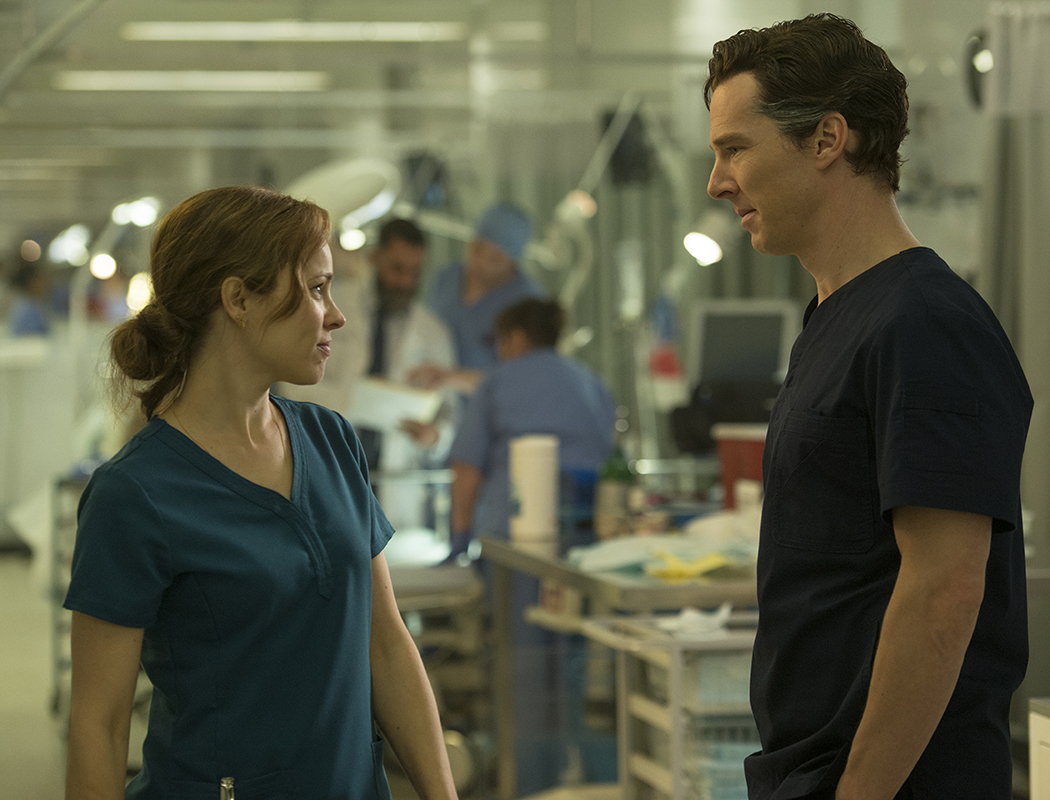
Rachel McAdams is Dr. Christine Palmer, Strange's former surgical colleague—and former lover.

Rachel McAdams is Dr. Christine Palmer, Strange’s former colleague—and former lover.

Cumberbatch, beloved as TV’s Sherlock and lauded for the mojo he’s brought to movies including The Imitation Game, 12 Years a Slave and Star Trek Into Darkness, steps into the role of Strange like he’s been waiting for it all his life. Chiwetel Ejiofor is Mordo, one of the masters in service to the Ancient One; Mads Mikkelson plays the traitorous Kaecilius, whose theft of a sacred text threatens to doom the planet. Rachel McAdams, strong and sassy as Strange’s surgical colleague and former lover Christine Palmer, could have used a few more scenes. But in a movie this packed with things to appreciate, it’s hard to complain—and I get the feeling she’ll have more time to shine later.

And Strange’s Cloak of Levitation is the most badass superhero cape ever. It’s got his back, in more ways than one.

The bonus-scene teaser during the final credits is a nod to the doctor’s appearance in the upcoming Avengers: Infinity War (2018). Clearly, Doctor Strange has taken his place in the Marvel pantheon. Welcome aboard, doc—I’ll definitely see you at our next appointment!

—Neil Pond, Parade Magazine
Tagged , , , , , , , , ,

Hot to Trot

Tom Hanks runs down another cryptic puzzle in ‘Inferno’

Tom Hanks;Felicity Jones

Inferno
Starring Tom Hanks & Felicity Jones
Directed by Ron Howard
PG-13
In theaters Oct. 28, 2016

“Dante—Dante again,” says Robert Langdon (Tom Hanks) as he gazes into the “face” of the late, great Italian poet of the Middle Ages. “Why always Dante?”

Well, it’s not always Dante—but it is this time. And it’s always something involving cloaks, daggers, art, religion and old, cold Mediterranean white guys, as fans of Dan Brown know. Brown is the author who wrote the books Inferno and its two predecessors, The Da Vinci Code and Angels and Demons, both of which were also turned into movies with Hanks in the starring role. Brown created the lead character, Langdon, as sort of his own fictional alter ego, a globetrotting, puzzle-solving “symbologist” and professor of religious iconography who repeatedly uncovers conspiracies, solves murders and peels back the layers of other murky mysteries.

In Inferno, Langdon wakes up in hospital room in Florence, Italy, with amnesia and a bloody head wound. Soon he and his nurse, Sienna (Felicity Jones), are running for their lives from a Terminator-like policewoman (Ana Ularu) and connecting the dots from Renaissance-era painter Sandro Botticelli’s painting of hell, inspired by Dante’s Divine Comedy, to a plot by billionaire scientist Bertrand Zobrist (Ben Foster), who just committed suicide. Zobrist’s radical idea of overpopulation control was “cleansing” the planet by wiping out most of the people on it with a viral-pathogen bomb, which he has timed to go off—tomorrow!

Langdon must find the bomb before it’s detonated, and before it’s located by anyone who might try to turn it into a weapon of war, ransom or terrorism.

Langdon (Tom Hanks) and Sienna (Felicity Miller) study 'The Map of Hell'

Langdon (Tom Hanks) and Sienna (Felicity Miller) study Botticelli’s painting of ‘The Map of Hell’

Director Ron Howard, who was also behind the camera for Da Vinci Code and Angels and Demons, keeps things moving, literally. As they put together the clues that will lead them to the bomb, Langdon and Sienna are constantly on the go—dashing through crowded streets, ducking in and out of cars, taxicabs, trains and planes, and across a gigantic attic, through a garden, over a wall, into side doors, back doors and hidden passageways.

Who can Langdon trust? What’s the deal with that dude from Slumdog Millionaire, Jurassic World and The Life of Pi (Irrfan Khan) and his drawer full of knives, and that mystery woman (Danish actress Sidse Babett Knudsen, currently starring in HBO’s Westworld) in Langdon’s unsettling flashbacks? Who knew there were so many unlocked doors in Italy?

 And the movie never stays put, either. It’s filled with beauty shots of recognizable tourist highlights from all the places Langdon’s search takes him. In Florence, he visits the Baptistry of Saint John and the palatial Palazzo Vecchio; he runs through Boboli Gardens and the Vascri Corridor. A side trip to Venice lets our characters linger on the steps of St. Mark’s Basilica, pontificating about the history of the four bronze horses standing guard there. In Istanbul, we’re treated to a lovely shot of the walls of Constantinople and the movie’s soggy, splashy climax, which takes place in the subterranean 6th century Basilica Cistern.

It all feels like a ridiculously expensive, high-stakes reality-show scavenger hunt, with a preposterously contrived plot twist. And like all of Robert Langdon’s adventures, it takes place in one tidy, 24-hour period.

Kids, if you want to grow up and see the world, by all means, see the world. If you want to solve puzzles, there are plenty of books of Sudoku and there’s always a daily crossword. I’m just afraid I can’t recommend becoming a symbologist—there’s far too much running involved, it’s very dangerous, and Robert Langdon seems to have the market cornered.

—Neil Pond, Parade Magazine
Tagged , , , , , , , , , ,

Ghoulish Game

Dark portal to spirit world opens Ouija: Origin of Evil

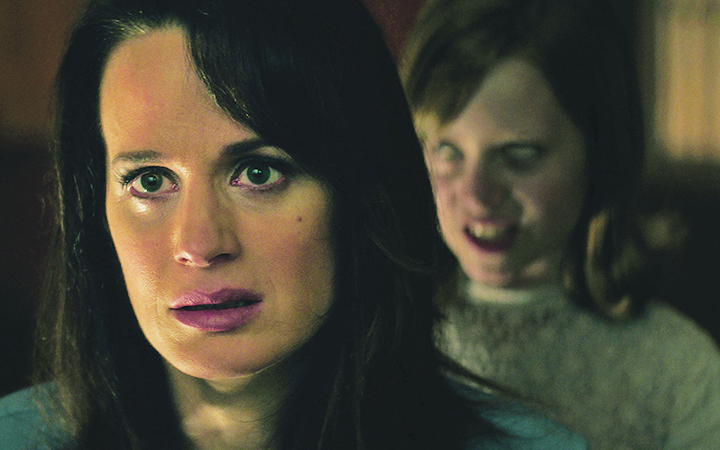
Watch out! Elizabeth Reaser and Lulu Wilson star in 'Ouija: The Origin of Evil.'

Watch out! Elizabeth Reaser and Lulu Wilson star in ‘Ouija: The Origin of Evil.’

Ouija: Origin of Evil
Starring Elizabeth Reaser, Annalise Basso, Lulu Wilson & Henry Thomas
Directed by Mike Flanagan
PG-13
In theatres Oct. 21, 2016

When I was a kid, my older teenage cousin had a Ouija board. She mostly used it, at least it seemed to me—moving the plastic, teardrop-shaped “planchette,” the thing with three little legs and a see-through hole—over the letters to answer questions about her boyfriend, Slick.

There was nothing very otherworldly about it, and nothing very ominous; when Ouija didn’t give her the answers, she turned to another oracle, the Magic 8 Ball. I think there may have been some Tarot cards and incense in there somewhere, too. Anyway, she and Slick didn’t last very long.

In this movie, set in 1967, we first see the Ouija board game nested, innocently enough, within a stack of other popular games of the era, including Candyland, Sorry! and Monopoly. But in a movie subtitled “Origin of Evil,” how long do you think it takes before that ol’ black magic begins to stir?

Ouija: Origin of Evil is actually a prequel to Ouija, the 2014 movie about a group of teens who noodle around with a Ouija board and unlock the portal to a dark, dangerous spirit world. In the new Ouija, a widowed mom working as a fake spiritualist (Elizabeth Reaser) adds a new stunt—the Ouija board—to pep up her fake séance business. In doing so, she makes the same mistake, rolling out the welcome mat for a host of malevolent spirits to take over her home.

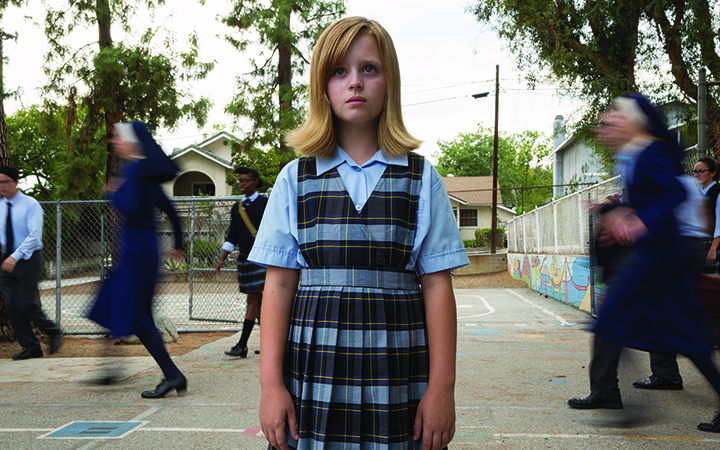
Film Title: Ouija: Origin of EvilAnd they’re particularly interested in her youngest daughter, Doris (Lulu Wilson), who begins speaking in strange voices, seeing things invisible to everyone else and writing in a foreign language. And all that’s before things start getting really weird, creepy and calamitous.

Mom thinks Doris is good for business, but her oldest daughter (Annalise Basso) is freaked. The headmaster priest at the girls’ Catholic school (Henry Thomas, all grown up from E.T. the Extra-Terrestrial) is concerned. When he pulls up in front of the house to check things out, the background music mimics the iconic theme from The Exorcist.

Co-writer and director Mike Flanagan does a very nice job with the late ’60s vibe—the movie genuinely feels like something happening in the era of moon missions, late-night TV test patterns, macramé sweaters and big American-made cars. It also feels like something of the era, from the golden retro glow of its colors to the clever reel-change cues “burnt” into the corners of scenes, an homage to a time when its kind of fright-night scares were something you’d see at drive-ins and double-features—a pre-digital era when projectionists would need visual cues to stay on their toes.

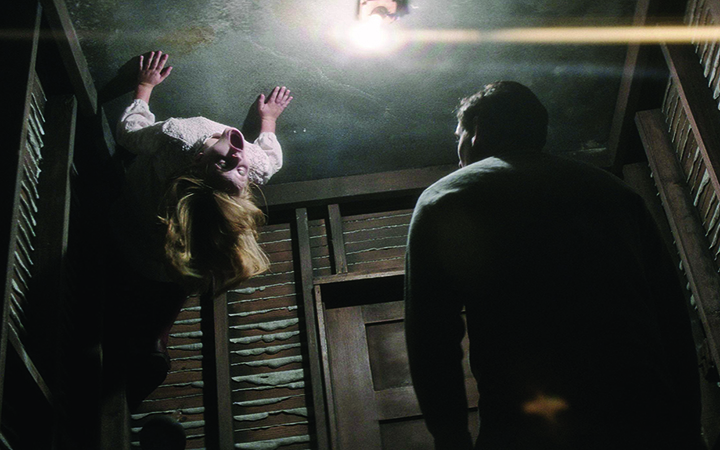
Film Title: Ouija: Origin of EvilRed-eyed, hissing demons—check. Adorable tyke who undergoes terrifying body transformations and crawls on the walls and walks on the ceiling—yep. Slingshots and stitching needles, comin’ right at your nightmares—got ’em. If you’re looking for some straight-up, mainline Halloween haunted-house “gotchas,” this date-night ride has a slow start, but builds to a wild, crazy, screaming finish.

The performers are all good, especially the youngsters. Watch out for Lulu Wilson, who played Mikayla on TV’s The Millers; she reminds me of a young Reese Witherspoon. And Annalise Basso—terrific earlier this year as one of the kids in Captain Fantastic—shoulders more and more of the movie as it goes on, shifting her teen-sister role into a stronger, more significant lead as the plot progresses.

Can playing with a Ouija board open up the door to hell? It certainly does in the movies—and my cousin’s ex-boyfriend Slick might have thought so. And maybe that that’s why I’ve always been more of a Monopoly, Operation and Mousetrap guy myself.

—Neil Pond, Parade Magazine

Tagged , , , , , , ,

Birth Rights

Bracing, provocative ‘Birth of a Nation’ resonates with righteous unrest

The Birth of a Nation
Starring Nate Parker, Armie Hammer & Penelope Ann Miller
Directed by Nate Parker
R
In theaters Oct. 7, 2016

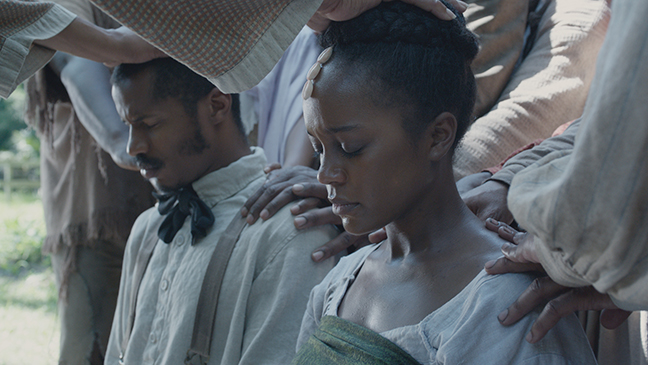
In 1831, 31-year-old Nat Turner led a slave uprising in Virginia that resulted in the deaths of more than 50 white men, women and children, and the retaliation of white mobs and militias that killed some 200 blacks—including many who were not involved in the rebellion.

A “literate” black who could read and write, Turner grew up on Bible stories and later held worship services for his fellow slaves. He eventually came to believe that God had finally seen enough of the injustices of slavery, and was calling him to lead a slave army on a march of vengeful, wrong-righting insurrection.

When a solar eclipse darkened the sky over the cotton fields one day, Turner knew he’d seen his sign—he’d gotten his “go” signal. The timing, as they say, was right.

The timing was right for director and star Nate Parker, too, when he opened his movie about Nat Turner earlier this year at the Sundance Film Festival. The Birth of a Nation was a smash, a stunner, a shocker. Landing smack in the middle of the #OscarSoWhite controversy—about the lack of diversity among the 2016 Academy Awards nominees—it was a bracing, provocative blast of black-powered, top-to-bottom talent, and a topic, that couldn’t be ignored.

And it wasn’t. Fox Searchlight forked over $17.5 million for the distribution rights, a Sundance record, to get the film into theaters by the end of the year.

The film also recently opened the 10th annual International Black Film Festival in Nashville, Tenn., just ahead of its wide theatrical release.

 Armie Hammer as Samuel Turner Nate Parker as Nat Turner and Jayson Warner Smith as Earl Fowler

Armie Hammer as Samuel Turner, Nate Parker as Nat Turner and Jayson Warner Smith as Earl Fowler

The Birth of a Nation is a powerful piece of filmmaking, and a mighty impressive work, especially as Parker’s debut as a director. It takes a little-known event from America’s shameful past and elevates it to rousing, epic proportions. Both in front of and behind the camera, Parker shows the humanity as well as the horrors of slavery in the antebellum South, and the evils of an entire economic system built upon the systematic exploitation of a population for profit, regardless of the “kindness” or cruelty of any individual master, landowner, merchant or anyone else who benefitted.

Armie Hammer plays Turner’s second-generation master, Samuel Turner, whose benevolence is eclipsed by his desire to keep his estate financially secure and reputable—at whatever the cost. Penelope Ann Miller is Samuel’s mother, who teaches young Nat to read, which has enormous repercussions. Jackie Earle Haley is a sadistic slave hunter. Gabrielle Union portrays Esther, a slave wife forced to spend an evening as “entertainment” for one of Samuel Turner’s drunken guests.

Aja Naomi King plays Nat Turner's wife, Cherry.

Aja Naomi King plays Nat Turner’s wife, Cherry.

Yes, it’s sometimes hard to watch—to see Turner tied to a post and horsewhipped to a pulp, to watch a little white girl lead a little black girl around with a rope “leash” around her neck, to witness a slave get his teeth get bashed out with a hammer. And a couple of—pivotal—rape scenes are particularly discomforting, given how the movie has reactivated the spotlight on Parker and his screenwriting collaborator Jean Celeste and the charges that were brought against them in 1999 as college students that they raped a fellow student; Parker was acquitted, the charges were dropped on Celeste after he appealed, and the woman who accused them committed suicide.

Different audiences will see this movie through different prisms, quite obviously. Some people won’t want to see it at all, for various reasons. Given the inflamed, highly polarized state of affairs across the nation, the Black Lives Matter movement and protests about police treatment of blacks, racial profiling, our national anthem and criminal injustice, the film resonates with a righteous unrest that rings far beyond events that happened 175 years ago.

“They’re killin’ people everywhere for no reason all than bein’ black,” says Turner’s wife, Cherry (Aja Naomi King).

In so many ways, the timing for Parker’s film about Nat Turner feels so right, and so right now.

—Neil Pond, Parade Magazine

All Aboard

‘The Girl on the Train’ is dark, juicy fem-centric thriller

Film Title: The Girl on the Train

The Girl on the Train
Starring Emily Blunt, Haley Bennett & Rebecca Ferguson
Directed by Tate Taylor
R

“My husband used to tell me I have an overactive imagination,” says Rachel (Emily Blunt), watching the scenes of New York’s Hudson Valley go by as she stares out the window of the train she takes on her daily commute into the city.

Those scenes, that train and that “girl”—Rachel—drive the drama in the highly anticipated big-screen adaptation of British author Paula Hawkins’ 2015 thriller, which has sold some 11 million copies worldwide.

After her divorce, Rachel spiraled even deeper into her alcohol-soaked resentment—and it tortures her every day when the train passes her old house, now occupied by her former husband, Tom (Justin Theroux), his new wife and former mistress, Anna (Rebecca Ferguson), and their new baby daughter.

Haley Bennett

Haley Bennett

But it’s another house, and another set of occupants, that really intrigues Rachel. A beautiful young blonde woman (Haley Bennett) and her adoring husband (Luke Evans) seem to be so obviously, passionately, completely in love. Sipping on vodka as the train zips by, morning and night, Rachel fantasizes about them, and especially about her. “She’s what I lost,” she muses. “She’s everything I want to be.”

The young woman’s name is Megan, and she works as Anna and Tom’s nanny—and loathes it.

As Rachel’s bitterness about Tom and Anna grows, her voyeuristic beguilement with Megan intensifies when she sees her in the embrace of another man, triggering Rachel’s memories of her own husband’s unfaithfulness. One evening Rachel goes on a drunken tirade about Anna the “whore,” takes the train to her neighborhood, but then blacks out—and wakes up the next morning covered in mud and blood.

And Megan has disappeared—or worse. When Allison Janney steps in as a homicide detective, it becomes a murder case. (Did the screen suddenly pick up a stream of CSI: Westchester County or something?) Did Rachel do it? She honestly doesn’t remember. And as blurry as her memory is, she wants to find out the truth, as twisted as it might turn out to be.

Rebecca Ferguson

Rebecca Ferguson

Tate Taylor—who also directed The Help (2011), another drama with a powerful female ensemble—builds the mystery by toggling between Rachel, Megan and Anna and each of their stories, going backward and forward in time to pick up pieces of the fractured, fragmented puzzle.

The performances are all super-solid, especially from the three women playing the triad of females in various states of personal misery and psychological abuse; as the movie takes us deeper into their stories, we see how they all connect, interweave and eventually collide. It’s about secrets, lies, loneliness, love, infidelity, rage, motherhood, things that aren’t always as they seem, and layers and layers of buried hurt and loss that finally come frothing to the surface, spilling into the light. The shocking conclusion splashes out dark, red and juicy—a catharsis that taps a wellspring of pent-up emotions.

Emily Blunt is an extremely versatile actress who’s done musicals (Into the Woods), comedy (The Devil Wears Prada), sci-fi (Edge of Tomorrow, Looper), family flicks (The Muppets), fairy-tale fantasy (The Huntsman: Winter’s War) and action (Sicaro). Now she’s landed a role that will get her even more serious mainstream attention. For her, especially, this Train is just the ticket.

—Neil Pond, Parade Magazine
Tagged , , , , , , , ,