Hollywood buffs out rough edges of Jeannette Walls’ tough survivor’s tale
 The Glass Castle
Starring Brie Larson, Woody Harrelson & Naomi Watts
Directed by Destin Daniel Cretton
PG-13
Family, man.
That’s where it’s at. Hollywood loves family—think of the countless movie comedies and dramas you’ve seen with clueless parents, crazy relatives, squabbling spouses and precocious kids.
The Glass Castle has its own version of all that, all rolled together. It’s based on the best-selling memoir by Jeannette Walls, the former newspaper reporter, magazine writer New York City gossip columnist whose tale captivated readers with the wrenching details of her nomadic, poverty-stricken childhood.
Walls and her two young siblings were taken by their deeply dysfunctional parents across the country, from one dilapidated, often abandoned house to another, often just one step ahead of the law, creditors and child protective services. Their mother, Mary Rose, who fancied herself an artist, would rather paint than provide meals for her kids; father Rex was an alcohol-fueled, cigarette-puffing schemer and scammer who railed against the “system” and dreamed of one day building a solar-powered castle made of glass.
There was love, but there was also screaming, fighting and drinking and an apparent inability to hold down—or even seek—any kind of job.

Brie Larson
Woody Harrelson and Naomi Watts play the parents, and three different groups of actors portray Jeannette and her brother and sisters at different ages and stages, told in overlapping flashbacks. Brie Larson anchors the tale as grown-up Jeannette prepares in the late 1980s to marry a successful young Wall Street broker (Max Greenfield, who played Schmidt on TV’s New Girl) in a final defiant act to break free from her past.
But she can’t shake off the literal and psychological scars of her childhood.
You might recognize several of the younger performers. Shree Crooks, who plays Jeannette’s younger sister Maureen, was Scarlett Lowe in American Horror Story, and also one of the kids in the Oscar-nominated Captain Fantastic. Sister Lori is played by Sadie Sink, who you’ll recall as Max if you watch Stranger Things. Iain Armitage, who has a couple of scenes as little brother Brian, will star this fall in The Big Bang Theory spinoff series Young Sheldon.
But it’s young Ella Anderson, as young Jeannette, who steals the show—and your heart. Anderson starred on the Nickelodeon series Henry Danger and had roles in the movie comedies The Boss and Mother’s Day, and her expressive face shows just how Rex’s weakness and failures eventually crushed and scattered all his children.
But the relationship between a parent and a child can be a paradoxical and complicated thing, and Jeannette later confesses that her father is the smartest man she’s ever known.

Ella Anderson & Woody Harrelson
It’s one thing to watch Swiss Family Robinson and be entertained by Walt Disney’s fanciful account of how a shipwrecked father, his wife and their kids built a life on an island with bamboo, coconuts and palm fronds. It’s another to know The Glass Castle is based on a true account grounded in issues of mental illness and addiction, of irresponsible parents who willfully let their kids live in rundown shacks with no electricity, go without food or medical attention, and do nothing when they were physically abused—and how, at least in the movie, everything comes out in the feel-good, all-is-forgiven wash.
Instead of the gritty, spunky survivor’s tale of triumph in the book, the movie is essentially a Hollywood melodrama about quirky, wayward, happy-go-lucky bohemian parenting. Harrelson and Watts give it their best, and so does Larson, who won an Oscar for Room, particularly since she’s basically little more than a recurring supporting player. But the documentary footage over the credits suggests that the real story of the real people they’re playing would likely be far more interesting than this glossed-over dramatization, which seems to buff out some rougher, tougher edges, including an attempted rape and childhood sexual assault.
At one point, the children have gone for days eating only butter because there’s no other food in the house. Then they apparently go for several days more after Rex spends all the household money on an all-night booze bender. The movie never picks up the no-food, we’re-starving idea again—and neither do the children. Did the kids get anything else to eat? What? How? When?

There are laughs, there are tears—in one scene, they actually drip off Brie Larson’s quivering chin. But mostly, there’s a sense that everything that happens brings Jeannette closer to her family—to her siblings, her mom and even to her dad.
At a dinner—with more tears—at the end of the movie, Jeannette says simply, “I feel lucky.” And everyone gives a glowing toast to Rex, the dreamer, schemer and drunkard, ne’er-do-well father who kept them together until he finally drove everyone apart.
Wow. Score one for extremely well-adjusted kids. At least in the movies.
Family, man.
In theaters Aug. 11, 2017
 Detroit
 By day three, the Michigan governor has called in the national guard, and soldiers in jeeps and tanks patrol the streets. Neighborhood by neighborhood, the city becomes a war zone as African-American hopelessness, helplessness and rage erupt in widening spasms of destruction—and the police and the military strike back with sometimes lethal force.

 Atomic Blonde
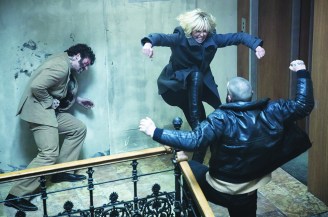 Director David Leitch, a former stuntman who directed Keanu Reeves in John Wick, certainly knows how stage boffo fight scenes, and he sets up a few doozies here. One in particular, which occurs toward the end of the movie, is nearly five minutes long, shot in a single unbroken take into a building, up an elevator, down a stairwell, through an apartment and finally into the streets for a slam-bang car chase.



 A Ghost Story
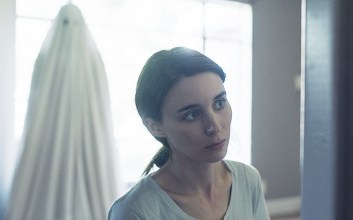 Back at his home, the ghost silently watches his wife come and go. He tries—unsuccessfully—to “reach out” and touch her. But she is unaware of his presence. When she comes home from a date with another man, the ghost has a jealous poltergeist moment—light bulbs burst and books fly off the shelf. (One of the books opens to a page of the Virginia Woolf short story “A Haunted House,” quoted at the beginning of the film.)
 Affleck and Mara’s characters are never named, but in the credits they are identified as “C” and “M.” Of course, C is for Casey and M is for Mara. But coincidentally, C is also the Roman numeral for 100 and M is for 1,000—and in this movie, those quantities could easily signify years.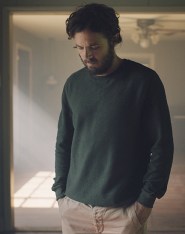
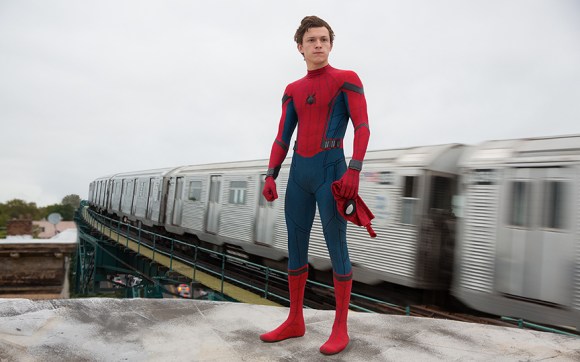 Spider-Man: Homecoming
 He gave a teaser cameo appearance as Spidey in last year’s Captain America: Civil War, and the movie creatively begins with Peter’s “home video” leading up to his experience in that film’s “clash of the Avengers” tarmac scene.
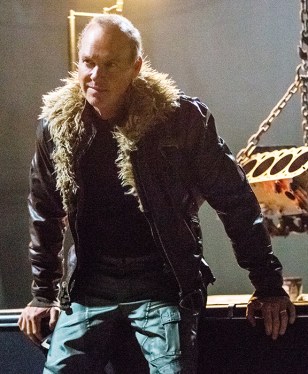
 Despicable Me 3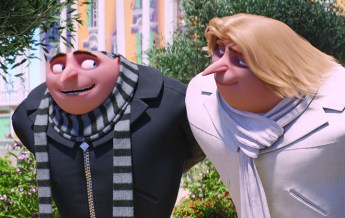
 Kristin Wiig returns to her DM2 role as Lucy, Gru’s feisty secret-agent wife. Miranda Cosgrove, Dana Gaier and Nev Scharrel provide the voices of Gru and Lucy’s three young adopted daughters, whose heartwarming subplot becomes a warm center to all the movie’s madcap swirl of sight gags.
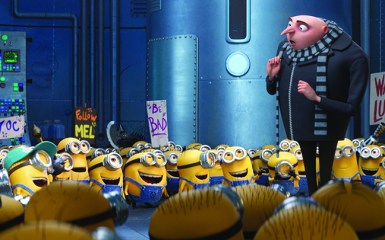 In this movie, the Minions crash an America’s Got Talent-style TV competition, get sent to prison and escape by making an elaborate flying machine—out of stitched-together prison uniforms, toilets and other jailhouse odds and ends.
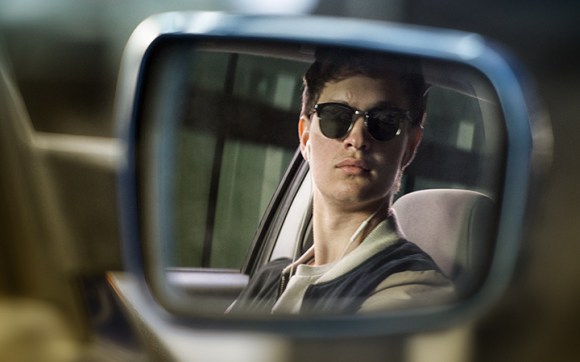 Baby Driver
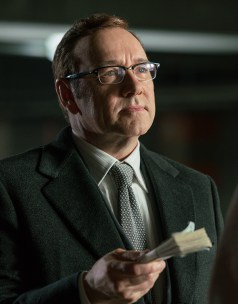
 Baby meets a beautiful waitress, Debora (Lily James, from Downton Abbey and Disney’s Cinderella), who has a dream of wanting “to head west…in a car I can’t afford with a plan I don’t have.” Debora tells Baby she has an older sister, Mary, who got all the good songs, like “Proud Mary,” “Hello Mary Lou” and The Monkees’ “Mary, Mary.” She tells Baby, admiringly, that “Every song is about you.”


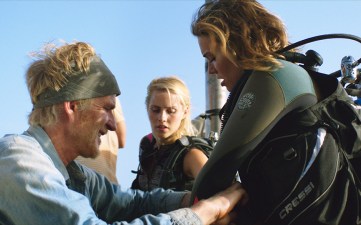
 British director Johannes Roberts knows how to startle, spook and surprise. Even if you didn’t see any of his previous flicks, the titles alone—The Other Side of the Door, Forest of the Damned, Hellbreeder—should give you a pretty good indication that he loves poking around dark corners, keeping audiences guessing, and cranking up the suspense.
 The Media Tourist