Ed Helms shuns spotlight in quirky rom-com about Hollywood substrata
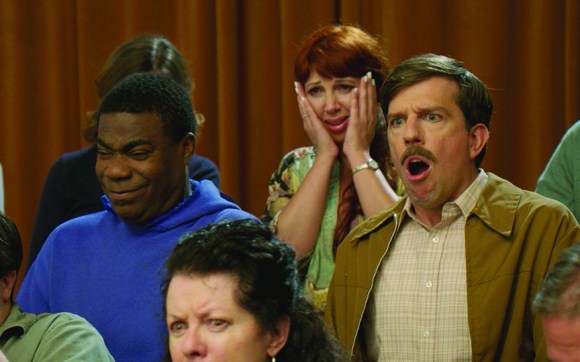
Tracy Morgan & Ed Helms are paid audiences members at infomercial tapings in ‘The Clapper.’
The Clapper
Starring Ed Helms & Amanda Seyfried
Directed by Dito Montiel
R
There are many ways of “making it” in Hollywood, and not all of them involve landing a juicy role on N.C.I.S., receiving an Academy Award or getting a star on the Walk of Fame.
For Eddie Krumble, making it means being a paid audience member at tapings of TV infomercial programs, where he dutifully laughs and applauds on cue and sometimes gets an extra 50 bucks to stand up and ask a scripted question—like, “So you mean to tell me, with no money down…I could buy a house?”
Krumble (Ed Helms) isn’t well-off, by any means. He’s barely getting by, zipping around in his little blue car when he can afford to buy gas, taking the city bus when he can’t, and using a computer at the nearly doughnut shop. But he’s satisfied, meeting up with his group of fellow “clappers,” including his best friend Chris (Tracy Morgan), and checking in daily for assignments with the infomercial casting agent, Louise (Leah Remini from TV’s Kevin Can Wait).
He’s found his groove—his job, his little niche in La La Land.
His mother (Brenda Vaccaro) badgers him over the phone about his lack of ambition. She thinks he’s in Hollywood to make a bigger splash, to become a bona fide actor. Eddie insists he’s fine being part of the background, part of the crowd. “I blend in,” he tells her. “I get paid to clap. That’s what I do.”
Director Dito Montiel—whose handful of other films includes Boulevard, starring Robin Williams—wrote the screenplay based on his own experiences with a friend when they both arrived in Los Angeles from New York and found work as sketchy “research marketers” and paid studio-audience members.
In The Clapper, the plot quickly thickens and things get a bit sticky for Eddie. A popular late-night L.A. talk-show host, the Letterman-esque Jayme Silverman (Russel Peters), fixates on “the clapper.” He wonders about the identity of the mystery man who keeps showing up in the audience of so many cheesy infomercials. Silverman blasts the screen with freeze-frame enlargements of Eddie’s face and challenges his audience to “out” the clapper, find who he is. Silverman wants him on his show.
Silverman’s camera crews scour the city looking for The Clapper and people who might know him. Giant billboards appear along Hollywood Boulevard. Clapper “spotters” create YouTube videos that become viral sensations. An enterprising producer finds Eddie’s phone number and tells him he’s “the biggest thing to hit late-night since Stupid Pet Tricks.”
Suddenly, blending in isn’t so easy for Eddie.
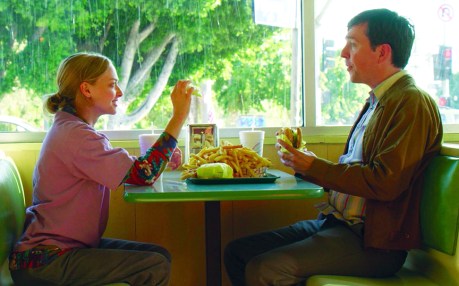
Amanda Seyfried plays Ed’s girlfriend, Judy.
All this complicates things for Eddie and his new girlfriend, Judy (Amanda Seyfried), who doesn’t quite understand any of it. She works as a gas station attendant and her TV is broken, so she’s totally out of the loop of Eddie’s infomercial “fame.” Eddie shields her from the messy details—until they come knocking at the Plexiglas window of Judy’s attendant booth.
There’s an edge of spoof-ery to The Clapper, about TV culture, exploitation, infotainment, privacy and talk shows—and what happens when “reality” TV gets a little too real. Adam Devine of Maroon 5 plays a producer; in what would be his last acting role before his death in 2016, former Growing Pains star Alan Thicke does a dapper, self-deprecating turn as a pitchman-for-hire; Dallas Mavericks owner and Shark Tank investor Marc Cuban appears as himself in the greenroom, waiting to appear on Silverman’s show.
But there’s also plenty of sentiment to go with the satire. The Clapper is a small movie with a big, generous heart; it never makes fun of its characters, even the guy who trots around downtown Hollywood at night in diapers, or the dude dressed up like a big baked potato. Helms, known for his comedic roles on TV’s The Office and in The Hangover movies, plays Eddie as a naïve, sheepish sadsack; you eventually find out the source of the heaviness he carries around like weights in the pockets of his baggy pants. Seyfried, who’ll star in Mama Mia: Here We Go Again in July, gives Judy a mousy, lovelorn beauty, and you never doubt for a second the magnetic mojo of those big, blue eyes.
The two of them make a cute couple, and when the riptide of Silverman’s show eventually tears them apart, you root for them to get back together.
Quirky and sweet, The Clapper illuminates a substrata of Hollywood working-class culture that doesn’t typically get the spotlight. It rallies around a group of characters who’ll never be “stars,” who live and work in the colorful, offbeat, teeming background—and who prefer it that way. Sometimes they meet and fall in love.
And I’ll clap for that.
In theaters Jan. 26, 2018


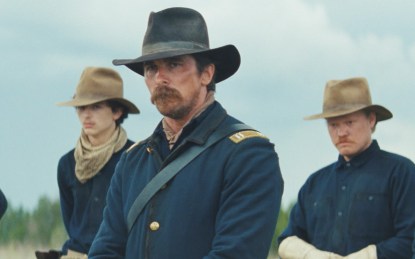


 Look, there’s Alison Brie, as Graham’s daughter and sounding board, Lally. Bob Odenkirk is reporter Ben Bagdikian, whose contact at the government-backed Rand Corporation, Daniel Ellsberg (Matthew Rhys), exposes the massive cover-up—which spanned four presidential administrations—and delivers 7,000 pages of documents to the Post and its competitor, The New York Times. Carrie Coon plays Post writer Meg Greenfield; Bruce Greewood is former Secretary of Defense Robert McNamara, a major architect of the Vietnam War under Presidents Kennedy and Johnson.



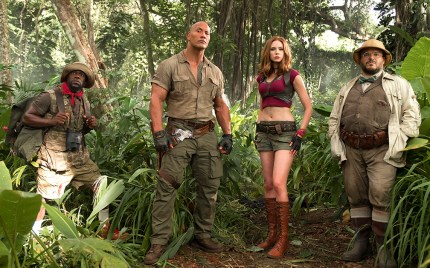 For maximum comedic effect, nerdy, scrawny Spencer is now brawny expedition leader Smolder Bravestone (Dwayne Johnson). Fridge, the school’s hunky star football player, has become pipsqueak zoologist Moose Finbar (Kevin Hart). Wallflower Martha is sexy Ruby Roundhouse (Karen Gillan, from Guardians of the Galaxy and TV’s Dr. Who), a kick-ass martial-arts expert. And self-absorbed Bethany is horrified to discover she’s been turned into a pudgy, middle-aged man, Professor Shelly Oberon (Jack Black).
 Bravestone, Moose, Ruby and Professor Oberon have to put together a map and dodge leaping alligators, rampaging rhinos, hungry, hungry hippos, hissing snakes and a gang of ninja bikers. The on-location Hawaii settings are lush and gorgeous. Johnson hangs out of a helicopter zooming though a canyon and leans onto the top to fix its defective rotor, so it won’t crash into a mountain ahead. Whew!
 Star Wars: The Last Jedi






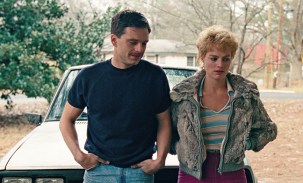
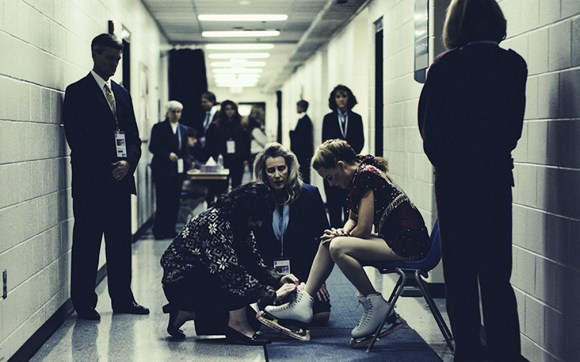
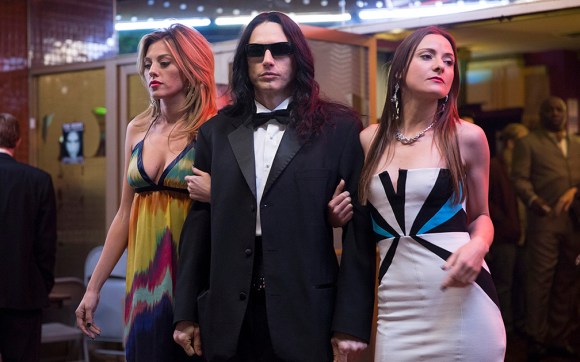 The Disaster Artist
 Many celebrities are among The Room’s ardent fans, and a lot of them are sprinkled throughout The Disaster Artist. If you bring a scorecard, you’ll have to work fast to check off Josh Hutcherson, Megan Mullally, Zac Efron, Lizzy Caplan, Seth Rogen, Nathan For You Fielder, Bryan Cranston, Sharon Stone, Melanie Griffith, J.J. Abrams, Ari Graynor, the real Greg Sestero, Christopher Mintz-Plasse, Zach Braff, Hannibal Buress, Randall Park, Paul Scheer, Jacki Weaver, Casey Wilson and more.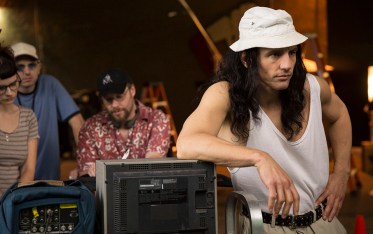

 To return home, he must get his family’s blessing—not an easy task, since Miguel wants to play music, and everyone in his family, on both the living and dead side, is dead-set against it.
 Rather than just use Mexico as a starting point, the movie dives deep into Hispanic customs, folklore and visual elements, particularly Día de Muertos, from start to finish. Miguel’s pooch, Dante, is a Xolo dog, the national canine, nearly hairless creatures long thought represent the Aztec god of fire and lightning. Dante, a real goofball at first, becomes much more than just a tail-wagging sidekick. Frida Kahlo (Natalia Cordova-Buckley), Mexico’s legendary painter, appears as an “afterlife” conceptual artist whose wildly inventive media creations take on thrilling new dimensions in the anything-goes underworld.
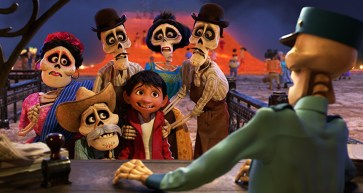 And they obviously spent some time soaking up vibes with real family members. Coco is all about what it means to be a part of a group, a clan, a family. Get your tissues ready for the final minutes. Bring the extra-ply packets, if you’ve got any left over from watching the wrenchingly bittersweet closing moments of Toy Story 3, when Andy says his college goodbyes to Woody and Buzz, or Ellie and Carl’s “flashback” scene in Up.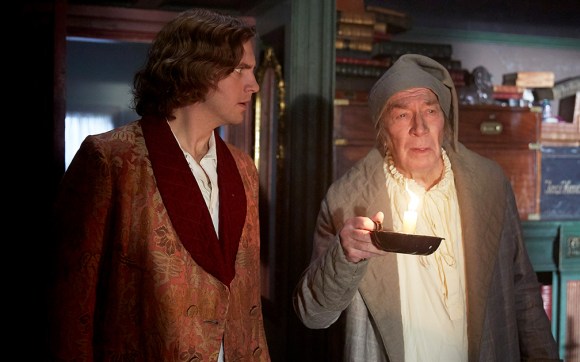
 Director Bharat Nalluri, who has mostly worked in television, creates a thriving scene of London in the early 1840s, where the upper classes often had to rub coattails with the city’s poor. In an inventive twist, we meet characters in Dickens’ real life who spark his imagination for his book as he struggles to find creative inspiration and wrestle with his own past.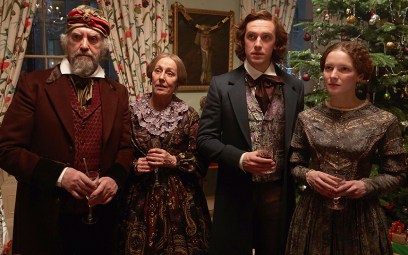
 The Media Tourist