Tag Archives: neil pond

Bull’s-eye

‘American Sniper’ aims for entertainment & something deeper

AMERICAN SNIPER

American Sniper

Starring Bradley Cooper & Sienna Miller

Directed by Clint Eastwood

R

If you were one of the millions of people who read Chris Kyle 2012 bestseller American Sniper: The Autobiography of the Most Lethal Sniper in U.S. Military History, you might have thought, “That’d make a great movie!”

Steven Spielberg, thought so, too, and wanted to direct it. Bradley Cooper, who’d already ventured into executive roles with his Silver Linings Playbook and American Hustle, agreed, and wanted to produce it—and wanted Chris (Guardians of the Galaxy) Pratt to star in it.

But in Hollywood, things don’t always end up the way they start out. Spielberg decided to take a pass, and Clint Eastwood stepped in. And Cooper decided not only to produce, but also to play the leading role of the highly decorated U.S. Navy SEAL, who killed more than 160 “hostiles” during four tours of duty in the Iraq War—before his life took its own ironically tragic turn.

TA3A6997.dngIt would have no doubt been different, with a different director and a different leading man, but it’s hard to imagine it being much more successful, dramatically stronger or more emotionally visceral. Eastwood and Cooper both bring their A games for this taut, tense, terse drama that depicts Kyle’s trajectory from Texas good ol’ boy to one of the military’s most effective killing machines, as it also bites down hard on the psychological effects of war, violence and combat that linger long after the fighting is over.

Cooper is an undeniably versatile actor; he’s done serious drama as well broad comedy. But this role is unlike anything he’s ever undertaken, requiring him to bulk up with 30 pounds of muscle and take on a vowel-stretching Lone Star drawl to play Kyle, who knocked around as a rodeo cowboy before enlisting in the SEALs after watching TV coverage of the 9/11 terrorist attacks.

0696974.tiff

Sienna Miller

Sienna Miller plays his frustrated wife, Taya, who watches helplessly as her husband wrestles with emotional demons she can’t fathom each time he returns home from a tour.

Eastwood, 84, is a Hollywood icon best known as for his portrayal of a “hall of fame” of iconic cowboys, cops and other classic characters—but he’s also directed more than 30 movies, beginning back in the early 1970s, for which he’s won two Oscars.

Working with his longtime cinematographer Tom Stern, he sets up every shot with solid, no-nonsense precision. Every detail feels right: the paint on the scope of Kyle’s rifle, worn away by thousands of minute focusing adjustments; the makeshift U.S. outposts on the outskirts of Fallujah or Sadr City, where the plywood on the barracks for the troops looks so fresh you can almost smell it; the quick red splatters of blood, which splash across the bleached-out, blanched background tones like crimson punctuation marks, whenever Kyle’s aim is true.

Kyle’s reputation as a deadly marksman makes him feared among the Iraqi opposition—and highly valued as a trophy. Other snipers, including one known as Mustafa, have their sights trained on him. And then there’s a shadowy terrorist henchman, the Butcher, whose torture instrument of choice is a power drill. Be warned: There’s one particularly harrowing scene, involving an hysterical Iraqi family, whizzing bullets, dueling snipers, Kyle’s wife on a cell phone, a growling dog, and the Butcher and his drill. Eastwood doesn’t rub your nose in it for any longer than necessary, but it’s a terrifying reminder of atrocities of war.

“It’s a heck of a thing to stop a beating heart,” Kyle tells his young son, taking him on his first hunting trip, making him understand that killing anything is not to be taken lightly. Is American Sniper pro-war or antiwar? Is a sniper a hero, or just a soldier doing his lethal job? Where’s the line between civilization and savagery during wartime, and what’s the price of walking it? Can there ever be enough good to overcome evil? Eastwood wants viewers to watch, think and decide. American Sniper aims for entertainment as well as something even deeper, and hits its mark.

 —Neil Pond, Parade Magazine

Tagged , , , , , ,

Marching Across Time

‘Selma’ connects past and present at pivotal civil rights flashpoint

SELMA

David Oyelowo (second from left) stars as Dr. Martin Luther King Jr. in ‘Selma’

Selma

Starring David Oyelowo, Carmen Ejogo & Tom Wilkinson

Directed by Ava DuVernay

PG-13

It depicts events that happened half a century ago, but the drumbeat—and the heartbeat—of the present pounds loud and clear in Selma.

Set in the weeks leading up to March 1965, it’s a moving, powerful portrait of Dr. Martin Luther King and his passionate work to turn back the toxic tide of segregation and discrimination against African-Americans, especially in the South.

British actor David Oyelowo does a phenomenal job as King, conveying the combustive cocktail of faith, focus, outrage, diplomacy and drive that fueled his mission leading up to the “peaceful protest” marches from Selma to Montgomery, Ala., to bring national attention to voting rights. His King is no martyred saint, but a charismatic, pragmatic leader who can take sit-down meetings with the President in the White House, as well as a husband, father and family man trying to keep his own “house” from crumbling from pressures inside and out.

SELMA

Carmen Ejogo plays King’s wife, Coretta.

A scene in which King’s wife, Coretta (Carmen Ejogo, also terrific), confronts him over his well-known infidelities is a masterfully staged, perfectly written and expertly performed moment in which the silence becomes as important as—and even more weighty than—the words.

SELMA

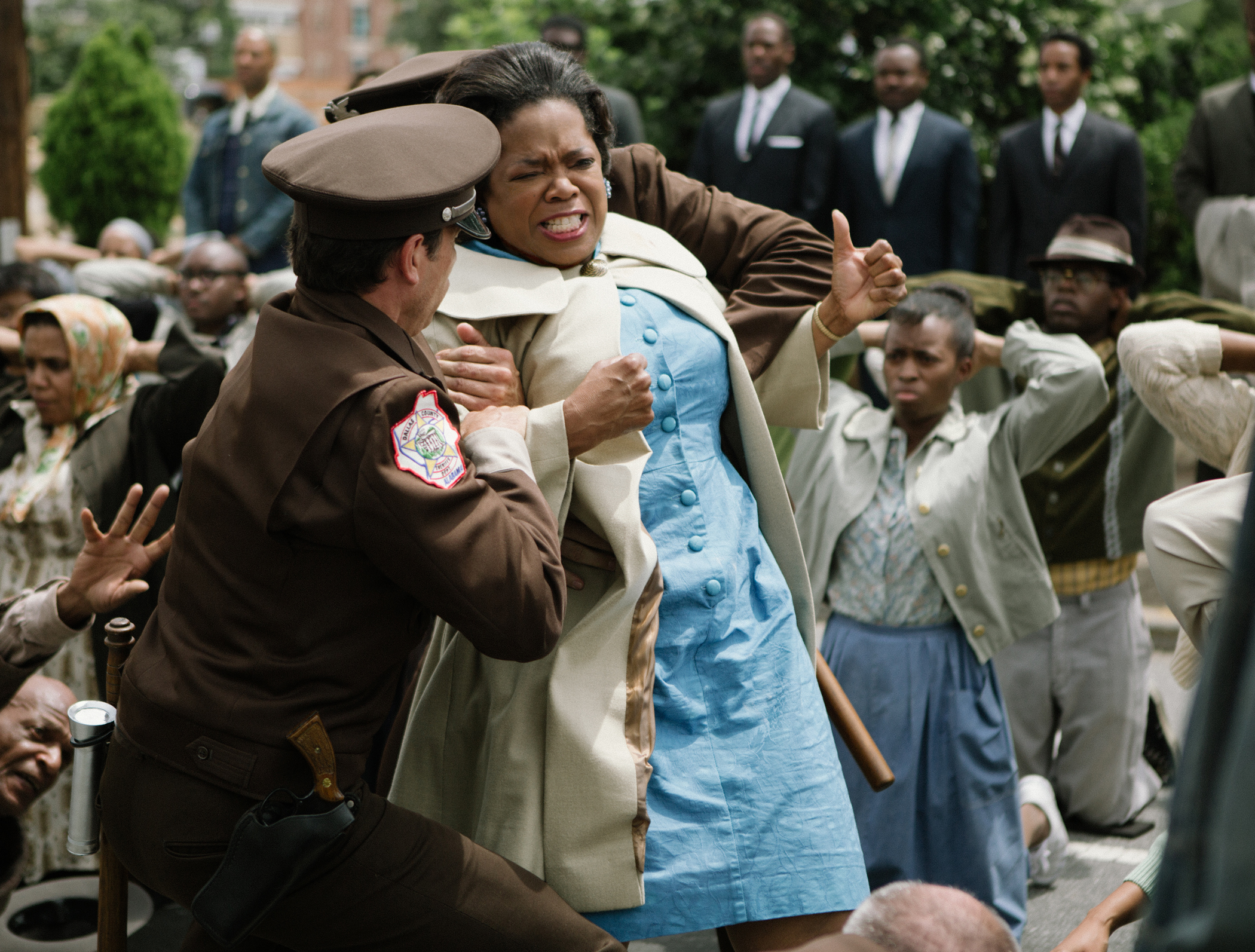
Oprah Winfrey plays a civil rights activist.

The protests at the heart of the movie may have been “nonviolent,” but the event that came to be known as Bloody Sunday, March 7, was an episode of horrific, horrendous brutality, as hundreds of marchers were attacked by state and local police on the Edmund Pettus Bridge with tear gas, clubs wrapped in barbed wire, and horsewhips. Director Ava DuVernay, a former Hollywood publicist who worked her way up through the studio system via music documentaries and indie films, depicts the one-sided confrontation as a melee of swirling smoke, raining blows, sickening thuds and crumbling bodies.

King is the movie’s central figure, but note that it doesn’t bear his name. It’s about more than the man; it’s about the movement he inspired. And specifically, it’s about how the crucial flashpoint of that movement came at one moment in time, in one specific place, and that place was Selma.

And, appropriately, there’s a big supporting cast that helps get it there, including Tom Wilkinson as Pres. Lyndon B. Johnson; Tim Roth as Alabama Gov. George Wallace; Oprah Winfrey as activist Annie Lee Cooper; Dylan Baker as J. Edgar Hoover; Ledici Young as gospel singer Mahalia Jackson; and numerous other actors, including Martin Sheen, rapper Common, Stephen Root, Niecy Nash, Cuba Gooding Jr., Giovanni Ribisi, Andrè Holland, Stephan James and Wendell Pierce, portraying other real-life players in the drama.

SELMA

King meets in the White House with Pres. Lyndon Johnson (Tom Wilkinson).

The filmmakers didn’t have access to King’s archive of speeches, so his orations are paraphrased—to magnificent effect. And there have been questions and quibbles about the movie’s authenticity and precise historical accuracy, especially about its portrayal of King’s relationship with L.B.J. But leave the parsing of small details to small minds. As the 50th anniversary of the events depicted in Selma approaches, this big-issue movie—with policemen beating and killing unarmed black men, streets filled with peaceful protesters, and repressive voting laws that disenfranchise minorities—feels chillingly contemporary, all too real, and monumental in more ways than one. Selma profoundly reminds us that while the marching may lead to the mountaintop, we still, sadly, haven’t fully made it there yet.

—Neil Pond, Parade Magazine

Tagged , , , , , , , , , , , , , , , , , , , , , ,

The ‘Eyes’ Have It

Amy Adams & Christoph Waltz shine in quirky true retro-art tale

BIG EYES

Big Eyes

Starring Amy Adams and Christoph Waltz

Directed by Tim Burton

PG-13

Appropriately enough, the opening shot of Big Eyes is a big eye—and a tear.

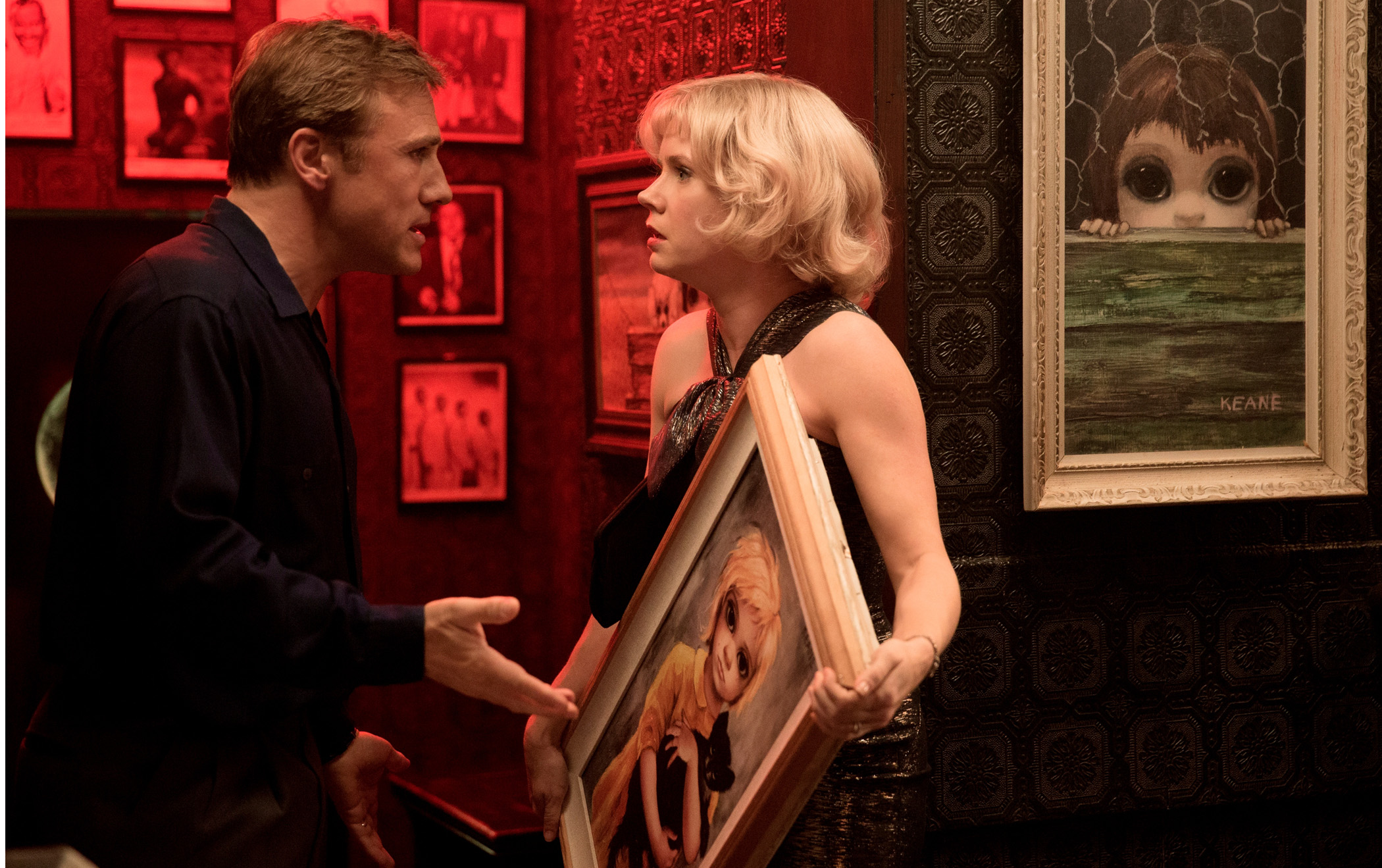
For this is a sad tale—sort of. Based on the true story of Margaret Keane, the artist whose paintings of children with big, sorrowful eyes became a kitschy art sensation in the 1960s, it stars Amy Adams as Margaret and Christoph Waltz as her husband, Walter.

The “sad” part of the story is that Walter took full credit for Margaret’s paintings, keeping his wife and her talent hidden in his shadow for almost ten years.

BIG EYES

Christoph Waltz & Amy Adams

“People don’t buy lady art,” Walter tells Margaret, convincing her that “they” would benefit more if he becomes known as the creator of the wistful-looking, saucer-eyed waifs on the canvasses—and above the signature that read simply “KEANE.”

Amy Adams, whose career has spanned a spectrum of widely diverse roles (American Hustle, The Muppets, Her, The Master), shines with a wounded, subdued glow as Margaret, making us understand both the weakness that would let her character remain a victim of Walter’s bullying, as well as the strength it took for her to finally leave him—and then, 20 years later, sue him to prove her rightful claim to the paintings.

Waltz, the German-Austrian actor who became known to American audiences in Inglourious Basterds and Django Unchained, brings a manic, electrified energy to Walter, depicted him as a trifecta of showy self-promotion, talentless hackery and scary domination.

BIG EYES

A tense moment with Margaret’s visiting friend (Krysten Ritter)

Big Eyes might seem an odd, highly conventional choice for director Tim Burton, best known for the eccentric, wildly imaginative look, feel and subject matter of Pee-Wee’s Big Adventure, Edward Scissorhands, Ed Wood and The Nightmare Before Christmas. But there are quirks a-plenty in the weird true story itself, and Burton’s signature touches abound, especially in the movie’s bight, day-glow colors; his attention to far-out, decade-spanning period details; and the casting of some fine character actors in supporting roles, including Terence Stamp (as a snooty New York Times art critic), Danny Huston (a tabloid reporter who serves as the movie’s narrator), Krysten Ritter from TV’s Breaking Bad (as Margaret’s best friend), Jason Schwartzman (an art gallery snob) and Joe Polito (a nightclub owner), all of whom provide their own dry, dark-comic edges to the central melodrama.

The movie culminates in a recreation of the 1986 trail, a showdown in which a judge orders Margaret and Walter into an easel-versus-easel contest for the jury to determine who was the real artist of the “big eye” paintings.

Burton’s movie brings up several issues: the subjugation of women in the 1950s and ’60s, intellectual property theft and the role of media and publicity in creating fads, movements and celebrity. But mostly it’s a wacky history lesson about a real-life woman who finally set the record straight, told by a director who loves a kitschy underdog tale, with two lead actors who put their own colorful brushstrokes on a zesty, little-known story. Big Eyes may not become a big breakout hit, but it’s certainly a big, bright surprise.

—Neil Pond, Parade Magazine

Tagged , , , , , , , , , ,

Grimm & Grand

Disney version of hit fairy-tale mash-up musical hits all the right notes

INTO THE WOODS

Into the Woods

Starring Meryl Streep, James Cordon & Emily Blunt

Directed by Rob Marshall

PG

Composer Stephen Sondheim’s award-winning 1987 Broadway play, a marvelously intertwined tapestry of several Grimm fairy tales laced with decidedly grown-up themes, debuts on the big screen with an all-star cast—and enough Disney tweaking to make it marketable to younger audiences.

Sondheim’s musical mash-up takes well-known characters from “Little Red Riding Hood,” “Jack in the Beanstalk,” “Rapunzel” and “Cinderella,” adds a few others, and puts them all on a woodland collision course of fate and fortune—and sometimes, alas, misfortune.

“Anything can happen in the woods,” goes a line in one of the songs.

INTO THE WOODS

Emily Blunt and James Cordon

And it certainly does, as a kindly baker (James Cordon) and his wife (Emily Blunt) embark on a journey to find the magical ingredients that will break a generational curse cast by a witch (Meryl Streep) that has prevented them from having a child.

Before they go, they send Little Red Riding Hood (Lilla Crawford) traipsing off with a basket of baked goods to see her granny. Soon enough, they come across Cinderella (Anna Kendrick) fleeing from an arduous prince (Chris Pine), and the young village peasant Jack (Daniel Huddlestone), whose trade of a beloved milk cow for some magic beans will come to have calamitous effects for everyone.

INTO THE WOODS

Anna Kendrick

As anyone familiar with the musical knows, Sondheim’s storyline and wonderfully clever, crafty songs work on multiple levels. They traffic in some serious, decidedly heavy topics—parenting, choices, decisions, guilt, forgiveness, infidelity, murder and mortality. But they pack in some soft, tender moments, too, and some hilarious highlights, as well. Younger kids may think Johnny Depp’s two-scene cameo as The (big, bad) Wolf is just a howl-y hoot, but adults will easily catch the “sumptuous carnality” in the role’s campy pedophilic undertones. And you won’t come across many more amusing surprises than “Agony,” the preening, prancing “prince”-off duet between Chris Pine and Billy Magnussen, whose royal character yearns for the tower-trapped damsel with the golden hair, Rapunzel (Mackenzie Mauzy).

INTO THE WOODS

Meryl Streep

Other recognizable faces include Tracey Ullman as Jack’s mother and Christine Baranski as Cinderella’s stepmother. Everyone sings, and does a terrific job. You might have known Streep and Kendrick, from previous movies, had the pipes for their roles, but prepared to be blown away by everyone else, especially Blunt (who was—ironically—pregnant during much of the shoot) and Cordon, who you’ll be seeing even more of when he takes over The Late Late Show on CBS in March.

This fractured fairy tale might get a bit grim, especially for overly sensitive little ones; it was never intended as a sweet-dreams bedtime story. Disney has softened some of its coarser edges and made other modifications, but the “Be careful what you wish for” morality-tale message in the show’s not-always-so-happily-ever-after remains intact.

Yes, anything can happen in the woods. Who knows, you might find magic beans, witches, princes, big bad wolves, and much more—like the year’s best, most delightful, star-packed movie musical.

—Neil Pond, Parade Magazine

Tagged , , , , , , , , , ,

All-American Hero

Angelina Jolie tells Louis Zamperini’s story of survival and inspiration

Unbroken 4

Unbroken

Starring Jack O’Connell, Takamasa Ishihara & Domnhall Gleeson

Directed by Angelina Jolie

PG-13


As far as real-life, all-American heroes go, they don’t get any red, white and bluer than Louis Zamperini, the U.S. Olympic runner, World War II bombardier and prisoner-of-war survivor whose amazing story was told in author Laura Hillenbrand’s bestselling 2010 book, Unbroken.

Now Angelina Jolie, making her second theatrical outing behind the camera as a director, brings Hillenbrand’s book to the screen in a grandiose dramatization of Zamperini’s epic ordeal during the war, with flashbacks to his rascally boyhood in Torrence, Calif., his surprising success as a high-school track star, and his wide-eyed trip to the 1936 Olympics in Berlin.

Unbroken 5The movie begins with a bang—quite literally—as we’re taken inside the belly of a B24 bomber, alongside Zamperini (Irish actor Jack O’Connell) and his crew mates as they crack jokes, then crack down and delivering their goods, fend off a fierce attack by Japanese Zeros and finally bring their badly damaged plane in for a very rough landing. A later mission sets up the dire circumstances that put Zamperini and two of his fellow crewmen (Domnhall Gleeson and Finn Whitrock) adrift in life rafts and finally into the hands of Japanese captors.

Zamperini (who died earlier in 2014, at age 97) would spend more than two years in Pacific prison and work camps, and the heart of the movie is the torment he received from a young, terrifying prison warden called “the Bird” (Japanese singer-songwriter Takamasa Ishihara, making his acting debut), whose soft, “feminine” appearance masked a grotesque sadism.

O’Connell gives a tremendous, star-making performance, transforming his entire physicality to depict the ravages of his ever-worsening conditions. Ishihara is galvanizing in an unforgettable “bad guy” role that hints of much more complexity and ambiguity than the script gives him rein to fully explore.

The movie looks fantastic, thanks to the camera work of award-winning cinematographer Roger Deakins, who brings a prestigious, pedigreed master’s touch to every scene: the danger—and the excitement—in the air; the desolation, desperation and drama of floating for weeks the ocean;Unbroken 3 the soul-sucking abominations of the prisons, where days and months seep into years.

The script—whose unlikely collaborators include Joel and Ethan Cohen, not typically known for such un-cynical, snark-free, drama—focuses a lot (perhaps too much) on suffering, agony and endurance, and not enough on just how, exactly, Zamperini came to circle back on the words of a sermon we watch him squirming through, as a boy: “Love thy enemy.”

One sequence depicts a weakened, starved and beaten “Louie” forced by the Bird to pick up a heavy wooden beam and hold it above his head for what the movie ticks off to feel like hours. Jolie presents it like a scene from The Passion of the Christ. That incident may very well have happened, but making Zamperini look like a saint—or more—seems like unnecessary sermonizing.

He wasn’t a saint, but he certainly was a great, inspiring man. And now his legacy includes a handsome movie monument to remind even more people of his service, his sacrifice and the incredible reserves of strength and resolve he used to keep his will, his faith, his courage and his call of duty to his country “unbroken.”

—Neil Pond, Parade Magazine

Tagged , , , , , , , , , , ,

Little Girl Lost

Modernized ‘Annie’ is an underwhelming, quasi-musical mess

1111746 – ANNIE

Annie

Starring Quvenzhane Wallis, Jamie Foxx & Cameron Diaz

Directed by Will Gluck

PG

“You’re such a special little girl,” one character tells the world’s most famous little orphan during this latest musical remake of her well-traveled tale.

And it’s certainly true: Little Orphan Annie, the eternally young waif, has cut a 90-year swath across pop culture, from comic strips to the Broadway stage and beyond. You’ve got to be some kinda special to live nearly 100 years and never look a day over 9.

But most people who are familiar with Annie today know her from the 1982 musical made about the 1970s Broadway production, and that will be the standard—for better and for worse—to which much of this new Annie will be compared.

Perhaps it’s finally time for Little Orphan Annie to come out of the 1920s and into the modern world, and this version does that, all right, putting a shiny contemporary spin on an old, familiar story. But just how well will Annie fans take to mashed-up, hip-hop songs, miscast performers, and a production that sinks far more than often than it soars?

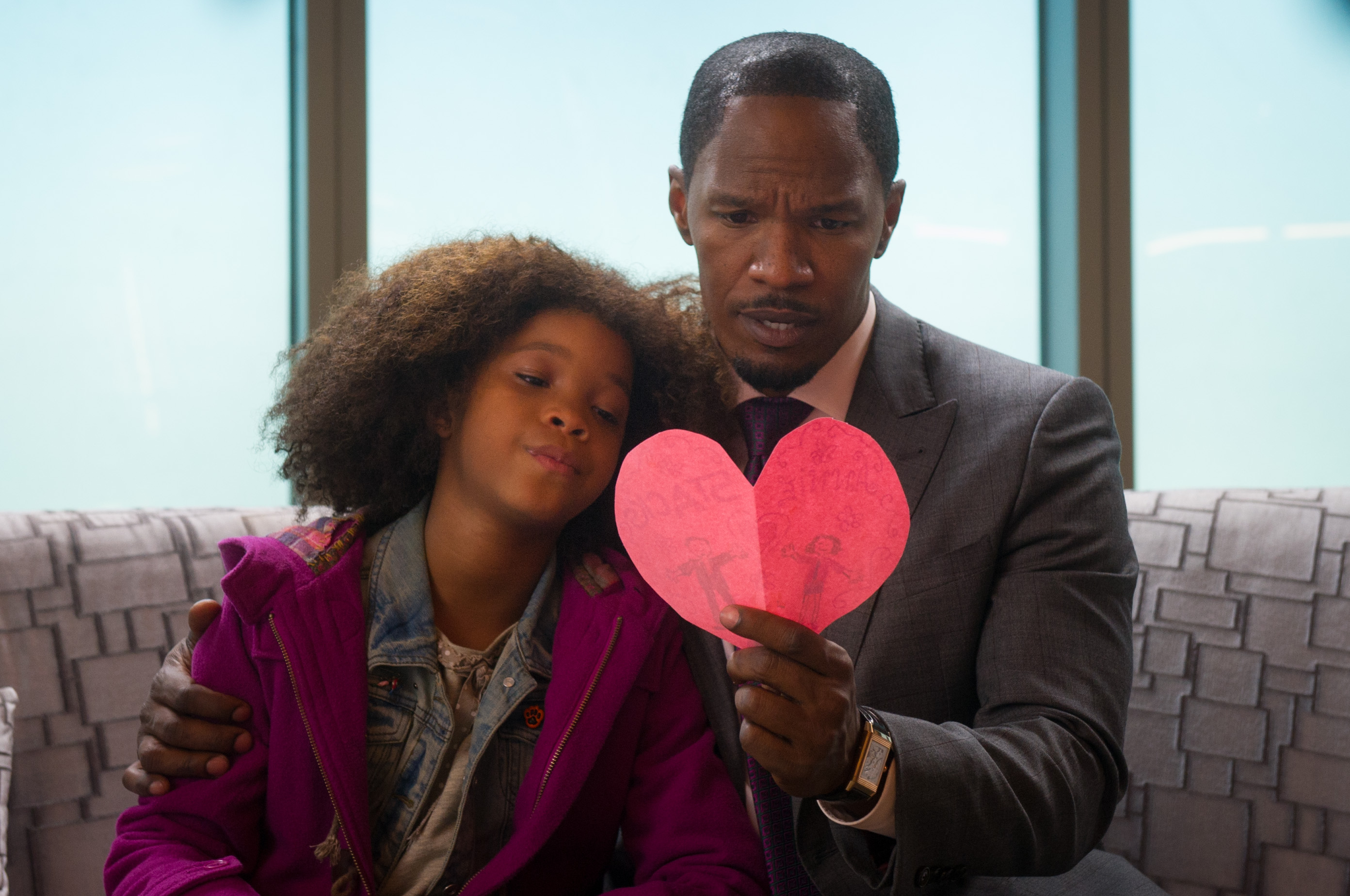
Quvenzhane Wallis and Jamie Foxx

Quvenzhane Wallis & Jamie Foxx

The new Annie, Quvenzhanè Wallis, who received an Academy Award nomination when she was 6 for her starring role in as the unflappable bayou child in Beasts of the Southern Wild, has a relaxed, natural charm and undeniable cuteness. But she’s no “stage kid,” and she’s clearly out of her element in a role requiring extensive singing and dancing.

Jamie Foxx plays Will Stacks, the contemporary equivalent of Daddy Warbucks, now a fat-cat tech tycoon running for mayor of New York. Cameron Diaz is Miss Hannigan, the boozy-floozy foster mom raising Annie—a several other preteen tykes—in a welfare-funded tenement. Bobby Cannvale and Rose Bryne are Stacks’ campaign manager and personal assistant, working hard to humanize his cool, aloof image.

Fine performers all, they’re hamstrung by cinematography, choreography (or lack of it) and staging that leaves them stumbling, bumbling, flailing, wailing and sounding like their vocals have been pumped into an Annie atomizer. Director Will Gluck, whose previous films include the witty teen comedy Easy A and the sexy relationship farce Friends With Benefits, had never directed a musical before. This makes you wonder if he’d ever paid much attention to one, either.

Enter Annie—now a foster child instead of an orphan—in an encounter than becomes a YouTube viral video and a campaign godsend for Stacks, and the opportunity for the moppet to work her magic.

1111746 Ð ANNIEExcept there’s not a lot of magic to be found—certainly not in the signature show tunes, like Tomorrow, Hard Knock Life and Little Girls, which are revised with new lyrics and urbanized, boom-box-y arrangements, and supplemented with some new tunes entirely. The storyline, though mostly hewing to Annie basics, dazzles it up with contemporary window dressing, including a Big Apple setting, jazzy lingo (“janky,” “Bam!”), celebrity cameos (Hey, there’s Michael J. Fox! And Austin Kutcher—and Mila Kunis!) and a breathlessly “today” subplot driven by cell-phone tracking and Twitter postings.

But it all makes for one big, underwhelming quasi-musical mess. Little Orphan Annie has been a kitschy, pop-cultural treasure for nearly a century, arcing across generations with a message of spunk, sunshine, adventure, uplift and the possibilities of better, brighter tomorrows. But most viewers will probably be disappointed to watch this Annie fall—and ring—achingly flat, reminding them mostly of much more enjoyable yesterdays.

—Neil Pond, Parade Magazine

Tagged , , , , , , , , ,

From Bad to Worse

Things go wrong in ‘Horrible Bosses’ sequel, in more ways than one

Horrible Bosses 2

Horrible Bosses 2

Starring Jason Bateman, Jason Sudeikis and Charlie Day

Directed by Sean Anders

Rated R

If you got a chuckle out of the first one, you’ll probably get a chuckle out of this one. But just because you might doesn’t mean you should. And why don’t you save your titters for something that’s not such a waste of talent, a lazy roll over retreaded gags, and a smutty stroll down a street full of racist, sexist and homophobic jokes?

The first Horrible Bosses, in 2011, set up an initially amusing, over-the-top, screwball comedy: Three hapless schmucks (Jason Bateman, Jason Sudeikis and Charlie Day), each so exasperated with their individual employment situations, were driven to an absurdly extreme measure: a plan to murder their bosses.

Horrible Bosses 2

Jennifer Aniston

Their bosses were pretty bad—especially the crooked, conniving business owner (Kevin Spacey) and the rapacious sexual-predator dentist (Jennifer Aniston). Awful, yes—but sometimes awfully funny.

Horrible Bosses 2

Christoph Waltz

Both Spacey and Aniston, as well as the knucklehead trio of Bateman, Sudeikis and Day, are back in Bosses 2. This time, the disgruntled employees have become entrepreneurs—they’re the bosses now—striking out on their own with a prototype for an all-in-one bathing accessory. But when an unscrupulous distributor (Chrisoph Waltz) makes a play to bankrupt them and take over their operation, they devise their own plan for payback—by kidnapping his insufferably spoiled adult son (Chris Pine) for ransom.

Things go “horribly” wrong, of course—in more ways than one. The plot follows the same basic course as the first movie, down to some of the same exact gags. (Hey, they got a laugh the first time, right?) The humor is beyond bawdy—it’s super raunchy, and so blatantly offensive on so many levels, it almost seems admirable the filmmakers tried so hard to maintain such a consistent tone of tastelessness.

To call it “bathroom” humor demeans a lot of bathrooms, especially in one particular scene with a toothbrush, and in another when the discussion in a sexaholics support group turns to a topic that would be shocking even if it didn’t involve underage children.

Any guffaws these jokes get depend on just how far you think it’s OK to go for a laugh, and how closely you care to look at what you’re really laughing at. I’m not sure in what context a reference to the sexual assault of a hospital patient in a coma, for instance, would come off as funny—but here it’s played just that way.  

Horrible Bosses 2

Jamie Foxx

Jamie Foxx returns as a shady career criminal whose obscenity of a nickname can’t be printed in a newspaper but is repeated dozes of times in the movie, and whose flawed advice the would-be kidnappers once again seek.

The first time around, the bosses were terrible, but the movie wasn’t so bad. This time, the “new” bosses turn out to be awful, too, the movie is a disappointment, and the jokes may make you laugh…but you should feel guilty about it when you do.

-Neil Pond, Parade Magazine
Tagged , , , , , , ,

Hungry For More

‘Hunger Games’ semi-finale is light on action but heavy on build-up

SS_D8-3267.dng

The Hunger Games: Mockingjay—Part 1

Starring Jennifer Lawrence, Josh Hutcherson, Philip Seymour Hoffman & Liam Hemsworth

Directed by Francis Lawrence

PG-13

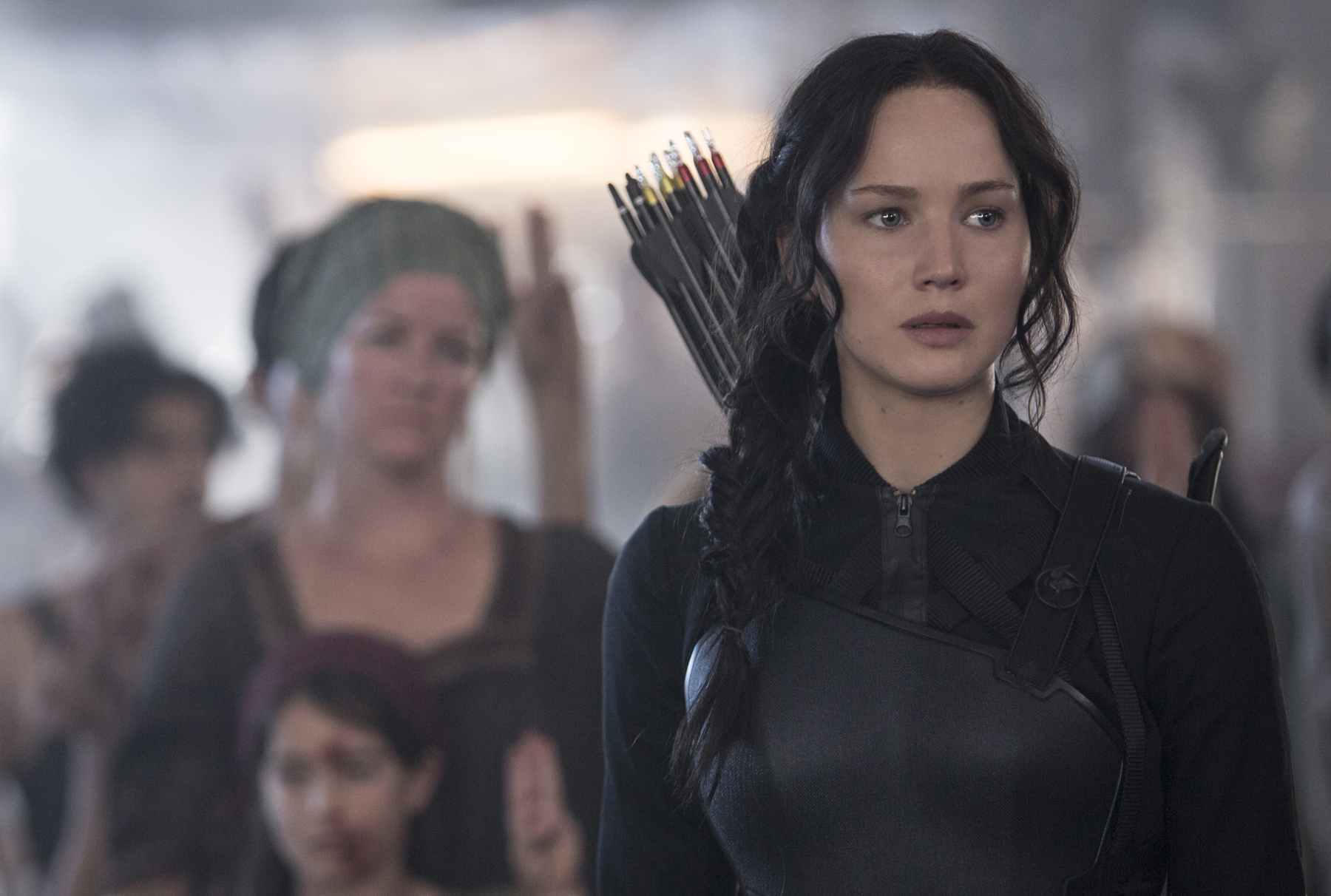
Fans of The Hunger Games will be thrilled because the latest installment—the next-to-last movie, the result of splitting the final book of author Suzanne Collins’ smash trilogy into two movie parts—has hit the screen. But that excitement might be tinged by some disappointment in watching the feisty, girl-power heroine Katniss Everdeen (Jennifer Lawrence) sit out much of the drama on the sidelines.

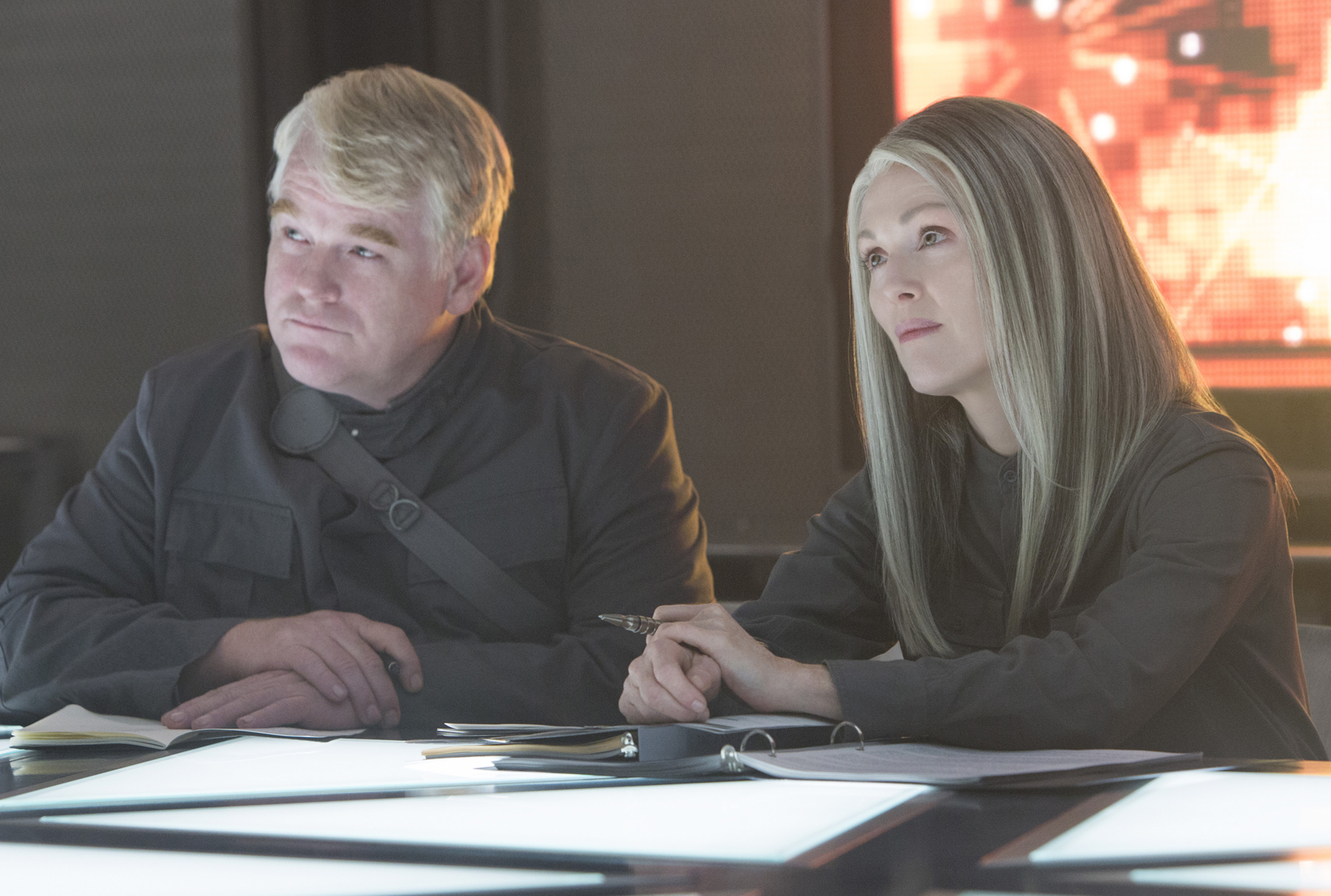
Mockingjay—Part 1 begins where last year’s Catching Fire left off: Katniss, the victor of the first two movies’ kill-or-be-kill games, has become a refugee from the totalitarian regime’s brutal President Snow (Donald Sutherland), living underground with a group of rebel insurgents and their leader, President Coin (Julianne Moore).

SS_D13-5271.dng

Philip Seymour Hoffman and Julianne Moore

A revolution is brewing, and the rebels want Katniss to become its poster girl. “We have to have a lightning rod,” says Coin. So Katniss is recruited to make a series of propaganda videos—or “propos”—to spark a rebellion in the miserable masses of Snow’s repressed citizens.

“It’s the worst terror in the world, waiting for something,” Coin tells Katniss. A lot of Hunger Games fans might agree, given that so much of the movie feels like waiting around for the real excitement to start.

SS_D7-2805.dng

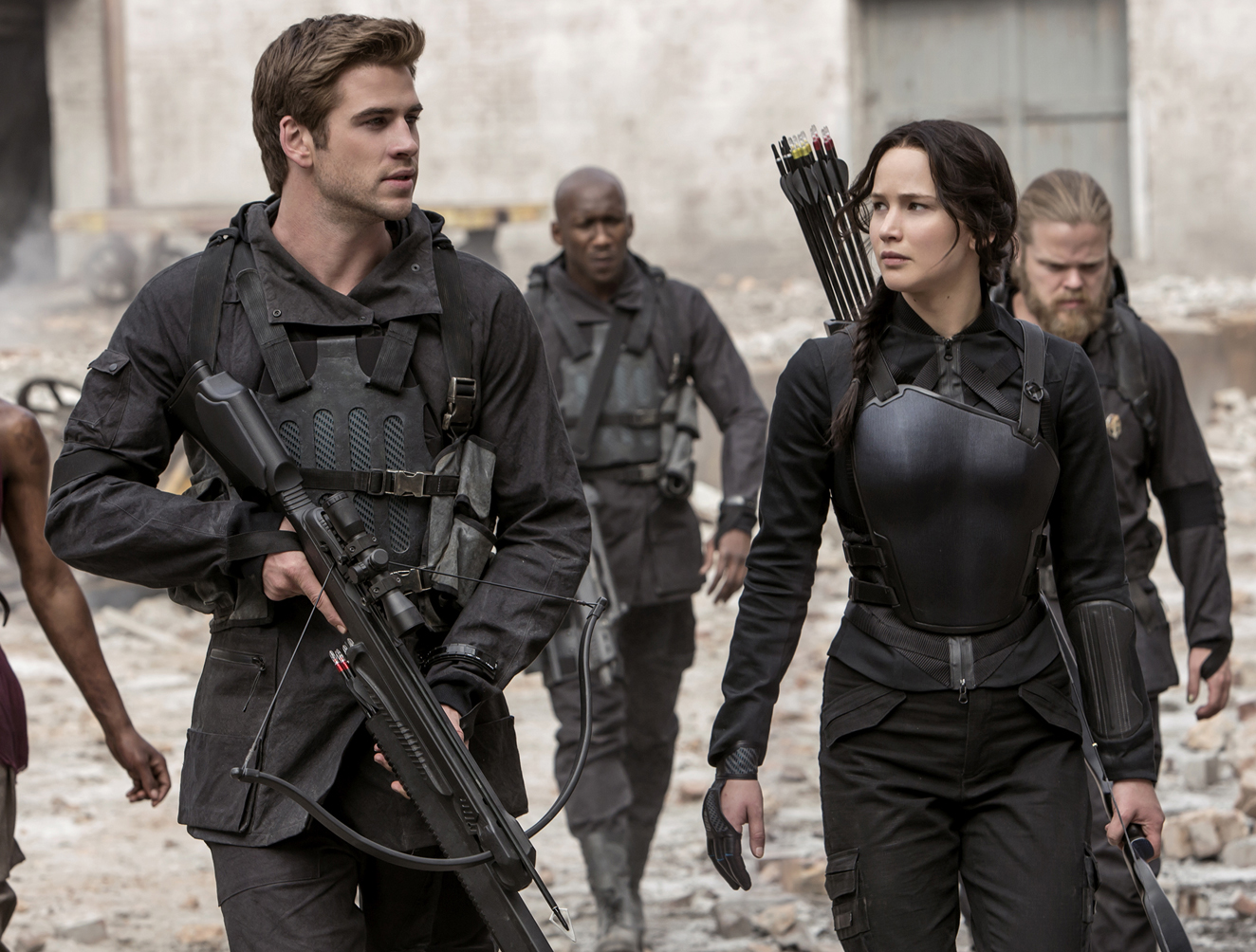
Liam Hemsworth and Jennifer Lawrence

Katniss, the rousing action figure around which the entire franchise is based, appears in only one scene that would quality as an action scene, in which she gets to actually un-sheath an arrow from her quiver and fire it from her bow. But then it’s back to the bunker for more plotting, more prep, and hanging out while other people get down to the nitty-gritty. There’s other action—a big dam blows up, a bunch of forced-labor lumberjacks turn the tables on their “Peacekeeper” guards, and a daring nighttime rebel raid on President Snow’s compound looks like a mash-up of Mission Impossible and Zero Dark Thirty. But Katniss sits it all out.

Director Francis Lawrence (no relation to Jennifer), who also steered last year’s Catching Fire, keeps things looking drab and dreary, to match the mood of repression, doubt and dread. Obviously, he’s holding back, saving the story’s knockout punch for its final act, the big show. OK, I get that—but frequently this warm-up seems like it’s huffing and puffing without generating a lot of real heat.

SS_D103-309737.dng

Josh Hutcherson

The movies’ main cast returns: Woody Harrelson, Elizabeth Banks, Stanley Tucci, and (the late) Philip Seymour Hoffman. Josh Hutcherson and Liam Hemsworth are back as Peeta and Gale, the two hunks competing for Katniss’s affections, although the storyline puts them in very different places and situations.

There’s a lot here for Hunger Games fans to digest—political undertones, the drumbeat of war, public executions. And it’s got another great performance by Lawrence, who makes almost everything she does (even playing a bad actress, who struggles to get her propos lines right) fun to watch. She even breaks out in song, a haunting, dirge-like ditty called “The Hanging Tree.” There’s some real dramatic tension, a good deal of emotion, and one heck of a setup for the next movie.

But as for a big, “fiery” showdown that fans have been waiting, and waiting for, well, they’re just going to have to stay hungry a bit longer—until next November.

—Neil Pond, Parade Magazine

Tagged , , , , , , , , , ,

Time Warped

Matthew McConaughey stars in mind-bending deep-space yarn

INTERSTELLAR

Interstellar

Starring Matthew McConaughey, Anne Hathaway & Michael Caine

Directed by Christopher Nolan

PG-13

Outrageously ambitious, deliriously far-out and epically geeky, director Christopher Nolan’s sprawling Interstellar is a space movie with one foot on the ground and one in the stars, a story of both humanity and the heavens, with a thumping heartbeat driving its spewing intergalactic fountain of dazzling, digitized special effects.

In this mind-bending yarn about gravity, time and the power of love, Matthew McConaughey plays a family-man space cowboy on a mission to save the Earth. As its story unfolds, sometime in the not-so-distant future, our planet’s resources have been all but exhausted; the world’s a big dust bowl. McConaughey’s character, Cooper, a former moon-exploring astronaut, is selected for a top-secret, last-ditch NASA dash across deep space to chase down a probe signal that may possibly signal a new planetary home.

Big problem: The widowed Cooper will have to leave behind his sage old dad (John Lithgow) and his two young children, teenage son Tom (Timotheè Chalamet) and spunky young daughter Murph (Mackenzie Foy). Even bigger problem: Once he takes off, Cooper doesn’t know how long how he’ll be gone—or if he’ll be able to return.

INTERSTELLARCooper tries to reassure Murph—he gives her an old-school wristwatch and tells her that whenever she looks at it, she can know he’ll be looking at his, too, wherever he is, up there in space, for however long, until he comes home. Tick-tock, tick-tock.

Nolan, whose other films include the Batman Dark Knight trilogy and the mind-scrambling Inception, sets off an explosion of images and ideas as the tale unfolds both “on the ground” and “out there.” We’re taken through a space “wormhole,” a shortcut expressway compressing and expanding space and time, to a watery planet prone to monstrous tidal waves, where every hour counts for seven years of Earth time, and another that’s so cold, even the clouds are solid ice. We watch as Cooper, whose own aging has been halted by the time-warp of space travel, sees video feeds of his children grown into adults (Jessica Chastain and Casey Affleck)—and bitter that their father has apparently abandoned them, “decades” ago.

INTERSTELLARAnne Hathaway plays one of Cooper’s fellow explorers—a key role in more ways than one because of her connection to her NASA scientist father (Michael Caine) back on Earth, and also to someone the astronauts will meet on their journey to the outer reaches of the cosmos.

Along the way, we’re introduced to some lofty concepts: Are we alone in the universe? Is it possible to go backward and forward in time, or to make it stand still? Is love a quantifiable force? Nolan lays out a narrative path between Odysseus, Albert Einstein and Buck Rogers, then paints it with bold cinematic brushstrokes inspired by the masters—Stanley Kubrick, Steven Spielberg, John Ford.

It doesn’t always work, but man, is it ever something to see. It gets pretty trippy (and even a bit hokey) in the end, and at nearly three full hours, it’s quite a journey. And this rip-roaring Rip Van Winkle rocket tale is unlike anything else you’ve seen at the movies this year, if ever. Hang on for the ride and you may come out on the other side feeling a bit wobbly and time-warped yourself.

And afterward, you might never look at the tick-tock of your wristwatch the same way again.

—Neil Pond, Parade and American Profile Magazines

Tagged , , , , , , , , , , , , , , ,

Brutal Bedtime Story

Nicole Kidman’s an amnesiac damsel in distress

IMG_7245.CR2

Before I Go To Sleep

Starring Nicole Kidman, Colin Firth and Mark Strong

Directed by Rowan Joffè

Rated R


“Who are you?” asks Nicole Kidman’s character, Christine, in the opening scene to the man she’s just woken up next to in the bed.

It’s not a particularly unique movie situation—a lot of characters have found themselves in hazy morning-after scenarios. But in Christine’s case, she really, truly has no idea: She has a form of amnesia that makes her wake up every day totally blank about everything that happened the day before—and every day before that.

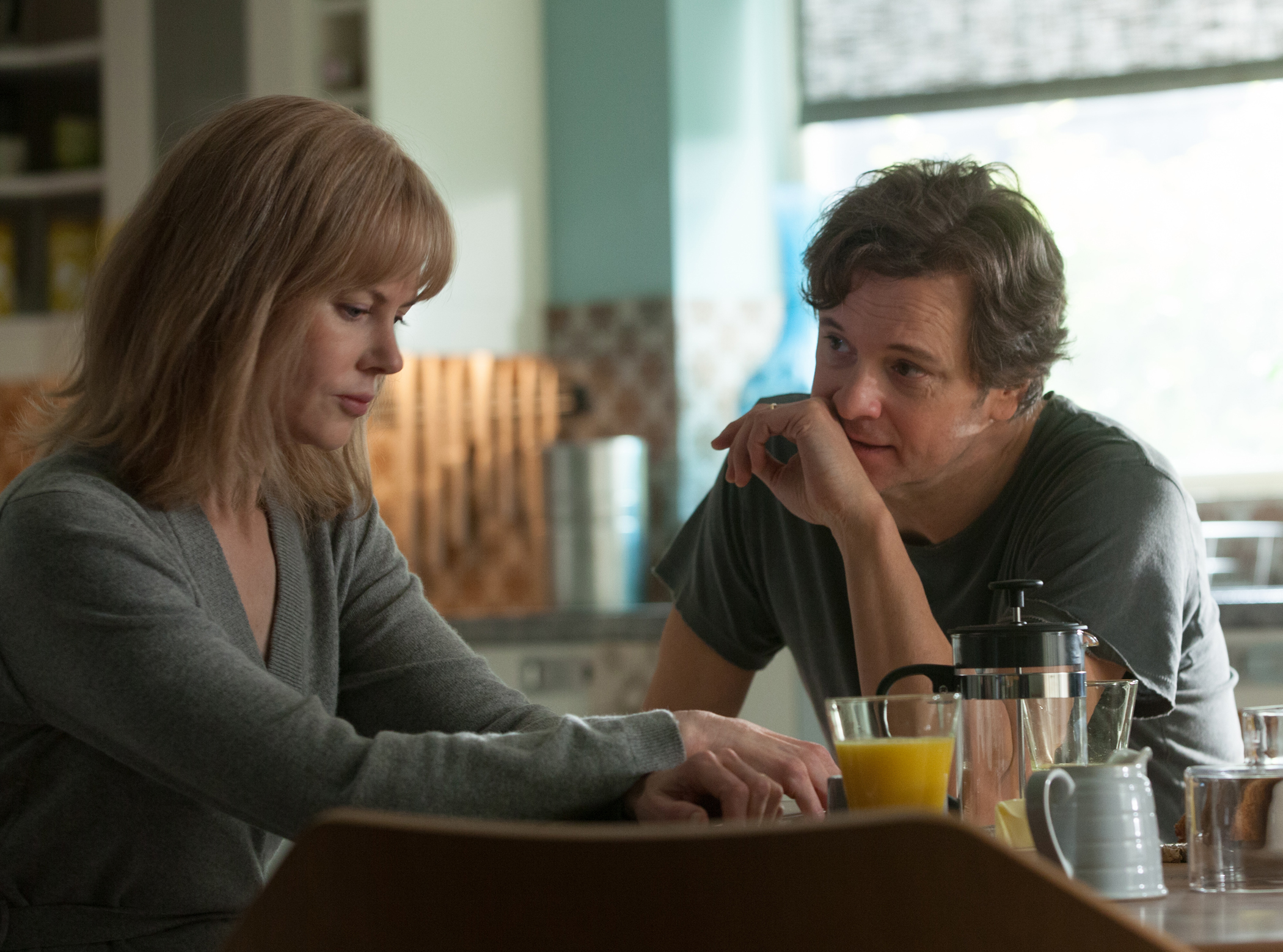
“You store up information for a day, and when you wake up in the morning, it’s all gone,” her husband of 14 years, Ben (Colin Firth) explains to her, and to us. We also learn, through Ben, that Christine’s memory loss was due to the head trauma of a terrible automobile accident, 10 years ago.

IMG_0053.CR2

Christine (Nicole Kidman) wakes up each day not recognizing the man who repeatedly explains to her he’s her husband (Colin Firth).

But was it? That’s only one of the questions that soon begin to pile up in director Rowan Joffè’s adaptation of British author S.J. Watson’s bestselling psychological thriller. Why doesn’t Christine trust Ben? Why does she have flashbacks of an airport hotel room, a violent assault by a man with a scar, and a woman named Claire? Why does her psychologist, Dr. Nasch (Mark Strong), insist on seeing her without Ben’s knowledge, often in his parked car in a damp, underground garage?

Each morning, Christine receives a call from Dr. Nasch, instructing her to retrieve a digital camera from its hiding place in her closet. She watches the recording(s) she’s made on it previously, as her memories painfully, partially begin to rebuild again bit by bit every day. Suspicions mount, secrets are revealed, and things turn out to be different from what they seem—and from what Christine has been led to believe.

To say more would spoil the surprises (although probably not to anyone who’s read the book). But fans of contemporary mystery-suspense thrillers will get a kick out of following the twists and turns, and of cheering on Christine as she struggles to piece together her life from the scattered, shattered shards of her past—not to mention the even greater, bloodier struggle she faces in the movie’s final act.

IMG_0096.CR2

Mark Strong plays Christine’s psychologist, Dr. Naish

Kidman has become quite adept in roles that suggest a certain physical frailty and vulnerability, especially when it can be stoked into wounded fury and ferocity. She evokes the audience’s total sympathies as Christine, not only operating in a memory vacuum, starting every day from scratch, but also seemingly being manipulated by those she’s come to trust. Firth and Strong, two terrific actors, only have one brief scene and one snippet of dialogue together, but they weave the tangled, mangled web of dramatic tension from which the entire movie is suspended.

Released just as Hollywood prepares to launch a barrage of box-office fall and winter heavy hitters, Before I Go To Sleep will likely get lost in the shuffle of bigger, flashier movies. It’s a little slow to get going, it sags and drags it bit in the middle, and its heavy-handed ending seems stitched on from a hammy, leftover Nicholas Sparks project. But for anyone who wants a stylish, somewhat brutal, Brit-centric bedtime story about deception, danger and Nicole Kidman in distress, well, sleep tight!

—Neil Pond, Parade Magazine

Tagged , , , , , ,