The terrifying devil doll that launched ‘The Conjuring’ is baaaaack!
 Annabelle: Creation
Starring Anthony LaPaglia, Talitha Bateman & Stephanie Sigman
Directed by David F. Sandberg
R
The demonic backstory to the evil plaything that inspired The Conjuring and later got its own spin-off, Annabelle: Creation effectively fulfills horror fans’ need to be scared—and reminds us of just how creepy dolls can be.
In the opening credits, we watch in the 1950s as a toymaker (Anthony LaPaglia, best known for playing Jack Malone on TV’s Without a Trace) carefully puts the finishing touches on the doll that will become Annabelle, a gift for his young daughter, Bee.
Bee is struck by a car in the very next scene and killed.
Then, 12 years later, the heartbroken toymaker and his mysteriously bedridden wife (Mirando Otto, Rebecca Ingram from 24: Legacy) open their home to a group of orphan girls and a young Catholic nun, Sister Catherine (Stephanie Sigman).
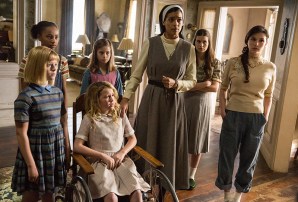 The girls are told they can freely go anywhere in the house, except for one place—Bee’s old bedroom, which is always locked.
Swedish director David F. Sandberg, whose resume includes last year’s horror flick Lights Out, doesn’t really do anything flashy or new. But he certainly knows how to solidly ramp up the suspense, and once he turns on the jolt juice, it really starts to flow.
The setting of a big, rambling, Victorian-style farmhouse, on a desolate hilltop in the middle of nowhere (actually, Southern California) makes a great place for the spooky shenanigans. Sandberg keeps gore—and slaughter—to a minimum, especially for an R-rated flick, and gets maximum value out of things that are only glimpsed briefly, seen in the shadows or stirred in the darkness of the imagination.
That’s not to say you won’t see some things that will make you gasp, and if you come to see bodies torn apart, walls smeared with blood and eye sockets missing eyeballs, well, you won’t be disappointed.
The device of a houseful of young women, or girls, is a well-worn horror cliché. Here, the orphans, who range in age from kids to older teens, provide several creative opportunities for interaction with Annabelle and the house, from telling spooky stories underneath a bedsheet to exploring the grounds and outbuildings. A game of hide-and-seek holds quite a surprise, and that sinister-looking scarecrow in the barn—well, there’s a reason he looks so sinister.
This is definitely the kind of movie you need to see in a theater with other people. It certainly adds to the enjoyment to hear a whipped-up audience chiming in, shouting at the screen, offering characters advice: “Don’t open that door!” “Close that door!” “Get away from that!” “Don’t go in there!”
A woman in front of me could barely stay in her seat; several times, she literally leaned forward, arms extended, as if reaching into the screen to extend a helping hand.
One of those times was the dumbwaiter scene, when one of the smallest girls was trying to get away from one of the other little girls—who had turned into a demon—in the shaft of the house’s dumbwaiter, and the ropes were stuck. Yikes!!!

Talitha Bateman
Much of the focus is on little Janice, played by Talitha Bateman (her brother, Gabriel, starred in Lights Out). Janice is recovering from polio, hobbling around in leg braces, and Annabelle singles her out for particular attention.
The Annabelle and Conjuring movies walk a profane line between good and evil—and evil always seems to have the upper hand. No amount of prayers, holy water, priests, nuns, rosary beads or pages from the Bible plastered over a door can keep the malevolent spirt of Annabelle from raging across the decades. The doll, a priest says, is a conduit for evil. Mullins’ wife says it’s “the devil itself.”
Whatever it is, it’s on the way to being a lynchpin of one of the most successful horror franchises ever, a nearly $900 million part of director-producer James Wan’s creepshow empire, which includes Saw (six movies and counting), Insidious and now the ever-widening world of Annabelle. Next year we’ll see The Nun, of which Annabelle: Creation provides a peek—a dark, spectral presence in the corner of a picture frame.
Even if you don’t buy into believing that Annabelle is a conduit for evil, you have to agree: This devil doll has certainly tapped into the box office. And as long as people enjoy being spooked by creepy dolls, she’ll be around—somewhere, in the shadows, behind a door, inside that locked room.
“Don’t go in there!”
In theaters Aug. 11, 2017
 The Glass Castle


 Detroit
 By day three, the Michigan governor has called in the national guard, and soldiers in jeeps and tanks patrol the streets. Neighborhood by neighborhood, the city becomes a war zone as African-American hopelessness, helplessness and rage erupt in widening spasms of destruction—and the police and the military strike back with sometimes lethal force.

 Atomic Blonde
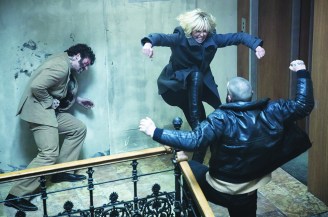 Director David Leitch, a former stuntman who directed Keanu Reeves in John Wick, certainly knows how stage boffo fight scenes, and he sets up a few doozies here. One in particular, which occurs toward the end of the movie, is nearly five minutes long, shot in a single unbroken take into a building, up an elevator, down a stairwell, through an apartment and finally into the streets for a slam-bang car chase.




 A Ghost Story
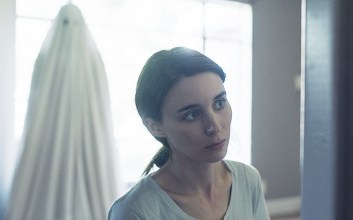 Back at his home, the ghost silently watches his wife come and go. He tries—unsuccessfully—to “reach out” and touch her. But she is unaware of his presence. When she comes home from a date with another man, the ghost has a jealous poltergeist moment—light bulbs burst and books fly off the shelf. (One of the books opens to a page of the Virginia Woolf short story “A Haunted House,” quoted at the beginning of the film.)
 Affleck and Mara’s characters are never named, but in the credits they are identified as “C” and “M.” Of course, C is for Casey and M is for Mara. But coincidentally, C is also the Roman numeral for 100 and M is for 1,000—and in this movie, those quantities could easily signify years.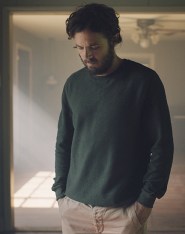
 Spider-Man: Homecoming
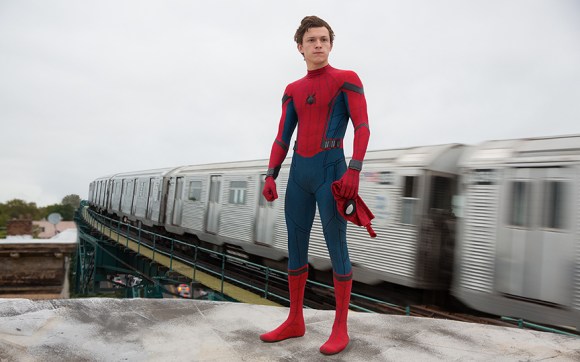
 He gave a teaser cameo appearance as Spidey in last year’s Captain America: Civil War, and the movie creatively begins with Peter’s “home video” leading up to his experience in that film’s “clash of the Avengers” tarmac scene.
 Despicable Me 3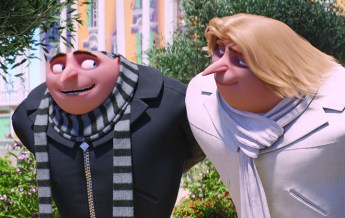
 Kristin Wiig returns to her DM2 role as Lucy, Gru’s feisty secret-agent wife. Miranda Cosgrove, Dana Gaier and Nev Scharrel provide the voices of Gru and Lucy’s three young adopted daughters, whose heartwarming subplot becomes a warm center to all the movie’s madcap swirl of sight gags.
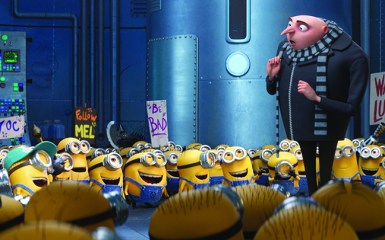 In this movie, the Minions crash an America’s Got Talent-style TV competition, get sent to prison and escape by making an elaborate flying machine—out of stitched-together prison uniforms, toilets and other jailhouse odds and ends.
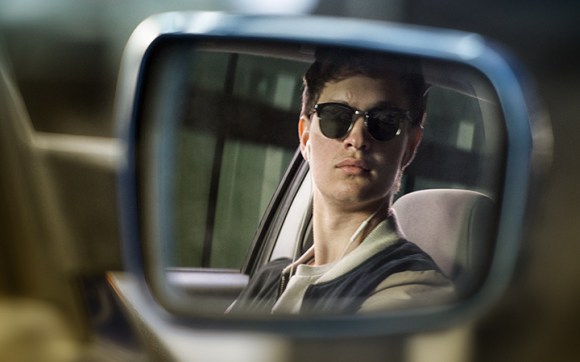 Baby Driver
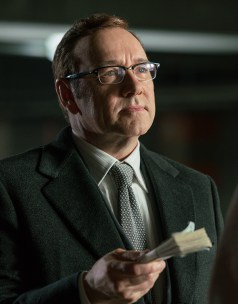
 Baby meets a beautiful waitress, Debora (Lily James, from Downton Abbey and Disney’s Cinderella), who has a dream of wanting “to head west…in a car I can’t afford with a plan I don’t have.” Debora tells Baby she has an older sister, Mary, who got all the good songs, like “Proud Mary,” “Hello Mary Lou” and The Monkees’ “Mary, Mary.” She tells Baby, admiringly, that “Every song is about you.”


 The Media Tourist